Applewood and Resin Turning Showcases Modern Decorative Woodcraft
Applewood and resin turns are getting a glossy boost from UV-cured finishes. The look is small-batch, photogenic, and easier to copy than it first appears.
Applewood and resin: the look that stops the scroll
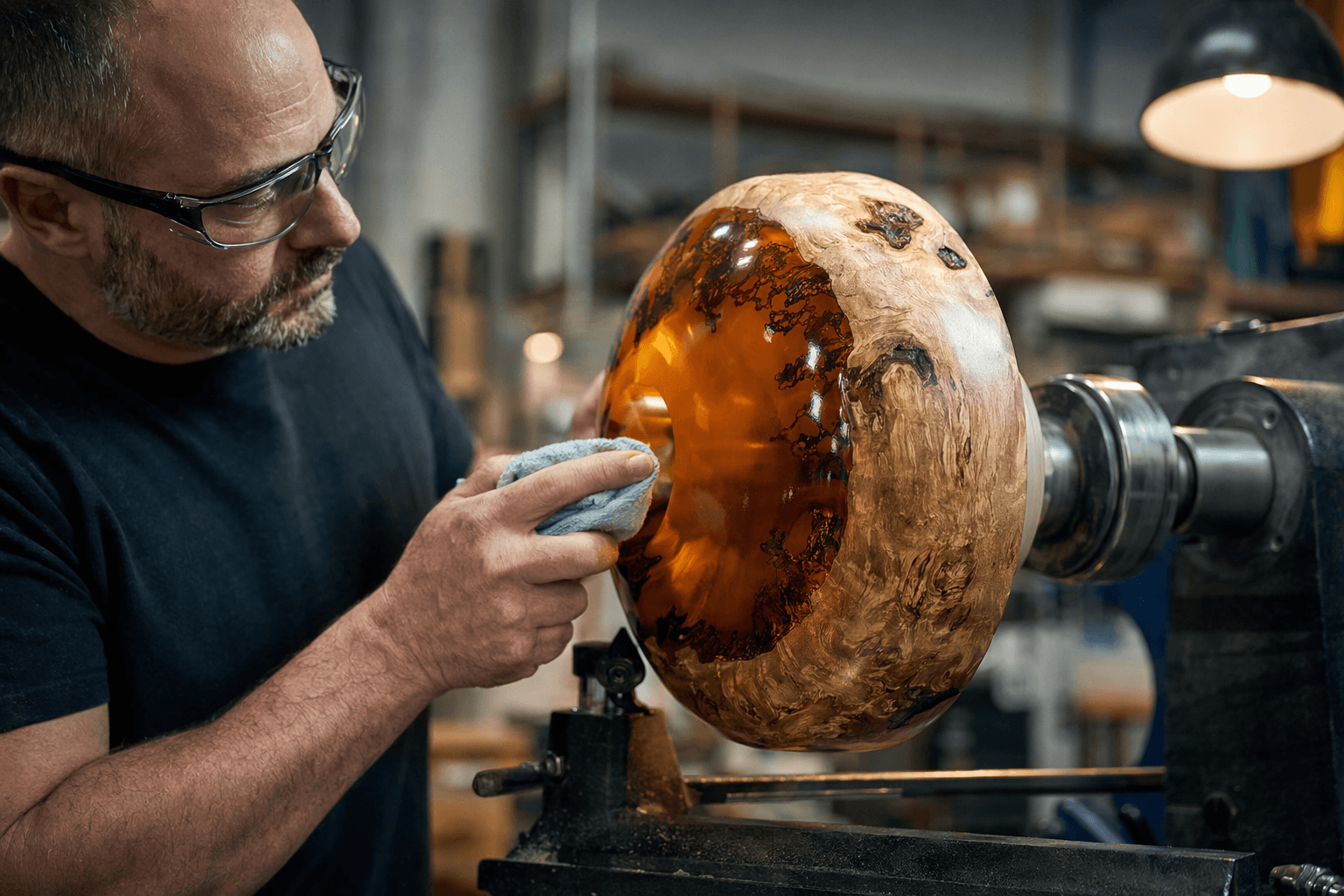
A compact applewood-and-resin turn can do a lot with very little material. MSN’s recent video, “Woodturning something new,” shows a product turned from applewood and resin, then sealed under a clear coat of UV cured resin, and that combination is exactly why the piece reads so strongly on screen. The wood brings grain, warmth, and identity; the resin adds contrast, color, or a filled void that pushes the object toward decorative art rather than a purely functional blank.
That visual equation is the heart of the trend. Applewood gives you a recognizable natural voice, while resin lets you control what the eye hits first. Finish it with a glossy UV cured coat and the whole surface catches light in a way that makes even a small turning feel like a display object instead of a workshop offcut.
Why the applewood-and-resin pairing works
The appeal here is not complicated, but it is deliberate. Woodcraft describes resin-and-wood turning as a way to create “amazing art,” and that is the right framing for this kind of work. You are not just stabilizing a blank or patching a flaw. You are composing a contrast between organic figure and a synthetic field that can either echo the wood or deliberately interrupt it.
That is also why applewood is such a useful partner. It already carries its own character, so the resin does not have to do all the visual work. Even in a short video description, the material pairing suggests a piece meant to be looked at from a distance first and inspected closely later, which is exactly how a lot of modern decorative turning lands in home decor and gift markets.
The repeat appearance of this formula matters too. MSN previously ran “Woodturning - I’ve never made one of these before,” and it used the same applewood-and-resin combination with a clear coat of UV cured resin. That tells you this is not a one-off novelty. It is a repeatable style language, one that can be adapted without needing a giant blank or a specialized lathe setup.
What makes or breaks the result
The finish can hide a lot, but it will not rescue a weak blank. With resin-and-wood turning, the prep stage is where the piece starts deciding whether it will look crisp or messy. Alumilite’s turning guidance points to a basic but important truth: resin work is typically done from a fully cured resin blank, using sharp carbide or high-speed steel tools before sanding and polishing bring out the gloss.
That means the most important decisions happen before the final shine. If the resin is not fully cured, the turning experience changes fast, and the surface quality can suffer. If the tools are not sharp, the cut will not stay clean at the seam where applewood meets resin, which is the exact place the eye will check first.
A few practical checkpoints matter more than anything else:

- Keep the blank fully cured before you go anywhere near the lathe.
- Expect the transition between wood and resin to reveal every tool mark.
- Use sharp carbide or high-speed steel cutters so the surface stays controlled.
- Sand and polish with patience, because the final gloss is doing real visual work.
- Treat the UV cured topcoat as a design choice, not just a protective layer.
The UV cured resin finish is especially interesting because it suggests speed and control. For a hobby turner, that matters. A clear coat that cures under UV gives you a hard, transparent surface without waiting through a long conventional cure, and that can make the whole project feel more approachable when you want to move from blank to finished object in a single session or over a weekend.
A realistic weekend project, or a disguised advanced build?
The honest answer is both, depending on scale. A small applewood-and-resin piece is realistic as a weekend project if the blank is already prepared and the goal is a compact decorative object. MSN’s descriptions point to that kind of manageable format: not a giant statement bowl, but a concise example of the mixed-media direction modern turning has taken.
The advanced part is not the lathe time alone. It is the control required to make the material junction look intentional. Resin seams can expose mistakes immediately, and the final clear coat makes every surface decision visible. If you are new to this territory, the project is friendly in concept but strict in execution, which is a classic woodturning trap. It looks simple because the finished object is compact, but the prep and refinement can be unforgiving.
That is where the broader context from Woodcraft and Alumilite helps. Woodcraft points to years of experimentation behind resin-and-wood work, which is a reminder that the polished Instagram-ready look sits on top of a lot of iteration. Alumilite’s emphasis on curing, cutting, sanding, and polishing shows the same thing from the shop side: the technique is established, but the finish quality still depends on disciplined handling at each stage.
What this style tells you about where decorative turning is headed
Applewood-and-resin pieces sit comfortably at the intersection of craft and design. They are still made at the lathe, with all the tactile decision-making that implies, but they are also built to photograph well, sell well, and read quickly in short-form video. That makes them a neat summary of where a lot of contemporary turning lives now: rooted in traditional tooling, but shaped for display shelves, gift tables, and the kind of fast visual appeal that keeps mixed-media work moving.
The reason this specific combination keeps resurfacing is simple. It gives you a way to turn a familiar material into something that feels current without abandoning the fundamentals of the craft. Applewood supplies the warmth. Resin supplies the contrast. UV cured resin supplies the gloss. Put those three together with clean prep and sharp tooling, and you get a piece that feels modern without losing the hand-made backbone that makes woodturning worth watching in the first place.
This article was produced by Prism’s automated news system from verified source data, official records, and press releases, then run through automated quality and moderation checks before publishing. The system is built and supervised by the people who set the standards it runs under. Read our full AI policy.
Did this article answer your question?