Andy Phillip turns wenge and zebrano offcuts into striking hollow form
Andy Phillip’s wenge-and-zebrano hollow form turns offcuts into a lesson in contrast, proportion, and restraint. The species pairing and hollow-form choices still pack enough punch to be worth studying.

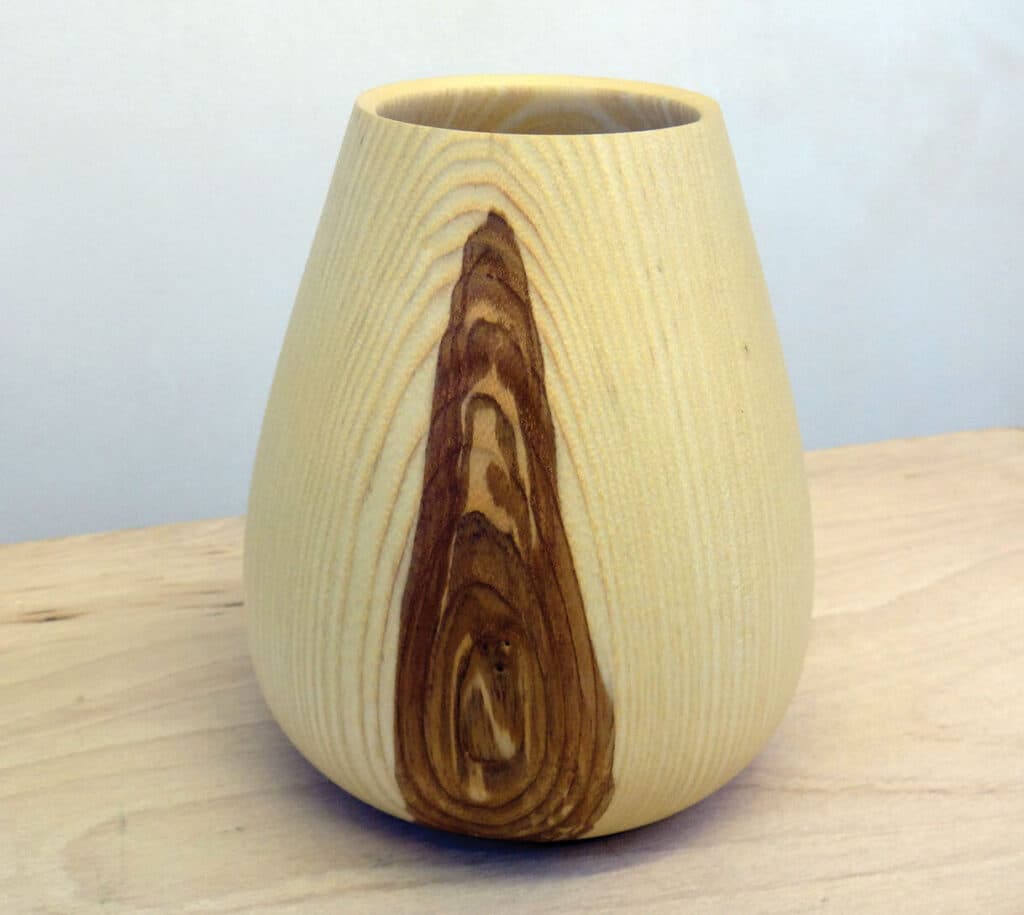
Andy Phillip turns leftover stock into the kind of hollow form that does not look like leftover stock at all. That is the trick worth paying attention to here: two humble species, wenge and zebrano, become a piece that reads like a gallery object the moment it leaves the lathe. Phillip has built a reputation on that exact move, taking small blocks and offcuts and turning them into something that feels deliberate, polished, and worth keeping on display.
The reason this piece still lands is simple. Wenge brings the dark, almost severe body of the form, while zebrano adds striping and movement that keeps the surface from going flat. That contrast is not decoration tacked on at the end, it is the design language of the blank itself. Once the wood is chosen that well, the turning does not have to shout; the form can stay clean and let the material carry the first impression.
Why the species pairing matters
A hollow form lives or dies on balance. The outside profile has to look resolved, the opening has to feel right, and the wall thickness has to support the illusion that the vessel is lighter than it really is. Phillip’s wenge-and-zebrano build adds another layer to that problem: the maker is no longer just shaping a vessel, but deciding how a two-species blank will land once the curves are finished and the hollowing is done.
That is what makes this project more than a pretty object. The stripes in zebrano give the eye something to follow, while the dense darkness of wenge gives the silhouette weight. If you are used to thinking about hollow forms as pure shape exercises, this is the reminder that the blank can be doing half the design work before the first cut is made.
- Let the wood do part of the talking. In a piece like this, the species contrast is not background detail, it is the headline.
- Plan the finished read of the blank, not just the blank itself. Once the vessel is hollowed, the orientation of the grain and color matters as much as the outer curve.
- Keep the form disciplined. Strong material pairing does not excuse a weak profile.
A signature build that still pulls people in
The earlier version of the project, which shows Phillip making the blank from offcuts before turning the hollow form vessel, has drawn about 7.2 million views. That number tells you something useful: this is not a niche exercise for the already converted, it is one of those builds that keeps getting rediscovered because the result is so immediate. A turner can study it as a design lesson, a material lesson, and a process lesson all at once.
Phillip’s channel description makes the connection clear. He says he mainly makes “interesting one off pieces” using different combinations of woods, and this hollow form fits that approach perfectly. It has the one-off energy collectors look for, but it also has enough clarity that another turner can borrow the idea without copying the object. That is the sweet spot: distinctive, but not gimmicky.
What intermediate turners can steal from the design
The most useful thing here is not the exact species list, it is the thinking behind the build. Phillip treats the blank as part of the final composition, which is exactly how you should approach a mixed-wood hollow form if you want it to look intentional rather than busy. The offcuts do not need to match in obvious ways; they need to create a conversation between dark and light, straight and striped, dense and lively.
That approach also explains why the project resonates so strongly in woodturning circles. Offcuts become a showpiece, and the maker proves that resourcefulness can look luxurious when the form is handled with discipline. The most interesting blank is not always the biggest one. It is the one with the right contrast and the right shape waiting inside it.
Phillip’s broader offcut habit is the real story
This is not a one-off experiment from a turner who stumbled into waste reduction by accident. Phillip keeps working the same territory across different forms. In a 2026 video, he made a segmented form from small offcuts that included purpleheart, wenge, walnut, spalted beech, black palm, oak, zebrano, iroko, kingwood and sycamore. That list alone says a lot about how he works: he is comfortable letting a piece become a meeting point for woods that would never naturally belong together.
His shop reinforces the same mindset. One segmented vase made from zebrano and wenge is listed at approximately 23 cm tall, with a 6.5 cm opening, a 15.5 cm widest diameter, and a 7.5 cm base diameter. Those dimensions matter because they show the scale at which this visual strategy works best: tall enough to read as a statement piece, controlled enough that the striping and dark timber stay elegant instead of loud.
The Ellsworth influence is worth noting
There is also a deeper lineage running through Phillip’s work. He has said that an off-centre zebrano insert in a wenge bowl was inspired by an early hollow form by David Ellsworth. That connection matters because Ellsworth’s name still carries weight in the modern hollow-form conversation. When Phillip borrows from that tradition, he is not repeating it mechanically; he is using it as a prompt for new material combinations and new visual tension.
That is why this wenge-and-zebrano piece deserves a second look now. It is not just a popular old project with a lot of views. It is a compact lesson in how to make offcuts feel intentional, how to let a species pairing shape the identity of a vessel, and how to keep a hollow form looking refined when the blank itself is doing so much of the work. Phillip’s best pieces do not disguise the leftover material. They turn it into the reason the form succeeds.
This article was produced by Prism’s automated news system from verified source data, official records, and press releases, then run through automated quality and moderation checks before publishing. The system is built and supervised by the people who set the standards it runs under. Read our full AI policy.
Did this article answer your question?