Maker Rescues Turning Project After Severe Split Threatens to Destroy It
A severe split opened mid-turn and nearly wrecked the project entirely; the maker's step-by-step recovery is a lesson every lathe operator needs.
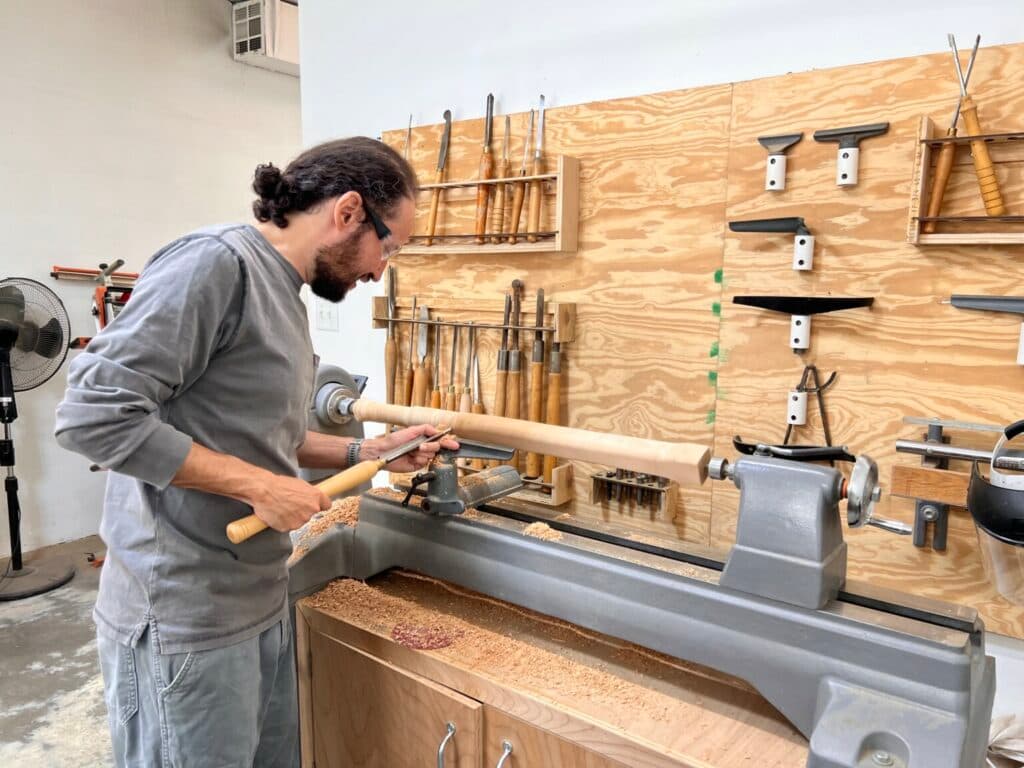
The split showed up exactly when it always does: partway through, once the blank had been committed. In a video posted April 8, a maker working a partially-turned blank watched a severe crack open during what appeared to be roughing or hollowing, threatening to propagate through the piece entirely and unbalance it on the lathe. The clip, described by its own framing as "a risky turn when a serious split threatens to ruin the piece before the final shape," documents in real time what the maker chose to do next.
The first move was the right one: stop the lathe. Not slow it down, not take one more pass to see how it develops. Stop it. With a split of this severity, any continued rotation risks the crack widening under centrifugal load until the blank either separates at the chuck or launches a section across the shop. Stopping the lathe and stepping back to assess the geometry of the crack, its direction relative to the grain, and how far it had already traveled into the wall gave the maker the information needed to decide whether the piece was salvageable at all.
It was. The mitigation sequence the video documents moves in a logical order: clamp where possible to hold the faces of the split together, work thin cyanoacrylate or resin into the fissure while the piece is stationary, and give the adhesive time to cure before remounting. The maker then added light reinforcement, in the form of sacrificial face attachments, to redistribute stress away from the compromised wall section. The single most consequential decision here was the choice not to immediately resume turning at the same speed and depth of cut that opened the crack in the first place. Dropping the lathe speed and taking lighter finishing passes gave the stabilized repair the best chance of holding through to completion.
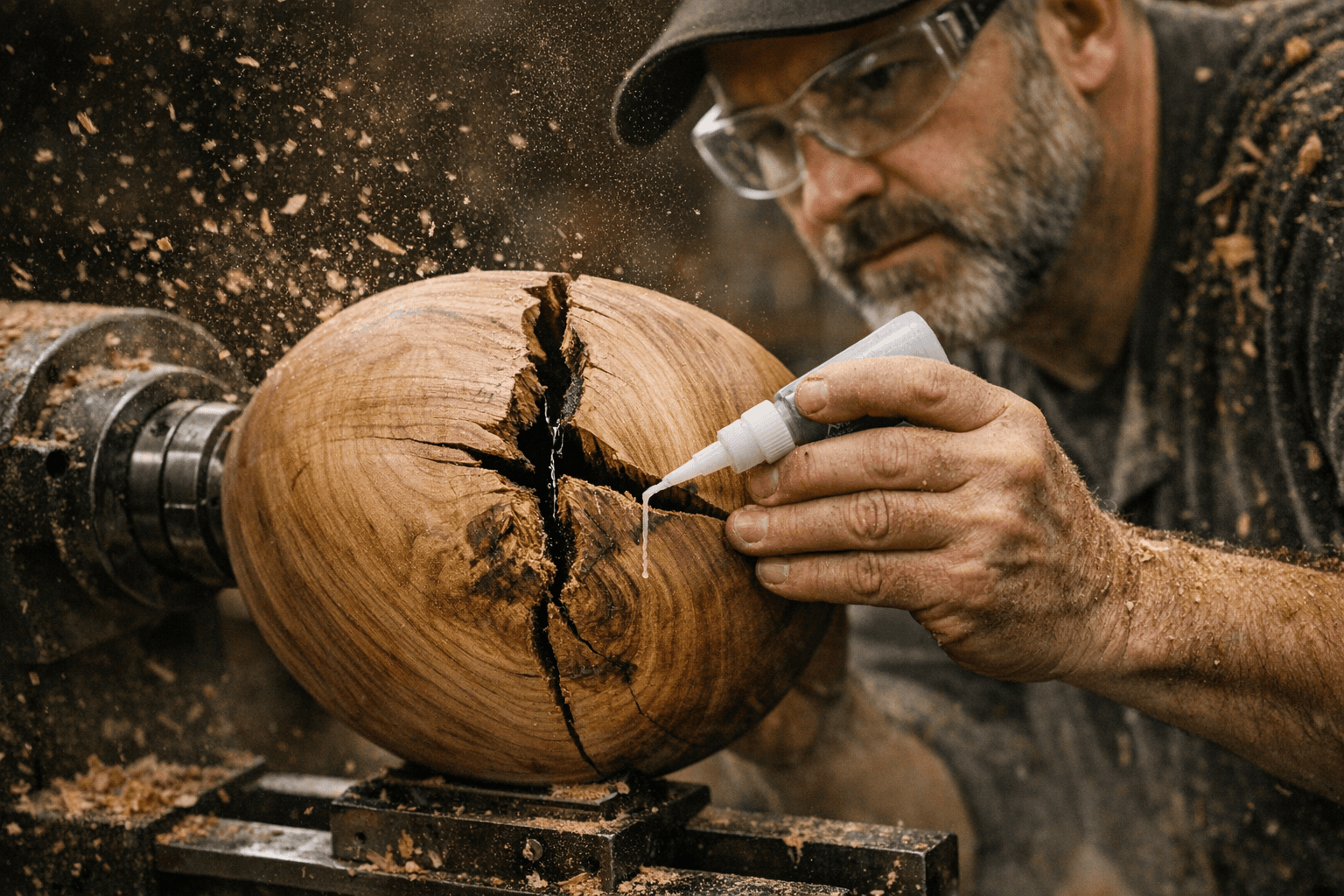
The root causes visible in this kind of failure almost always come down to a combination of factors: grain orientation that places tension directly across a wall, residual drying stress in a blank that wasn't fully seasoned, and a wall section that thinned unevenly and lost structural reserve before the maker realized it. Any one of these can be managed; all three arriving together during a single turning session is what turns a routine project into a near-disaster.
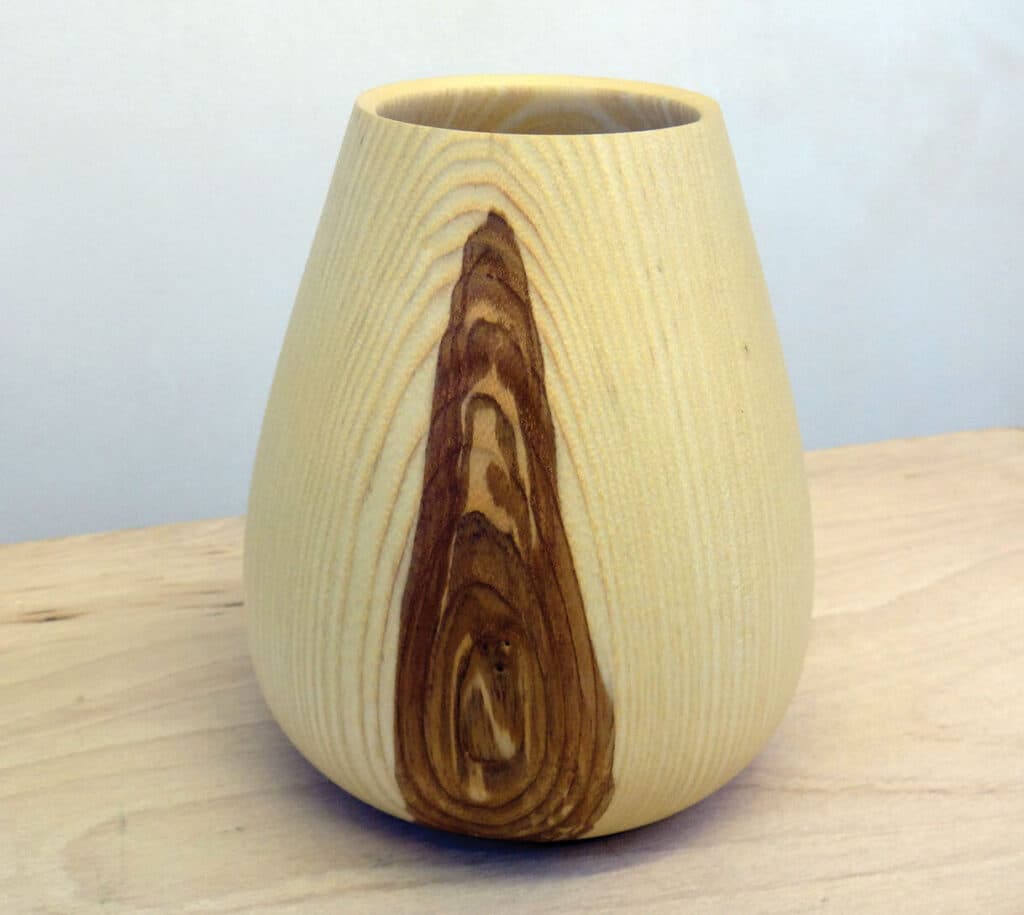
The finished piece made it. Careful sanding and finishing concealed the repaired seam well enough that the crack's path became a feature rather than a flaw. For turners who have abandoned a blank the moment it shows a check, this is the case study worth keeping. The difference between scrap and a finished bowl was one decision: stop, assess, and reach for the CA glue before reaching for the gouge.
This article was produced by Prism’s automated news system from verified source data, official records, and press releases, then run through automated quality and moderation checks before publishing. The system is built and supervised by the people who set the standards it runs under. Read our full AI policy.
Did this article answer your question?