Mid Minnesota woodturners offer beginner class, year-round mentoring pathway
Mid Minnesota's three-night intro class and $10 drop-in studio sessions give new turners a low-risk way to get from blank wood to real lathe time.
A short class built for first-timers
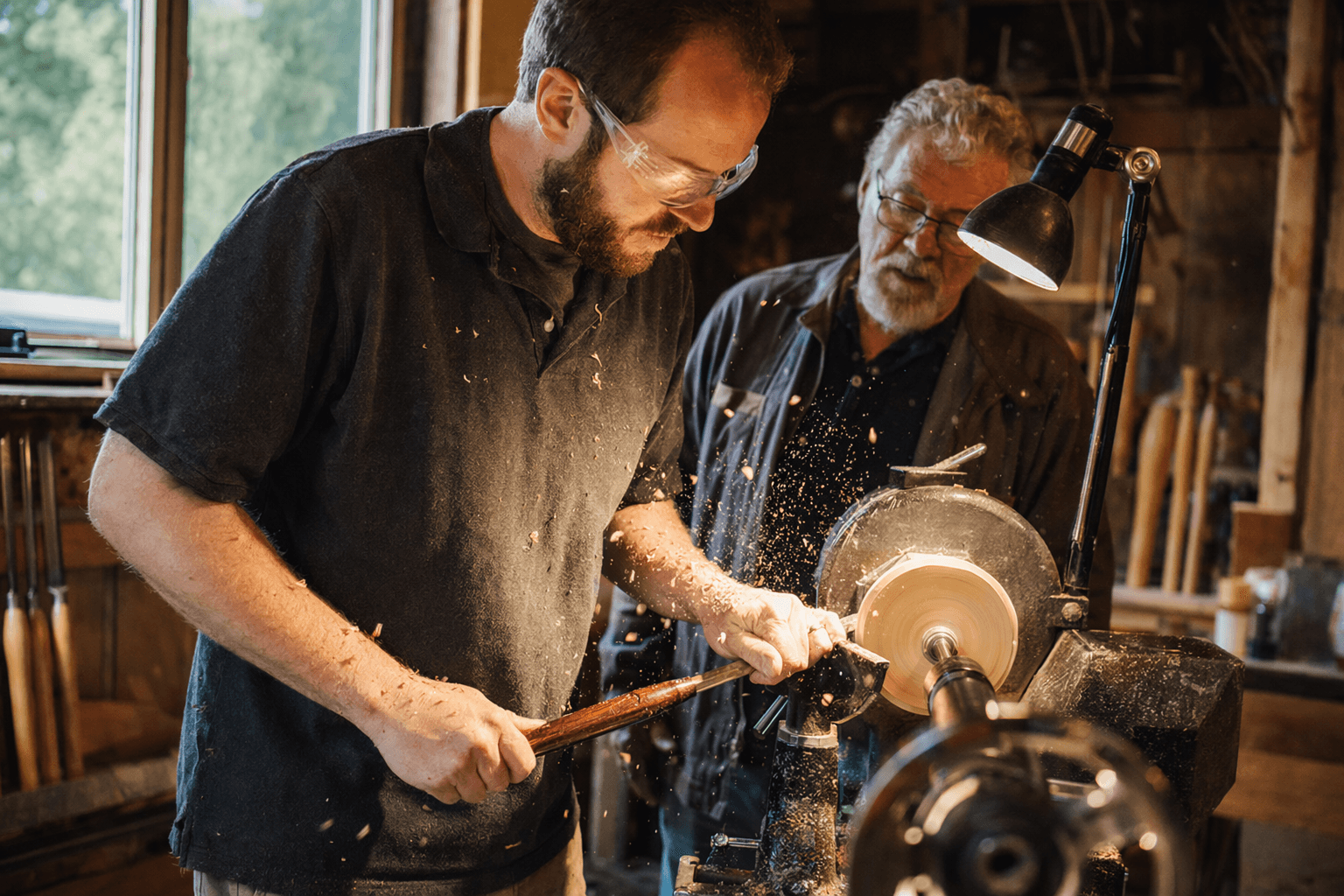
Mid Minnesota Association of Woodturners is making the first step into the craft feel much less intimidating. Its Intro to the Art of Woodturning course, taught by Tyler Smith, is set up as three evening sessions from 6 to 8 p.m., April 27 through April 29, 2026, and it is open to beginners with no prior experience required. That matters because woodturning is one of those hobbies that can look simple until you stand in front of a lathe for the first time. A short, three-session format gives you enough time to move past the nerves and actually start learning the cuts, the setup, and the feel of the toolrest without turning it into a semester-long commitment.
The age cutoff is 18 and up, which makes the class clearly adult-focused, but the structure is what really sells it as an on-ramp. Three nights is long enough to build confidence and short enough that you are not signing up for something vague and open-ended. For someone who has never touched a lathe, that is the sweet spot: enough repetition to remember what you did on night one, enough supervision to keep mistakes from becoming bad habits, and enough time to leave with a real sense that the machine is no longer a mystery.
Why this is a practical beginner path
The strongest argument for this class is not just that it exists, but that it sits inside a bigger learning ladder. The club also runs Arts Underground on Thursday evenings from January 8 through May 14, 2026, from 6 p.m. to 9 p.m., so there is a place to keep turning after the intro course ends. That is the difference between a one-off demo and a real hobby pathway. A beginner can take the class, then come back into a supervised shop environment and keep practicing while the fundamentals are still fresh.
That follow-through lowers the usual barriers that stop people from getting serious about turning. A lathe can look expensive, tools can look specialized, and the first few minutes can feel awkward if nobody is there to correct your stance or explain why the bowl gouge is behaving the way it is. Here, the club has built a setup that spreads the learning out over time instead of forcing everything into one session. You get the class, then you get a place to keep turning, and that is how confidence actually gets built in this craft.
Arts Underground is the bridge from class to practice
Arts Underground is the part of the story that turns a beginner class into a pathway. The Paramount Center for the Arts describes it as a drop-in program with studio mentors, first-come, first-served capacity, and woodturning available for ages 13 and up. MMAW’s open-studio page adds the practical details: the woodturning portion costs $10 for teens and $10 for adults, and the club has four lathes with an experienced mentor available.
That is a smart setup for new turners because it keeps the friction low. You do not need to build a full workshop before you start, and you do not need to arrive with any prior experience. You show up, you work under supervision, and you get access to actual lathe time instead of just watching somebody else turn a spindle or bowl. The fact that it is drop-in also helps, because woodturning skills improve with regular hands-on repetition, not just one polished class night.
The gear count matters too. Four lathes are enough to keep a small studio feeling active without becoming chaotic, and the presence of an experienced mentor means the space is designed for learning rather than just access. That is the kind of environment where a beginner can move from hesitant cuts to basic control, and then to something that resembles confidence.
What the club is, and why that matters
MMAW identifies itself as a not-for-profit, membership-based organization and a local chapter of the American Association of Woodturners. That puts the class in a larger educational network, not a standalone hobby meetup. The club also meets every second Saturday of the month at the Paramount Technical Site in Waite Park, Minnesota, which tells you this is not a one-time effort. It is a recurring structure with a regular calendar, a home base, and a community built around keeping people involved.
That affiliation is useful for beginners because it means the intro class is backed by a group that already lives and breathes the craft. The American Association of Woodturners says its more than 365 worldwide chapters are independent local groups that come together to learn the craft and enjoy fellowship with other turners. In plain terms, MMAW is part of a very large teaching network, and that usually translates into better access to shared knowledge, better habits, and more opportunities to keep learning after the first project is done.
The craft itself is older than the tools in most modern shops
Woodturning has a long runway behind it. The American Association of Woodturners describes it as an ancient craft used by many cultures worldwide, and notes that for many hundreds of years before the Industrial Revolution, the foot-powered lathe was the only woodworking machine in common use. It also defines woodturning simply, as using a wood lathe with hand-held tools to cut a shape symmetrical around an axis of rotation.
That history is part of the appeal. You are not learning a niche trick, you are stepping into one of the oldest machine-based woodworking traditions around. The modern club setup in Waite Park, Minnesota, with mentor support and small-group access, is just the latest version of a very old idea: someone with an edge tool, a spinning blank, and enough guidance to make the first cut safely.
Safety is not optional, especially at the start
The AAW’s safety guidance makes the case for supervised instruction as clearly as anything else. It says safe lathe use requires study and knowledge of procedures, and it recommends a full face shield whenever the lathe is turned on. That is exactly why a beginner class and mentor-led studio time are worth more than a stack of videos and a guess.
A new turner does not need bravado. You need repetition, correction, and a shop culture that treats safety as part of the craft rather than an afterthought. Between the three-session intro course, the drop-in Arts Underground sessions, and the mentor presence at the lathe, MMAW has built a route that removes the hardest barrier in woodturning: that first, uncertain hour in front of the machine.
For anyone looking for the simplest real on-ramp into woodturning, this is it, a short class, a supervised studio, and a club structure that keeps the door open after the first piece is finished.
This article was produced by Prism’s automated news system from verified source data, official records, and press releases, then run through automated quality and moderation checks before publishing. The system is built and supervised by the people who set the standards it runs under. Read our full AI policy.
Did this article answer your question?