Woodturners weigh non-round handles, ergonomics, and maker support issues
Thompson handle stock is drying up, and turners are moving to modular non-round grips that solve roll-off, balance, and support headaches.
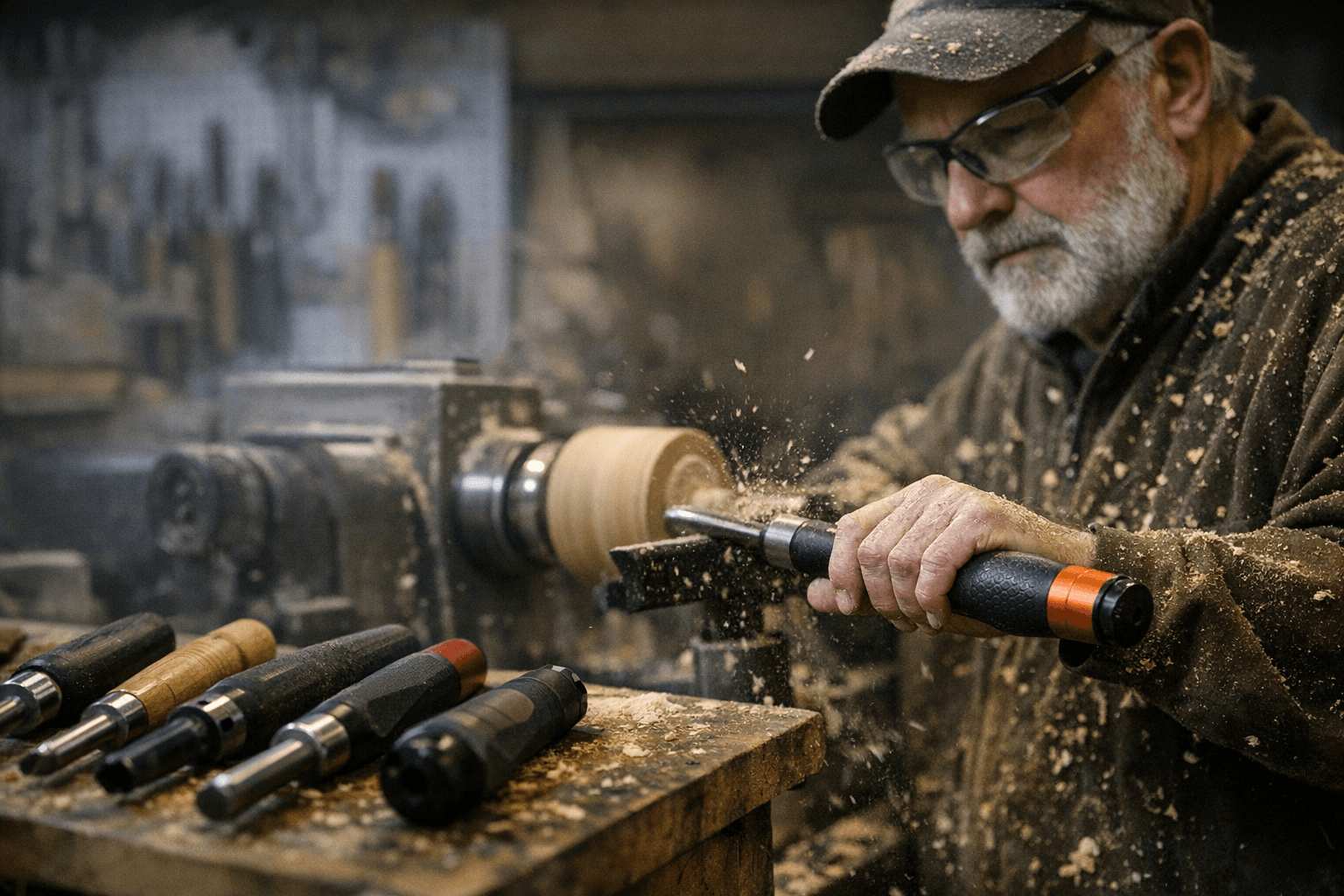
Thompson handle stock is running out, and that has turners rethinking what they want from a handle before they place the next order. In the American Association of Woodturners forum, Sam Fleisher says he likes Thompson handles because they do not roll when set down, which is a real shop advantage when tools are constantly being picked up, rotated, and parked on the bench.
Why the handle shape matters at the lathe
Fleisher’s post is not just a complaint about supply. He says he has placed what he expects will be his last order because he has grown frustrated by the difficulty of contacting Doug Thompson for questions and special requests. That turns a simple buy-or-replace decision into a bigger question: if you rely on specialty tooling, how much does direct maker support matter when you are deciding where your money goes?
The answer, in this thread, is a lot. Fleisher also recalls having seen a triangular handle before but cannot remember who made it, which tells you how memorable non-round shapes can be when they solve a real problem. A round handle can skate across the bench; a flat-sided or triangular one stays put, and that is the kind of small convenience you appreciate after a long session at the lathe.
The live alternative turners are pointing to
The first practical replacement named in the discussion is Stuart Batty’s connectable handle system. Wyatt Holm points to Batty’s 4-handle set with one connector, which is marketed as offering nine distinct length options. That is the sort of modularity turners keep asking for because it lets one handle cover detail work and bowl work without forcing you into a single fixed length.
Batty’s connector page goes further. A four-handle, two-connector setup gives 12 distinct length options, and each combined handle and connector adds about 0.9 pounds compared with an equivalent single-length handle. That weight figure matters more than it sounds like it would on a product page. Extra length is useful, but extra hardware changes the feel in hand, and that is exactly where handle systems either earn their keep or become shop clutter.
For a buyer, the Batty setup is interesting because it is not pretending to be a simple round stick with a ferrule. It is a real system, built around configurable lengths and a defined weight penalty. If you want a ready-made answer and do not want to turn your own handle, that kind of packaged flexibility is the opposite of gimmickry.
What to judge before you buy another handle
This is where the buying decision gets practical. The shape is only the starting point. Ergonomics decide whether the handle disappears in use or reminds you it is there every minute. The Thompson appeal, as Fleisher describes it, is the no-roll geometry. The Batty appeal is the ability to pick the length that fits the cut instead of living with one compromise setup.

Weight comes next. Batty’s published 0.9-pound increase per combined handle and connector gives you a number you can actually think about instead of vague marketing language. If you work detail cuts and want quick hand changes, that added mass may be welcome. If you spend more time on long, controlled bowl work, it may feel like a feature rather than a penalty. Either way, it is the sort of figure that belongs in the buying conversation.
Then there is the business end of the handle, the ferrule and connector hardware. A non-round handle only helps if the assembled tool still feels solid and predictable under load. The connector is the part that has to make the modular system behave like one piece, so that interface deserves the same skepticism you would give any other shop hardware. If the fit feels loose, the clever geometry stops mattering.
Price is the last piece, but not the least important one. The forum discussion makes clear that people are willing to pay for specialty geometry only when it comes with something extra: a handle that will not roll away, a system that offers nine or 12 usable lengths, or a maker you can actually reach. A cheaper handle that leaves you chasing answers later is not a bargain.
Maker support is part of the purchase
Fleisher’s frustration with contact is the part of this story that makes the most sense to anyone who has bought niche tooling. He is not accusing Thompson of making a bad handle. He is saying that support and access now sit beside design as part of the value equation. In a small market like woodturning, that matters as much as the wood or the steel.
That is why Doug Thompson’s name keeps coming up in the broader AAW conversation. Members discuss Thompson, D-Way, and Lyle Jamieson gouges as standard comparisons, which tells you the community is already used to weighing makers against one another on performance, feel, and service. Another forum post says Thompson is still active in the tool business and symposium circuit, but communications can get sidelined when he travels. For a buyer, that is not a footnote. It is a warning that even a respected maker can become hard to pin down when you need a special answer fast.
Why Batty stays in the conversation
Stuart Batty’s name keeps surfacing because the brand has been visible in the places turners pay attention to. A forum post notes that Batty tools had a booth in Louisville and that the website would be active again before the end of the month, which is exactly the kind of signal turners look for when a supplier disappears and everyone starts asking what to buy next.
That visibility matters because it tells you the choice is not between waiting on one maker and improvising in your own shop. Ready-made, non-round, modular handles are out there now, and the market is answering the exact complaint Fleisher raised. If you want a handle that stays put, a setup that covers different working lengths, and a maker you can reach without chasing him across the symposium circuit, the current alternatives are already lining up. In a small tool category, that is the real story: the handle is no longer just where you grip the gouge, it is where ergonomics, weight, hardware quality, and maker support all meet.
This article was produced by Prism’s automated news system from verified source data, official records, and press releases, then run through automated quality and moderation checks before publishing. The system is built and supervised by the people who set the standards it runs under. Read our full AI policy.
Did this article answer your question?