10-minute yoga routines help busy mothers build a sustainable practice
Ten minutes is not a compromise here. For overloaded mothers, a short yoga habit can be the difference between a practice that sticks and one that never starts.

A realistic yoga check for mothers
The best thing about a 10-minute yoga routine is also the least glamorous: it can actually happen. India TV News framed its Mother’s Day special around that hard truth, using Himalayan Siddhaa Akshar’s advice to make yoga feel workable for mothers who are already carrying caregiving, work, and household labor on the same day.
That is a useful reset for a wellness space that often sells transformation through long classes, retreat weekends, and beautiful uninterrupted mornings. This story is about the opposite. It treats yoga as something you can do before school runs, between tasks, or during a rare quiet minute at night, and it argues that consistency matters more than duration.
Why ten minutes is enough to start
The real strength of a short routine is that it lowers the barrier to entry. A mother who cannot protect a full hour is not failing at yoga, she is living in a schedule that has no spare edges. A 10-minute sequence built around breathing, gentle stretching, and mindfulness gives her a way to practice without pretending life has suddenly become spacious.
That matters because the goal is not to mimic a studio class at home. It is to create a repeatable habit that can survive fatigue, interruptions, and uneven time. In practical terms, that means the routine needs to be simple enough to begin on a crowded morning and flexible enough to repeat on a better day.
What the routine should actually include
Himalayan Siddhaa Akshar’s approach, as presented in the Mother’s Day piece, centers on three things: breathing exercises, gentle stretching, and mindfulness. That combination is important because it keeps the practice grounded in what yoga actually does best. It is not only about postures. It is also about the breath, attention, and the nervous-system reset that comes from slowing down on purpose.
For mothers, that stripped-down structure is smarter than an ambitious sequence that demands perfect conditions. A few minutes of deep breathing can take the edge off a frantic transition. Gentle stretching can help with stiffness from carrying children, sitting at a desk, or sleeping badly. Mindfulness gives the whole thing a purpose beyond movement: it turns the routine into a pause rather than another task to complete.
Why the science backs the short-form approach
The broader public-health guidance lines up neatly with this idea. The World Health Organization says yoga is linked with stress reduction, anxiety relief through deep breathing and mindfulness, and improvements in flexibility, strength, balance, and quality of life. It also highlighted yoga in 2024 through the 10th International Day of Yoga, under the theme “Yoga for Self and Society,” which underlines how yoga is being presented as part of everyday well-being, not just as a niche studio practice.
The Centers for Disease Control and Prevention adds another practical point: adults need at least 150 minutes of moderate-intensity physical activity each week and 2 days of muscle-strengthening activity, but physical activity can be accumulated in smaller chunks, and some physical activity is better than none. The CDC’s moving-guidance materials are blunt about the reality most people live in. Five minutes here, a short bout there, and a staircase climb can all count.
That idea matters because it removes the false all-or-nothing frame that stops many people from starting. If your day breaks into fragments, your exercise can too.
Postpartum bodies need flexibility, not perfection
The American College of Obstetricians and Gynecologists makes the short-bout logic even more relevant for mothers. It says physical activity during pregnancy and postpartum is beneficial for most women and may help prevent postpartum depressive disorders. It also notes that postpartum exercise can be divided into smaller 10-minute workouts throughout the day.
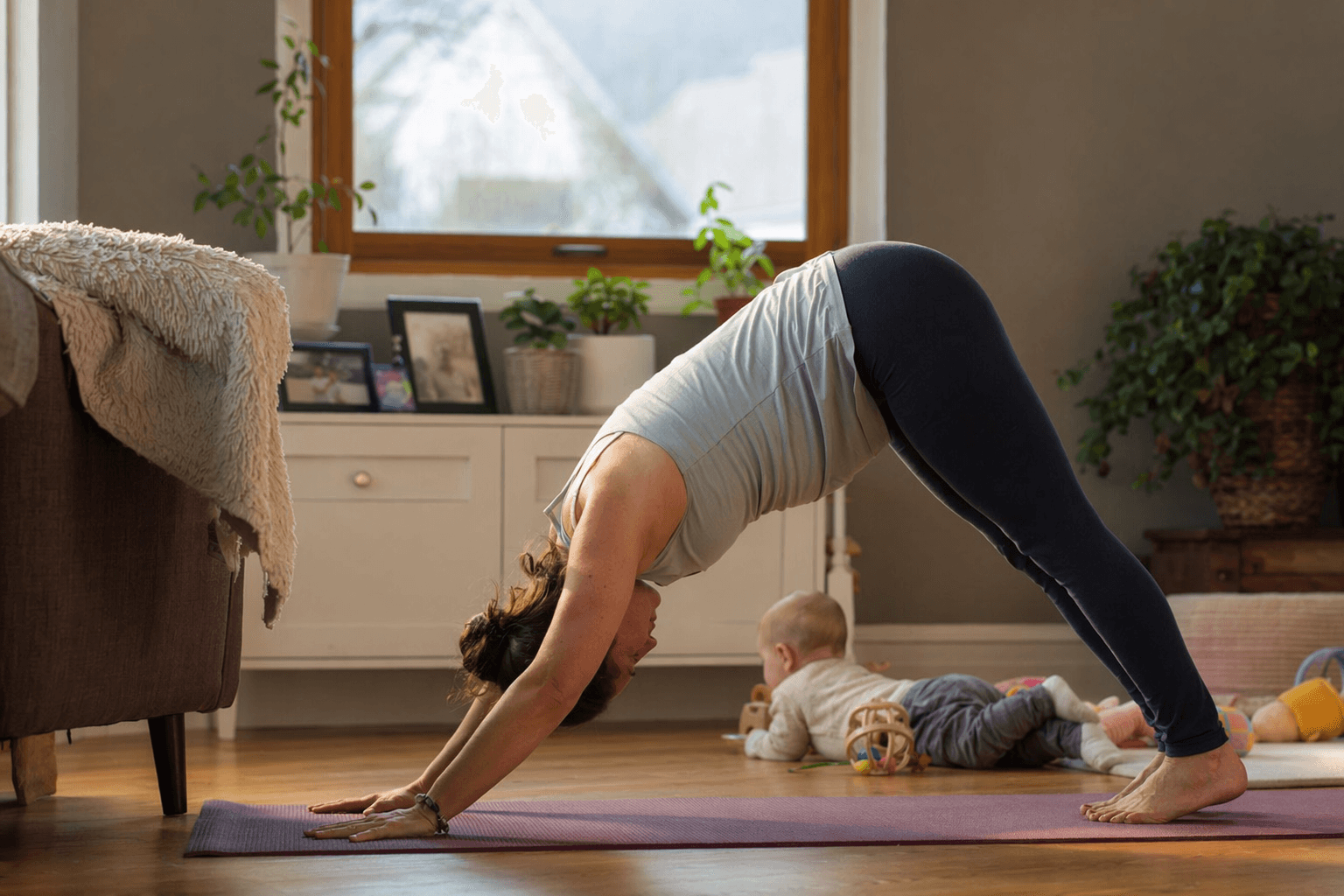
That is the key realism check. A mother recovering from pregnancy or managing the postpartum period does not always need a longer plan. She often needs a plan that survives broken sleep, feeding schedules, appointments, and the kind of unpredictable fatigue that turns even a good intention into a logistical puzzle. Ten-minute yoga is appealing because it respects those limits instead of pretending they are temporary inconveniences.
It also leaves room for medical caution. ACOG advises women to consult a physician or clinician before starting or changing an exercise program, especially if they have specific health conditions. That guidance matters in pregnancy and postpartum, where the body’s needs are not generic and a one-size-fits-all routine can be the wrong answer.
The evidence says smaller doses can be more sustainable
There is also a useful nuance in the research on maternal mental health. A systematic review found that postnatal yoga is associated with decreased depressive symptoms and improved psychological well-being and quality of life. That does not turn yoga into a cure-all, but it does support the idea that yoga can be more than a stretch break for mothers navigating emotional load.
Another trial, this one in women after stillbirth, adds a sharper lesson about dose. A home-based online yoga intervention found that 60 minutes per week was satisfactory for many participants, while 150 prescribed minutes per week was too much for the moderate-dose group. That is exactly the kind of finding that should shape how we talk about busy-mother wellness: the most effective routine is not always the most impressive one. Sometimes it is the one people can realistically keep doing.
How to make a 10-minute practice stick
A short yoga routine works best when it is designed around the life it has to fit into, not an idealized version of one. The practical move is to pick a consistent trigger, then keep the sequence small enough that you can repeat it even when the day goes sideways.
- Pair the practice with an existing moment, such as after waking, after school drop-off, or before bed.
- Keep the sequence fixed for a while. Repeating the same breathing, stretches, and mindfulness work makes it easier to start.
- Treat interruptions as part of the routine, not proof that the routine failed.
- Use the 10 minutes as a reset, not a performance test.
That approach is what makes the India TV News framing feel so grounded. It is not asking mothers to invent a new life around yoga. It is asking them to insert yoga into the life they already have.
The point of this whole conversation is not that 10 minutes replaces a full class, a stronger fitness plan, or professional care where it is needed. It is that a small, repeatable yoga habit can be a legitimate entry point for mothers who are tired, busy, and more realistic than the wellness industry usually gives them credit for. If the opening problem is that there is never enough time, the answer is not a grander promise. It is a routine short enough to fit the day you actually live.
This article was produced by Prism’s automated news system from verified source data, official records, and press releases, then run through automated quality and moderation checks before publishing. The system is built and supervised by the people who set the standards it runs under. Read our full AI policy.
Did this article answer your question?