Amy Charles rebuilds Urban Yoga as a welcoming Phoenix home base
Amy Charles is turning Urban Yoga into more than a studio, with Spanish-language classes and a non-heated, community-first model that fills a real gap in Phoenix.
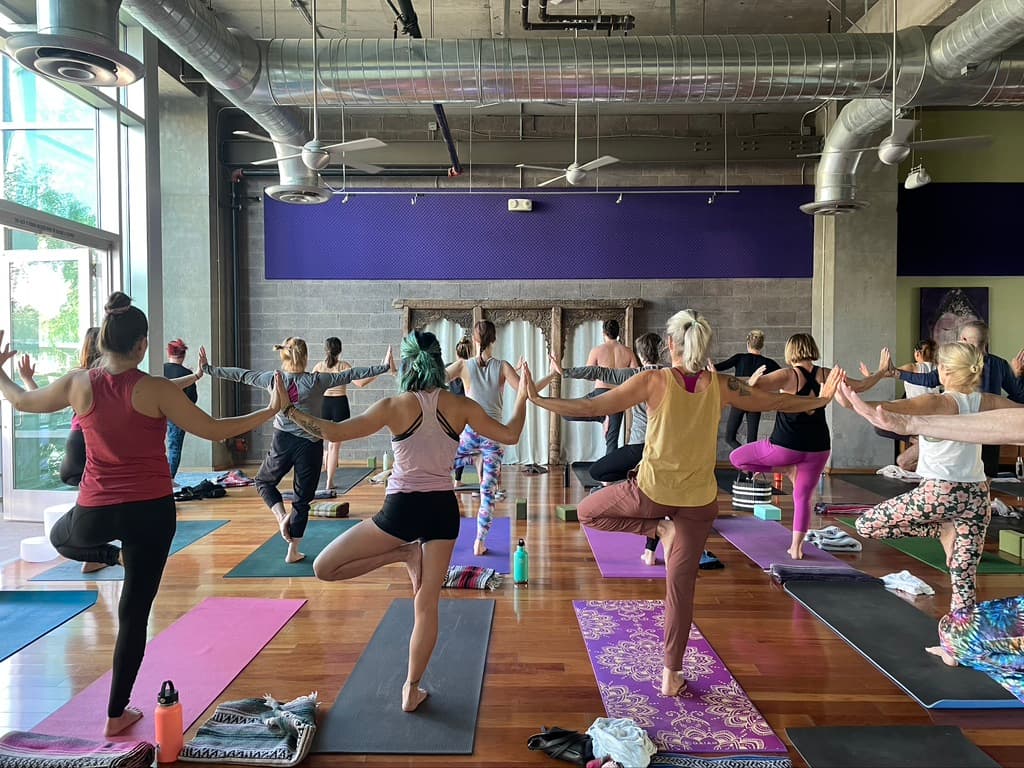
The strongest thing Urban Yoga has going for it is not a pose sequence or a trendy format. It is the way Amy Charles and her co-owners are rebuilding the studio in midtown Phoenix as a place that feels like it belongs to more people, especially Spanish-speaking students who have not always found themselves reflected in local yoga spaces. At 3800 N Central Ave, Suite C-100, in the City Square and Clarendon area, Urban Yoga is leaning into breath, meditation, restorative work, and a slower kind of practice that stands apart from Phoenix’s hotter, harder boutique-fitness scene.
A Phoenix studio that chose a different lane
Urban Yoga says it opened in October 2008, and the business is now in its newest chapter under three Arizona women, Amy Charles, Lucía Nevárez, and Rosie Fajardo, who took over in November 2024. That matters because the studio is not trying to be another glossy room full of sweat-forward classes and performance cues. It presents itself as Phoenix’s original home for authentic, non-heated yoga, with daily yoga, meditation, and breathwork in a brand-new space that includes multiple practice rooms, dedicated wellness areas, and free parking.
That physical setup tells you a lot about the studio’s priorities. This is a place built for people who want to stay longer than one class, move at different intensities, and use yoga as part of a broader routine rather than a one-off workout. The non-heated format is also part of the point: a May 2025 profile on the studio noted that Phoenix’s yoga market is still dominated by heated, fitness-oriented spaces, which makes a calm, traditional studio model feel unusually specific instead of generic.
Why the Spanish-language programming changes the room
Charles’s bigger project is not just keeping the doors open. It is making the studio feel useful to Hispanic communities in a city where Spanish-language yoga remains comparatively rare. Urban Yoga already offers classes and events in Spanish, and those offerings are not symbolic add-ons tucked into the margins of the calendar. The studio lists Spanish classes on Monday at 6:30 p.m. and Saturday at 3 p.m., plus a Spanish-language Open House on the last Saturday of each month.
There is also Spanish-language teacher training coming soon, which signals that the studio is thinking beyond attendance and into leadership. That is the real accessibility move here: not just inviting people into the room, but helping create teachers, organizers, and regulars who can sustain the room in their own language. Lourdes Silva, a longtime instructor who has been part of Urban Yoga since 2016, has been instrumental in developing that programming, and her role gives the Spanish-language effort a rooted, practiced feel rather than a marketing gloss.
What the class mix says about who Urban Yoga wants to serve
The menu at Urban Yoga is broad enough to meet different kinds of students without flattening the studio’s identity. Its class offerings include Vinyasa, restorative, yin, Ashtanga, Kundalini, Trauma Release, and sessions that combine yoga with breathwork and meditation. That mix suggests the studio is not chasing one demographic or one fitness style. It is trying to hold space for beginners looking for structure, experienced practitioners who want a deeper practice, and students who need a gentler entry point.
That breadth also fits Charles’s own framing of yoga as more than exercise. Her path back to yoga came through healing and a return to the practice as something stabilizing, which gives the studio’s public mission a personal core. In a city where yoga can sometimes read as either aggressively athletic or purely aesthetic, Urban Yoga’s mix of restorative and more physically demanding classes creates room for different bodies and different reasons for showing up.
The studio details that make it practical
Urban Yoga’s appeal is not only philosophical. It also works as a usable neighborhood base, and the details matter.
- Midtown Phoenix location at 3800 N Central Ave, Suite C-100
- Brand-new studio with multiple practice rooms
- Dedicated wellness spaces
- Free parking
- Daily yoga, meditation, and breathwork
- Non-heated classes
Those are the kinds of practical pieces that make a studio easy to return to. The location puts it close to Central Avenue and the Clarendon area, which gives it a central, accessible feel for people coming from different parts of the city. The free parking is the sort of thing that sounds small until you are trying to build a habit around a place you actually want to visit three times a week.
Amy Charles and the leadership behind the reset
Charles brings more than enthusiasm to the ownership shift. Yoga Alliance lists her as a Registered Yoga Teacher, which helps establish the professional grounding behind the studio’s new direction. That matters in a market full of polished wellness branding, because the credibility here comes from experience as much as from vision.
The ownership change in November 2024 also gave Urban Yoga a chance to keep what already worked while widening the frame. The earlier profile of the studio after the handoff described the new owners as preserving the longstanding emphasis on non-heated, spiritual, restorative yoga while expanding offerings for Spanish speakers and for more athletic students. That balance is exactly what makes the studio interesting now: it is not choosing between accessibility and depth, or between community and discipline. It is trying to hold both.
Who feels invited now
The clearest measure of Urban Yoga’s rebuild is the kind of person who can walk in and feel the space was made with them in mind. Spanish-speaking students do not have to treat their language as an exception here. Regular restorative students do not have to leave Phoenix’s hotter studio culture behind to find calm. Practitioners who want Ashtanga or Kundalini still have somewhere to go, but so do people who want Trauma Release, breathwork, or a softer return to movement.
That is why this story reaches beyond one owner and one studio logo. Urban Yoga is showing how a neighborhood yoga space can become a real home base when it pays attention to language, class design, and the quiet details of access. In a city where many studios ask students to adapt to the room, Charles and her team are building a room that finally seems willing to adapt back.
This article was produced by Prism’s automated news system from verified source data, official records, and press releases, then run through automated quality and moderation checks before publishing. The system is built and supervised by the people who set the standards it runs under. Read our full AI policy.
Did this article answer your question?