B.K.S. Iyengar’s Light on Yoga still shapes modern practice
Light on Yoga turned asana into a shared visual language, and the long-hold, prop-friendly studio class still traces back to its pages.
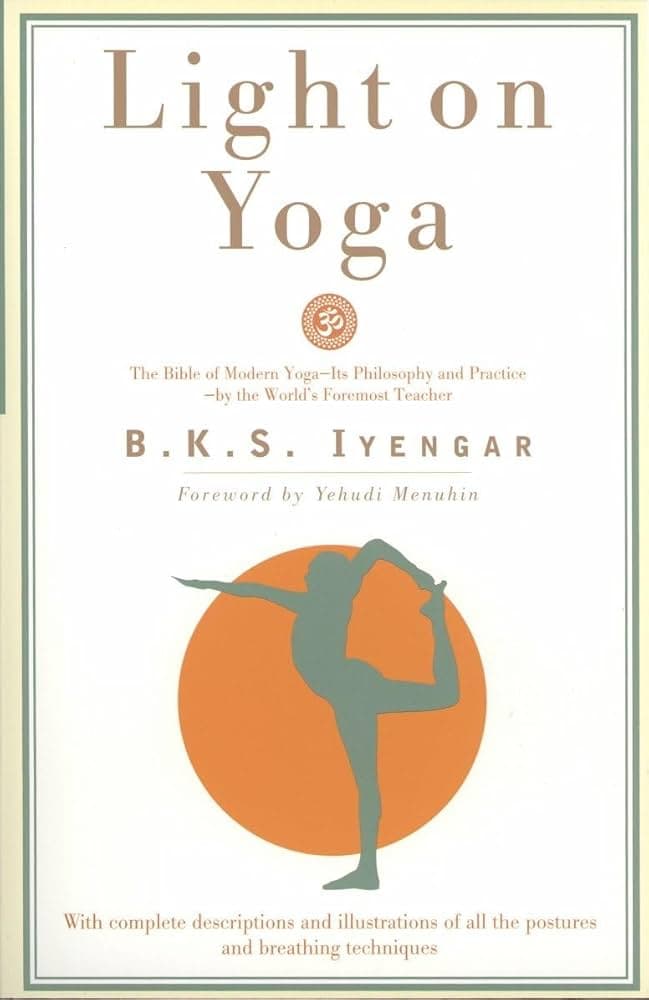
B.K.S. Iyengar’s Light on Yoga gave students a repeatable visual grammar for asana, with precise alignment cues and a system that still shows up in teacher trainings, home practice, and the way classes are sequenced.
The book that made yoga look teachable
Britannica dates Light on Yoga to 1965 and calls it a great success. First-edition listings tie the book to Allen & Unwin, while Iyengar Yoga London places the UK and international publication date in 1966 and says the contract with B.K.S. Iyengar was signed in 1964. Goodreads lists the book as first published January 1, 1966, with Yehudi Menuhin as foreword author.
It arrived as yoga was becoming global, especially outside India, and it gave students a way to study a practice that had often been learned orally and person-to-person. The result was a treatise that looked and functioned like a manual, with hundreds of photographs of Iyengar demonstrating the asanas so readers could compare, repeat, and refine what they were doing.
What Light on Yoga standardized
The book covers more than 200 yoga postures and is illustrated with 600 monochrome photographs of Iyengar demonstrating them. It also includes 14 breathing practices, which helps explain why it became a reference point rather than a simple pose book.
The material was organized in a way that helped make pose names feel settled, alignment language more consistent, and the path from one posture to the next more deliberate. Instead of handing down a few favorite shapes, the book offered a system for naming postures, cueing alignment, and moving from one posture to the next.
The habits in modern classes that trace back to the book
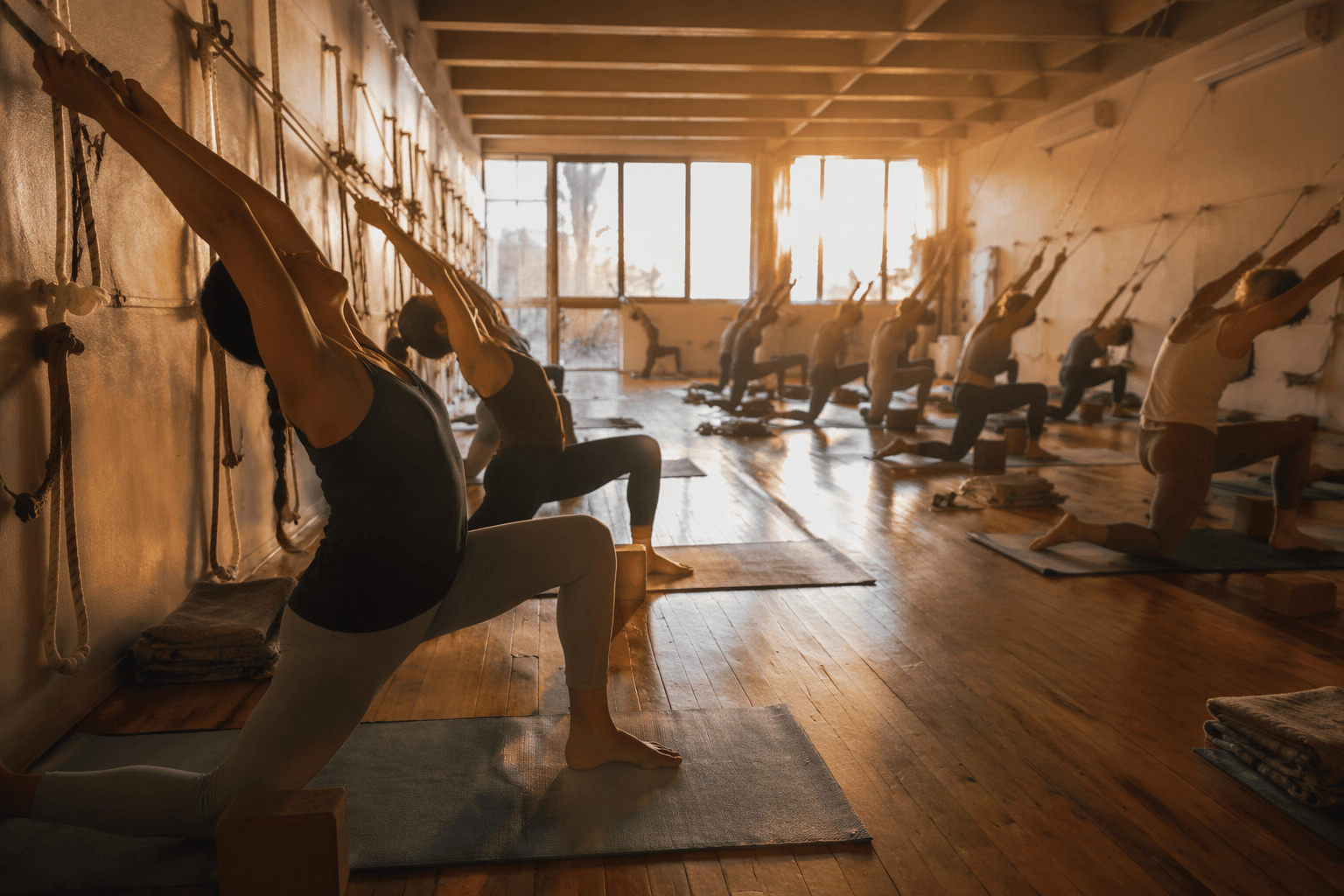
A lot of what reads as “normal” studio yoga still carries Iyengar’s fingerprints. Anatomical detail, long holds, and props are now common enough that many students barely notice them.
- Precise alignment: the teacher’s obsession with where the feet point, how the pelvis stacks, or how the ribs settle in a pose is pure Iyengar DNA. The cue is not just “do the shape,” but “do it exactly enough to be intelligible.”
- Long holds: instead of rushing through a flow, Iyengar-style teaching often asks you to stay in the posture. That changes the work from performance to observation, which is why so many trainings still use sustained holds to study form.
- Props: today’s blocks, straps, blankets, and other supports are now part of the mainstream vocabulary of classes. In Iyengar-informed rooms, props are not a concession, they are how the pose becomes more exact.
- Sequencing: the book’s systematic structure helped normalize the idea that poses should be arranged with purpose, not just strung together. That is why many modern classes still build from foundation to peak posture rather than moving randomly.
- Breathing practice: the book includes 14 breathing practices alongside the asanas.
Why Iyengar’s method became the template
B.K.S. Iyengar, born in 1918 and died in 2014, became one of the most influential popularizers of yoga in the twentieth century. Light on Yoga sat at the center of that influence because it made a difficult practice portable. The combination of photographic demonstration, exact instruction, and broad coverage turned the book into a bridge between the old guru-led model and the modern classroom.
The book is still described as “the bible of yoga” and “the bible of modern yoga.” A posture could now be named, checked, corrected, and compared against a fixed model instead of being learned only from memory.
The canon is influential, and contested
Light on Yoga’s authority has not gone unchallenged. A few poses in the book have been criticized as resembling material from a nineteenth-century American publication on contortionist poses.
The book has stayed in circulation for decades, including later revised or illustrated editions and a HarperCollins India edition.
This article was produced by Prism’s automated news system from verified source data, official records, and press releases, then run through automated quality and moderation checks before publishing. The system is built and supervised by the people who set the standards it runs under. Read our full AI policy.
Did this article answer your question?