Digital Mindfulness Program Boosts Sleep Efficiency and Heart Rate Variability in Adults
A 10-day Oura app mindfulness program improved sleep efficiency and heart rate variability in 81 adults, with most gains holding at the 4-week follow-up.
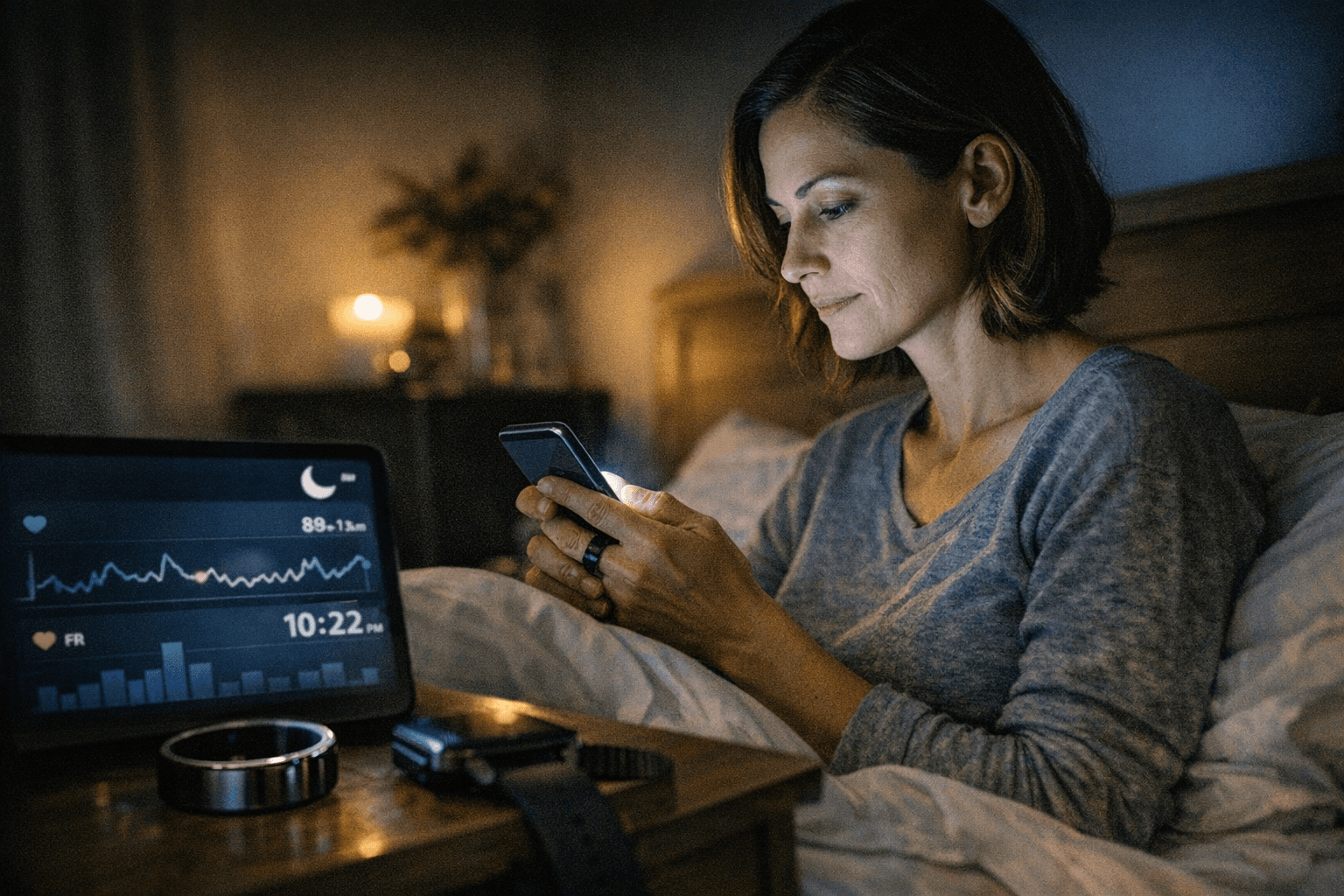
Eighty-one healthy adults were randomized to either a mindfulness program or a waitlist control group to test whether a 10-day program delivered through the Oura app could improve sleep and stress markers. The results, published March 21, 2026 in *Scientific Reports* by lead author Ulrich Kirk and colleagues at the University of Southern Denmark, make a compelling case for what most practitioners in mindfulness-adjacent communities already suspect: consistency, even in small doses, reshapes the nervous system.
Participants wore an Oura ring throughout the baseline period, the 10-day intervention or waitlist phase, and a four-week follow-up, with the device recording sleep efficiency, total sleep, deep and light sleep, and sleep-onset time. Questionnaires completed at each time point included the Pittsburgh Sleep Quality Index, the Perceived Stress Scale, the Copenhagen Burnout Inventory, and the Mindful Attention Awareness Scale.
Mixed-model ANOVAs revealed significant group-by-time interactions for sleep efficiency, total sleep, deep and light sleep, and sleep-onset time, with all p-values below 0.031. The mindfulness group improved across those measures after 10 days, with all p-values below 0.021, and gains persisted at the four-week follow-up except for deep sleep. Within sessions, the physiological shifts were immediate: a brief, app-based mindfulness program produced sustained improvements in sleep efficiency and enhanced HRV, demonstrating that digital mindfulness can favorably influence biobehavioral sleep-stress metrics. Heart rate fell during sessions (p = 0.011) and heart-rate variability rose (p = 0.029).
The psychological picture was more nuanced. The mindfulness group showed higher scores on the Mindful Attention Awareness Scale (p = 0.017), a measure of present-moment awareness that practitioners often treat as a proxy for how deeply a practice is taking hold. But the group also registered a transient increase in personal burnout immediately after the intervention (p = 0.021), an effect that returned toward baseline by follow-up. Kirk and co-authors Cirkeline Nellemann Hovgaard and Marino Theodor Larsen Persiani, who contributed equally to the work, have not yet offered a public explanation for the burnout spike, though it is consistent with early-phase mindfulness research in which heightened awareness temporarily surfaces latent stress before it resolves.
Recruitment ran from December 2023 to April 2024, and power analysis indicated that a sample of 81 participants would provide 80% power to detect significant between-within interaction effects. The study is registered on ClinicalTrials.gov and was conducted under ethics approval from the regional scientific committee for southern Denmark.
For the yoga and mindfulness community, the study's wearable-first design is particularly resonant. Using the Oura ring as both a passive observer and a behavioral prompt mirrors how many practitioners already track their recovery and readiness scores. The finding that HRV improvements showed up not just in nighttime sleep data but actively during sessions gives objective weight to what most experienced meditators report subjectively: the nervous system responds fast, and it responds measurably. The four-week follow-up provides rare longitudinal signal for a 10-day program, even if deep sleep proved the one benefit that didn't hold.
Know something we missed? Have a correction or additional information?
Submit a Tip