India Launches Yoga Protocols to Combat Lifestyle Diseases and NCDs
India's Ministry of Ayush launched 10 new yoga protocols targeting diabetes, hypertension and asthma, as chronic disease accounts for nearly two-thirds of deaths nationwide.
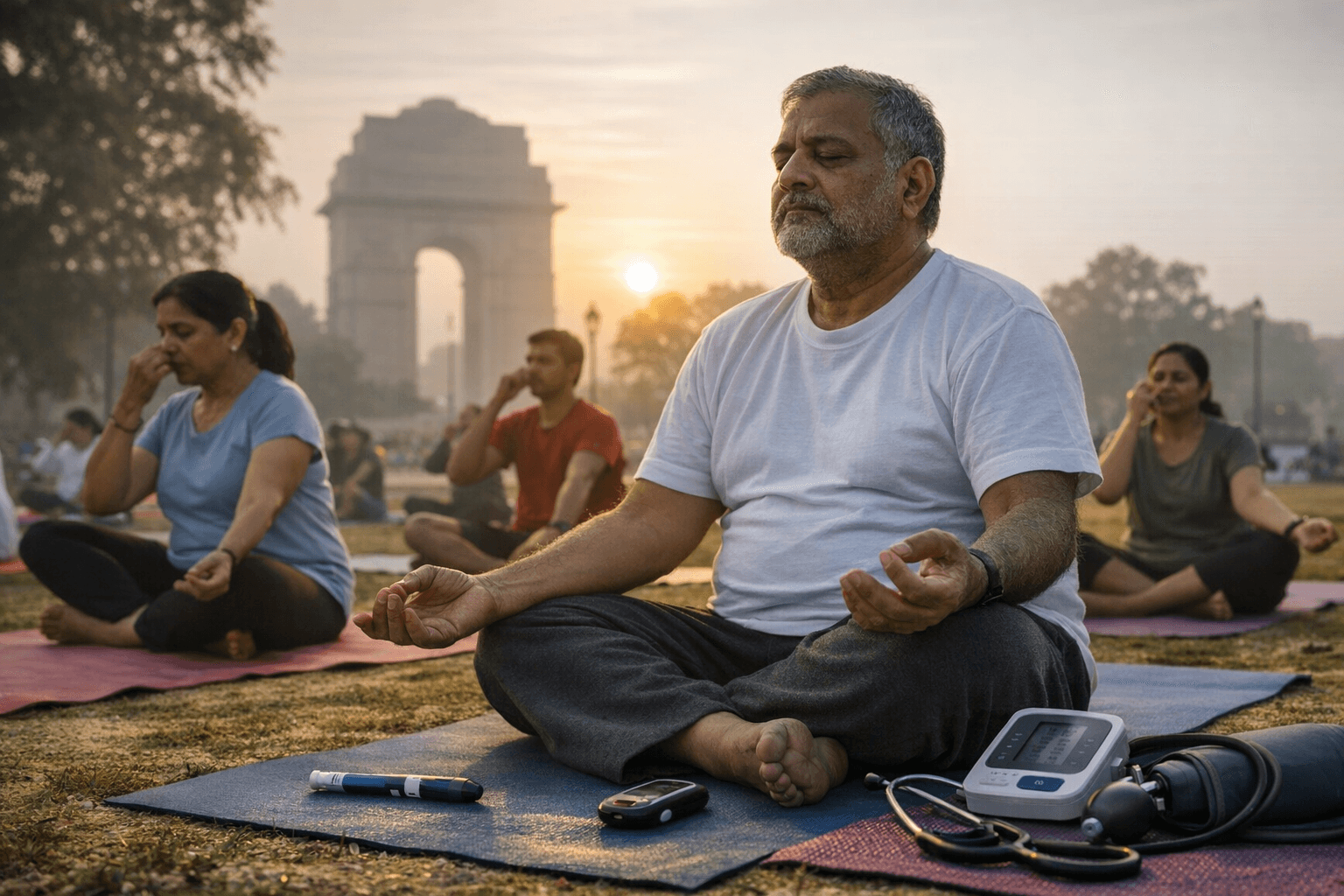
Union Ayush Minister Prataprao Jadhav unveiled 10 structured yoga protocols at Vigyan Bhawan in New Delhi this month, positioning the mat as a front-line tool against India's three most prevalent lifestyle diseases: diabetes, hypertension, and bronchial asthma. The formal rollout took place at Yoga Mahotsav 2026, the same event that launched a 100-day countdown to International Day of Yoga on June 21.
"Prevention is the future of healthcare, and yoga is India's answer to the rising burden of lifestyle diseases," Jadhav said at the launch.
The initiative, officially titled "Yoga Protocol for Non-Communicable Diseases (NCDs) and Target Groups," was developed by the WHO Collaborating Centre for Traditional Medicine (Yoga), designated WHOCCIND 118, operating out of the Morarji Desai National Institute of Yoga under the Ministry of Ayush. The protocols are structured, evidence-based modules built on scientific evidence and clinical insights, with daily sessions prescribed at 30 to 60 minutes. Each session combines asanas, pranayama, meditation, and relaxation techniques in a sequence designed to be gradual and adaptable across varying fitness levels and medical conditions.
The condition-specific targeting is where these protocols break from India's existing Common Yoga Protocol, which addresses general population wellness without clinical differentiation. The diabetes module zeroes in on metabolic balance and glycaemic control. The hypertension routine is calibrated to calm the nervous system and regulate blood pressure. For bronchial asthma, the practices are structured to strengthen respiratory capacity and lung function. Clinicians can recommend these modules to patients, and the design intentionally scales from the home to the clinic: the Ministry intends deployment across homes, schools, workplaces, and health centres.
The public health stakes are direct. Chronic conditions now account for nearly two-thirds of deaths in India, making preventive intervention at this scale an urgent priority, not an aspirational one. "Through these evidence-based protocols, we are empowering every citizen to take charge of their own health and well-being in a simple, accessible, and sustainable manner. By integrating yoga into daily life, we aim to shift the focus from illness to wellness, reducing long-term healthcare pressures," Jadhav said.
Alongside the NCD protocols, the Ministry launched Yoga 365, a nationwide umbrella campaign that consolidates existing programs rather than building new infrastructure. Y-Break, the short-session program designed for corporate employees, the Common Yoga Protocol for the general public, and the new therapeutic NCD modules all fold into Yoga 365 as one coordinated national strategy, with the explicit goal of extending yoga's reach well beyond its annual peak on June 21.
Awareness is not the gap the Ministry is trying to close. According to the National Sample Survey, 95 percent of rural Indians and 96 percent of urban Indians already recognize traditional systems like yoga. The challenge the protocols address is converting that awareness into structured, condition-specific daily practice, with a clear 30-to-60-minute framework that both practitioners and clinicians can use with confidence.
"This initiative reflects our commitment to building a healthier nation through holistic, preventive, and people-centric approaches rooted in India's rich traditional knowledge," Jadhav added. The 100-day window before IDY 2026 gives the Ministry a concrete runway to measure early adoption.
Know something we missed? Have a correction or additional information?
Submit a Tip