Moline yoga studio thrives with pay-what-you-can model and gift culture
Sarah Stevens turned pay-what-you-can yoga into a durable Moline business, topping 600 March visits and breaking even in four months.
Sarah Stevens turns access into a growth engine
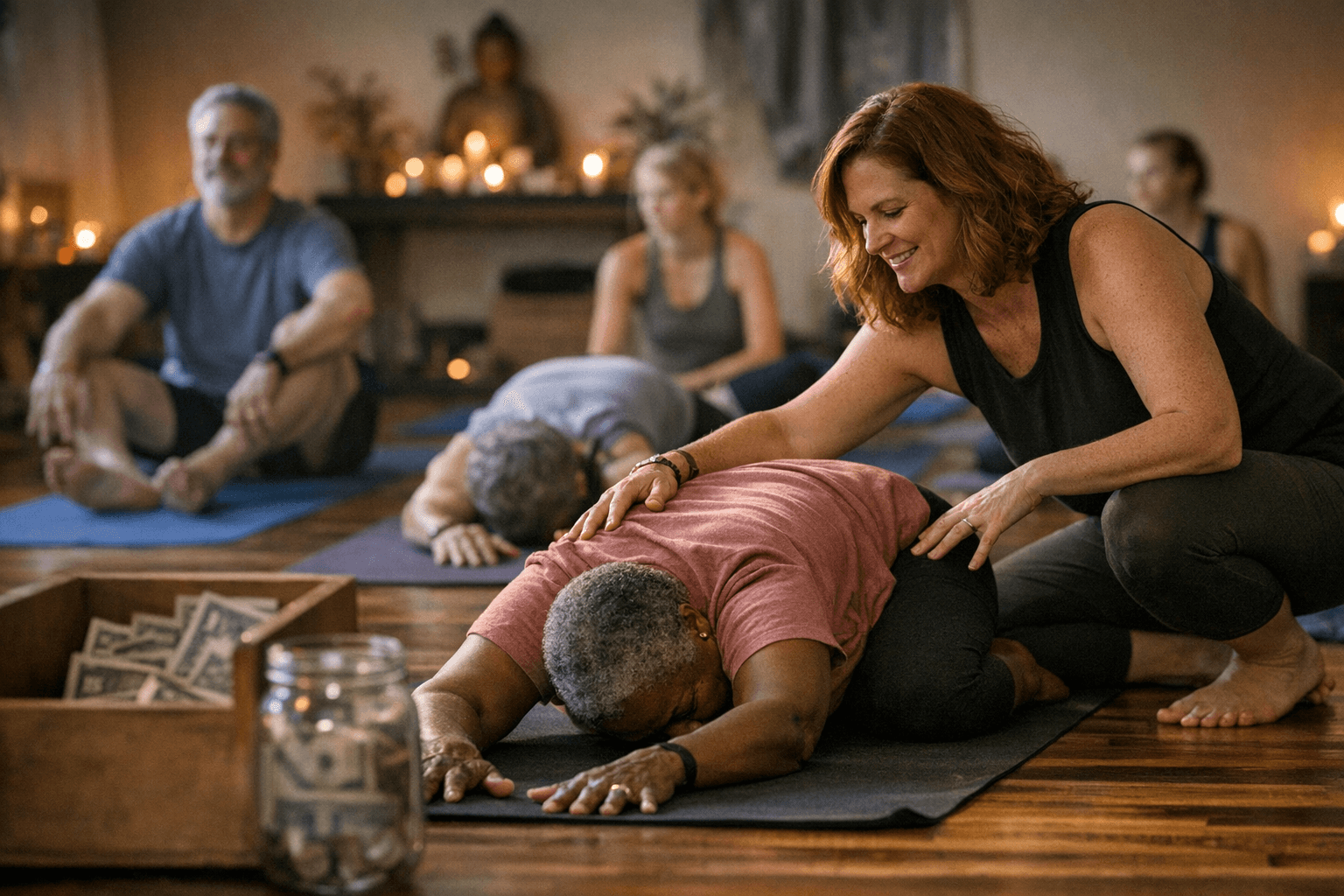
Sanctuary Studios has reached its second anniversary in Moline with something most yoga studios chase and few can prove: demand. Founder Sarah Stevens built the room around a simple idea, remove financial barriers and make space where everybody and every body belongs, and the numbers now suggest that idea is doing real business work.
The studio logged its strongest month yet in March, with more than 600 visits, and is now offering just under 80 classes a month. That level of activity matters because it shows the pay-what-you-can model has not capped growth. It has helped Sanctuary become a place people keep coming back to, not a one-off experiment in affordability.
A studio that started with access first
Sanctuary opened in mid-March 2024 on the second floor of the Spotlight Theatre Building at 1800 7th Ave. in downtown Moline. At launch, WQAD described it as the area’s only pay-what-you-can yoga space, which immediately set it apart in a market where most studios depend on fixed pricing and predictable drop-in revenue.
The first year gave the model its first proof point. By April 15, 2025, the studio had recorded 4,200 visits, doubled weekly class offerings from 10 to 20, and added several teachers. Stevens later said Sanctuary had surpassed 10,000 visits since March 2024, a scale jump that shows the studio is not just surviving on goodwill, but building an audience with staying power.
The business math behind the gift culture
What makes Sanctuary notable is not just that people can pay what they want. It is that Stevens says the studio broke even within its first four months while paying instructors above market rates and keeping the environment high quality. In a sector where fixed costs can crush margins, that is a meaningful signal that accessibility can coexist with sustainability.
Stevens describes the approach less as charity and more as community care, and that distinction shows up in how people behave inside the studio. Contributions do not stop at cash. Students also give gifts and other acts of generosity, creating what Stevens calls a gift culture, a social economy that helps reinforce the studio’s finances and its identity at the same time.
Sanctuary’s website reflects that structure with an Outer Circle membership option designed to support financial sustainability. For a pay-what-you-can studio, that kind of recurring support matters because it gives regular students a way to stabilize the business without turning access into a barrier.
More than yoga classes
The studio’s growth has also come from widening the offer beyond standard vinyasa schedules. Sanctuary lists movement, meditation, bodywork, Reiki and sound therapy among its services, which broadens the audience while keeping the same access-first ethos. That mix helps explain why the studio can fill a dense calendar without losing its identity as a place rooted in inclusion.
Education has become part of the model too. In early 2026, Sanctuary’s events page promoted a 200-hour yoga teacher training running from January to October 2026 on a pay-what-you-can basis, extending the studio’s philosophy from drop-in classes into professional training. That is a notable move in yoga business terms because teacher training usually sits among the highest-priced products in a studio’s lineup.
The roster around the studio has grown as well, with names such as Abigail Webster, Erica Franzen, Laura Vincent-Arnold and Lena Hann tied to the expanded teaching environment. More teachers, more formats and more ways to participate all point to the same pattern: the model is drawing enough volume to support deeper programming.
Why the Moline story travels beyond one studio
Stevens’ public work helps explain why Sanctuary feels larger than a pricing test. Her site says she has been on a mission since 2018 to change how people relate to their bodies, and she founded The Beautifull Project in 2016, a storytelling collective she says reached tens of thousands of women. Sanctuary reads like the latest expression of that longer arc, moving the same ideas about belonging from storytelling into a physical space.
The next phase already points outward. Sanctuary is expanding into destination retreats, with upcoming trips to Mexico and Colorado, which suggests the studio is pairing local loyalty with higher-touch experiences that can deepen community and diversify revenue. For the broader yoga world, that is the key takeaway from Moline: affordability does not have to be a side project or a charitable exception. When attendance climbs, classes fill, memberships help, and students give back in more than one way, access can function as a durable growth strategy.
This article was produced by Prism’s automated news system from verified source data, official records, and press releases, then run through automated quality and moderation checks before publishing. The system is built and supervised by the people who set the standards it runs under. Read our full AI policy.
Did this article answer your question?