Namita Thapar returns to yoga after 11 months of frozen shoulder pain
Namita Thapar said frozen shoulder sidelined her for 11 months, then sent her back to yoga with props and a medical yoga expert as she rebuilt movement.
Namita Thapar’s return to yoga came with a cautionary note that every shoulder-opening class should take seriously: frozen shoulder can shut down a practice long before it fully stops a body from moving. The Shark Tank India judge said she had been dealing with frozen shoulder pain for 11 months, and that the first seven months were so severe she gave up most physical activity before gradually working her way back through gym workouts, yoga and dance.
That timeline matters because frozen shoulder, also called adhesive capsulitis, is not a quick flare-up. It causes pain and stiffness in the shoulder joint, usually unfolds in painful freezing, frozen and thawing stages, and often improves only over the span of one to three years. Medical references also note that it is more common in middle-aged adults and women, with prolonged immobilization, diabetes and thyroid disorders all raising risk. In Thapar’s case, the problem also intersected with perimenopause, a phase she linked to staying active while recovering.
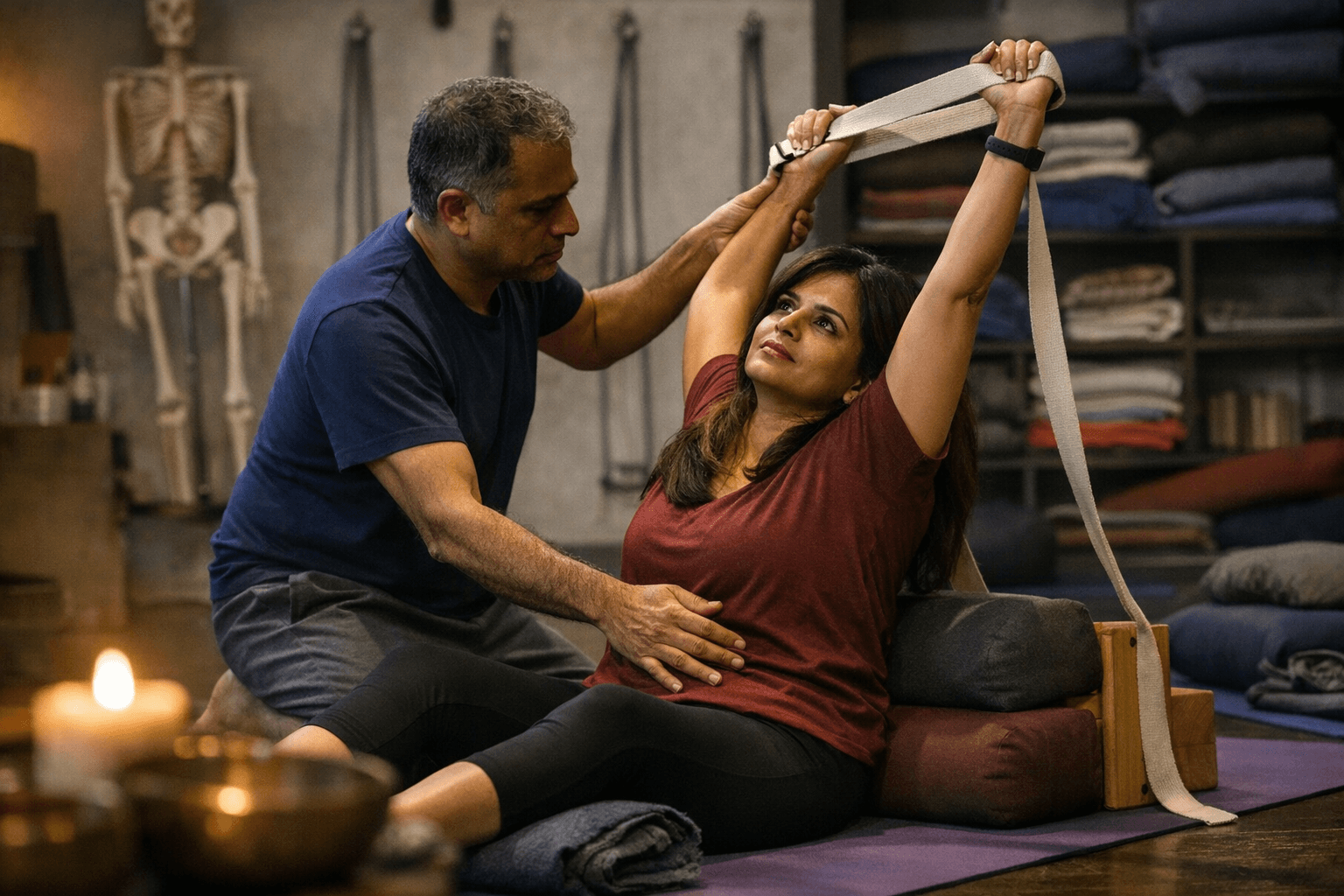
What makes her comeback useful for everyday yoga practitioners is how carefully she approached it. Thapar said her last headstand was in July 2025, a detail that shows how far frozen shoulder can reach into an advanced practice. When she returned to yoga, she did not treat it like a test of grit. She worked with Supriya, a medical yoga expert from the Iyengar Institute, and used props and support to keep the practice safe while her shoulder recovered.
That is the right lesson to draw from her story. Frozen shoulder is not a condition to muscle through with a stronger vinyasa, a deeper bind or a longer inversion hold. It is a staged shoulder injury that changes what a body can tolerate on any given day, and it often needs a mix of movement, strength work, patience and expert modification rather than a return to full expression all at once. Thapar’s gradual path back to the gym, dance and yoga fits that reality.

Her experience also lands in the middle of a bigger medical conversation. A UCSF trial launched in 2026 is studying hormone replacement therapy as an adjunct treatment for frozen shoulder in peri- and postmenopausal women, and the study description says adhesive capsulitis affects up to 5% of the population. A 2023 analysis of 1,952 menopausal women found adhesive capsulitis in 4.0% of women receiving HRT and 7.7% of those not receiving HRT, though the difference was not statistically significant. For yoga practitioners, Thapar’s recovery is a reminder that shoulder pain is not just a mobility issue. It can be a long medical detour that demands real modification, not denial.
This article was produced by Prism’s automated news system from verified source data, official records, and press releases, then run through automated quality and moderation checks before publishing. The system is built and supervised by the people who set the standards it runs under. Read our full AI policy.
Did this article answer your question?