Yoga and Strength Training Together Support Better Aging, Experts Say
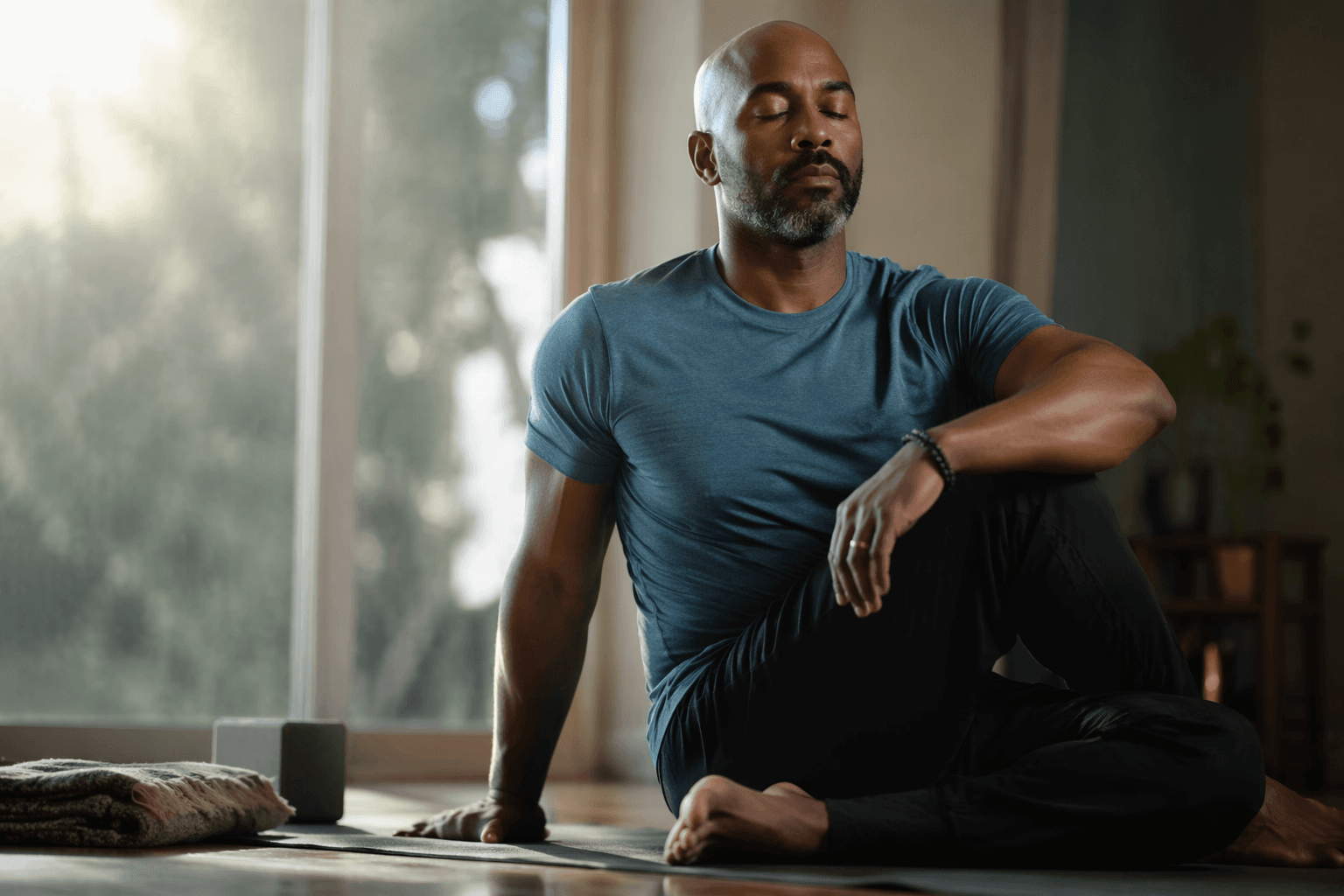
Yoga is getting framed as the missing partner to strength training: the work that keeps mobility, balance and posture intact while you build real longevity.
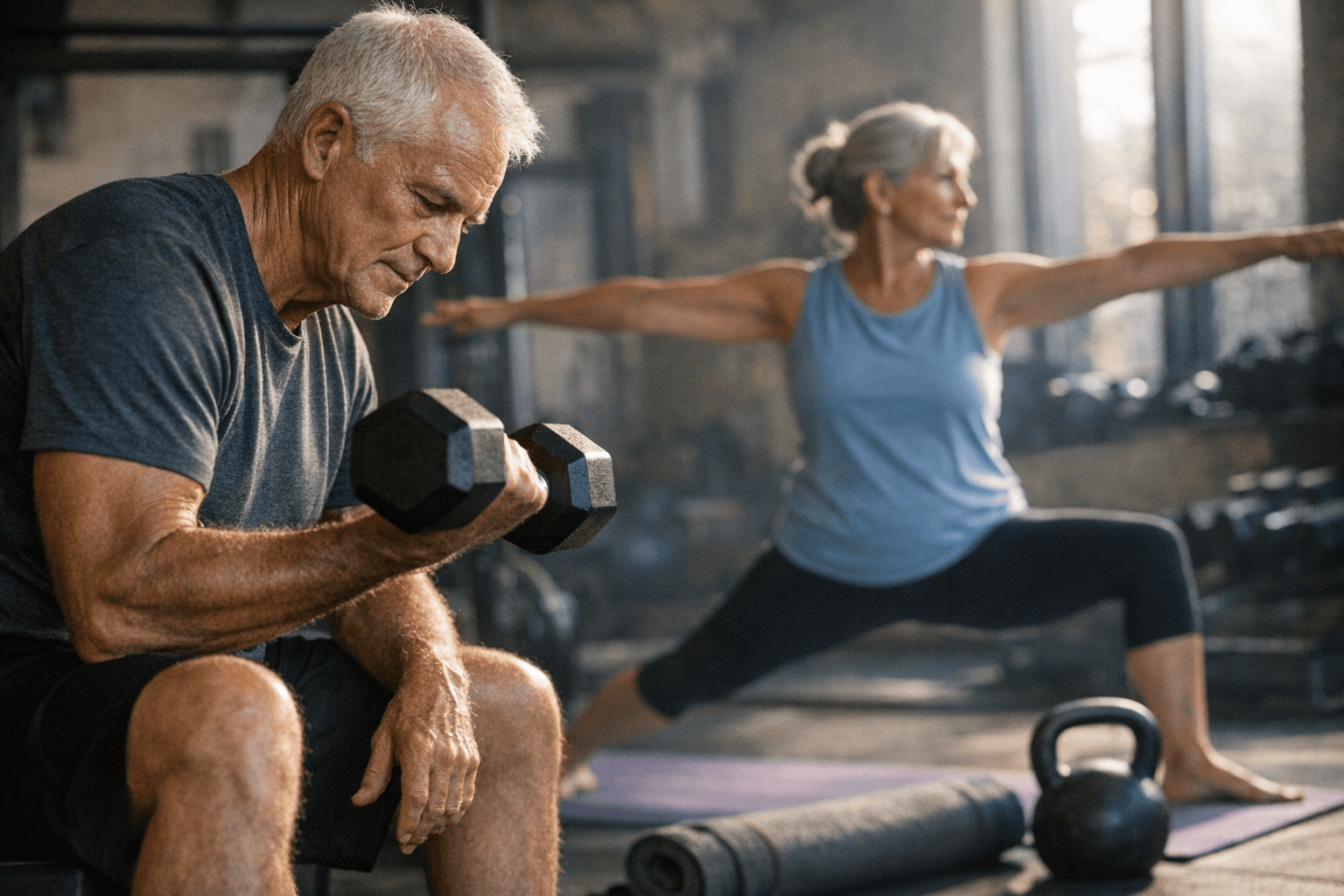
Yoga is no longer being treated as a soft add-on to serious fitness
The clearest shift in longevity talk is this: yoga and other stretching-based classes are being placed right alongside weights, not beneath them. A longevity-focused piece in Vogue India, tied to Dr. Gil Blander’s thinking on living longer and better, reflects how mainstream wellness has moved toward a more balanced model, one that treats mobility, posture and recovery as part of the aging equation, not optional extras.
That matters because the modern fitness conversation often gets stuck in a false choice. Strength training is essential, but it does not cover everything aging asks of the body. Yoga fills in the gaps that barbell work leaves behind: the ability to move well, recover well, stay upright, and keep doing ordinary things without feeling brittle.
What the public-health guidance actually says
The case for pairing yoga with strength training is not just a wellness trend story. It lines up with public-health guidance from the World Health Organization, the Centers for Disease Control and Prevention and the U.S. Office of Disease Prevention and Health Promotion. The WHO recommends adults get 150 minutes of moderate-intensity physical activity each week, and says older adults should add balance and strength work, especially if they have poor mobility or want to prevent falls.
The CDC says adults need 150 minutes of moderate-intensity activity a week as well. For older adults, the advice becomes more specific: do multicomponent physical activity that includes balance training along with aerobic and muscle-strengthening activities. The U.S. Physical Activity Guidelines for Americans also recommend muscle-strengthening activity on 2 or more days a week. Put simply, the official guidance is not “lift only” and it is not “stretch only.” It is a mix, and yoga fits squarely into that mix.
Why yoga earns its place in a longevity plan
Yoga’s value in a serious aging plan is not that it replaces weights. It is that it protects the things strength work depends on. If your hips are stiff, your thoracic spine barely rotates, or your single-leg balance is shaky, your lifting can stall or start feeling rough around the edges. Yoga helps keep the body organized enough to train hard and stay active outside the gym.
That is also why yoga is so closely tied to posture. A strong body that is folded forward all day at a desk, a steering wheel or a phone still feels old before its time. Yoga’s repeated emphasis on spinal extension, shoulder opening, hip mobility and controlled breath gives it a different job from resistance training: it keeps your structure usable.
The research backs up more than the vibe
This is not just studio folklore. A 2021 review in Advances in Geriatric Medicine and Research reported that multiple well-designed studies show yoga can have positive effects on cellular aging, mobility, balance, mental health and prevention of cognitive decline. That is a broad set of outcomes, but it matches what yoga practitioners already notice: better movement quality, less fear of wobbling, and a calmer nervous system.
A separate PubMed-indexed review found that yoga interventions improved multiple physical function outcomes and health-related quality of life in older adults, compared with both active and inactive controls. That matters because it pushes yoga out of the “feel-good” category and into the realm of measurable function. In longevity terms, function is the point. The body that can climb stairs, get off the floor and recover from a bad night of sleep is the body that ages better.

Where yoga supports what weights cannot
Yoga’s most obvious contribution is balance. That is not a niche benefit. Falls are one of the biggest threats to healthy aging, and balance work is one of the clearest ways to reduce that risk. Yoga also builds proprioception, the body’s sense of where it is in space, which is part of why long-time practitioners often move with more confidence on uneven ground, in crowded spaces and in awkward positions.
It also supports mobility in a way that pure strength work often does not. Lifting can build range of motion if programmed carefully, but many people do not get enough of it. Yoga asks joints to go through ranges under control, which is useful for the ankles, hips, spine and shoulders. That mobility can translate into easier squats, cleaner hinges, more stable overhead work and fewer little strains that accumulate over time.
Recovery is another place yoga earns its keep. Slow, deliberate movement and breath work can help you downshift after harder training or a long day, which makes it easier to stay consistent. Consistency is what actually drives healthspan, and yoga can be the piece that makes training feel sustainable instead of punishing.
The new science is testing yoga like an intervention, not a trend
The most interesting part of the story is how research is evolving. In 2024, an assessor-masked randomized controlled trial enrolled 258 sedentary older adults in a yoga-based clinical intervention for healthy ageing. That kind of study design signals a shift: yoga is being tested as a legitimate healthy-aging intervention, not just as a lifestyle accessory.
Another 2024 trial combined yoga with a Mediterranean diet in 116 community-dwelling older adults and measured flexibility, grip strength, balance, gait, fall risk and lower body strength. Those are the right metrics. They reflect how real life works. The point is not whether yoga looks serene on a mat. The point is whether it improves the things that keep you moving safely and independently.
Why this keeps showing up in Vogue India coverage
Vogue India has repeatedly linked yoga with strength training, posture and holistic fitness, and that consistency mirrors a broader cultural shift. The Aug. 26, 2021 interview with Dr. Gil Blander already framed longevity as something built from multiple habits rather than one perfect workout. More recent coverage has continued in that lane, pairing yoga with fitness and aging as part of one conversation.
That framing resonates because it reflects how people actually train when they want to stay active for decades. They lift to preserve muscle and bone. They do yoga to keep the joints cooperative, the balance steady and the posture from collapsing into modern life. They use both because aging rarely fails in only one system.
The sharpest takeaway is also the simplest: if strength training is the engine of a longevity plan, yoga is the steering, suspension and alignment. Ignore it, and the whole machine gets harder to drive.
This article was produced by Prism’s automated news system from verified source data, official records, and press releases, then run through automated quality and moderation checks before publishing. The system is built and supervised by the people who set the standards it runs under. Read our full AI policy.
Did this article answer your question?