Yoga expands beyond tradition into healthcare, research and digital wellness
Yoga is moving into public health, research and screens, with India’s healthy-ageing push and a 435,831-view livestream showing how far the practice is stretching.
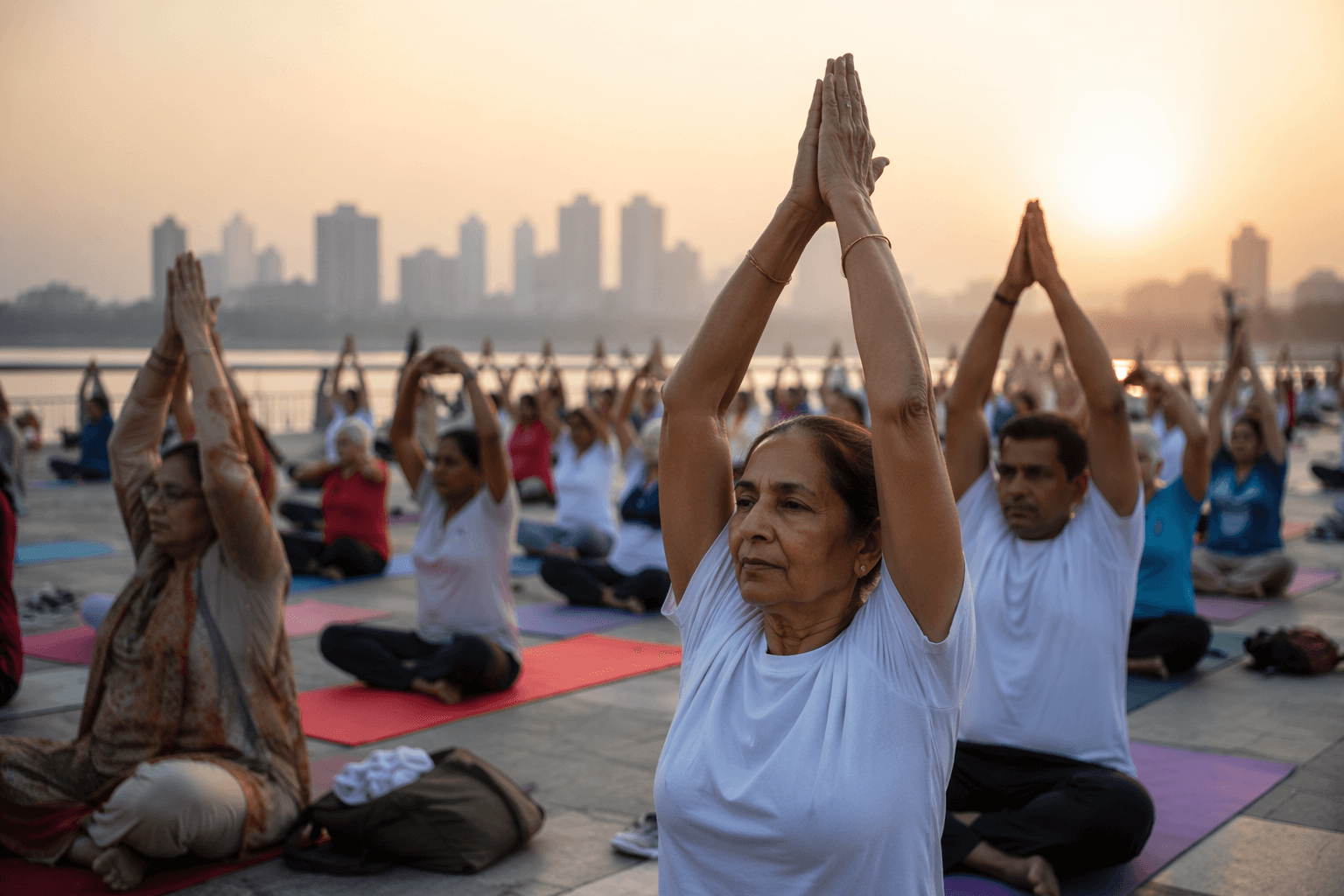
Yoga is being recast as infrastructure, not just tradition. The 12th International Day of Yoga in 2026 carried the theme "Yoga for Healthy Ageing," and a June livestream drew 435,831 concurrent YouTube viewers in a run described as a Guinness World Record. Together, those markers show the practice moving into healthcare, research and digital wellness at the same time.
From observance to public-health platform
The policy frame behind that shift was built in 2014, when the United Nations General Assembly adopted resolution 69/131 without a vote and proclaimed June 21 the International Day of Yoga. The resolution describes yoga as a holistic approach to health and well-being and encourages global awareness of its benefits, which is a much wider brief than a once-a-year celebration.
India followed with its own institutional backing. The Ministry of Ayush says it was formed on November 9, 2014 to develop and propagate Ayush systems of healthcare, and its messaging has increasingly treated yoga as a year-round public-health and wellness movement. The 2026 theme, "Yoga for Healthy Ageing," fits that agenda neatly by tying practice to active lifestyles and healthy longevity across age groups.
What the health research is saying
The science has given that policy language some weight. The World Health Organization’s 2020 physical-activity guidelines say physical activity provides significant health benefits and reduces health risks, placing yoga inside the broader prevention conversation instead of outside it. That is one reason yoga is increasingly discussed alongside walking, strength work and other forms of exercise in public-health settings.
The yoga research base points in the same direction. A 2014 systematic review and meta-analysis found yoga can affect cardiovascular risk factors in general and in high-risk disease groups, and updated meta-analysis work found a modest but significant positive effect on BMI, blood pressure, lipid profile and HbA1c. Secondary-prevention studies have also examined yoga in coronary heart disease, which is why clinicians and policymakers are more willing to treat it as a serious adjunct to prevention rather than a lifestyle extra.
How digital wellness is changing access
Digital platforms have become the fastest way to scale that idea. The Ministry of Ayush and International Day of Yoga outreach have used online channels to broaden participation, and the June 2026 livestream that drew 435,831 concurrent viewers turned that strategy into a measurable milestone. A record set through YouTube is a different kind of cultural signal from a packed public square, but it shows how yoga can now travel through screens as easily as through studios.
That shift changes the first point of contact for many people. A guided session can arrive through a government broadcast, a phone app or a social feed long before someone steps into a neighborhood class, and that is where digital wellness stops being a buzzword and becomes the way practice actually reaches a mass audience.
The push to make yogasana a sport
Sport is the other frontier, and Yogasana Bharat has made its ambitions plain. The organization says it is recognized by the Ministry of Youth Affairs & Sports, affiliated to World Yogasana, and working to bring yogasana into major multi-sport events, including the Olympics and Commonwealth Games. Dr. Jaideep Arya, its National Secretary General since 2019, has also served as an honorary member of the Government of India’s inter-ministerial International Day of Yoga committee since 2015.
In June 2026, Arya said Prime Minister Narendra Modi’s support had strengthened yogasana’s case for Olympic recognition, while organizers were anticipating participation from nearly 190 countries at a world yogasana championship. That is more than a branding exercise. It is a bid for rules, recognition and an international competitive structure that could change how the discipline is understood far beyond India.
The clearest sign of the transition is that yoga now has to fit several systems at once: public health, academic evidence, livestream culture and sports administration. The mat still matters, but the bigger arena is already here, and the practical clue is simple: the next major yoga milestone is just as likely to appear in a health ministry note, a research journal, a YouTube stream or a federation calendar as it is in a studio.
This article was produced by Prism’s automated news system from verified source data, official records, and press releases, then run through automated quality and moderation checks before publishing. The system is built and supervised by the people who set the standards it runs under. Read our full AI policy.
Did this article answer your question?