Yoga Journal Tests Non-Toxic Mats for Grip, Comfort, and Sustainability
Yoga Journal’s latest mat roundup looks past green labels and asks what is actually under your hands, knees, and feet. The best pick balances grip, comfort, and safer materials, not marketing gloss.
What matters most in a non-toxic mat
Yoga Journal’s latest mat roundup starts with the question that actually affects your practice: what is touching your skin every time you step onto the mat. The editors lean into a practical truth many yogis already feel in class, which is that a mat has to do more than look natural or sound eco-friendly. It has to grip well, cushion pressure points, stay steady under load, and hold up over time.
That framing gives the piece real utility. Instead of treating a mat as a lifestyle accessory, it treats it as practice infrastructure. If you are rolling out for a sweaty vinyasa session, sinking into a restorative hold, or logging daily home practice, the mat’s material and feel shape the experience in a way that marketing copy never can.
Why the label alone is not enough
The roundup makes a sharp point about language in the yoga gear market: words like sustainable, natural, eco-friendly, and non-toxic are often used loosely. That matters because those terms can sound reassuring without telling you much about what the mat is actually made from or how it performs once you start moving on it.
That is why the review does not stop at the environmental story. It asks whether a mat can support real practice demands and whether it can do so without leaning on vague claims. For readers who care about what is under their hands and feet, that approach cuts through the usual greenwash and gets closer to the purchase decision that matters in daily life.
Materials that shape the feel of practice
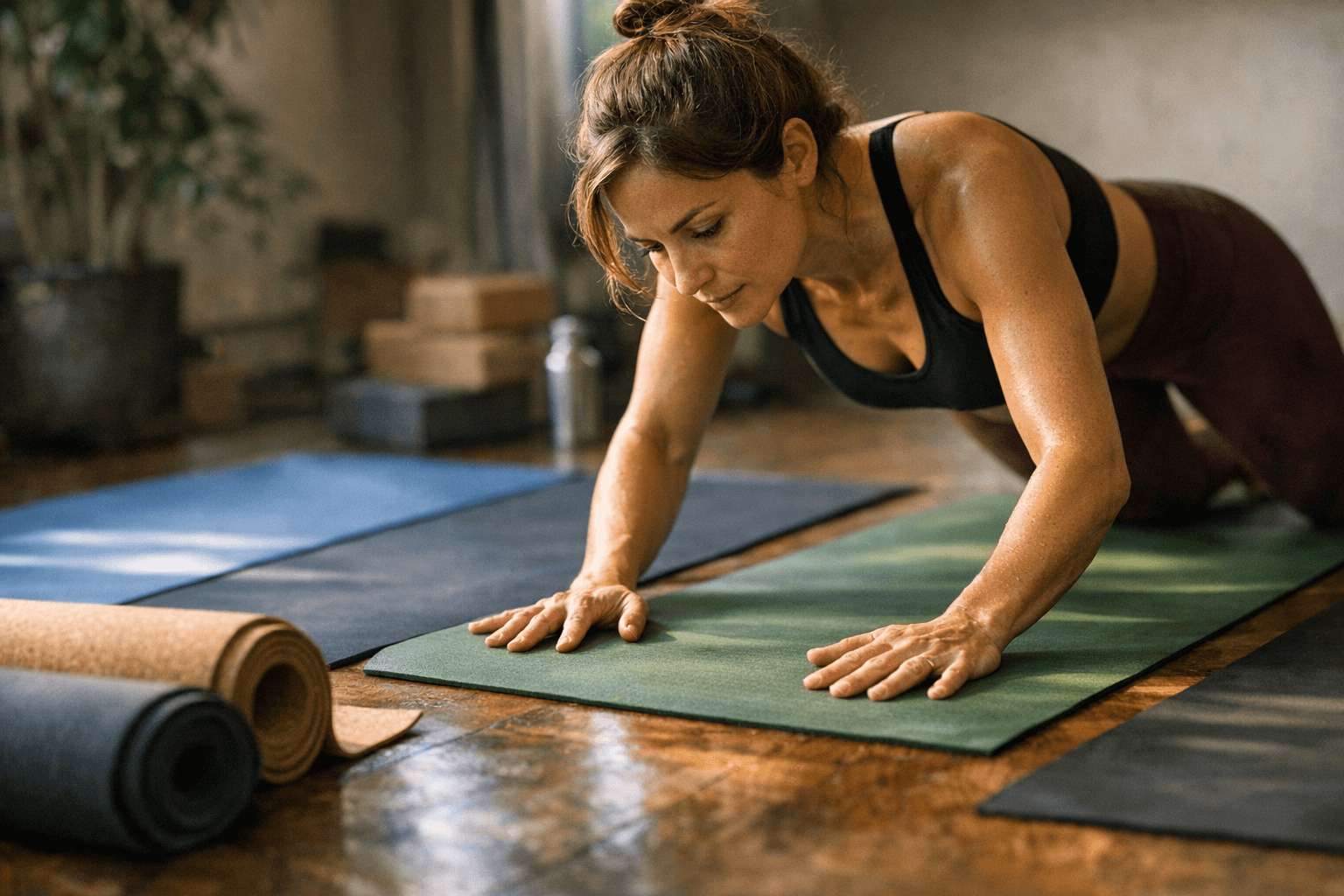
The roundup looks at a range of constructions, including natural rubber mats, cork mats, hybrid builds, and even one mat made from upcycled wetsuits. That mix matters because each material brings its own mix of traction, firmness, comfort, and environmental tradeoffs.
Natural rubber is a familiar choice for practitioners who want a grounded feel and dependable grip. Cork brings a different texture and a more distinctive surface profile, which can appeal to yogis looking for a stable feel under hands and feet. Hybrid constructions show how brands are trying to combine strengths from more than one material, while upcycled wetsuits point to a more creative reuse model that speaks to sustainability in a literal sense.
The broader message is simple: there is no single “best” material for every body or every practice. What works for a hot, fast-moving flow may feel very different from what you want under the knees in a slower, more restorative session.
Comfort is part of health, not just preference
One of the strongest threads in the roundup is that comfort is not a luxury feature. Cushioning affects how long you can stay in practice, how your joints feel in weight-bearing poses, and whether a mat still feels inviting after repeated use. A surface that is too thin can be hard on knees and wrists, while one that is too soft can make standing balance less stable.
That is where the story’s health framing becomes especially relevant. For people who sweat heavily or practice often, the mat’s surface has to stay functional when things get damp and demanding. A mat that feels grounded without turning slick or overly compressed is going to serve a much wider range of practice styles, and that practical reliability is part of what separates a serious mat from a pretty one.
How the roundup measures value
Yoga Journal evaluates mats on grip, cushioning, stability, portability, durability, and aesthetics. That matters because a non-toxic mat still has to survive real use, and a mat that falls apart quickly is not especially sustainable in the real world. Durability affects how often a replacement is needed, which in turn affects both cost and waste.
Portability also matters more than many shoppers expect. If you carry your mat to class, weight and ease of transport can determine whether it actually becomes part of your routine. A mat that looks beautiful but is awkward to move or store will not help much if it discourages you from practicing.
Aesthetics may seem secondary, but it is part of long-term use. Yoga gear that feels good to unroll can create consistency, and consistency is what turns good intentions into an actual practice.
Why Liforme Classic stands out
Among the mats tested, Yoga Journal names the Liforme Classic as its best overall pick. That designation signals balance rather than novelty. The value is not just that it fits one sustainability story, but that it brings together performance and materials in a way that makes sense across different kinds of practice.
That balance is important in a crowded market where many products try to win on one feature alone. A mat can have strong green credentials but weak grip, or impressive comfort but less convincing durability. The Liforme Classic stands out because the review treats it as a mat that can do the job on the floor while still aligning with the broader concerns many yogis now bring to the purchase.
How to choose based on the way you practice
The roundup is especially useful because it ties mat choice to practice style instead of pretending every body and every class needs the same thing. That makes the guide easier to use in real life.
- For hot, fast-moving flows, prioritize grip and stability so the mat stays reliable when sweat builds and transitions speed up.
- For restorative sessions, look more closely at cushioning and comfort, especially if you spend time on knees, hips, or seated holds.
- For all-around home practice, aim for the broadest balance of durability, portability, and traction so one mat can support the widest range of sessions.
That practice-specific lens is what turns the roundup from a product list into a decision tool. It helps you match the mat to the way you actually move, rather than to a vague ideal of what a “good” yoga mat should be.
The bigger shift in yoga gear buying
The deeper takeaway is that mat shopping has become more discerning. Practitioners are not just asking whether a mat is marketed as non-toxic. They are asking what it is made from, how it feels under pressure, how it behaves in sweat, and whether it will last long enough to justify the price.
That shift is reshaping yoga gear reviews and product expectations across the category. Yoga Journal’s roundup reflects that change clearly: the best mat is not the one with the loudest green promise, but the one that performs well, feels good on the body, and makes its sustainability claims in a way that can stand up to actual practice.
This article was produced by Prism’s automated news system from verified source data, official records, and press releases, then run through automated quality and moderation checks before publishing. The system is built and supervised by the people who set the standards it runs under. Read our full AI policy.
Did this article answer your question?