Yogasana could debut at 2030 Commonwealth Games in Ahmedabad
Yogasana is fighting for a Games slot in Ahmedabad, where India wants indigenous sports on the 2030 Commonwealth stage and yoga’s quieter traditions may meet the judging table.
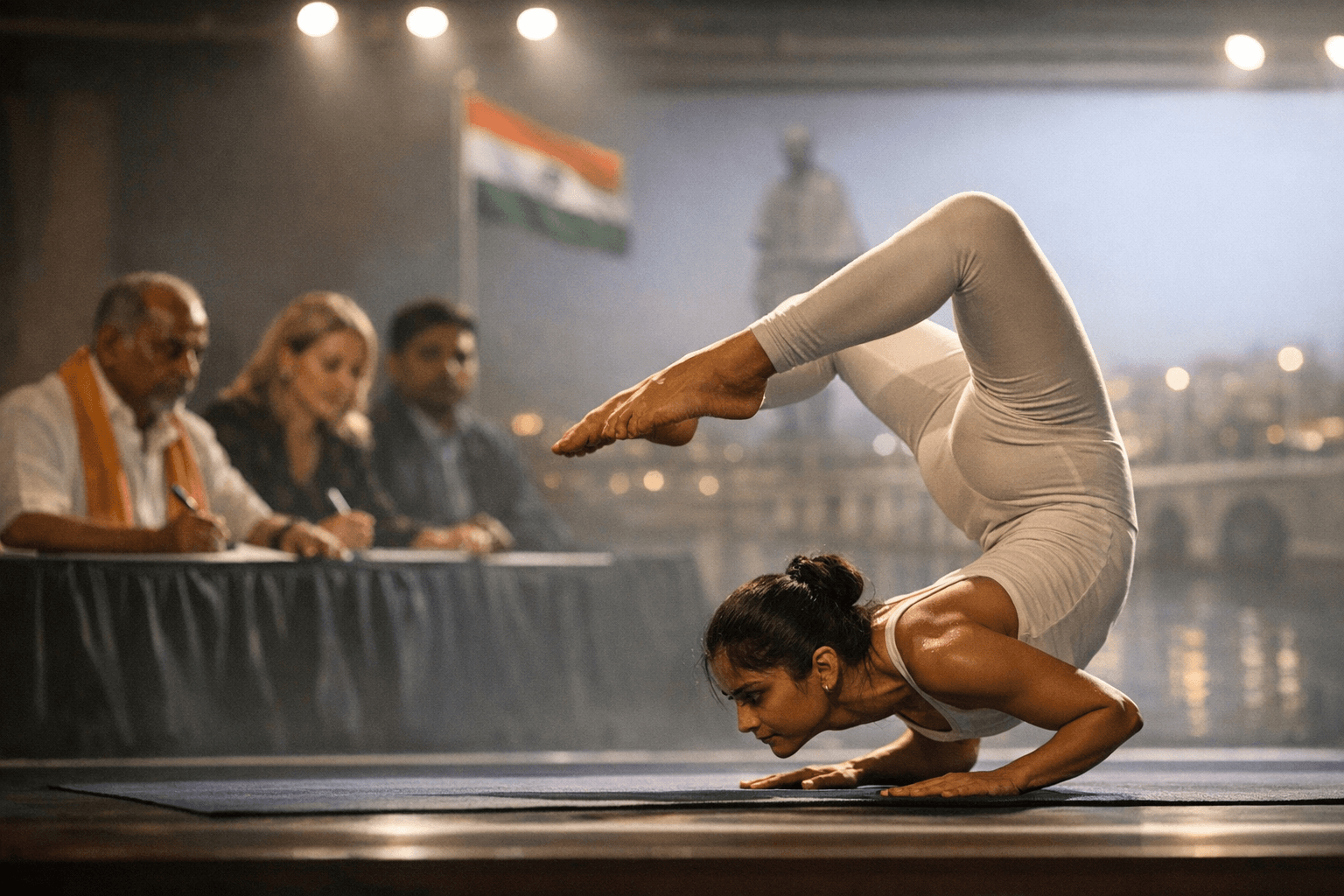
Yogasana is trying to cross one of the biggest thresholds in modern yoga: from mat-based practice to Commonwealth Games discipline. In Ahmedabad, where the 2030 Centenary Commonwealth Games will be staged, India is pressing to put the competitive form of yoga alongside other homegrown sports, a move that would give the practice a global television spotlight while testing how far yoga can be turned into a judged event without losing its roots.
Commonwealth Sport confirmed Amdavad, India, as the host of the 2030 Games after the host recommendation was announced on October 15, 2025, and the full membership ratified the decision in Glasgow on November 26, 2025. The programme is still being shaped, but Commonwealth Sport has said 15 to 17 sports will feature at Amdavad 2030. That leaves room for the sports ministry’s push to include Yogasana, Mallakhambh, Kho-Kho and Kabaddi, a package that would lean hard into India’s indigenous sporting identity.
The timing gives the campaign extra force. India last hosted the Commonwealth Games in 2010, so 2030 carries centenary weight for the country as well as for the event. That symbolism matters because Yogasana is not being sold only as another entry on the schedule. It is being framed as proof that an Indian discipline, long associated with breath, stillness and self-discipline, can also survive the demands of standardization, comparison and competitive judging.
That is where the sport’s character changes. World Yogasana describes itself as the international federation for Yogasana sport and says its job is to standardize and promote the discipline. It also says the Ministry of Youth Affairs and Sports, Government of India, recognizes it as a sports body in Yogasana sports. On its own platform, the federation shows competition activity reaching beyond India, including Zambia and Mauritius, and it has promoted para-national Yogasana events as an inclusive competitive platform. Those details show a sport trying to build rules, legitimacy and a wider field of play at the same time.
For yoga’s traditionalists, that shift is the central question. Classical yoga asks for inner discipline, not rankings. Yogasana asks for precision under pressure, in a system that can be scored, compared and broadcast. If it reaches Amdavad 2030, the discipline would gain visibility that yoga has never had at the Commonwealth level. It could also lose something in translation if the practice is reduced to athletic display alone.
This article was produced by Prism’s automated news system from verified source data, official records, and press releases, then run through automated quality and moderation checks before publishing. The system is built and supervised by the people who set the standards it runs under. Read our full AI policy.
Did this article answer your question?