April Birthstone: Diamond — Meaning, History, and Complete Guide
The diamond in your April birthstone piece may be 3.5 billion years old. Here's what that geological miracle and a collapsing lab-grown market mean for buyers.
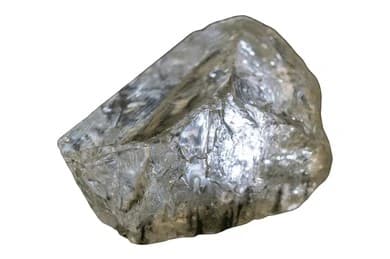
Before it was a symbol of love or an April birthstone, a diamond was a geological event. Carbon atoms, buried somewhere between 150 and 250 kilometers beneath the Earth's surface, crystallized under temperatures exceeding 2,200 degrees Fahrenheit and pressures so intense they exist nowhere else on the planet. Violent kimberlite eruptions then carried these crystals toward the surface over millions of years. The oldest diamonds ever dated are approximately 3.5 billion years old, predating complex life on Earth by more than two billion years. The stone on your finger, in other words, may be the most ancient object you will ever own.
That geological improbability has driven human fascination for millennia, and it is the foundation on which every modern purchasing decision should rest.
A Stone Pulled from the Ancient World
Sanskrit texts dating back to before 400 BC record the association of crystals with wonderment and profound significance. Ancient cultures in India were gathering diamonds from rivers and streams and trading them as early as the fourth century BCE; royalty and the social elite coveted the stones for their beauty and rarity, and merchant caravans carried them along trade routes that eventually reached the medieval markets of Venice.
There is research dating to 1330 showing diamond cutting in Venice, and by the 15th century the diamond trading business had flourished with the opening of Eastern trade routes and advances in using diamond dust to shape and polish faceted stones. By the 1400s, diamonds had become fashionable accessories for Europe's elite and ruling classes. The pivotal romantic milestone came in 1477, when Archduke Maximilian of Austria gave his betrothed, Mary of Burgundy, the first diamond engagement ring on record. That single gesture crystallized a tradition that persists across five centuries. Evidence also traces the legendary 45.52-carat blue Hope Diamond to India's Golconda mining region, grounding one of the world's most famous gemstones in the same ancient source.
In the early 1900s, South African mines dramatically expanded the global supply of diamonds, moving them from a gem of the ultra-wealthy toward something more widely attainable. In 1912, the American National Association of Jewelers convened and voted to create an agreed-upon list of gemstones associated with each calendar month, and what was once considered controversial for its commercial overtones is now accepted as the official modern birthstone list. Diamond's place as April's stone was, by that point, merely a formalization of what history had already decided.
What "Invincible" Has Always Meant
The name diamond derives from the Greek word for "invincible," and the symbolism runs just as deep as the etymology. Ancient Hindus wore diamonds as protective talismans, trusting the stone to ward off evil and attract good fortune. Ancient theories also held that lightning bolts formed diamonds, a belief that speaks to how early cultures intuited something extraordinary about the stone's origin even without the science to explain it. In the Middle Ages, diamonds became a symbol of strength and invincibility, often worn by knights in battle.
The April birthstone meaning centers on three qualities: strength, clarity, and enduring love. Those associations were earned over centuries of belief across entirely separate cultures. The spring association with purity and renewal follows naturally: April opens the year's most regenerative season, and a stone formed under the planet's most extreme conditions offers a fitting symbol of things that endure.
The 4Cs: How to Actually Prioritize
The 4Cs, codified by the Gemological Institute of America in the 1940s, form the global standard for evaluating diamonds: cut, color, clarity, and carat weight. Understanding how they interact, rather than chasing the highest grade in each, is what separates a well-bought diamond from an expensive disappointment.
Cut is the most consequential factor for visual impact. A well-cut diamond in the G-H color range with VS2 or SI1 clarity will look exceptional in person and hold its own visually against a higher-color, higher-clarity stone with a mediocre cut. Color grades run from D (colorless) to Z (visibly tinted); G and H sit in the near-colorless band and represent the best value, showing no perceptible warmth to the naked eye when set in white gold or platinum.
On carat weight, diamonds are priced per carat, and price rises exponentially, not linearly, as size increases. A practical consequence: a stone at 0.96 carats is priced significantly below a full 1-carat stone with no visible size difference to anyone looking at your hand. Choosing "light" carat weights just below the round-number thresholds (0.90ct, 0.96ct, 1.45ct) is one of the most reliable ways to access a larger-looking stone at a lower price.
Price Per Carat: What the Market Looks Like Now
The diamond market has fractured into three distinct tiers, and where you enter determines almost everything about what you can buy.
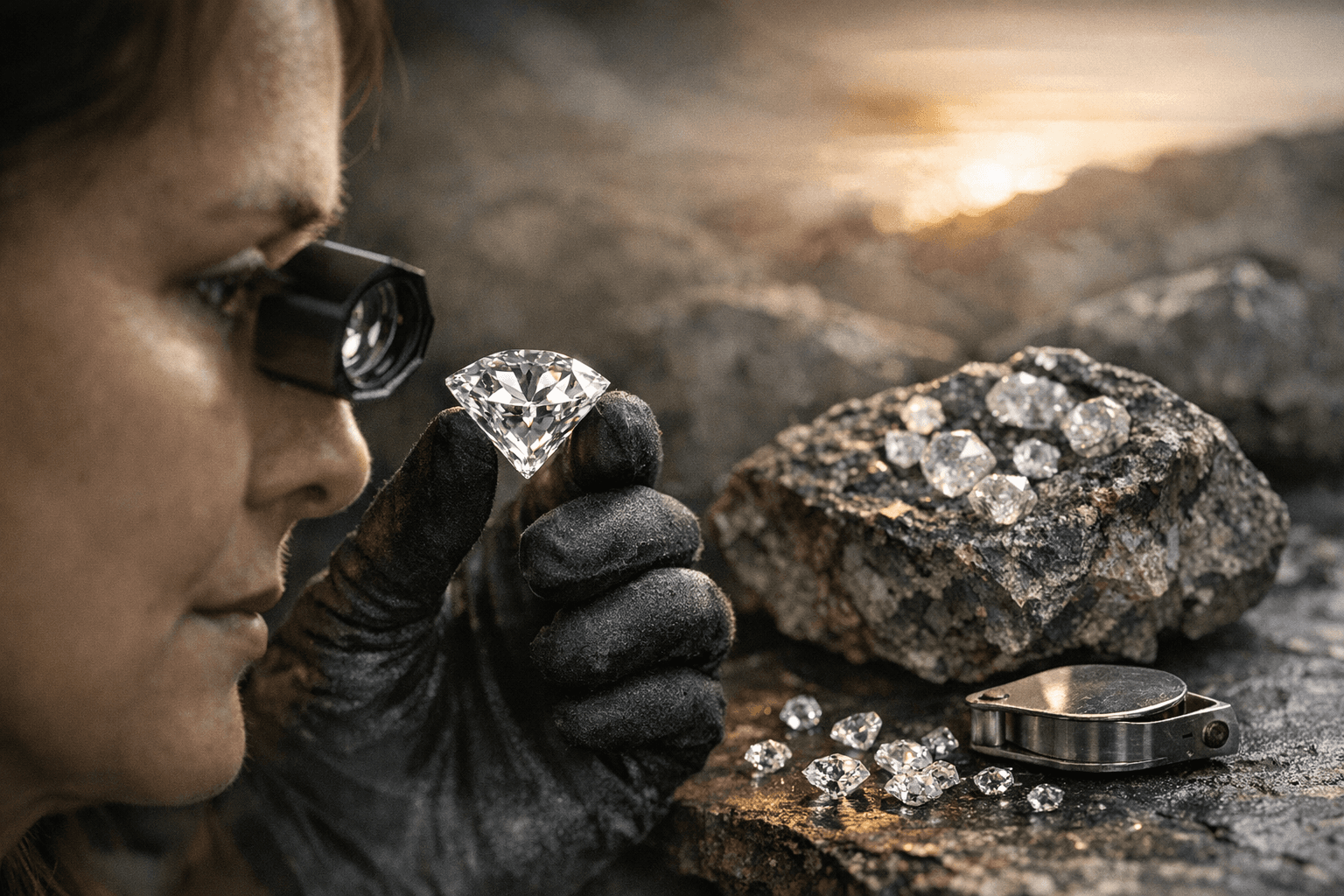
Natural diamonds remain the most expensive option, with a quality 1-carat round brilliant in the G-H, VS2-SI1 range typically running between $4,000 and $8,000 at retail, depending on cut quality and where you buy. The price scales steeply: a 2-carat natural stone of comparable quality can easily exceed $20,000.
Lab-grown diamonds are chemically, physically, and optically identical to their mined counterparts. As of 2025, they cost 80 to 95 percent less than natural diamonds of equivalent grade. A 1-carat round lab-grown diamond averages around $759 wholesale, with retail prices ranging from roughly $800 to $3,000 depending on the retailer and grade. Crucially, lab-grown diamond prices have fallen approximately 50 percent since 2021, a trajectory that continues to compress the market.
Moissanite, a silicon carbide gemstone first discovered in 1893 by French scientist Henri Moissan, occupies the third tier. For a 1-carat stone, moissanite typically costs between $300 and $800, or roughly 70 to 90 percent less than a comparable lab-grown diamond. A 3-carat moissanite can often be purchased for under $1,000; a 3-carat lab-grown diamond runs $3,500 or more. White sapphire rounds out the alternatives as a legitimate April birthstone option, offering a subtler, softer brilliance at a fraction of diamond pricing.
Natural, Lab-Grown, or Alternative: A Decision Path
The right choice depends on what you value most.
- Natural diamond if provenance, rarity, and long-term value matter to you. Insist on a GIA certificate (the industry's most trusted grading report for mined stones), a Kimberley Process conflict-free declaration, and ideally a retailer with Responsible Jewellery Council certification. Vague claims about "ethically sourced" without documentation are a red flag worth pressing.
- Lab-grown diamond if you want the same material properties at a dramatically lower price point, or if a traceable, mine-free origin is a priority. The U.S. Federal Trade Commission ruled in 2018 that lab-grown diamonds are genuine diamonds. For grading, IGI has become the dominant certification body for lab-grown stones. Note that GIA moved away from issuing specific 4Cs grades for lab-grown diamonds effective October 2025, replacing them with a simplified "Premium" or "Standard" quality assessment, so an IGI report currently gives you more granular data on a lab stone.
- Moissanite or white sapphire if maximum size per dollar is the goal, or if you simply prefer an alternative with its own identity. Moissanite scores 9.25 on the Mohs hardness scale, compared to diamond's perfect 10, making it highly durable for daily wear. Its refractive index produces more spectral "fire" than diamond, which some find dazzling and others find less classic.
Settings, Certification, and Care
Setting choice shapes how a diamond reads on the hand. A solitaire in four or six prongs maximizes light entry and suits a buyer who wants the stone to speak for itself. A halo setting, where smaller accent diamonds encircle the center stone, creates the optical illusion of a larger gem and works well for buyers prioritizing visual presence over carat weight. A pavé band adds brilliance without competing with the center stone. A bezel setting, which wraps the diamond in a continuous metal collar, offers the most protection for active wearers and suits a cleaner, more architectural aesthetic.
For care, diamonds are the hardest natural material on Earth but they are not indestructible: a sharp blow along a cleavage plane can chip even a flawless stone. Clean your diamond piece with warm water, mild dish soap, and a soft toothbrush; dry with a lint-free cloth. Remove it before gardening, gym sessions, or any impact-prone activity. Have prongs checked by a jeweler annually.
The remarkable thing about the April birthstone is that its appeal operates at every scale simultaneously: geological epic, historical artifact, cultural symbol, and an object you can hold in your palm. Whatever you spend and wherever the stone was formed, you are participating in a tradition that stretches back more than two thousand years of human hands reaching for the hardest, most brilliant thing the Earth could make.
*Priya Sharma covers the ethical dimensions of fine jewelry, with a focus on provenance, certification, and the supply chains behind precious stones.*
This article was produced by Prism’s automated news system from verified source data, official records, and press releases, then run through automated quality and moderation checks before publishing. The system is built and supervised by the people who set the standards it runs under. Read our full AI policy.
Did this article answer your question?