Best Lab-Grown Diamond Retailers for April Birthstone Shoppers in 2026
A $1,500 budget buys four times more diamond, by carat weight, in lab-grown vs. natural — here's which retailers make that math work for April birthstone shoppers.
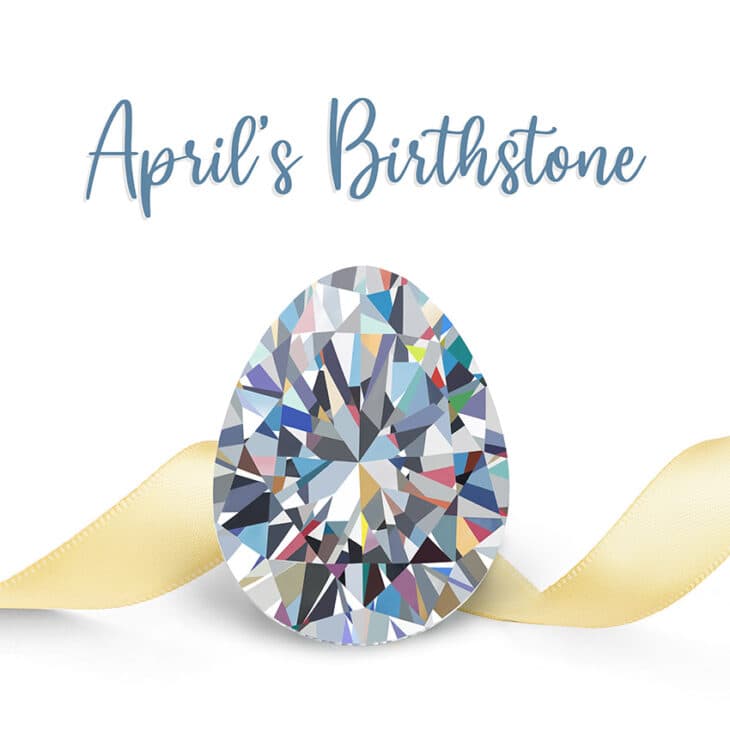
The story of the April birthstone begins not in a jeweler's case but in the ancient Near East, with a breastplate. Described in the Book of Exodus, the Breastplate of Aaron was set with twelve stones, one for each tribe of Israel, and scholars have traced the modern practice of wearing a birth-month gem in a direct, unbroken line from that biblical object through Roman naturalist Pliny the Elder, through medieval lapidaries, and finally to the formal birthstone list standardized by the American National Retail Jewelers Association in 1912. That list assigned diamond to April, and for most of the twentieth century, "diamond for April" meant one thing: a mined stone, extracted at enormous environmental and human cost, priced accordingly.
That calculus has changed with striking speed. By 2025, a 1-carat lab-grown diamond averaged $1,000 or less, compared to around $4,200 for a natural 1-carat stone. Put that in practical terms: a $3,000 gifting budget that would buy a natural diamond of roughly 0.7 carats in G color and VS2 clarity will instead buy a lab-grown stone of 2 carats or more in equivalent grades. Lab-grown diamonds are not simulants. Both lab and natural diamonds share identical chemical compositions and physical characteristics. The only meaningful difference is origin, and for a growing number of April birthstone shoppers, origin is precisely the point.
Buying a lab-grown diamond well, though, requires navigating a retailer landscape where quality, certification standards, and after-sale protections vary considerably. All leading retailers sell IGI or GIA certified lab diamonds, which means you are getting legitimate grading when you buy from a reputable source, but the depth of that grading, the return window, the setting quality, and the design range still separate the best from the merely adequate. Here is how the field shakes out for April shoppers in 2026.
1. Blue Nile
Blue Nile earns its best-overall designation through a combination of scale, transparency, and robust consumer protections that few competitors match. Blue Nile offers a 30-day return policy in original, unworn condition for a full refund or exchange, no questions asked, and backs every item with a limited lifetime warranty. They also offer a huge variety of lab-grown diamonds to choose from, with around 260 different engagement ring settings, and frequently offer discounts on ring settings. For an April birthstone solitaire or three-stone ring, the combination of transparent 4Cs reporting, IGI and GIA certification options, and a lifetime service commitment makes Blue Nile the lowest-risk entry point in the category.
2. James Allen
James Allen built its reputation on a single technological advantage that has not lost relevance: high-resolution 360-degree diamond views that let buyers inspect every stone before purchase. James Allen provides IGI certification and layers in more educational content and customer service support, walking buyers through what the grading report means and explaining the differences between CVD and HPHT growth methods. The best certification for lab-created diamonds is the IGI, because they give specific gradings for qualities like color and clarity. For an April shopper weighing a 1.5-carat versus a 2-carat stone and trying to understand exactly what the color-clarity tradeoff means at each price point, that educational layer is genuinely useful.
3. Vrai
Vrai offers zero-emission diamonds for modern, minimalist style, grown using renewable energy through its partnership with Diamond Foundry. For April birthstone shoppers whose provenance concerns extend beyond conflict-free sourcing to carbon footprint, Vrai represents the most defensible ethical position in the lab-grown market. The brand's design aesthetic runs clean and architectural, making it a strong fit for everyday pieces like diamond-set bands, huggies, or delicate pendants that carry the April stone without announcing it loudly.
4. Grown Brilliance
Grown Brilliance sits at the intersection of customization and accessibility, allowing shoppers to pair lab-grown stones with a broad range of settings across metal types and styles. The brand positions itself as a direct-to-consumer alternative to traditional bridal jewelers, with pricing that reflects the lab-grown cost advantage on both the stone and the setting side. For an April birthday gift that needs to feel personal rather than off-the-shelf, the build-your-own workflow here is one of the more intuitive in the category.
5. With Clarity
With Clarity differentiates through its home preview program, which ships a replica of your chosen ring to try before you commit to the lab-grown stone purchase. That tactile preview step addresses the single biggest anxiety in online diamond buying: whether the proportions and scale will look right in person. The brand pairs that service with IGI-certified stones, solid metal settings, and a customization interface that handles everything from prong style to band width. For gifters who want to be certain before they spend, this is the most risk-reduced path.
6. Mejuri
Mejuri's approach to April birthstone jewelry bypasses the engagement-ring frame entirely. The Toronto-based brand built its audience around fine jewelry for everyday wear, priced to be bought personally or gifted without the weight of a major occasion. Lab-grown diamond pieces here tend toward smaller stones, higher-frequency wearability, and a design language that suits stacking and mixing. The brand's recycled gold settings reinforce its sustainability positioning, which pairs naturally with the lab-grown diamond story. For an April birthday gift under $500, Mejuri's diamond pieces represent genuinely strong value.
7. Stone & Strand
Stone & Strand occupies similar everyday-wear territory to Mejuri but with a curatorial sensibility that skews more editorial. The New York-based retailer presents lab-grown diamond pieces alongside other fine jewelry in a way that contextualizes the stone rather than spotlighting it, which appeals to buyers who find the traditional birthstone gifting format a bit literal. Settings tend toward 14-karat gold, quality of finish is high for the price tier, and the selection includes enough variation in silhouette that finding something genuinely distinctive is straightforward.
8. Kinn Studio
Kinn Studio's focus on solid gold construction at everyday price points gives it a specific advantage for April birthstone pieces that will be worn constantly. The Los Angeles-based brand avoids gold-fill and vermeil, building in solid 14k as a baseline, which matters for longevity on a piece meant to mark a birthday and be worn for years. Lab-grown diamond options here are well-suited to minimalist pendants, thin bands, and stud formats: the kinds of pieces that read as personal and wearable rather than occasional.
9. Aurate
Aurate rounds out the field with a sustainable fine jewelry model built on recycled gold and lab-grown stones, with a New York aesthetic and price points that serve the gifting market well. The brand offers IGI-certified lab diamonds and maintains a commitment to supply-chain transparency that complements the ethical narrative already embedded in lab-grown sourcing. For April shoppers who want a coherent sustainability story across both the stone and the metal, Aurate ties those threads together more explicitly than most.
What to verify before you buy
Across all nine retailers, the certification question is non-negotiable. The IGI gives specific gradings for qualities like color and clarity, and the GIA has started fully grading lab-created diamonds recently, though GIA-graded lab stones remain harder to find. Whichever retailer you choose, confirm that the stone comes with an IGI or GIA report, not an in-house assessment. Beyond certification, check for a minimum 30-day return window, a lifetime warranty that covers at least prong tightening and rhodium replating, and visible high-resolution or 360-degree stone imagery before purchase.
The financial case for lab-grown April birthstone jewelry is by now well-established. As prices for lab-grown stones continue to fall and natural diamonds work to reclaim their luxury status, the industry is bifurcating: lab-grown diamonds are emerging as accessible, everyday luxury, while natural diamonds reposition as exclusive symbols of enduring value. For an April birthday, that bifurcation is a gift in itself. The same $2,000 that once bought a modest half-carat natural stone now buys a certified, eye-clean, brilliantly cut 1.5-carat lab-grown diamond with room left over for the setting. The breastplate of Aaron contained twelve stones symbolizing the full sweep of human value. It did not specify that those stones had to be expensive to matter.
This article was produced by Prism’s automated news system from verified source data, official records, and press releases, then run through automated quality and moderation checks before publishing. The system is built and supervised by the people who set the standards it runs under. Read our full AI policy.
Did this article answer your question?