April Birthstone Diamonds: Curated Picks From Budget to High Jewelry
Lab-grown diamond prices fell 74% since 2020, yet a natural 1-carat still commands ~$4,200. Here's exactly what each budget buys right now.
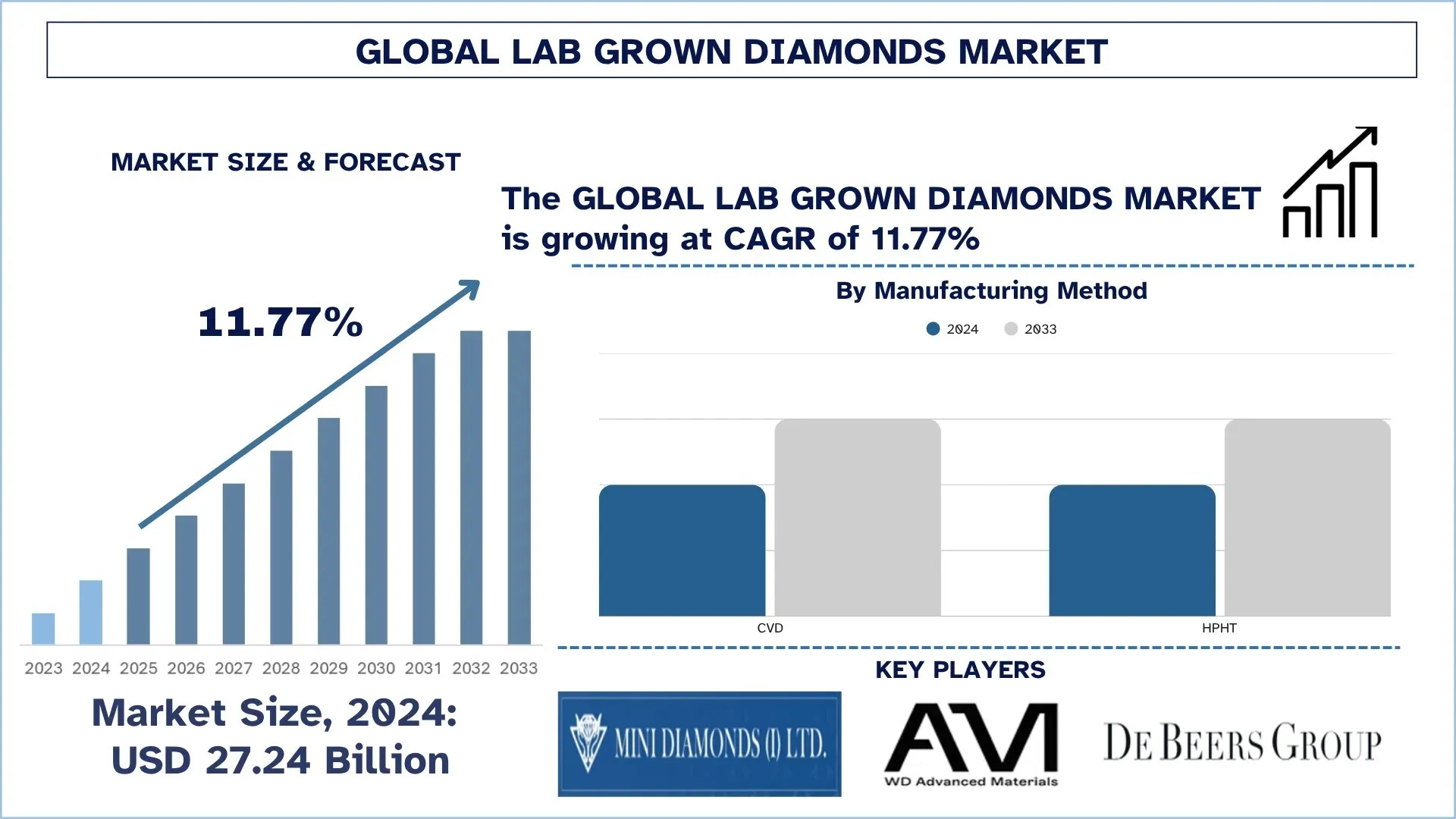
Diamonds have occupied the apex of the gem world since ancient Indian traders first described them as indestructible fragments of the gods. That mythology has survived every market correction, every trend cycle, and now, one of the most dramatic pricing disruptions in modern gemological history. In 2020, a 1-carat lab-grown diamond averaged around $3,410 per carat. By the close of 2024, that figure had collapsed to roughly $892, a 74% decline in under five years. Yet here's the paradox that makes April's birthstone genuinely fascinating to shop right now: natural diamonds have barely moved. A 1-carat natural stone with solid grades still runs approximately $4,200, and GIA-certified specimens with D/VS1/Excellent-cut grading now command anywhere from $829 (for a 1.1-carat round) well into five figures. The market has bifurcated cleanly, and knowing which side of that divide you're buying on changes everything about the decision.
What Three Budgets Buy Right Now
The most useful thing a buyer's guide can do is translate budget into specification. Price tags mean nothing without the 4Cs attached.
Under $500: The Entry Point, Done Properly
At this price, the category that rewards you most is accent and daily-wear jewelry: diamond stud earrings, solitaire pendants, and slim station necklaces. A quarter-carat (0.25 CTW) natural round diamond pendant set in 14K yellow gold is well within reach, typically grading H-I on the color scale and SI1-SI2 for clarity. Both grades fall comfortably in what gemologists call the "eye-clean" range: no color or inclusions visible to the naked eye. That is the floor you should insist on, regardless of price. Anything below SI2 clarity or J color in a pendant at this price starts to look compromised in daylight.
For earrings under $500, lab-grown diamonds rewrite the calculus entirely. A pair of bezel-set lab-grown studs in 14K gold can reach 0.5 to 1.0 carats total weight at this price, compared to the 0.15-0.25ct you'd get in natural. The bezel setting, which fully encircles the diamond in a collar of metal, also makes practical sense here: it protects the stone from chips and eliminates the risk of a prong catching on fabric or bending out of position. If you're buying everyday earrings, the bezel is a considered choice, not a style concession.
One non-negotiable at every price point: insist on a grading report. At sub-$500, you're unlikely to get a full GIA report on a small natural stone, but reputable retailers will provide a grading document. For lab-grown stones at this size, an IGI certificate is standard and acceptable.
Around $1,500: Where Specifications Start to Sing
At roughly $1,500, a natural diamond purchase becomes far more interesting. This is the budget where you can commission a pair of 0.5-carat total weight natural diamond studs in 14K or 18K white gold with G-H color and SI1 clarity, the kind of combination that looks genuinely bright in a four-prong martini setting and reads "fine jewelry" rather than "gift shop." The four-prong setting (sometimes called a martini or basket setting) maximizes the diamond's exposure to light, which is exactly what you want from a round brilliant cut designed around light performance.
Alternatively, $1,500 unlocks impressive territory in lab-grown: a 1-carat round brilliant with D-E color and VS1-VS2 clarity, certified by IGI, set in 14K gold. By 2025, 85.9% of lab-grown diamonds sold were colorless (D-F range), up from just 37.7% in 2020, meaning the quality available at accessible prices has genuinely improved, not just the size. A solitaire pendant or a slim diamond band at this grade will photograph beautifully and wear impeccably for decades.
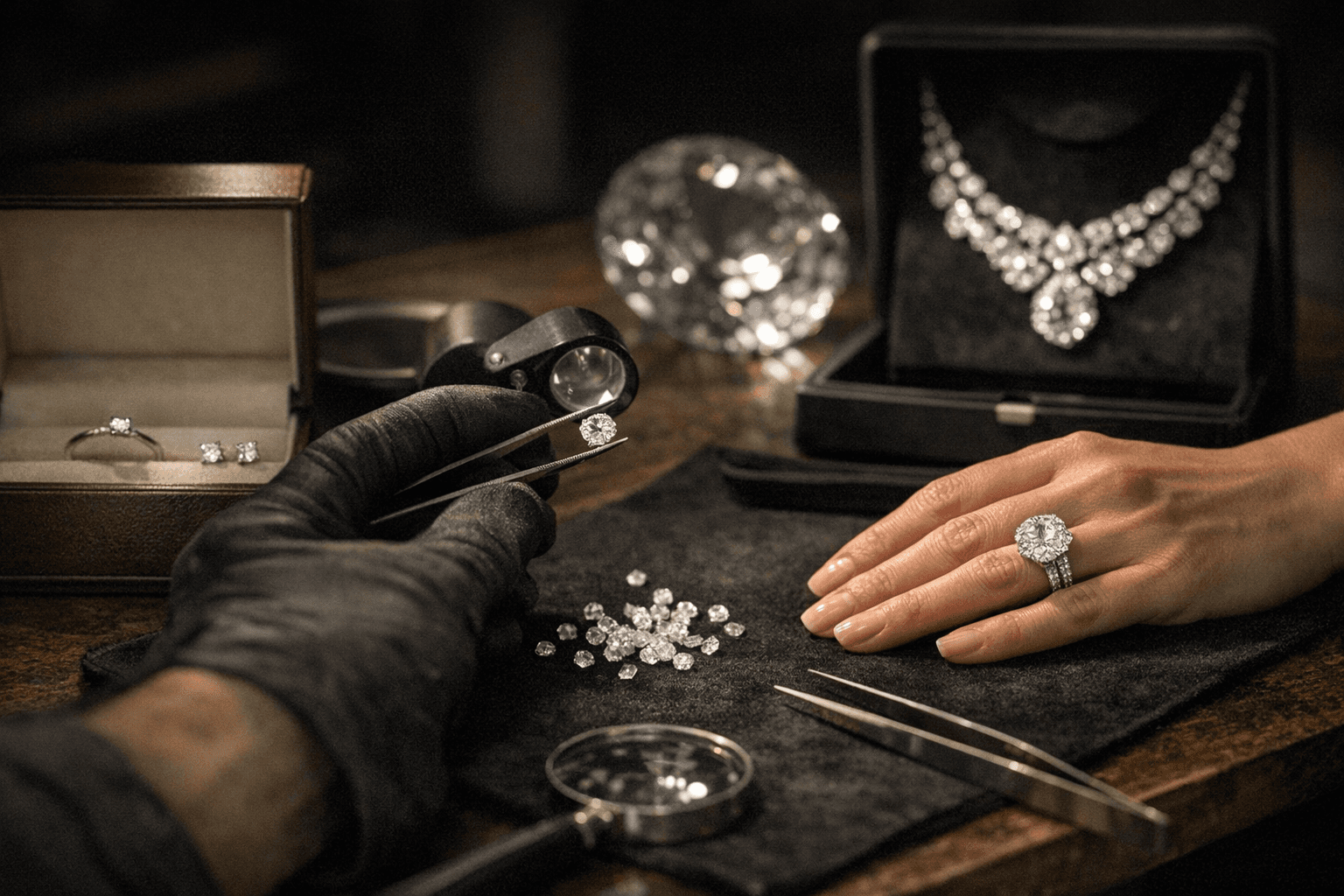
At $1,500, you should also begin expecting Excellent cut grades on round brilliants. Cut is the one C that human skill, not nature, controls entirely. An Excellent or Ideal cut maximizes the stone's internal reflection, making a 0.80-carat stone outperform a lazily cut 1.00-carat in almost every lighting condition. Never compromise cut to chase carat weight.
Around $5,000: The Natural Diamond Sweet Spot
Five thousand dollars is where a natural diamond purchase earns serious consideration as both jewelry and a durable asset. At this budget, a GIA-certified 1-carat round brilliant in G color, VS2 clarity, with triple Excellent grades for cut, polish, and symmetry is realistic. That combination represents what most gemologists consider the optimal intersection of quality and value: the color difference between G and D is invisible once the stone is set, and VS2 clarity is eye-clean with room to spare.
For those committed to natural, this budget also opens up half-carat stud earrings in 18K or platinum settings, each stone individually GIA certified, which is a meaningful jump in both quality assurance and resale reliability. Platinum, while a higher upfront cost than gold, has a lower reactivity rate and holds prongs more securely over decades of wear.
At $5,000 in lab-grown, the arithmetic becomes theatrical: a 2.5-carat lab-grown round brilliant with IGI certification, D color, VS1 clarity, and Excellent cut is within range. To put that in historical context, the average lab-grown engagement ring center stone was 1.31 carats in 2019. By 2025, that average had reached 2.45 carats. Buyers are getting nearly twice the diamond for the same relative spend.
The Value Checklist: What the Market Data Actually Says
Before choosing a specific piece, run every potential purchase through four considerations.
- Natural vs. lab, and what you're actually buying: Lab-grown diamonds are chemically and optically identical to natural stones, but their market value tells a different story. Natural diamonds hold 40-60% of their retail price at resale. Lab-grown diamonds, by contrast, have seen resale values compress to as low as 10-15% of purchase price, a direct consequence of that 74% price decline in production cost. If you view jewelry as a pure wearable pleasure, lab-grown is excellent value. If you view it as a transferable asset, natural is the only rational choice.
- GIA vs. IGI, and what each guarantees: The Gemological Institute of America is a non-profit with no commercial stake in your purchase. Its grading reports are the industry's most conservative and most trusted. For natural diamonds, always prioritize GIA. IGI has become the dominant certifying body for lab-grown stones and its standards are reliable for that category, but some lesser labs grade more generously than GIA would for the same stone, which can mean overpaying for a grade that doesn't hold up under scrutiny. Avoid any stone at a meaningful price point that arrives without a major lab certificate.
- The carat-weight trap: Diamond prices jump sharply at "magic" carat thresholds: 0.50ct, 0.75ct, 1.00ct, 1.50ct, and 2.00ct. A 0.90-carat stone with an Excellent cut will often look indistinguishable from a 1.00-carat stone of middling cut, while costing meaningfully less. Buying just below a magic number and redirecting that savings toward cut quality is one of the most reliable strategies in diamond purchasing.
- Resale expectations, stated plainly: No retail jewelry purchase is a liquid investment. Even natural diamonds, which hold value better than any other gemstone category, typically return 40-60 cents on the retail dollar in a secondary sale. The gap between wholesale and retail pricing means that the moment a diamond leaves a store, its resale price reflects wholesale market reality, not what you paid. Treat any diamond purchase as permanent ownership, not a financial instrument, unless you are operating at auction-house levels with certified stones of exceptional provenance.
Setting Choices That Affect Both Aesthetics and Longevity
Two settings dominate diamond jewelry across all three price tiers, and each carries real-world implications beyond aesthetics.
The prong setting (typically four or six metal claws gripping the diamond at its girdle) exposes the maximum amount of the stone to light, driving the brilliance and fire that make round diamonds so visually commanding. The tradeoff is vulnerability: prongs can bend, wear thin, or catch on fabric over years of daily wear, requiring periodic inspection by a jeweler. For statement rings and pieces worn occasionally, prongs are ideal.
The bezel setting, which wraps the diamond's circumference in a continuous band of metal, sacrifices a small amount of light entry for significant protection. Bezels suit active wearers, stud earrings worn daily, and anyone who prefers a cleaner, more graphic silhouette. The modern bezel has also become a design statement in its own right, favored by contemporary fine jewelry brands for its architectural quality.
Reading the Market in April 2026
Lab-grown diamonds now account for over 45% of US engagement ring purchases, a figure that would have seemed implausible a decade ago. The democratization of diamond access is real and, for buyers who prioritize wearability and visual impact over asset value, genuinely beneficial. The share of center stones that were lab-grown reached 52% in 2024, up from just 12% in 2019.
What this market moment means practically: natural diamond prices have held while lab-grown prices have plummeted, creating genuine price clarity for buyers who know what they want. A GIA-certified natural diamond at a sharp carat weight, excellent cut, and G/VS2 quality is as close to a "store of value" as fine jewelry gets without crossing into colored gemstone territory. A lab-grown stone at two to three times the carat weight, certified by IGI and set in 18K gold, is an argument for wearing the jewelry, not warehousing it.
April's birthstone may be the most scrutinized gem on earth, but it rewards scrutiny in kind. Know your budget, demand certification, chase cut before carat, and the stone you choose will earn its place.
This article was produced by Prism’s automated news system from verified source data, official records, and press releases, then run through automated quality and moderation checks before publishing. The system is built and supervised by the people who set the standards it runs under. Read our full AI policy.
Did this article answer your question?