GSI Workshop Trains Retail Teams on Gem Quality, Treatments, and Customer Trust
When a retailer can't name a stone's treatment or country of origin, that's a red flag. GSI just trained Madhya Pradesh's senior retail teams to change that.
The twelve stones set into Aaron's breastplate around 1200 B.C. were not chosen for ornament alone. Each of the four rows of three gems corresponded to one of the twelve tribes of Israel, their identities as specific as bloodlines: carnelian, chrysolite, and beryl in the first row; turquoise, lapis lazuli, and emerald in the second; jacinth, agate, and amethyst in the third; topaz, onyx, and jasper in the fourth. The first-century historian Josephus was among the first to draw a direct line from those twelve sacred stones to the twelve months of the Roman calendar, a connection he elaborated in his "Antiquities of the Jews." From that single act of interpretation, the modern concept of the birthstone was born.
More than two millennia later, the stones are still deeply personal. An emerald for May carries the same color as Aaron's second row; a sapphire for September echoes a lineage older than any certification body. But today's buyer faces something the ancient priests never did: a market where treatment technology can alter a stone's color, clarity, or apparent quality; where laboratory-grown gems are chemically identical to their mined counterparts; and where the person standing across the jewelry counter may or may not know the difference.
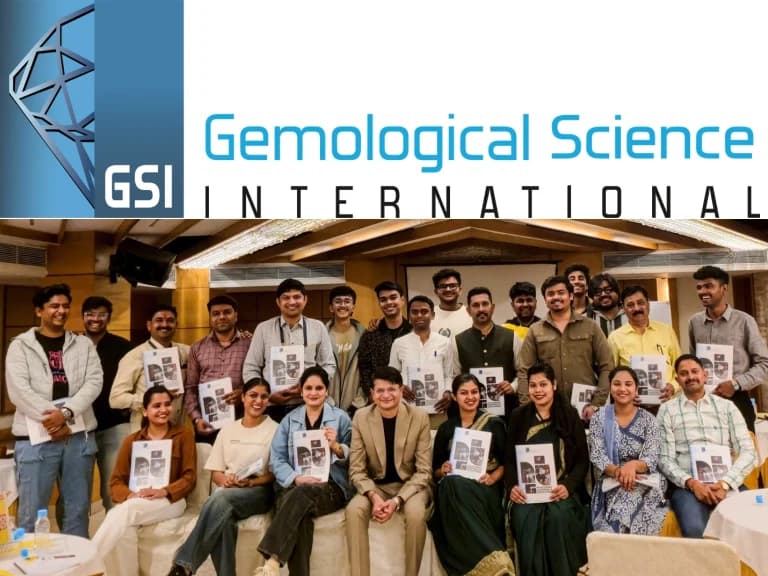
That last gap is what Gemological Science International set out to close when it convened its Jewelry Excellence Workshop in Indore last week. The program brought together senior sales representatives from leading jewelry brands across Madhya Pradesh for an intensive, hands-on session covering the diamond 4Cs, colored-gem identification, treatment disclosure, lab-grown versus natural screening, optical phenomena, and storytelling techniques designed to build customer trust. The curriculum was built around a straightforward premise: consumers arrive at the counter pre-informed, armed with terminology absorbed from hours of online research, and vague answers no longer satisfy them.
Deepa Srinivasa, Chief Gemologist at GSI India, has been direct about what that shift demands of retail teams. "Retail teams must match that evolution with genuine expertise," Srinivasa said. "Our workshops focus on building confidence grounded in science, and translating that knowledge into conversations that create trust." The Indore session put that principle to work with actual stones rather than photographs, asking participants to apply gemological theory to the same materials customers would place in their hands.
For consumers, the workshop's curriculum doubles as a verification checklist. What a trained retail team is taught to confirm is precisely what a birthstone buyer should expect to hear before completing any purchase.
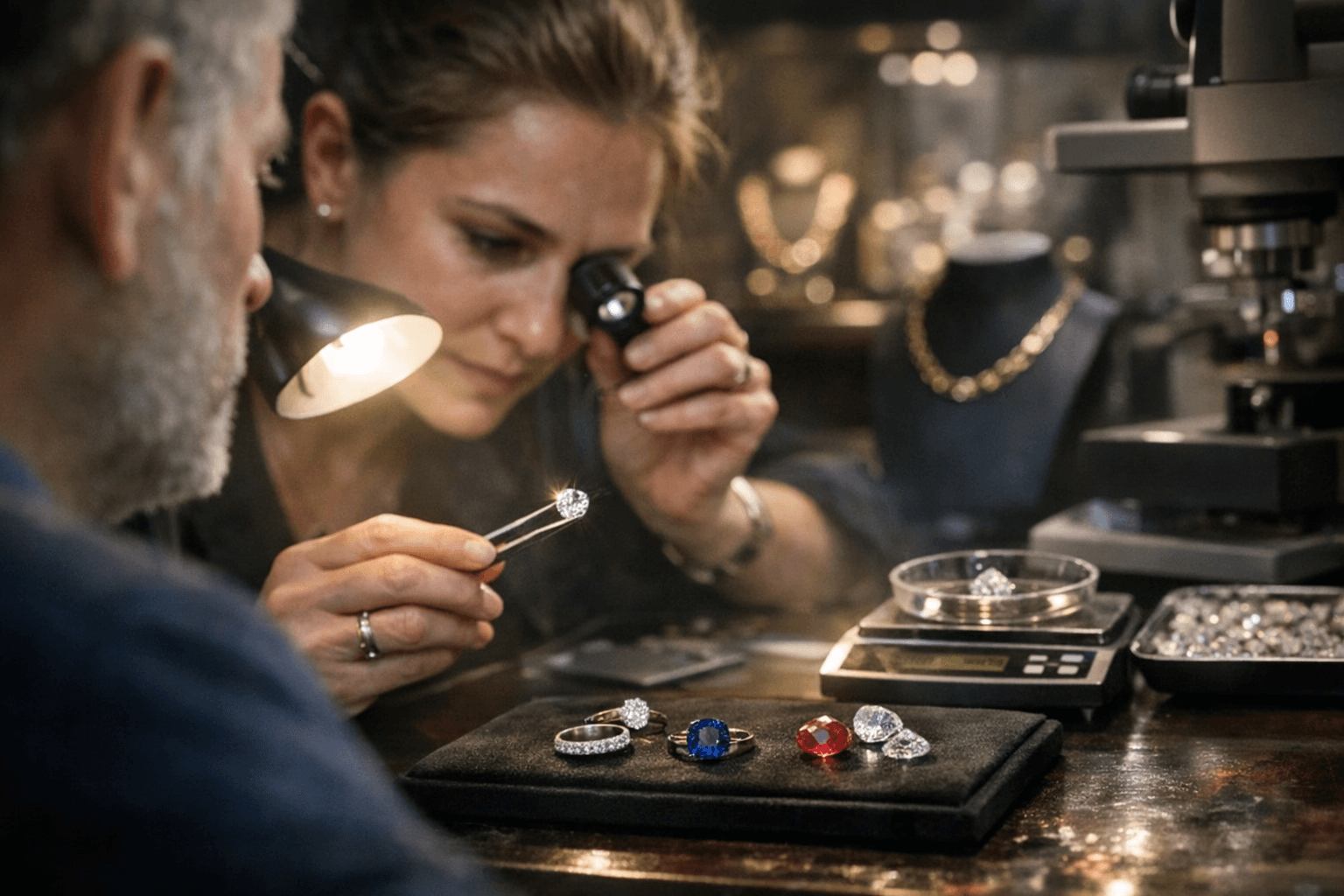
Identity comes first. A well-trained salesperson should confirm the gem's species and variety without hesitation, not simply repeat what is printed on a tag. For colored stones in particular, where sapphire, blue topaz, and blue zircon can occupy visually similar territory, the species designation matters enormously to value. If a staff member cannot distinguish between, say, a Ceylon sapphire and a synthetic spinel under basic loupe examination, or cannot explain why that distinction affects price, that is the first signal to slow down.
The second and most consequential area is treatment disclosure. Jewelers are legally obligated to disclose any treatments a gem has received prior to making a sale. Heat treatment is standard practice for corundum, the mineral family that produces sapphire and ruby, and is generally accepted when disclosed. Beryllium diffusion, fracture filling, and lead glass filling are more significant interventions that can substantially alter a stone's apparent quality and affect long-term durability; they warrant explicit disclosure and corresponding price adjustments. A birthstone counter where treatments are described in vague terms, or where a salesperson deflects the question with "all gems are enhanced," is one where buyers routinely overpay. The practical question to ask is this: name every treatment this stone has received and explain how each affects care requirements. If the answer requires checking, request written documentation before any money changes hands.

Origin claims require equivalent scrutiny. Kashmir sapphires, Burmese rubies, and Colombian emeralds carry origin premiums that can double or triple a stone's price relative to chemically equivalent material from other sources. Those premiums are real only when backed by a laboratory origin report from a recognized institution, not by a salesperson's assertion. GSI's training included colored-gem identification precisely because origin determination requires instrument-based analysis, spectroscopic methods, and comparative databases that no amount of showroom experience can replicate unaided. Ask whether an origin premium is supported by a third-party grading report, and which laboratory issued it.
The lab-grown versus natural question has become the most loaded conversation in retail gemology. For diamonds, the technological gap between lab-grown and mined stones has narrowed to the point that specialized equipment is required to detect it consistently. For colored stones, including rubies, sapphires, and emeralds, synthetic variants have existed for over a century, but distinguishing them from natural material at the retail counter still demands trained examination. Ask explicitly: is this stone natural or laboratory-grown, and is that confirmed by a laboratory report rather than a brand certification alone? The price differential in the natural stone market can be substantial. A natural, unheated sapphire with a reputable origin report commands a categorically different price than a heat-treated stone or a synthetic with similar visual characteristics.
The fourth area the Indore workshop covered, optical phenomena, is where some of the most dramatic overpaying occurs in birthstone retail. Phenomena such as asterism (the six-rayed star in star sapphires and star rubies), chatoyancy (the cat's-eye effect in chrysoberyl), and adularescence (the floating light in moonstone) are considered premium qualities that substantially increase a stone's value. They are also the characteristics most susceptible to misrepresentation by undertrained staff. A synthetic star sapphire, where the asterism is caused by titanium dioxide inclusions introduced during laboratory growth, looks nearly identical to a natural star sapphire to untrained eyes. For phenomenal stones, the question is specific: does the laboratory grading report describe and confirm the optical phenomenon, and does the pricing reflect natural versus synthetic origin?
The fifth area is administrative but equally protective: return and upgrade terms. GSI's storytelling component trained retail teams to articulate value clearly and consultatively, but buyers should verify that the narrative is backed by specific written terms. Before purchase, ask what the trade-in or upgrade policy is, whether the certification accompanies the stone permanently, and whether the retailer will accept a third-party laboratory re-examination if questions arise later. A retailer that resists outside verification has not yet earned the level of trust the transaction requires.
Priyesh Nagar, Director of Madanlal Chaganlal Jewellers in Indore, described the practical effect of the training on his staff. "GSI's workshop transformed our team's confidence. They now explain stones clearly, handle tough questions, and engage customers as experts rather than salespeople," Nagar said. That shift, from script to genuine command, is the precise outcome the workshop sought.
The buyer who arrives having read about heat treatment, beryllium diffusion, and origin certification is not being difficult. They are doing exactly what Josephus did when he connected twelve ancient stones to twelve months of human life: looking for meaning that holds up to scrutiny. The questions that protect a birthstone purchase are not adversarial. They are what any trained gemologist would ask before signing off on a stone. What is it, exactly? What has been done to it? Where does the origin claim come from? Who verified it? Any counter that cannot answer those questions with confidence and documentation has work left to do.
Know something we missed? Have a correction or additional information?
Submit a Tip