Diamond Council of America Launches Veteran, Parent Workforce Initiative for Jewelry Retail
The Diamond Council of America launched Second Spark, targeting up to 100 veterans and returning parents for gem and jewelry sales careers to address a retail talent gap.
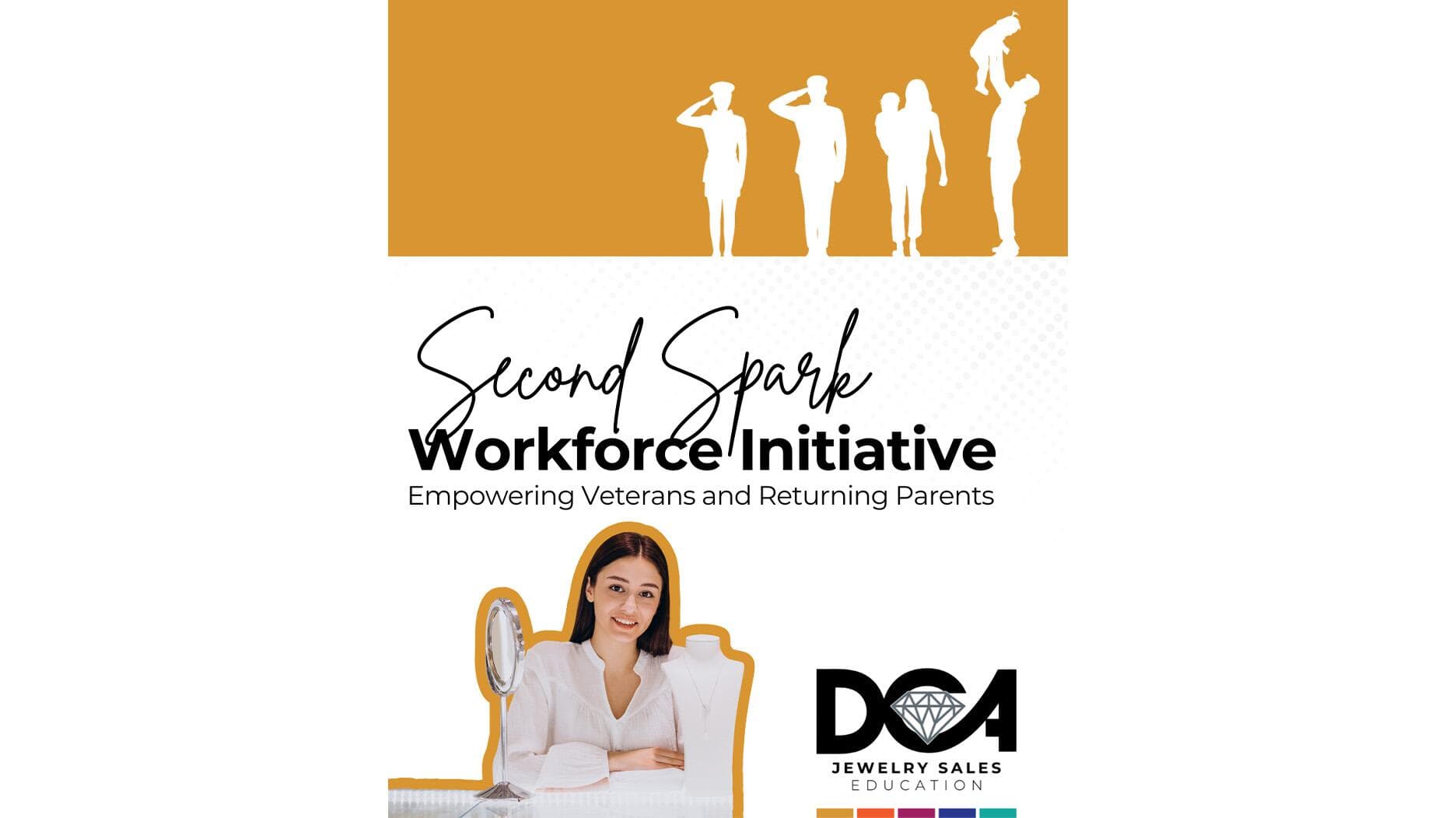
Before you spend a single dollar on a diamond, consider who is standing on the other side of the showcase. The Diamond Council of America is working to ensure that person knows the difference between a VS1 and an SI2, can articulate why cut quality outweighs carat weight in most budgets, and understands aftercare well enough to tell you exactly which setting style fits your lifestyle. Its new Second Spark Workforce Initiative is the program designed to put that kind of salesperson behind more jewelry counters.
The DCA launched Second Spark to connect veterans and parents returning to the workforce with careers in jewelry retail, addressing what it calls a critical and growing talent gap. The pressure points driving that gap are familiar to anyone who has tried to hire in specialty retail: retirements, an aging labor pool, and intensifying competition for sales and service talent.
The inaugural cohort accommodates up to 100 participants in an 8-10-week curriculum built around four DCA courses. Completers earn the DCA Diploma in Gem and Jewelry Sales and receive resume and interview coaching, mentorship, and direct job-placement support with retail partners. That credential covers diamonds, colored gemstones, and fine jewelry sales, giving graduates the structured fluency to explain, specifically and honestly, when a color trade-off is invisible to the naked eye and when it genuinely is not.
Graduates may also pursue the Certified Sales and Service Professional credential through Jewelers of America, and the program is supported by the JCK Industry Fund, with the DCA actively seeking additional partners to expand its reach.
Annie Doresca, DCA president and CEO, described the initiative as a solution to two simultaneous pressures: "It's a program built on both purpose and practicality." The program's logic in targeting veterans and returning parents is less sentimental than structural. Both groups tend to arrive with what no eight-week curriculum can manufacture: composure under pressure, an ability to read a room, and a practiced instinct for meeting someone exactly where they are. A parent who has spent years negotiating competing priorities and managing the details of a complicated household has, in practical terms, already rehearsed the floor skills that define a strong jewelry salesperson.
For shoppers, the consequence of better retail training is not abstract. A Second Spark graduate who has studied the 4Cs in depth can walk a first-time buyer through a genuine trade-off conversation rather than reaching for a spec sheet neither of them fully understands. One who has been coached on setting types can explain, without hesitation, why a bezel offers better stone protection during an active lifestyle than a six-prong, or why an ultrasonic cleaner is the wrong choice for certain treated stones. Those are not small distinctions. They are the difference between a purchase that disappoints in six months and one that holds its meaning for a generation.
The DCA, a charitable non-profit that has provided distance education and professional certification in gemstones and fine jewelry sales for decades, is framing Second Spark as a long-term infrastructure play. The program creates a new pipeline of trained professionals at the precise moment when retailers most need it. The first cohort of 100 is a start; the retail floor vacancy it is trying to address is considerably larger.
SUMMARY: The Diamond Council of America launched Second Spark, targeting up to 100 veterans and returning parents for gem and jewelry sales careers to address a retail talent gap.

CONTENT:
Before you spend a single dollar on a diamond, consider who is standing on the other side of the showcase. The Diamond Council of America is working to ensure that person knows the difference between a VS1 and an SI2, can articulate why cut quality outweighs carat weight in most budgets, and understands aftercare well enough to tell you exactly which setting style fits your lifestyle. Its Second Spark Workforce Initiative is the program designed to put that kind of salesperson behind more jewelry counters.
The DCA launched Second Spark to connect veterans and parents returning to the workforce with careers in jewelry retail, addressing what it calls a critical and growing talent gap. The challenges driving that gap are retirements, an aging labor pool, and increased competition for retail talent.
The inaugural cohort accommodates up to 100 participants in an 8-10-week curriculum built around four DCA courses. Completers earn the DCA Diploma in Gem and Jewelry Sales and receive resume and interview coaching, mentorship, and direct job-placement support with retail partners. That credential covers diamonds, colored gemstones, and fine jewelry sales, giving graduates the structured fluency to explain, specifically and honestly, when a color trade-off is invisible to the naked eye and when it genuinely is not.
Graduates may also pursue the Certified Sales and Service Professional credential through Jewelers of America, and the program is supported by the JCK Industry Fund, with the DCA actively seeking additional partners to expand its reach.
Annie Doresca, DCA president and CEO, framed the launch plainly: "It's a program built on both purpose and practicality." The logic of targeting veterans and returning parents is less sentimental than structural. Both groups tend to arrive with what no eight-week curriculum can manufacture: composure under pressure, an ability to read a room, and a practiced instinct for meeting someone exactly where they are. A parent who has spent years managing a complicated household has, in practical terms, already rehearsed the floor skills that define a strong jewelry salesperson.
For shoppers, the consequence of better retail training is not abstract. A Second Spark graduate who has studied the 4Cs in depth can walk a first-time buyer through a genuine trade-off conversation rather than reaching for a spec sheet neither of them fully understands. One who has been coached on setting types can explain why a bezel offers better stone protection during an active lifestyle than a six-prong, or why an ultrasonic cleaner is the wrong choice for certain treated stones. Those are not small distinctions; they are the difference between a purchase that disappoints in six months and one that holds its meaning for decades.
The DCA, which describes itself as a charitable non-profit providing quality, affordable distance education and professional certifications in diamonds, colored gemstones, and fine jewelry sales, is framing Second Spark as a long-term pipeline solution at the precise moment retailers most need one. The first cohort of 100 is a start; the vacancy it is trying to address runs considerably deeper.
This article was produced by Prism’s automated news system from verified source data, official records, and press releases, then run through automated quality and moderation checks before publishing. The system is built and supervised by the people who set the standards it runs under. Read our full AI policy.
Did this article answer your question?