Harriet Sperling's Engagement Ring Blends Royal Provenance With Modern Bridal Elegance
Peter Phillips chose Pragnell, the Mayfair jeweller behind Queen Elizabeth's 1946 engagement ring, for Harriet Sperling's diamond: a masterclass in reading royal bridal codes.
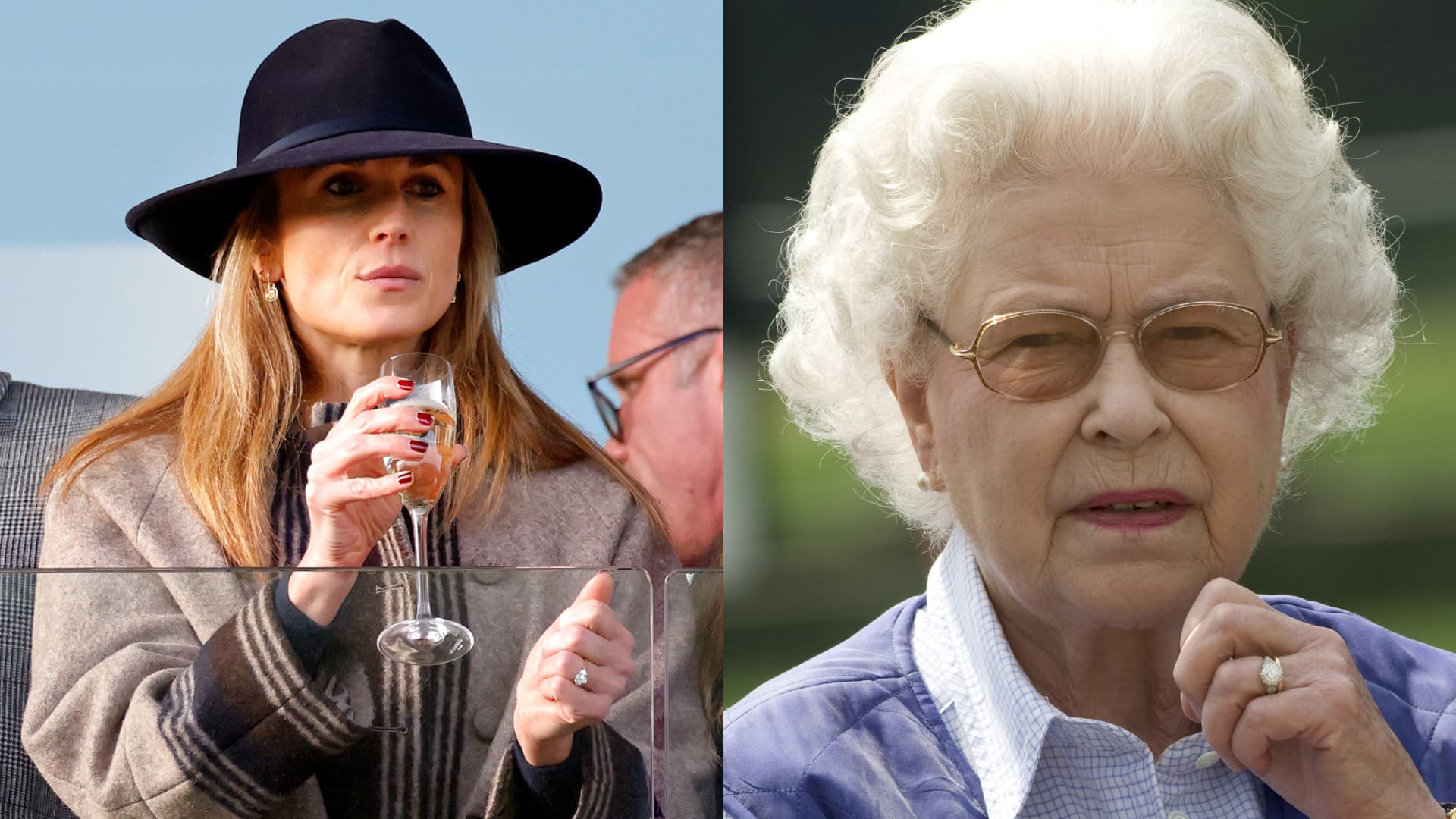
There is a particular kind of engagement ring that does not need to shout. It carries its authority quietly, in the cut of its diamonds, the reputation of its maker, and the generations of precedent woven into its design. The ring Peter Phillips placed on Harriet Sperling's finger is precisely that kind of piece. Chosen from Pragnell, a Mayfair jeweller with a lineage stretching back nearly two centuries, the diamond trilogy ring Sperling has been photographed wearing since the couple announced their engagement in August 2025 communicates something the bridal industry has spent decades trying to bottle: the unmistakable grammar of royal taste.
The Ring Itself
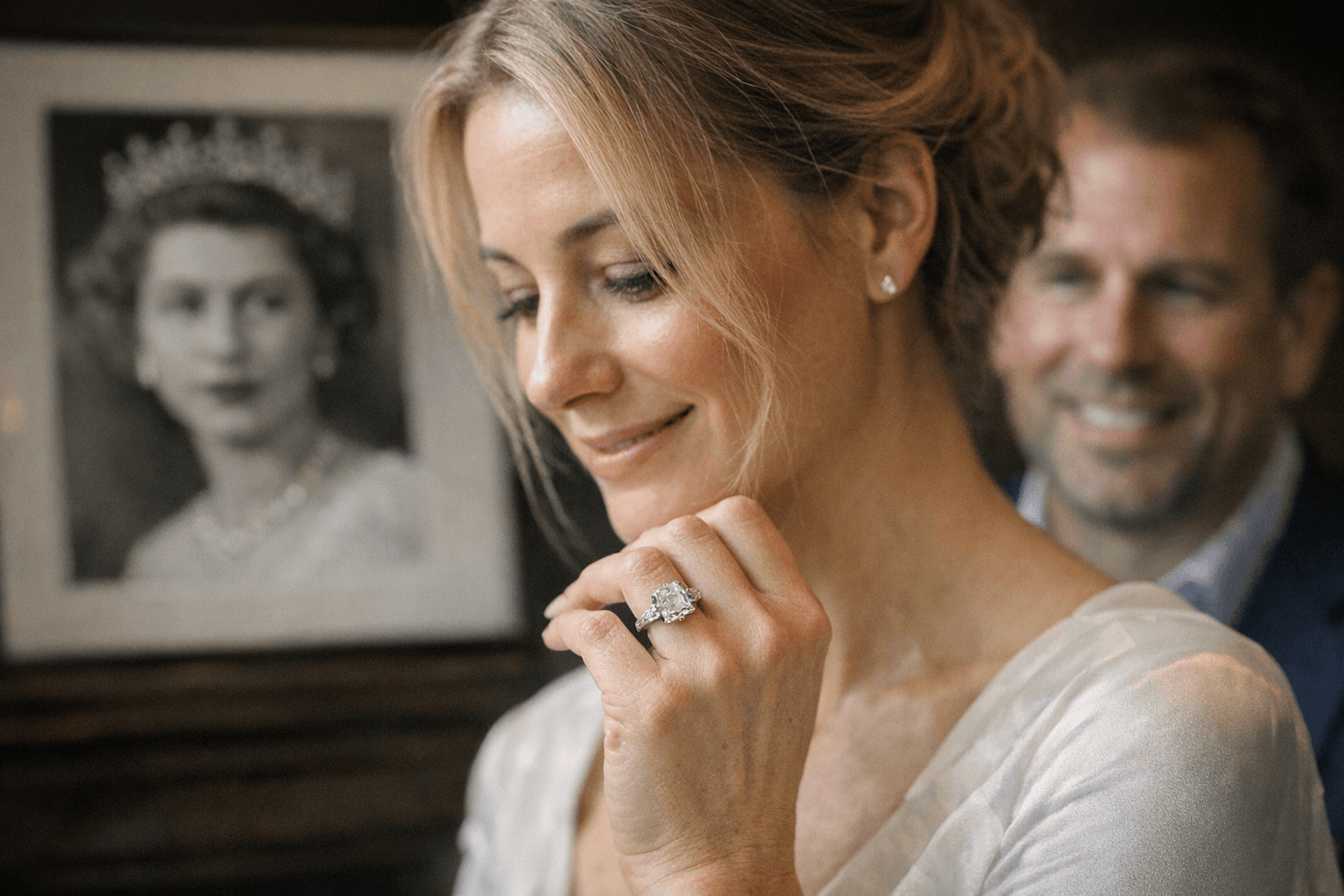
According to Tobias Kormind, co-founder and managing director of 77 Diamonds, "the ring appears to be a timeless trilogy design, likely showcasing a central oval or round diamond, flanked by trapeze-cut or triangular side stones." That three-stone arrangement, with a dominant center stone and two precisely cut flanking diamonds, is one of the most symbolically loaded configurations in fine jewelry. The three stones traditionally signify past, present, and future, a narrative framework that suits a ring intended to represent a lifetime. Pavé diamonds along the band's shoulders add the kind of light-scattering finish that photographs luminously in any setting, from a windswept Cheltenham Racecourse on New Year's Day (where Sperling publicly showed the ring for the first time in January 2026) to a church aisle.
The Pragnell Connection
Selecting Pragnell was not a passive choice of convenience. It was a deliberate act of heritage encoding. The Mayfair jeweller, founded by George Pragnell in 1954, holds one of the most specifically royal pedigrees in British jewelry history. George Pragnell himself served as a jeweller to Queen Mary from the early 1930s until her death in 1953, and accounts describe the young Princess Elizabeth and her sister Margaret visiting the shop while their grandmother browsed the cases. In 1991, Pragnell acquired Philip Antrobus Ltd, a house founded in 1815 and responsible for one of the most significant commissions in British royal history: the three-carat round brilliant-cut diamond engagement ring Prince Philip presented to Princess Elizabeth in 1946, with ten pavé diamonds set five to each shoulder of the band. The diamonds for that ring came from a tiara belonging to Philip's mother, Princess Alice of Battenberg, making it a piece that transformed family inheritance into wearable declaration. Pragnell now holds the original Antrobus archive designs and has built its Antrobus Setting collection around that legacy.
As Emily Nash of Hello! magazine observed of the parallel between the two rings: "Peter was the late Queen's eldest grandson and they had a very close bond, so this is a lovely connection to her own story." That connection is not incidental. It is the entire point.
Reading the Royal Jewelry Playbook
What Sperling's ring demonstrates is that the royal approach to engagement jewelry operates through a set of consistent codes, none of which are primarily about carat weight. Provenance is the first signal: buying from a jeweller with documented royal history is not snobbery, it is a form of storytelling that binds the new piece to an existing narrative. The second is setting geometry. The trilogy format has appeared across royal hands for decades precisely because it reads as considered rather than merely expensive. Third comes the treatment of the shoulders. Queen Elizabeth's 1946 ring used ten pavé diamonds to frame its central stone; Sperling's ring echoes that same shoulder language, creating visual continuity between two engagement rings separated by nearly 80 years. Finally, there is restraint in metal and cut. A round or oval brilliant-cut diamond in a clean, architecturally coherent setting reads as timeless in a way that trend-driven silhouettes do not.
How to Recreate the Look
The good news is that the codes above are translatable across almost any budget. The royal jewelry vocabulary is not owned by Mayfair; it is a design language anyone can speak fluently if they know what they are asking for.
The most authentic route is the antique market. Georgian and Victorian three-stone rings appear regularly at specialist auction houses and estate dealers, often featuring old mine or old European cut diamonds whose softer, more candlelit brilliance gives a warmth that modern brilliant cuts cannot replicate. These cuts predate precision industrial cutting, so their slight asymmetries and deeper pavilions create a glow rather than a flash. Prices span a wide range, from under £2,000 for modest pieces at regional auction to well above £20,000 for signed examples from documented houses. The key is condition of the setting and quality of the center stone, two factors worth having independently assessed by a GIA-trained gemmologist before purchase.
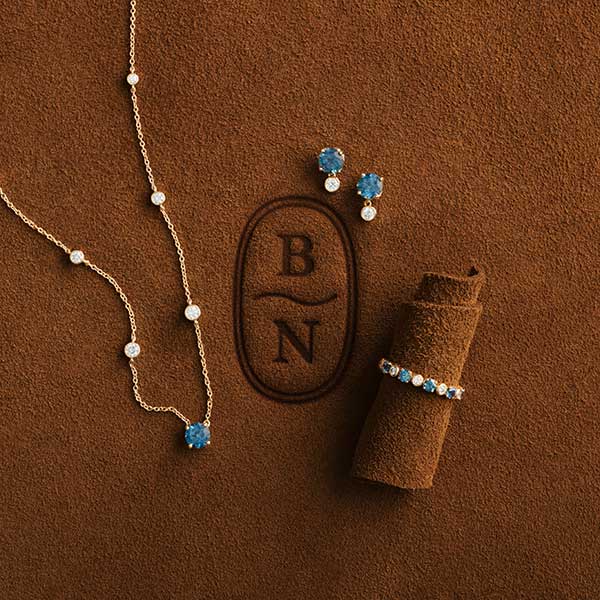
For a newly made ring that carries heritage sensibility, look for jewellers who work with old-cut diamonds sourced from antique jewelry or who offer hand-engraved shanks, milgrain edge detailing, and pavé shoulder treatments. Yellow gold, which fell out of royal favor during the platinum era of the mid-twentieth century but has returned emphatically, anchors a ring in the Georgian and early Victorian tradition and lends a warmth that flatters a wide range of skin tones. An 18-karat yellow gold trilogy ring with an old European cut center stone and hand-set pavé diamonds on the shoulders can be commissioned from a skilled independent jeweller for anywhere between £3,500 and £12,000 depending on center stone quality and carat weight, which places it within reach without requiring Mayfair pricing.
What to Ask Your Jeweller
The difference between a ring that reads as royally inspired and one that reads as merely costume-adjacent comes down to execution, and the right questions reveal whether a jeweller is capable of the former.
- Ask whether the side stones are hand-set or machine-set. Hand-setting produces slightly varied, naturalistic results that antique rings share; machine uniformity tends to flatten the piece.
- Ask about the source of any old-cut diamonds. Reputable dealers can provide provenance documentation or at minimum a reliable account of where the stones originated.
- Ask whether engraving is done in-house by a hand engraver or outsourced to laser cutting. Hand engraving inside the band is one of the least visible and most meaningful details a ring can carry, and laser-cut engraving lacks the depth and variation that makes the former worth doing.
- Ask to see the milgrain edge under magnification before committing. Well-executed milgrain should show fine, even beading; sloppy milgrain signals cutting corners throughout the production process.
- If commissioning a new piece intended to evoke heritage, ask whether the jeweller has access to historical pattern books or archival designs. Houses like Pragnell draw directly from the Antrobus archive; independent jewellers with genuine craft credentials will have equivalent reference material.
Why Provenance Has Replaced Carats as the Bridal Status Signal
Sperling's ring, estimated at upward of $10,000, is not remarkable for its size. What makes it remarkable, and what has driven the volume of coverage it has received, is the density of meaning packed into a relatively restrained design. The shift away from maximum carat weight as the primary indicator of bridal seriousness has been building for years, and Peter Phillips's choice crystallizes where that shift has arrived. A ring chosen from a house that made your grandmother's engagement ring, designed in a format that has carried symbolic weight for two centuries, set with diamonds cut to echo that historical precedent: that is a piece that will still be worth discussing in another 79 years. The Sperling ring does not try to impress through spectacle. It earns its authority the old way, through what it knows and where it has been.
This article was produced by Prism’s automated news system from verified source data, official records, and press releases, then run through automated quality and moderation checks before publishing. The system is built and supervised by the people who set the standards it runs under. Read our full AI policy.
Did this article answer your question?