Sotheby's Paris Sale Hits $7.4 Million, Cartier Ruby Ring Soars Eight Times Estimate
A Cartier bombé ruby ring crushed its estimate eightfold at Sotheby's Paris, fetching $560,322 in a sale that signals the saturated dome ring's full revival.
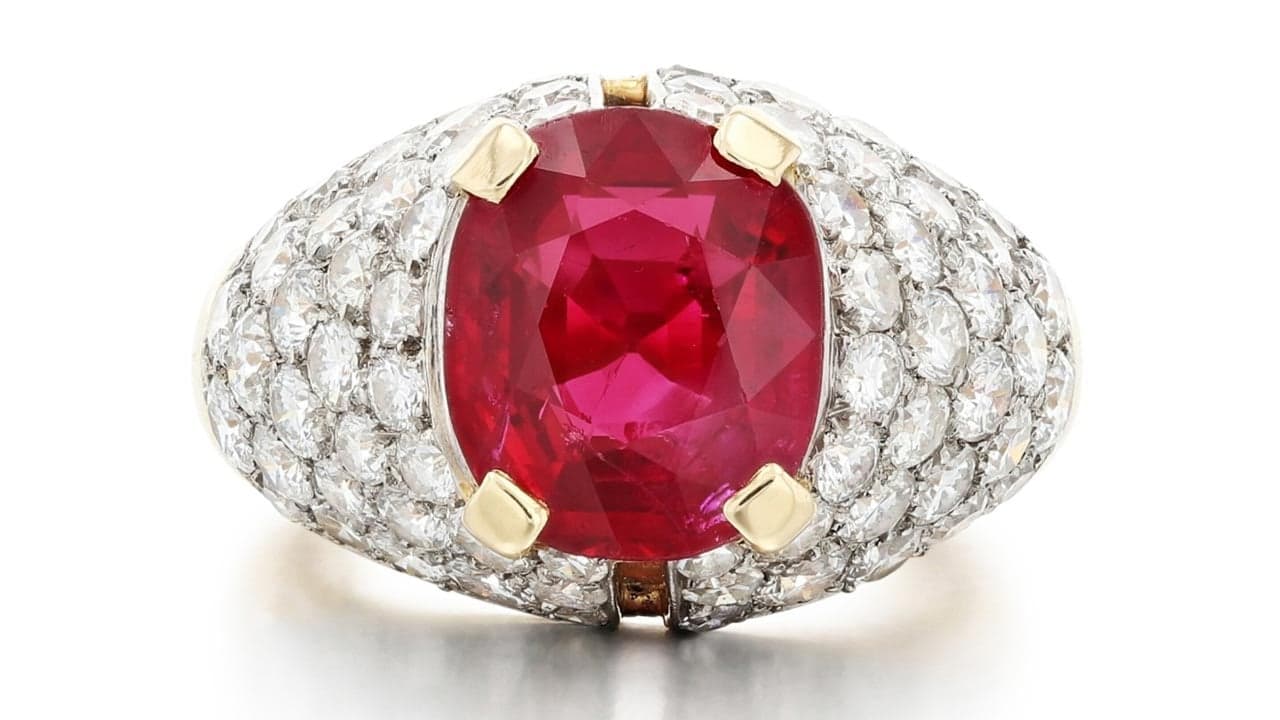
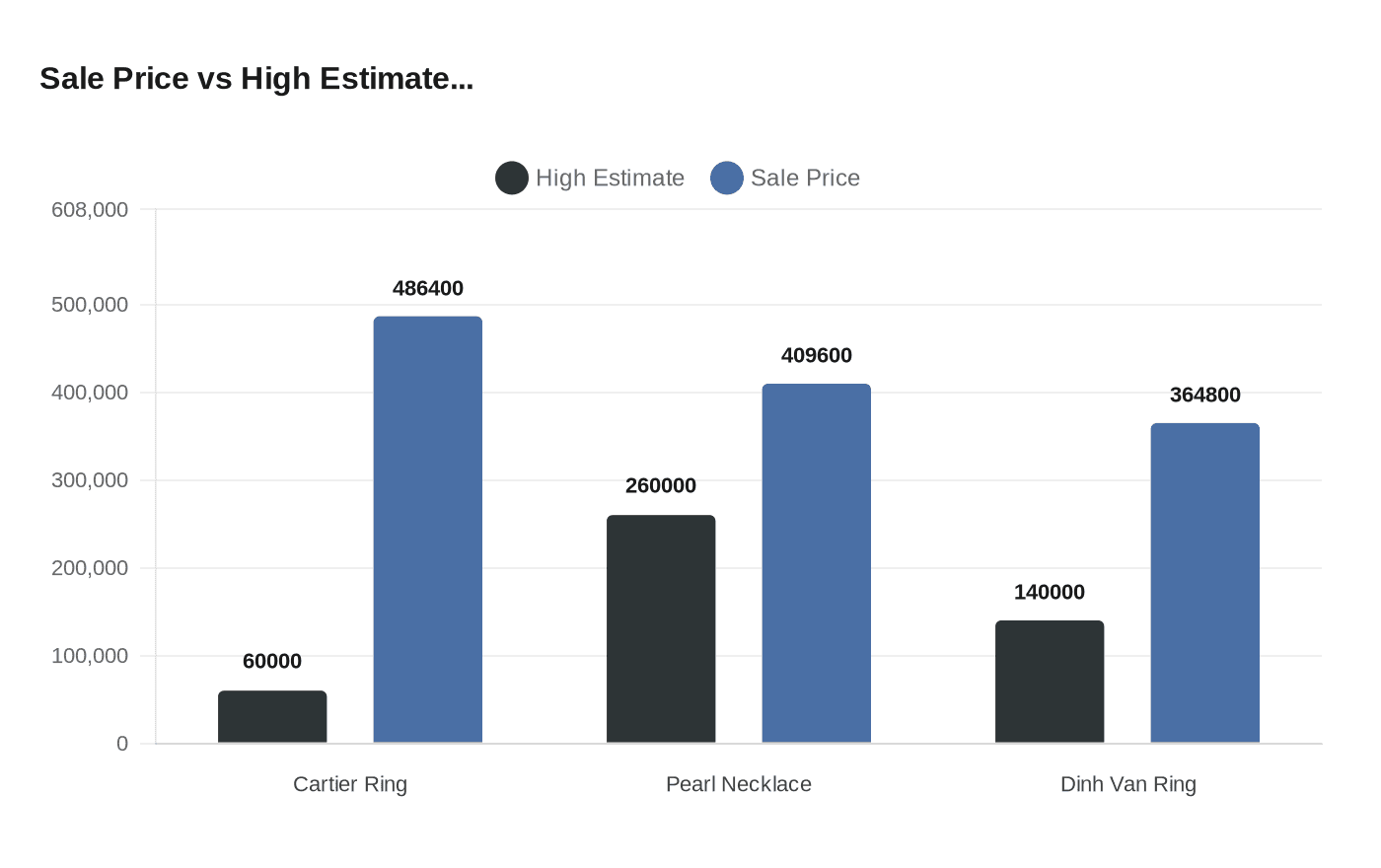
A Cartier ruby and diamond ring took the spotlight at Sotheby's Paris, bringing in more than eight times its high estimate. The bombé design centers an oval cushion-shaped, 4.12-carat Burmese ruby with a surround of brilliant- and single-cut diamonds, realizing €486,400 ($560,322) against a high estimate of just €60,000 ($69,119) at the March 31 fine-jewelry sale. In total, the auction closed at €6.4 million ($7.4 million).
That spread between estimate and hammer is the kind of result that reshuffles assumptions. But beyond the arithmetic, the Cartier ring is a style signal: the bombé silhouette, with its convex dome that crests above the finger in an almost architectural swell, is back at the center of serious jewelry collecting. Jillian Sassone, founder of Marrow Fine Jewelry, framed the appeal plainly: "Bombé rings are having such a moment right now because they're bold, sculptural and timeless all at once." The Cartier piece is that argument made physical, a dome profile commanding the hand with a ruby anchoring its crown.
The stone type matters as much as the silhouette. At this year's Academy Awards, rubies were the gemstone of the night, appearing on Dove Cameron and Zoe Saldana. The stone earns that red-carpet placement: a fine Burmese ruby at pigeon-blood saturation absorbs and returns light simultaneously, glowing under flash rather than washing out. The Burmese ruby commands collector premiums today because of its rarity, distinct red color, and historical provenance as the gemstone of Mogok Valley, Myanmar. The strongest per-carat prices are recorded for unheated, untreated pigeon-blood rubies from Myanmar, and certification from a recognized gemological laboratory documenting both origin and treatment status is the baseline before any serious acquisition conversation begins.
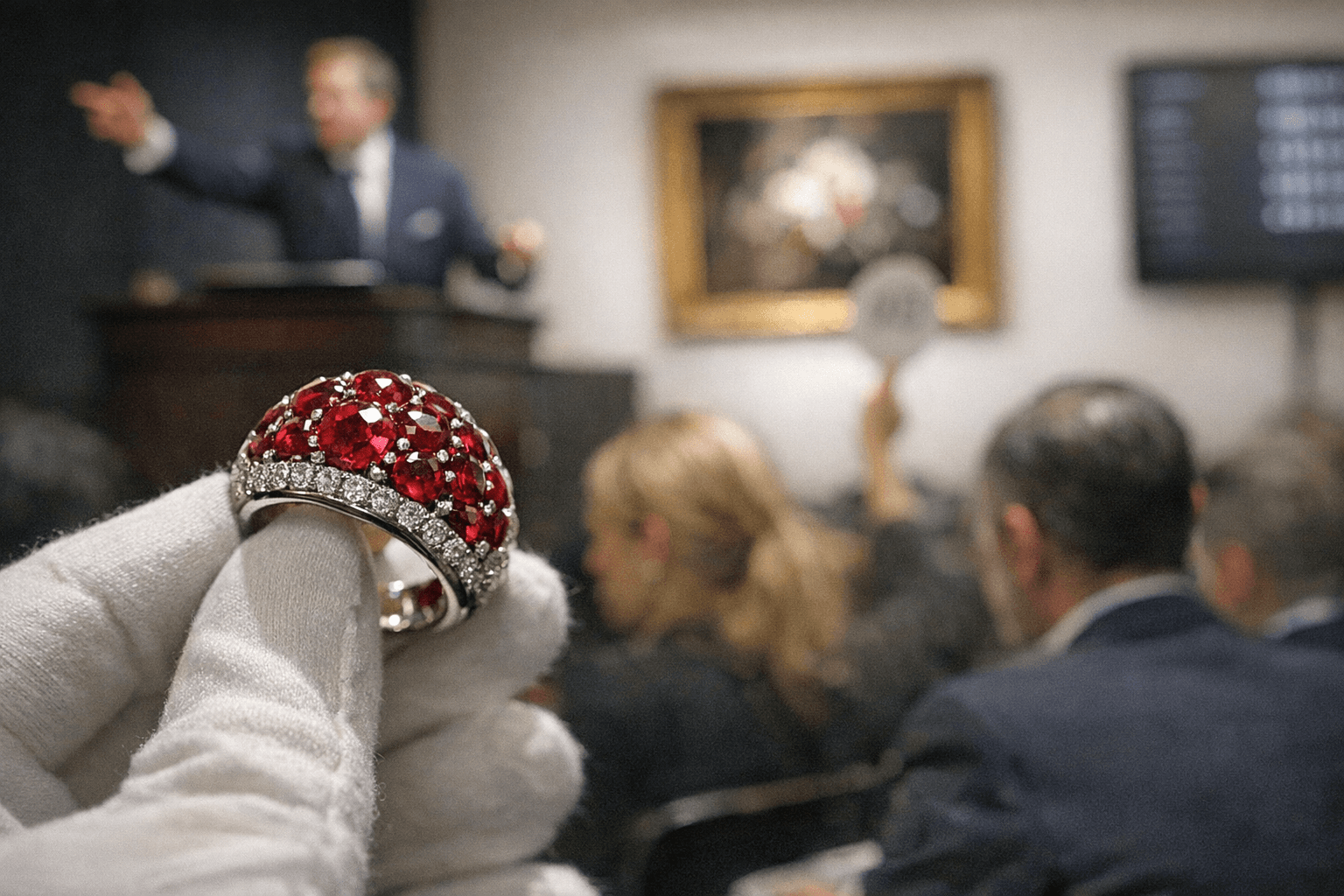
The Cartier ring was not the sole overperformer in Paris. A necklace comprising 33 rounded, oval, button- and drop-shaped natural pearls with a rhodolite garnet and diamond clasp sold for €409,600 ($471,851) against an estimate of €130,000 to €260,000. A Dinh Van ring centered on a 13.80-carat Burmese sapphire in an openwork mount brought €364,800 ($420,242) against a pre-sale estimate of €70,000 to €140,000. The sale drew top lots from famous design houses including Chaumet, Harry Winston, and Van Cleef & Arpels. The pattern is consistent: colored stones with a house signature attached are clearing multiples.
For anyone drawn to the silhouette the Cartier ring defines, the entry points are genuinely varied. Vintage dealers regularly surface unsigned mid-century bombé rings with natural or lower-grade rubies from a few hundred to a few thousand dollars; the dome profile is the design objective regardless of stone grade. Contemporary maisons including Bulgari and Verdura produce bombé settings with colored center stones at five-figure openings, climbing steeply with provenance. The most direct translation of the Sotheby's aesthetic at accessible retail is a question of geometry: prioritize dome height over raw stone weight. A 2-carat natural ruby in a well-proportioned bombé mounting outreads a larger flat-set stone at nearly every angle and in every room. Wearability is built into the architecture; the surrounding diamond setting amplifies depth rather than fighting the center stone for attention.
The Paris result did not discover the bombé ring. It repriced the conversation.
This article was produced by Prism’s automated news system from verified source data, official records, and press releases, then run through automated quality and moderation checks before publishing. The system is built and supervised by the people who set the standards it runs under. Read our full AI policy.
Did this article answer your question?