Top Online Destinations for Buying Loose Diamonds in 2026
Blue Nile's 400,000-stone vault and Rosec Jewels' lab-grown-first ethos represent two very different paths to a certified loose diamond — and both are worth knowing before you spend a dollar.

Before you spend a single dollar on a loose diamond, know this: the stone you choose matters far less than the platform you trust to grade, photograph, and stand behind it. The online engagement ring market is booming, with more and more couples turning away from traditional brick-and-mortar showrooms in favor of a digital shopping experience. The best destinations in 2026 have raised the bar considerably, combining rigorous third-party certification, high-resolution imaging, and transparent pricing structures that physical retail rarely matches. Here is a ranked look at where to shop, what each platform does best, and what to verify before you click purchase.
What to look for in any online diamond retailer
When buying loose diamonds, you want to be sure that you understand the specs and certifications of the stone. The best place to buy loose diamonds is a place where you can read the diamond's IGI or GIA certifications, look at detailed photos of the stone, and reach out with any questions you may have. Beyond that baseline, look for 360-degree viewing technology: leading destinations like Blue Nile pride themselves on cutting-edge virtual features like 360-degree diamond visualization, 100x magnification, and 24/7 customer support. Third-party certification from GIA, AGS, or IGI is non-negotiable. These three agencies are each named across major consumer guides for 2026, though their grading methodologies differ and no single guide in the current landscape declares one categorically superior to another. Demand the certificate, download it, and cross-reference the report number before committing.
1. Blue Nile
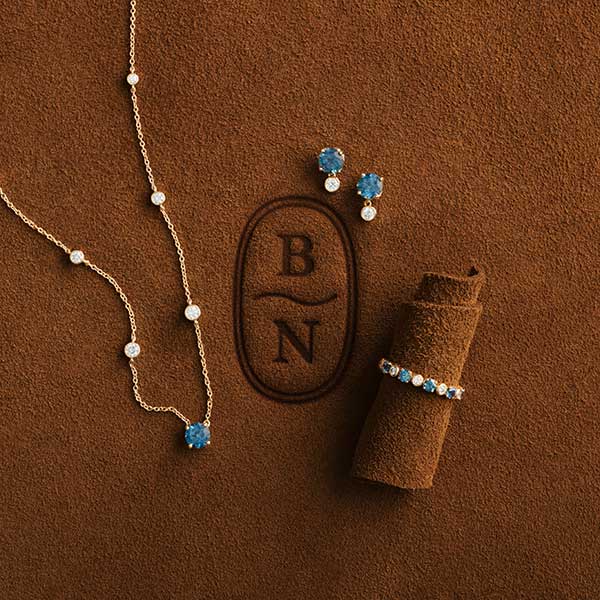
As the original online jeweler, Blue Nile epitomizes the advancements that have been made in the diamond industry. Valuing top-notch customer care, U.S.-based assembly, price transparency, and first-class craftsmanship, Blue Nile is best known for its design-your-own ring services, but you can just as seamlessly source a loose diamond from its well-stocked and constantly updated e-shelves. Blue Nile offers one of the most extensive diamond inventories worldwide, with over 400,000 natural diamonds in stock; their natural diamond stock carries GIA certification exclusively, which is widely considered the gold standard of the diamond industry. Around 300,000 of their natural diamonds are listed with 360 videos, allowing buyers to inspect stones under magnification from each angle.
The retailer's proprietary tier, Astor by Blue Nile, is a carefully curated collection featuring around 2,000 diamonds in various shapes, including round, princess, cushion, radiant, oval, and heart-shaped, each rigorously graded by the GIA and GemEx to ensure they meet the highest cut standards in the industry. Every loose diamond Blue Nile sells receives expert grading for its cut, color, clarity, carat, and any elements of note. On the lab-grown side, Blue Nile offers over 20,000 lab-grown diamonds on its website, all GIA-certified, making it the world's largest GIA lab-grown diamond seller.
Shoppers should note that Blue Nile's breadth is its greatest asset and its greatest challenge: with hundreds of thousands of stones to sift through, using the clarity, carat, color, and cut filters carefully is essential. Blue Nile offers a 30-day no-questions-asked return policy and provides lifetime guarantees on manufacturing defects. Their pricing runs up to 20 to 40 percent less compared to traditional jewelers. A price-match guarantee also applies if you find a comparable GIA-certified stone for less elsewhere.
2. Rosec Jewels
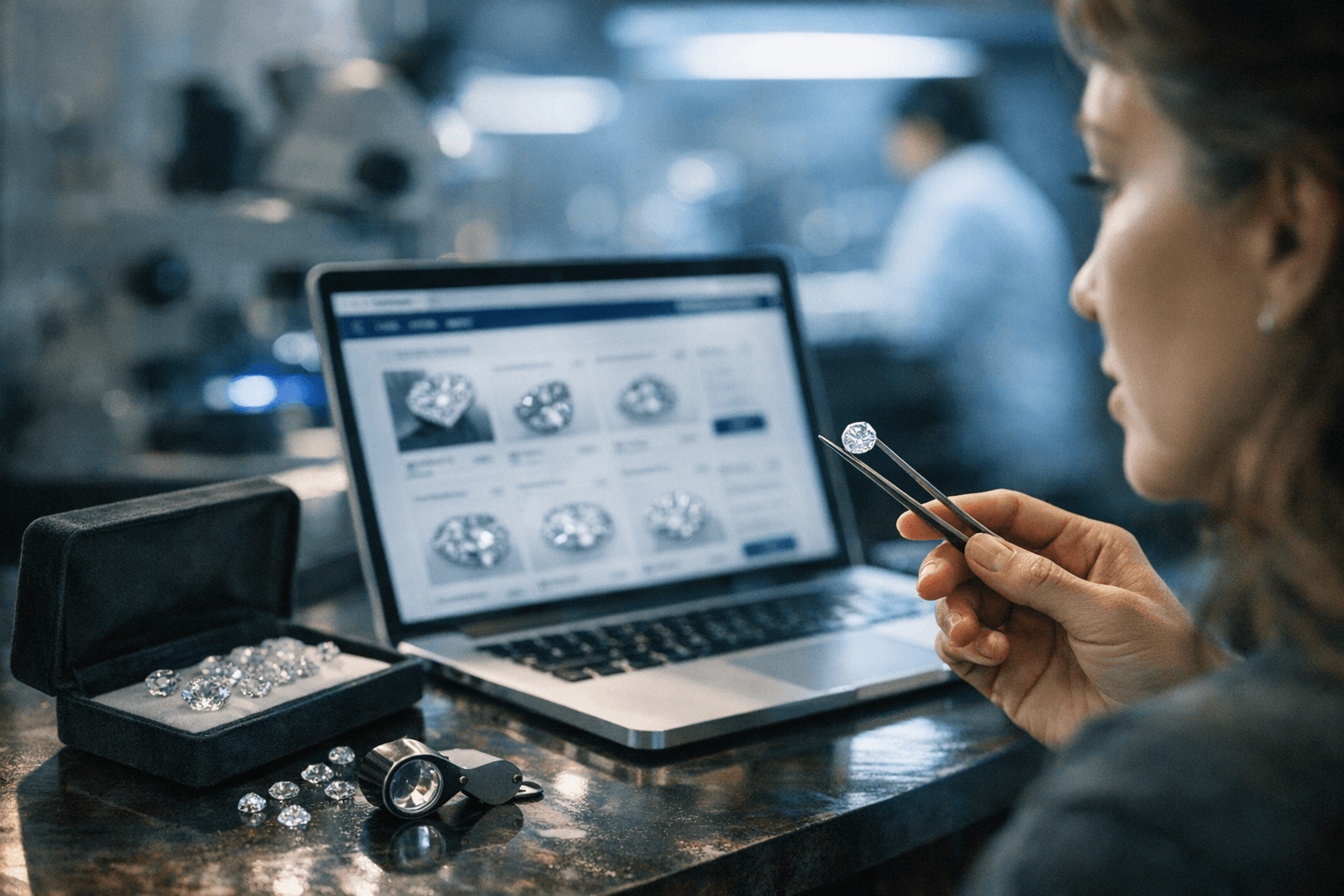
Where Blue Nile wins on sheer inventory scale, Rosec Jewels earns its place by building a more focused, values-led proposition. Every piece is handcrafted using certified lab-grown diamonds, moissanite, and conflict-free gemstones, ethical alternatives that match mined stones in brilliance and durability, with clear guides, fair pricing, full customization, and free insured global delivery. The brand positions itself as a dedicated lab-grown diamond manufacturer, but its catalog extends to natural diamonds and an extensive selection of colored gemstones, including vivid rubies, deep sapphires, and lush emeralds, crafted into everything from timeless solitaire settings to contemporary layered designs.
The lab-grown argument at Rosec is substantiated by market context worth knowing: the global lab-grown diamonds market stood at USD 29.73 billion in 2025, with expectations to climb to USD 33.94 billion in 2026 before reaching roughly USD 97.85 billion by 2034, reflecting a compound annual growth rate of 14.15%. Lab-grown diamonds, according to Rosec Jewels, are optically and physically identical to mined diamonds but come at significantly lower prices, making them especially popular for engagement rings among millennials and Gen Z shoppers. North America stands poised for the swiftest expansion among regions, propelled by elevated disposable incomes in hubs like California, New York, Texas, and Florida, alongside strong millennial and Gen Z preference for environmentally conscious alternatives, where ethical sourcing concerns and budget-friendly access propel adoption in bridal jewelry and fashion pieces alike.
One important note for investigative shoppers: Rosec's sustainability claims center on "verified sustainability" for its lab-grown stones, but the brand's marketing materials do not specify which third-party certifier or standard underpins that verification. That is a gap worth closing with a direct inquiry before purchase. Rosec Jewels offers lab-grown diamonds in EF-VS and HI-SI grades for what it describes as exceptional sparkle and ethical luxury.
3. The certification triangle: GIA, AGS, and IGI
Certification is the single most important variable when buying a loose diamond online, and the agency behind the certificate matters. GIA and AGS are the two bodies recommended by industry guides for natural diamonds; IGI has become the leading certifier for lab-grown stones. Both IGI and GIA are highly respected for lab grading today, and a lab-grown diamond with an IGI report from a reputable retailer is a rock-solid asset. All of Ritani's natural diamonds, for example, are certified by either the GIA or AGSL, the industry's two most respected grading labs. Blue Nile tells buyers to read the diamond's IGI or GIA certifications, while WWD's consumer guide specifically calls out GIA/AGS certification as a key feature to look for. The takeaway: confirm which lab certified the specific stone you are considering, download the report, and use the report number to verify its authenticity directly on the certifying agency's website.
4. 360-degree imaging and high-resolution photography
No certification replaces the ability to see a stone. Blue Nile allows buyers to inspect diamonds up-close with high-quality photos, IGI or GIA certifications, and even 360° viewing for many stones. WWD's consumer guide explicitly lists 360-degree imaging as a must-have marketplace feature for 2026. Blue Nile's lab-grown diamonds are each listed with a 360 premium video that allows buyers to inspect the stone easily, spot any flaws, and see its accurate color; their video technology is considered top-tier and the most reliable in the industry. When evaluating any retailer, check whether 360-degree viewing applies to all loose stones listed or only a subset. A retailer that provides magnified, multi-angle imaging on every listing gives a meaningfully different level of confidence than one that reserves it for premium-tier stones only.
5. Navigating the 4Cs filter system
A retailer's filtering taxonomy tells you a great deal about its sophistication and transparency. Blue Nile's current loose diamond catalog organizes stones by clarity (Flawless through Slightly Included), carat weight (from 0.5 to 4 carats, with incremental stops at 0.75, 1, 1.5, 2, and 3 carats), color grade (D through K), and cut tier (Ideal and the proprietary Astor Ideal). There are many diamond shapes that are popular today, with round brilliant often getting the most demand, but other shapes, such as princess and oval, are growing in popularity. Blue Nile recognizes 11 popular diamond shapes: Princess, Cushion, Heart, Pear, Marquise, Radiant, Asscher, Emerald, Round, Trillion, and Oval. A note on clarity shorthand: the standard industry abbreviations are VVS1/VVS2 and VS1/VS2; confirm which grade tier a stone falls into by reading the actual certification, not only the retailer's site labels, as shorthand varies between platforms.
6. Lab-grown vs. natural: the price and provenance question
Lab-grown diamonds, chemically, physically, and optically identical to their mined counterparts, have moved from the fringes to the forefront of the jewelry conversation. With production efficiencies soaring and consumer priorities tilting toward ethics and value, these stones now deliver brilliance at a fraction of traditional costs, reshaping decisions for engagement rings, anniversary pieces, and everyday wear alike. Lab-grown diamonds from retailers like Blue Nile can be up to 70% less expensive than mined diamonds. That price differential is real and significant, but it comes with an important caveat: lab-grown diamonds do not retain value the way rare natural stones can. If you are buying for the beauty of the stone and your budget, the lab-grown case is compelling. If you are buying with an eye toward an heirloom or investment, a GIA-graded natural stone from a transparent, conflict-free source deserves serious consideration.
Sustainability remains a powerful catalyst for lab-grown adoption. Lab-grown diamonds avoid the ecological disruptions of traditional mining: no land displacement, reduced carbon intensity in controlled settings, and transparent supply chains that resonate strongly with buyers attuned to planetary impact. Both Blue Nile and Rosec Jewels lean into this narrative, though neither provides independently audited environmental impact data in their public-facing materials. Treat sustainability claims as a starting point for inquiry, not a guarantee.
The online loose diamond market has matured enough in 2026 that the question is no longer whether you can buy a certified stone safely online; it clearly can be done. The top diamond brands of 2026 are considered fool-proof places for buying a loose diamond online, meaning the stone will not come to your door embedded in a setting, letting you take a more bespoke approach to your ring's design or craft your own pendant necklaces and stud earrings at a local jeweler. The more important question is which specific retailer's combination of certification standards, imaging quality, inventory depth, and return policy earns your trust for a purchase of this scale. Verify each of those variables independently, and the stone you choose will be one you hold with confidence, not uncertainty.
This article was produced by Prism’s automated news system from verified source data, official records, and press releases, then run through automated quality and moderation checks before publishing. The system is built and supervised by the people who set the standards it runs under. Read our full AI policy.
Did this article answer your question?