15 Expert Tips for Planning the Perfect Engagement Ring Proposal
Sizing secrets, lab-grown diamonds, and the art of the reveal: expert guidance makes the difference between a good proposal and an unforgettable one.
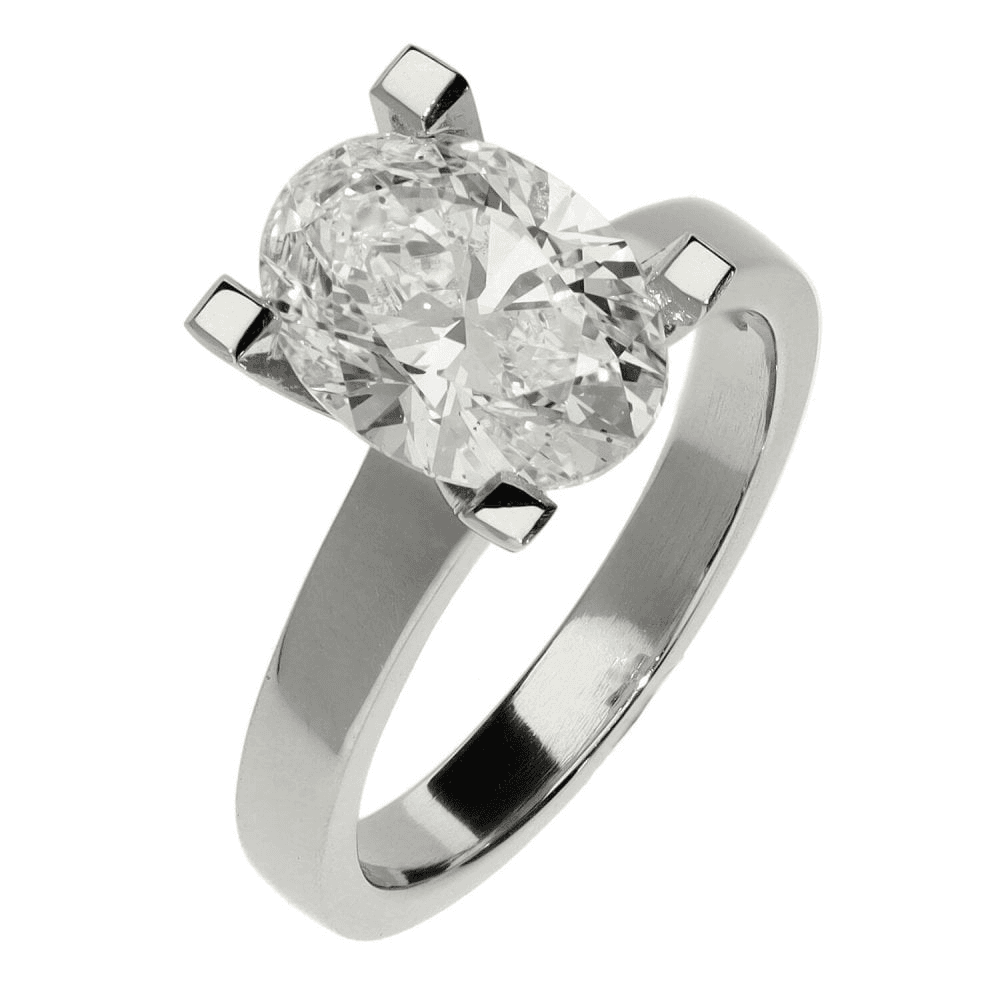
Few purchases carry the emotional weight of an engagement ring, and fewer moments demand more careful orchestration than the proposal itself. The stakes are high on both fronts: get the ring wrong and you've missed something deeply personal; get the moment wrong and the ring barely registers. The good news is that both are entirely plannable, provided you approach them with the same deliberateness you'd bring to any significant undertaking.
Start with a consultation, not a purchase
Before you step into a showroom or open a browser tab, talk to someone who knows the territory. Matt Frost of Sparkles for her describes his client intake as straightforward by design: "Our first conversation over the phone takes between 15-30 minutes and in that conversation I can help people move from whatever step they are in to knowing exactly what is possible for their budget and desires." That framing matters. A brief, structured conversation with a knowledgeable jeweler can collapse weeks of anxious research into a clear, actionable plan.
Understand what you'll actually decide
A ring purchase involves more decisions than most people anticipate, and knowing them in advance prevents the paralysis that strikes mid-appointment. According to Frost, a thorough consultation covers "what type of gems (mostly natural or lab-grown diamonds for engagement rings), what type of metal (white gold, yellow gold, rose gold, or platinum usually), what style of setting, and all the details they may not have thought of." Each of those categories branches significantly. Setting style alone spans solitaire prongs, pavé halos, bezel mounts, channel bands, and beyond, each carrying different implications for how the center stone appears and how the ring wears over time.
Know the difference between lab-grown diamonds and simulants
This is a distinction that causes genuine confusion among first-time buyers, and getting it wrong can be costly in more ways than one. Frost is direct on the point: laboratory-grown diamonds are "100% real diamonds" and are emphatically "NOT Moissanite or Cubic Zirconia/etc." Moissanite is silicon carbide; cubic zirconia is zirconium dioxide. Both are diamond simulants with optical properties that approximate diamond's brilliance but with entirely different chemical compositions and hardness ratings. A lab-grown diamond, by contrast, is crystallized carbon grown in a controlled environment using either high-pressure high-temperature or chemical vapor deposition processes. It is, in every gemological sense, a diamond.
Consider lab-grown diamonds for budget flexibility
The price differential between lab-grown and natural diamonds has become substantial enough that it fundamentally changes what's possible at a given budget. Frost puts the range at "about 30-50% less expensive than a natural diamond," a gap that can translate to a meaningfully larger stone, a more intricate setting, or simply more financial breathing room. That said, this is a vendor claim worth stress-testing: prices fluctuate, and the secondary market for lab-grown diamonds differs from that of natural stones, a factor worth understanding before committing.
Insist on certification, and know which body issued it
A diamond without a certificate is a diamond you cannot independently verify. Frost's position at Sparkles for her is unambiguous: "We only sell main diamonds that are certified by third party independent grading laboratories. The certification we use for natural diamonds is GIA (Gemological Institute of America) and IGI (International Gemological Institute) for lab-grown diamonds." The Gemological Institute of America is widely regarded as the most rigorous grading authority for natural diamonds; IGI has become the dominant certifying body for lab-grown stones. Neither is interchangeable with in-house grading, which should be treated with skepticism.
Verify the laser inscription on the girdle
Certification alone isn't sufficient if you can't connect a specific stone to its specific report. The industry-standard solution is laser inscription: a microscopic alphanumeric code etched onto the girdle, the narrow band encircling the diamond's widest point, that corresponds directly to the stone's grading report. As Frost explains, "these will have certification numbers laser inscribed on the girdle of the diamond so you will always be able to verify the diamond you have is exactly what you purchased." Ask to see this inscription under magnification before you finalize any purchase.
Choose your metal with the stone in mind
The interplay between metal color and diamond appearance is subtler than most buyers expect. White gold and platinum create a neutral surround that allows a colorless diamond to read as icily bright; yellow gold, conversely, can warm up a near-colorless stone and make faint yellow tints less perceptible. Rose gold sits between the two in tone and has maintained strong relevance in contemporary design. Platinum is denser and more durable than gold alloys, which matters for settings with fine prongs or intricate pavé work, where metal integrity directly affects long-term stone security.
Think carefully about setting style and lifestyle
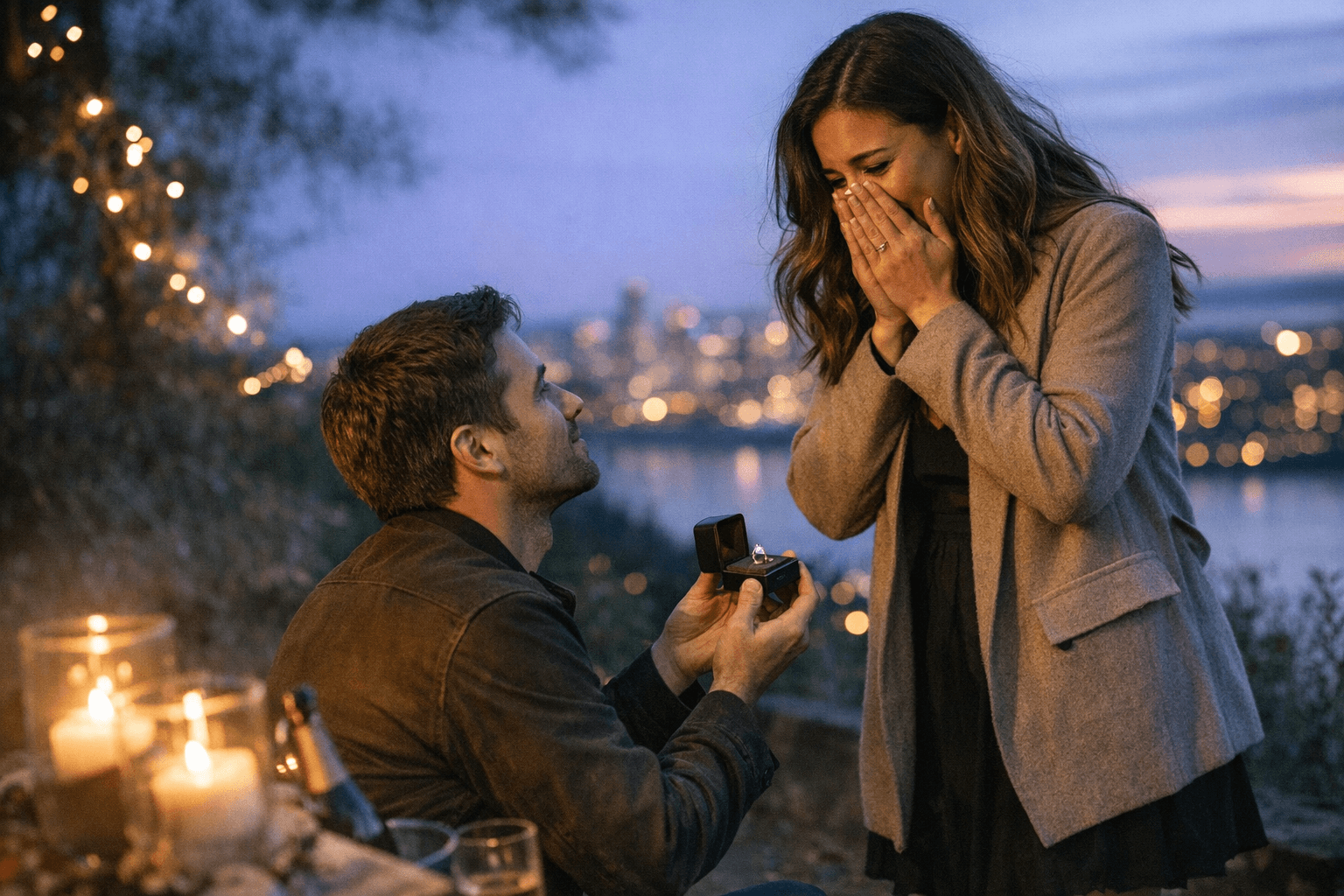
A six-prong Tiffany-style solitaire elevates a diamond beautifully but snagged prongs are a real concern for hands-on professions or active lifestyles. A bezel setting, where a continuous rim of metal encircles the stone's edge, offers significantly greater protection and a cleaner, more modern silhouette. A pavé or halo setting adds surface sparkle and can make a center stone appear larger, but the small accent stones require periodic checking. The right setting is the one that suits how the ring will actually be worn, not just how it looks under showroom lighting.
Determine ring size without ruining the surprise
This is the logistical puzzle at the heart of every surprise proposal, and it has more solutions than most people realize. Borrowing a ring the recipient already wears on the same finger is the most reliable method; having it sized by a jeweler while it's in your possession for a short period works even better. Failing that, asking a close friend or family member who might already know, or noting the size of a ring that fits your own finger loosely, are reasonable approximations. Most reputable jewelers offer one complimentary resize after purchase precisely because this step is so difficult to execute perfectly.
Set a budget before you fall in love with a stone
The sequence matters. Establishing a clear number before you begin looking prevents the psychological trap of anchoring to a stone that's beyond reach and viewing everything else as a compromise. Budget planning for an engagement ring should account not just for the stone and setting but for any resizing, insurance, and potential future upgrades. A good jeweler will work honestly within your stated range rather than nudging you consistently toward the upper edge of it.
Plan the timing with real precision
Timing a proposal involves more variables than simply picking a meaningful date. Consider whether the setting is private or public, who else might need to be coordinated (family, a photographer, a restaurant), and whether the date carries significance, an anniversary, a birthday, a first-trip location. The Proposal Planner in Italy blog, which features cases like a balloon proposal at the Fontanone in Rome, illustrates how location and timing interlock: a scenic backdrop raises the emotional stakes considerably, but it also introduces logistical complexity that rewards advance planning.
Decide early on a photographer or not
Having a photographer present, even discreetly, is a decision that needs to be made weeks in advance, not the night before. A skilled proposal photographer knows how to stay invisible until the moment arrives. If you choose not to hire one, think through who might be positioned to capture the moment on a phone, or accept that the memory will live primarily in the two of you rather than in an image file.
Consider the presentation of the ring itself
The ring box matters more than people typically acknowledge. A beautiful box in good condition, opened cleanly without fumbling, and presented at the right moment in the right light, adds a layer of theatre that the moment deserves. Practice opening it one-handed. Know which direction the ring faces when the box opens so the stone catches the light rather than turns away from it.
Prepare what you want to say
Even people who are eloquent in ordinary conversation often find themselves wordless in high-stakes emotional moments. Writing down what you want to say, and saying it aloud several times before the day, is not unromantic. It is how you ensure that what you feel actually gets spoken.
Have a contingency for everything
Weather, venue closures, delayed deliveries: proposals planned outdoors or around a specific location are vulnerable to disruption. A solid proposal plan has a backup setting in mind. The ring should be in your possession well before the date, with any sizing completed and the box inspected. The effort invested in the contingency is rarely wasted; more often, it's the reason the original plan unfolds without incident.
The difference between a proposal that simply happens and one that is genuinely remembered comes down to the same quality that distinguishes a well-made ring from a merely attractive one: intentionality applied at every level of detail.
This article was produced by Prism’s automated news system from verified source data, official records, and press releases, then run through automated quality and moderation checks before publishing. The system is built and supervised by the people who set the standards it runs under. Read our full AI policy.
Did this article answer your question?