Everything You Need to Know Before Buying an Engagement Ring in 2026
The two-to-three months' salary rule was invented by a diamond marketing campaign — and in 2026, with lab-grown diamonds and AI design tools reshaping the market, you finally have every reason to ignore it.
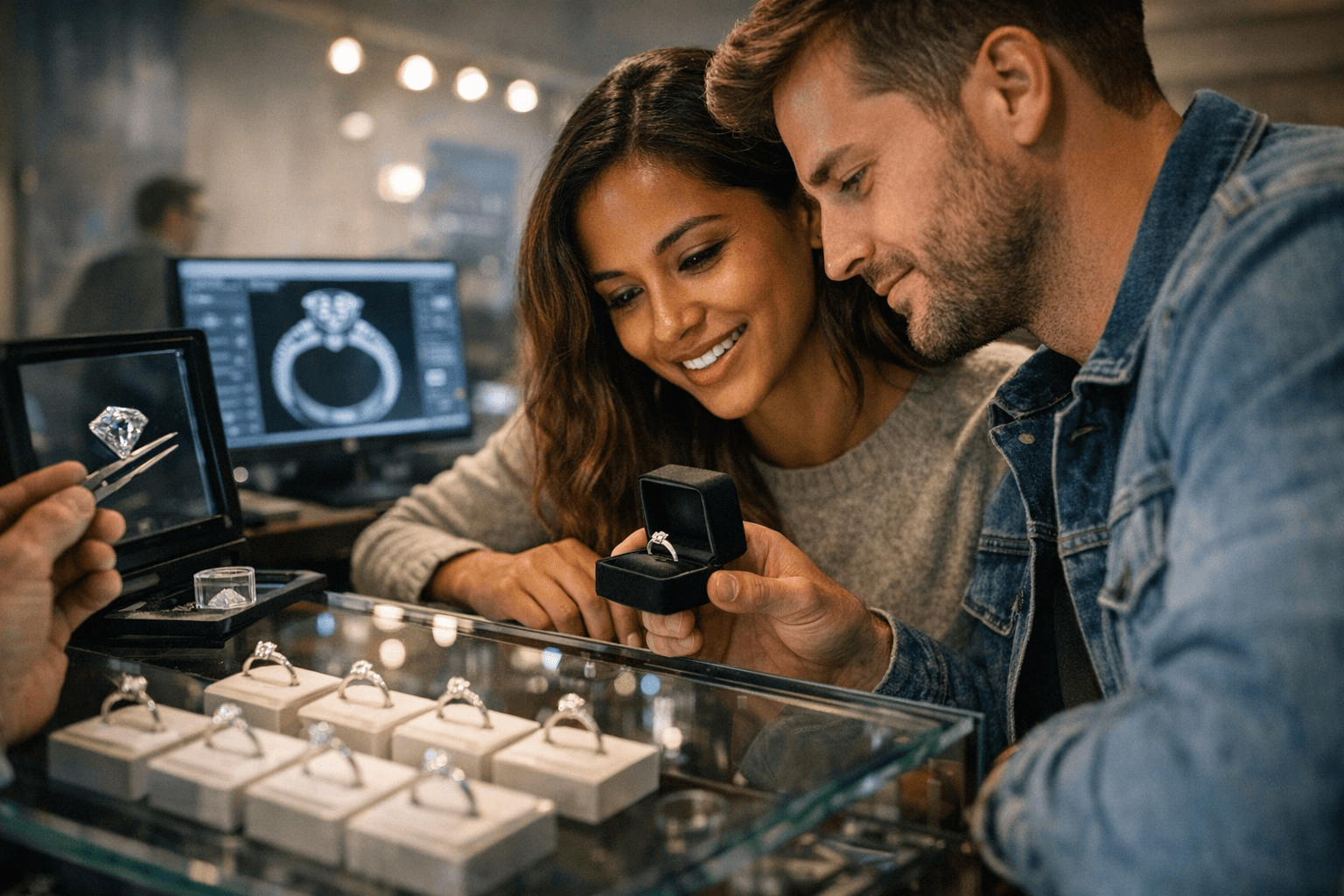
The rule that dominated engagement ring buying for decades — spend two to three months' salary — was never about love. It was invented by a diamond marketing campaign. That's worth knowing before you set foot in a jewelry store or open a single browser tab, because the market in 2026 looks nothing like the one that rule was designed for, and the best decisions start with a cleared head.
Set Your Budget Before You See a Single Stone
Before browsing any diamonds or settings, decide what you are comfortable spending. The average American spends between $5,000 and $7,000 on an engagement ring in 2026, but beautiful rings exist at every price point. What matters more than the number is where it comes from: your own financial picture, including savings goals, debt, and upcoming expenses, not a formula someone else handed you.
"A ring that puts you in financial stress is not a loving gesture," as one practical note puts it. Many couples today are choosing to allocate funds toward experiences or a home and opting for a stunning ring at a more modest budget. That's not a compromise — it's a priorities decision, and in 2026, the market fully accommodates it.
"Establishing a realistic budget is the foundation of a confident engagement ring purchase, allowing emotion and practicality to work together," says the team at Michael Agnello Jewelers in St. Clair Shores, Michigan. A clear financial range doesn't limit you — it focuses you. It opens conversations about metal choices, diamond size, and whether a natural or lab-grown stone better suits your goals. Rather than fixating on carat weight alone, consider overall presence, quality, and durability. Those three factors together will serve you far better than a single number on a scale.
Why 2026 Is a Genuinely Good Moment to Buy
Lab-grown diamonds have swiftly moved from an alternative option to the new norm; in 2026, more than half of couples are choosing lab-grown diamond rings for their engagement, drawn by sustainable origin and exceptional value. Lab-grown diamonds offer exceptional quality at a fraction of the cost of mined stones, and the technology behind them has matured to the point where the difference is undetectable to the naked eye. Both lab and natural diamonds are graded using the same criteria: the universal 4Cs established by the Gemological Institute of America (GIA) — and this shared standard is your guarantee that quality is measured consistently, no matter how the diamond was formed.
Beyond stone type, online retailers and AI design tools have made customization accessible to everyone. Customization and bespoke engagement rings are at the forefront of 2026 trends, with couples seeking rings that feel truly personal, from custom diamond shapes to one-of-a-kind settings and meaningful engravings. As Michael Agnello Jewelers frames it, selecting an engagement ring in 2026 is "both an emotional milestone and a strategic decision shaped by design innovation, ethical sourcing, and personal storytelling." Trends favor personal expression over rigid tradition, which means there is no wrong answer — as long as the ring reflects your relationship.
Mastering the 4Cs: Why Cut Comes First
The 4Cs — cut, color, clarity, and carat — are the universal language of diamond quality, and every serious buyer needs to understand them before committing to a stone. Of the four, cut is the one that deserves the most attention. "Prioritize diamond cut quality above all other factors," is the directive that appears across every credible buying guide, and for good reason: cut is what determines how light moves through a stone. Cut is the one 'C' you absolutely should not compromise on — a diamond's cut is what determines its brilliance and fire, how it plays with light. A beautifully cut one-carat diamond will outperform a poorly cut two-carat stone in every visual respect.
Color is graded on a D-to-Z scale, with D being completely colorless. A small trade-off — choosing a near-colorless stone instead of a colorless one — can free up a huge chunk of your budget with no visible difference to the naked eye. Clarity grades internal inclusions, and in practice, stones in the VS1–VS2 range often look identical to flawless stones without the premium price. Carat measures weight, not physical size; an elongated oval or marquise cut will appear larger on the finger than a round brilliant of the same carat weight. Carat measures weight, not visible size, and some diamond shapes spread their weight across a larger surface area, which makes them appear bigger on the finger.
Natural vs. Lab-Grown: How to Think Through the Choice
The question isn't which is "better" — it's which is better for you. The single most defining difference between a natural and a lab-grown diamond is its creation story. Chemically, optically, and physically, they are identical. Lab-grown diamonds cost 40–70% less than natural diamonds but are chemically identical. That gap in price can mean the difference between a one-carat and a two-carat stone on the same budget, or between a plain band and one with pavé diamonds along the shank.
For the buyer who sees a diamond as more than a beautiful object — as an heirloom, a piece of Earth's history, and a tangible asset — a natural diamond remains the unparalleled choice. Its finite supply and geological scarcity help it hold value across generations, making it not just a symbol of love but a lasting investment.
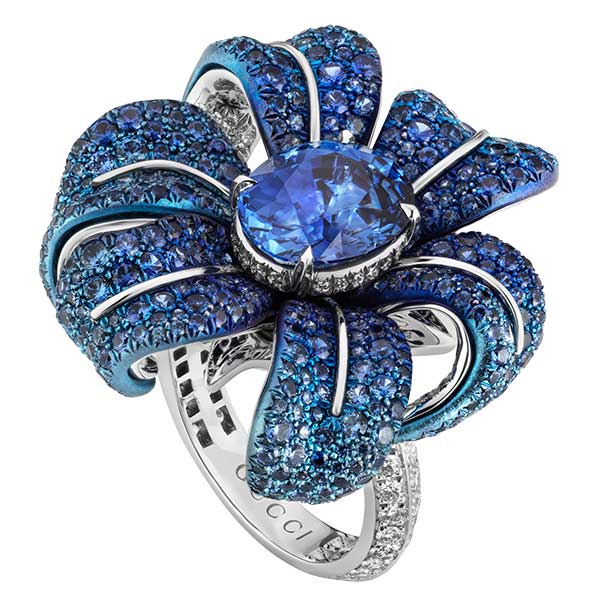
Beyond diamonds entirely, the market now includes a wide field of center stone alternatives. Color is making a statement in 2026, as more couples opt for vibrant gemstones: sapphires, emeralds, rubies, and stones like morganite add a personal pop of color to ring designs, reflecting a bride's unique personality or birthstone while offering a distinctive look beyond the traditional diamond. It is also worth noting that moissanite, while visually similar to a diamond, is classified as a diamond simulant, not a diamond — a distinction that matters when it comes to long-term value and resale.
Certification: What GIA and IGI Mean in Practice
Never buy a significant diamond without an independent certificate. The two most widely recognized certifying bodies are the Gemological Institute of America (GIA) and the International Gemological Institute (IGI), and they are not interchangeable. GIA is a nonprofit gemological organization founded in 1931 that developed the 4Cs grading framework; it is known for producing objective, laboratory-exact certification reports, most commonly for natural diamonds, which are widely used as a reference point across the jewelry industry. In 2026, GIA is the gold standard for natural diamonds and IGI leads for lab-grown. At Blue Nile, for example, GIA reports are used for natural diamonds while IGI reports accompany lab-grown stones — a useful shorthand for understanding how the two certifications function in practice. Blue Nile also recognizes a third standard worth knowing: Diamond Light Performance Certification, which evaluates how effectively a diamond interacts with light beyond the traditional 4Cs framework.
Understanding Your Partner's Style
Ring shopping done right requires observation. Observing the jewelry your partner wears daily reveals preferences in metal color, stone shape, and overall presence. Some gravitate toward minimal designs, while others favor bold details or vintage influences. Listening to casual comments, saving inspiration images, or consulting a trusted friend can provide valuable insight. The ring should feel natural on their hand, complementing both wardrobe and personality without requiring explanation.
Yellow gold has reclaimed its status as the metal of choice for trendsetting engagement rings in 2026; after an era dominated by platinum and white gold, its rich, golden hue offers a vintage-meets-modern vibe, complementing both classic solitaires and contemporary designs. If your partner leans toward silver-toned jewelry, platinum offers superior durability and a brighter white than white gold, though at a higher cost.
Choosing the Right Setting for Real Life
The setting does more than hold the stone in place — it determines how the ring wears over a lifetime. A cathedral setting, which arches the band upward to elevate the center stone, creates dramatic visual height but can catch on fabric and may feel cumbersome for someone with an active lifestyle. A bezel setting, where metal fully encircles the stone, offers excellent protection and a clean, architectural look. The bezel setting has emerged as one of the most influential design elements of 2026, creating a sleek, contemporary look while providing excellent protection for center gemstones. A classic four-prong setting, like the round diamond in white gold that appears in so many collections, maximizes light exposure but leaves the girdle of the stone more vulnerable to chips.
The key question: does this setting survive your partner's daily life? Someone who works with their hands, exercises regularly, or simply prefers not to think about their jewelry needs a lower-profile, more protective setting than someone who wears statement pieces daily and handles their rings carefully.
Before You Buy: A Final Checklist
The practical steps, in order:
- Set a realistic budget that does not cause financial strain.
- Research your partner's style preferences and ring size before any store visit.
- Prioritize cut quality above all other factors when evaluating diamonds.
- Choose a certified diamond with a GIA report for natural stones, or an IGI report for lab-grown.
- Select a setting that matches your partner's lifestyle as much as their aesthetic.
- Compare prices across multiple retailers, both online and in person.
- Ask about warranties, return policies, and resizing options before finalizing any purchase.
Both in-person and virtual shopping options exist at major retailers, which means you can begin with a virtual appointment to narrow your options and follow up in person to see how stones perform under real light conditions before committing.
The engagement ring market has never offered more choice, more transparency, or more flexibility than it does right now. What hasn't changed is the weight of the decision — and the fact that preparation, not budget size, is what separates a confident purchase from a regretted one.
This article was produced by Prism’s automated news system from verified source data, official records, and press releases, then run through automated quality and moderation checks before publishing. The system is built and supervised by the people who set the standards it runs under. Read our full AI policy.
Did this article answer your question?