From Neurobiology to Fine Jewelry, Blake Asaad Built Goodstone His Way
A bad engagement ring purchase sent Blake Asaad from medical school to founding Goodstone, an Austin fine jewelry brand built on cut quality and radical transparency.
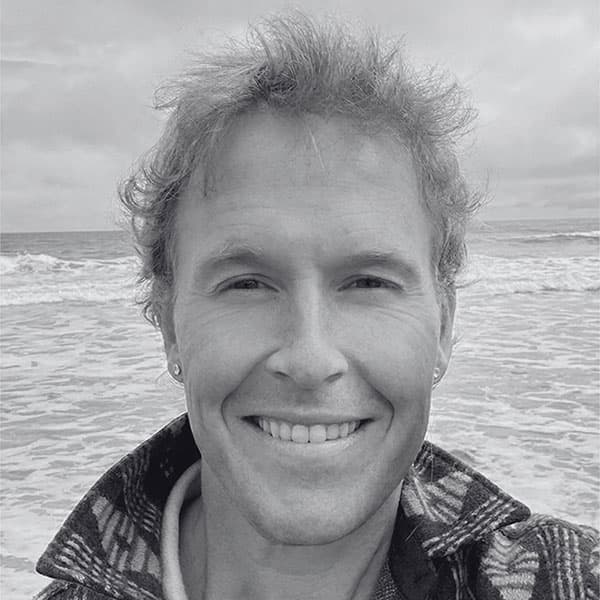
Before Blake Asaad ever thought about diamond cut grades or bezel settings, he was on track to become a doctor. He had studied neurobiology, understood systems, trusted research. Then came September 2012, and a jeweler who was a family friend, and a ring purchase that left him deeply unsettled.
Asaad and his girlfriend Erin were ready to marry right after college. The ring he bought was supposed to mark the beginning of that chapter. Instead, the transaction felt uncomfortable; he found himself wondering about the ring's value and what, exactly, he had paid for. In a later interview, he put it more plainly: "I was ripped off by a 'family jeweler' when purchasing my own engagement ring. Incensed, I began researching diamonds, jewelry, etc because I thought I could help my friends avoid the same pitfalls."
That research instinct, the same one that had carried him through neurobiology coursework and toward medicine, turned out to be the founding engine of a fine jewelry business.
The Pivot That Built a Brand
What happened next followed the particular logic of someone who genuinely cannot let a bad experience go unexplained. Asaad dug into gemology and diamond sourcing with the methodical intensity of someone trained in science. His friends noticed. Then their families noticed.
"What started as me researching turned into sourcing gemstones for friends. That turned into a referral business where I would help their families find stones," he says. "It developed into design and manufacturing relationships, and my role in the industry grew from there."
His own description of the early days is characteristically unromantic: "I basically made recommendations for friends in exchange for beer money. One thing led to another and I began importing stones on their behalf and eventually opening up my own ring design and jewelry manufacturing operation. The rest is history."
That history has a formal start date. After working out of a spare bedroom and conducting design consultations, Asaad solidified his manufacturing and design partnerships and established Goodstone in 2015. It began as a direct-to-consumer fine jewelry brand based in Austin, Texas, and it was shaped from the outset by what had gone wrong in that first ring purchase: a lack of transparency, a transaction that obscured value rather than illuminated it.
Building Goodstone: From Spare Bedroom to Showroom
The early operational picture is familiar to anyone who has started a small business on genuine conviction rather than outside capital: a spare bedroom, design consultations conducted on trust, relationships built one stone at a time. What distinguished Asaad's trajectory was the deliberateness with which he structured his supply chain before he opened a physical space. By the time he formalized Goodstone in 2015, the manufacturing and design partnerships were already in place.
He subsequently opened a showroom where he could meet clients in person, then built out a full team covering sales, social media, and customer service. As Goodstone's creative director, Asaad frames the brand around two ideas that are easy to state and genuinely difficult to execute: transparency and intentional purchasing. In an industry where markup practices are rarely discussed and provenance is often opaque, those commitments are not decorative.
What Goodstone Is Known For
The brand specializes in engagement rings, wedding bands, and other diamond jewelry, and Asaad is precise about what sets it apart: "We're known for a few things, mainly our diamonds' cut quality, meaning their tier 1 sparkle, handcrafted durability, and elite customer service."
Cut quality is worth pausing on here. Among the standard grading criteria for diamonds, cut is the one factor most directly within a jeweler's control and the one most consequential to a stone's visual performance. A diamond with excellent color and clarity grades can still look flat and lifeless if cut poorly; a well-cut stone concentrates light through its facets in a way that creates brilliance, fire, and scintillation. When Asaad describes his diamonds as "tier 1 sparkle," he is making a specific claim about light return, not a vague marketing gesture. It is the kind of claim that matters enormously to someone who once paid for a stone and couldn't be sure what they were getting.

The brand also emphasizes handcrafted durability, which speaks to construction rather than aesthetics. A beautifully designed ring that loses a stone because of a poorly executed prong or a bezel that hasn't been properly closed is a piece that fails the person wearing it. Durability is the unglamorous side of fine jewelry, and it is the side that matters most over a lifetime of wear.
On customer reviews, Asaad is confident: "In our 8 years of business, we only have raving 5 star reviews." That consistency, if it holds under scrutiny, is an unusual achievement in a category where post-purchase anxiety is common and expectations run high.
Signature Designs: East West Half Bezel and the Triad
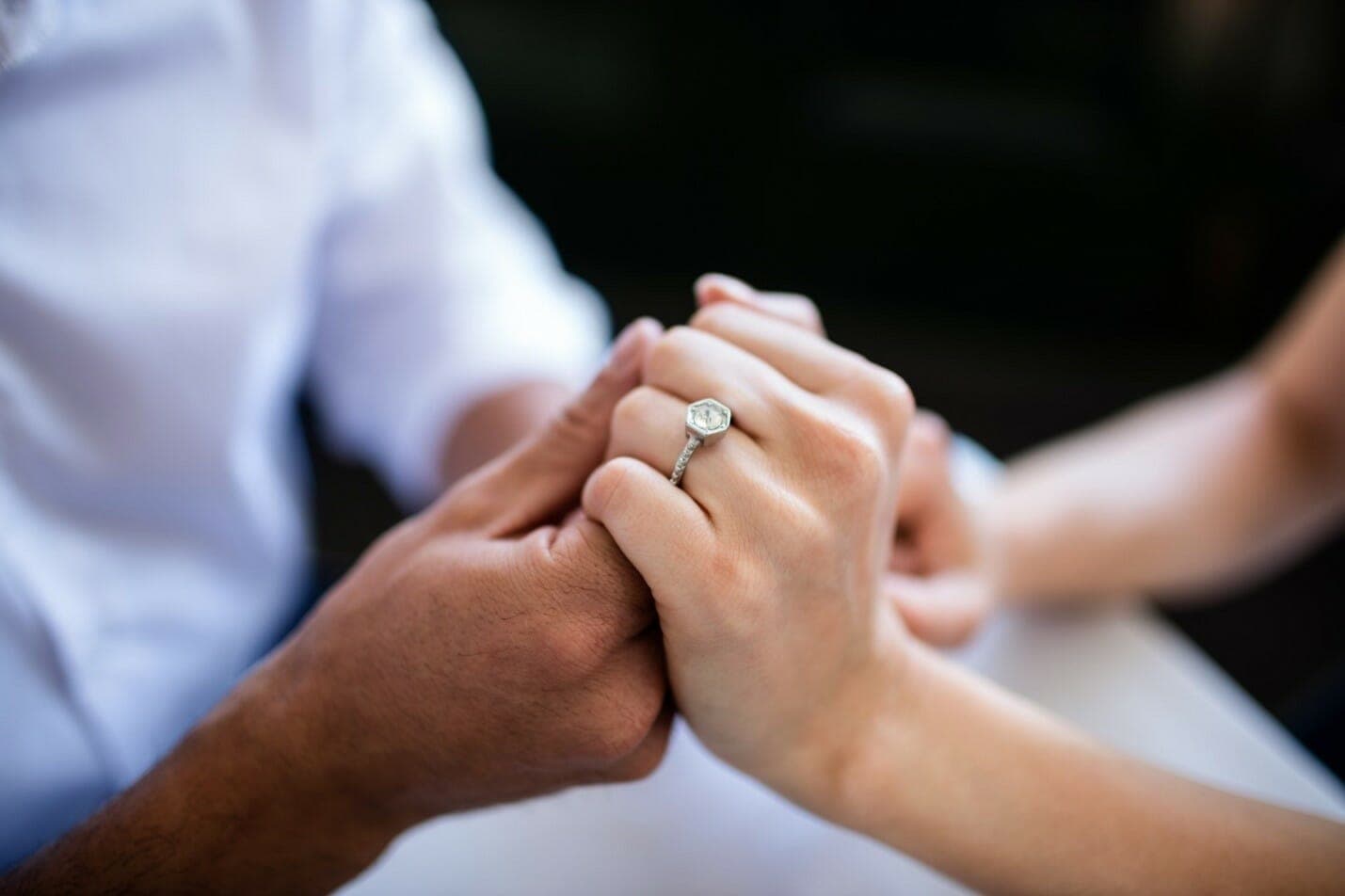
Among Goodstone's original designs, Asaad singles out two. The East West Half Bezel solitaire collection is, by his own account, "the design I'm most proud of." The east-west orientation, which positions an elongated stone horizontally across the finger rather than vertically, has become a significant contemporary preference, particularly for oval and emerald cuts. It reads as architectural and deliberate. Pairing that orientation with a half bezel, which wraps the stone partially in metal at its sides while leaving the top and bottom open, balances security with visibility. The half bezel protects the stone's most vulnerable points without fully encasing it; light still enters from multiple angles.
The second signature design is the Triad ring with Ovals, a three-stone configuration using oval diamonds. The three-stone format carries its own symbolic weight in the engagement ring context, traditionally representing past, present, and future. Using ovals rather than rounds gives the setting a softer, more elongated silhouette, and the combination of three ovals demands careful calibration of proportions to read as cohesive rather than busy.
These are not arbitrary design choices. They reflect considered decisions about geometry, wearability, and contemporary taste, which is exactly what you would expect from a creative director who entered the category through research rather than inheritance.
On the Experience of the Business Itself
Asaad is candid about what running Goodstone feels like relative to his other ventures: "I own other businesses and Goodstone is extremely smooth sailing compared to the others. I owe this to the nature of the job. I get to partner up with the best people as they enter an exciting stage of life, marriage, and aide them in crafting their dream ring. It's awesome."
When asked how he thinks about happiness, his answer skips past the expected entrepreneurial language entirely: "Getting a text from a customer after they've proposed. They're never quite ready for how excited their girlfriends are to get the ring and are always elated." That moment, the surprise of a partner's reaction, is precisely the one that Asaad's own 2012 experience should have produced but didn't. It reads less like a marketing story and more like a correction.
Beyond Jewelry: Culina and a Pattern of Partnering With Erin
Asaad also works with his wife Erin on a second business that has nothing to do with diamonds. Culina is a plant-based food brand now sold at Whole Foods and other major grocery stores, and it began from an entirely personal necessity. Erin developed a yogurt recipe because a health issue required her to avoid dairy, sugar, and gluten. That product became a brand. The parallel to Goodstone is not incidental: both businesses began with a real problem, a gap between what existed and what was needed, and a determination to solve it rather than accept the available options.
What connects Asaad's path from neurobiology to engagement rings is something simpler than ambition. It is the refusal to walk away from a bad experience without understanding why it happened and building something better in its place. Goodstone, now more than a decade past its 2015 founding, is the longest-running answer to a question that started with a ring purchase that felt wrong.
This article was produced by Prism’s automated news system from verified source data, official records, and press releases, then run through automated quality and moderation checks before publishing. The system is built and supervised by the people who set the standards it runs under. Read our full AI policy.
Did this article answer your question?