Gold Surges Past $5,000 Per Ounce, Reshaping Engagement Ring Budgets
Gold hit nearly $5,589/oz in January 2026, more than doubling from $2,624 a year prior — and engagement ring budgets are feeling every dollar of it.
When gold crossed $5,000 per ounce, it wasn't just a headline for commodity traders. For couples shopping for engagement rings, it marked the moment a metal that once felt like a stable backdrop to a sparkling center stone became a significant line item in its own right.
Gold's ascent has been extraordinary by any measure. A year ago, the metal was trading around $2,624 per ounce. By January 2026, it had surged to nearly $5,589 per ounce, essentially doubling in price within twelve months. The drivers behind that run include aggressive central bank accumulation, which has been pulling physical supply from the open market while simultaneously signaling institutional conviction in gold as a reserve asset.
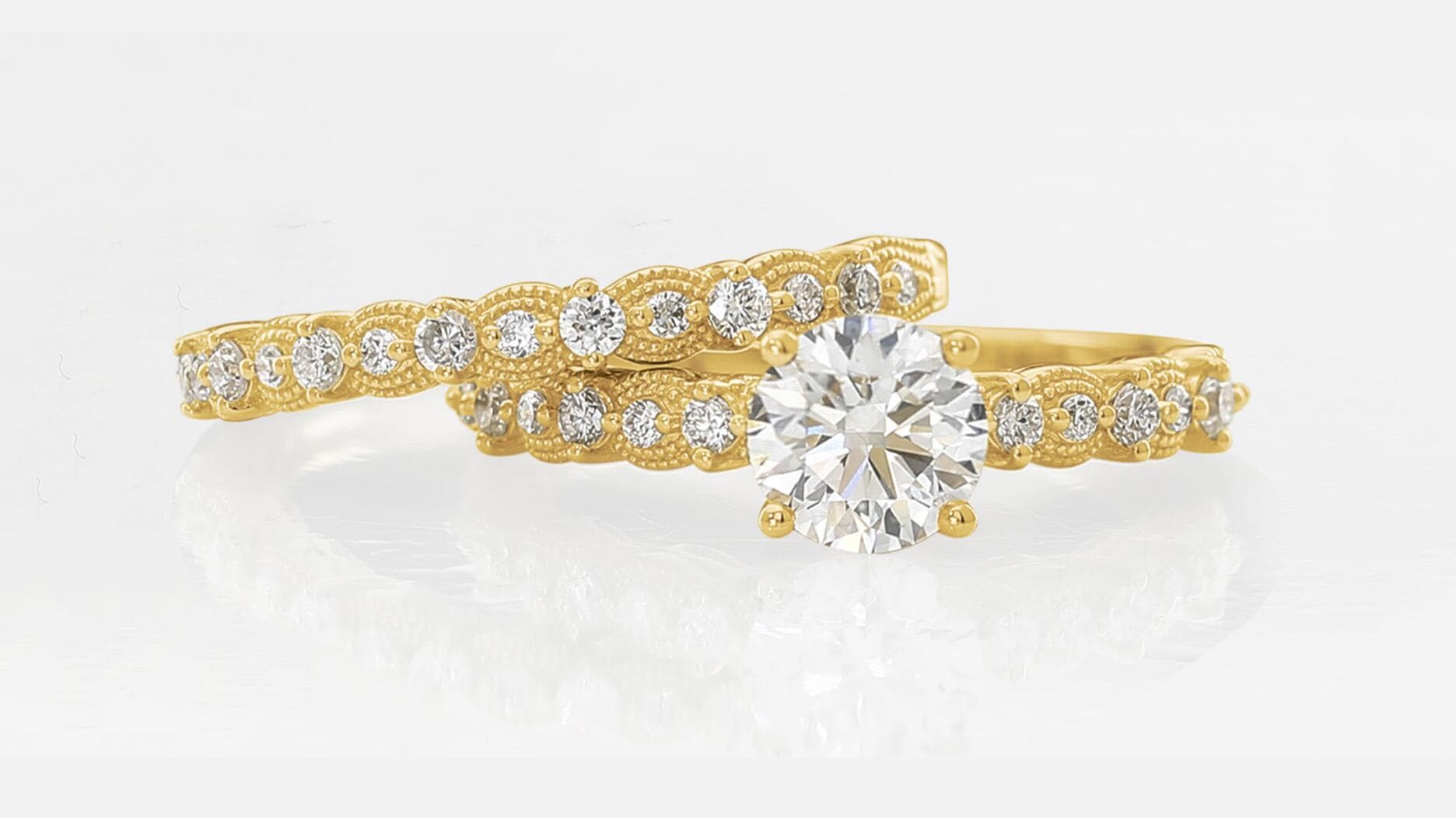
The practical consequences for engagement ring buyers are immediate and specific. A classic 14-karat gold solitaire setting that once represented a modest fraction of a ring's total cost now commands serious attention on its own. Platinum, long positioned as the premium alternative to gold, is drawing renewed comparison shopping as buyers recalibrate what "worth it" means when gold's price has more than doubled.
Jewelers working with clients on custom or semi-custom pieces are navigating a landscape where metal weight matters in ways it simply didn't two years ago. A wide-band design or a pavé-set halo, both of which require substantially more gold than a simple four-prong solitaire, carry meaningfully higher fabrication costs at current spot prices. The difference between an 18-karat and a 14-karat band, once a conversation primarily about color depth and durability, is now also a conversation about hundreds of dollars in material cost.

For buyers committed to gold, the calculus has shifted toward lighter settings, thinner bands, and lab-grown or lower-carat center stones that free up budget to cover elevated metal costs. Rose gold, which carries the same spot-price exposure as yellow or white gold at equivalent karatage, offers no price relief despite its current popularity.
The silver lining, if there is one, is that gold's durability as a long-term store of value means a ring purchased today at elevated metal prices retains meaningful material worth. That's a different conversation than the one couples were having when gold sat comfortably below $3,000. Whether prices hold above $5,000 through the spring buying season, or pull back as some analysts expect, the era of treating gold as a negligible cost in fine jewelry appears to be over for the foreseeable future.
This article was produced by Prism’s automated news system from verified source data, official records, and press releases, then run through automated quality and moderation checks before publishing. The system is built and supervised by the people who set the standards it runs under. Read our full AI policy.
Did this article answer your question?