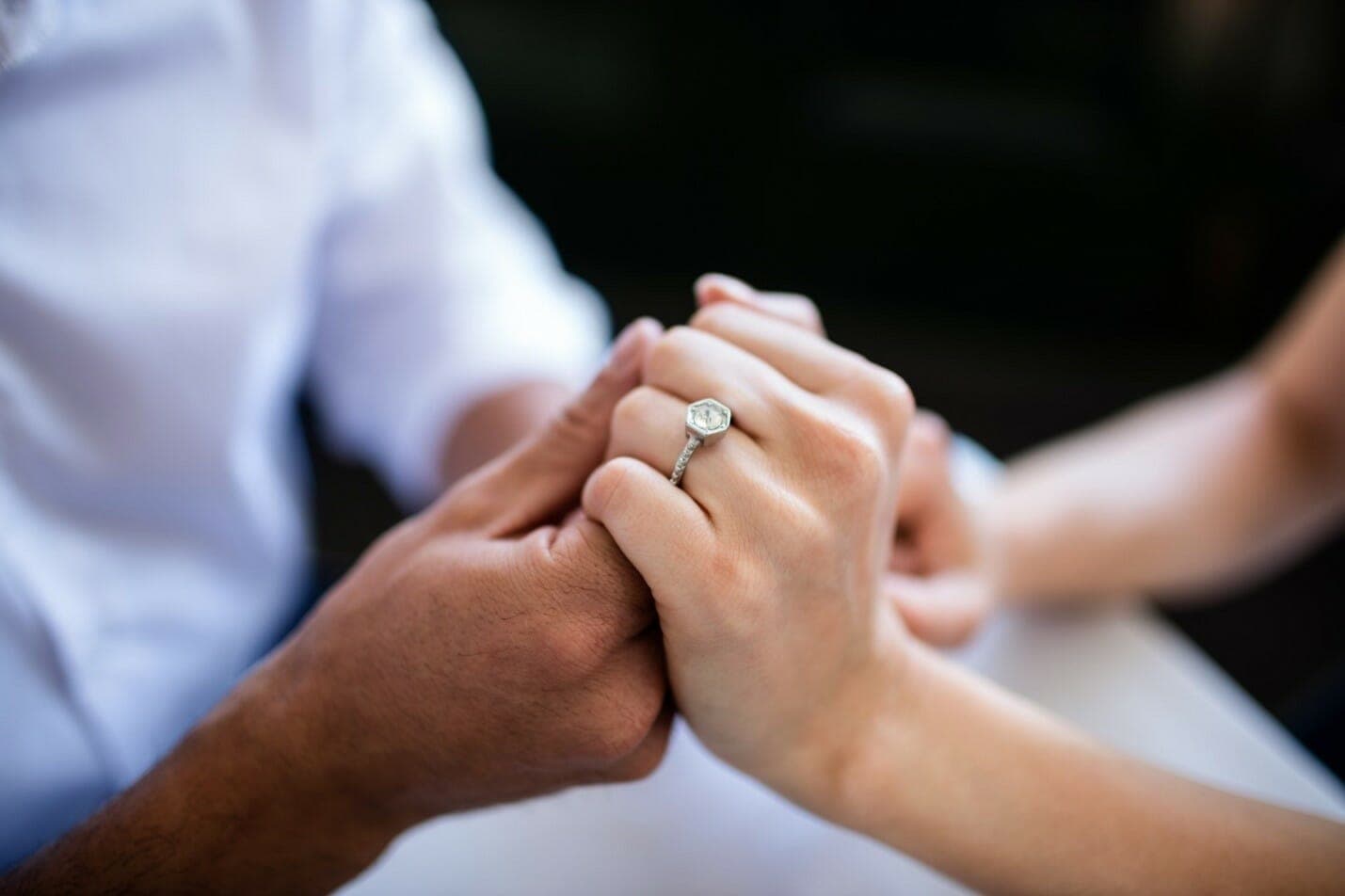
India's Diamond Hub Sits Empty as Lab-Grown Stones Reshape Engagement Rings
Surat's $350M diamond hub sits 95% empty as lab-grown stones claim nearly half of US engagement rings, forcing real trade-offs on cut, size, and price at the jewelry counter.
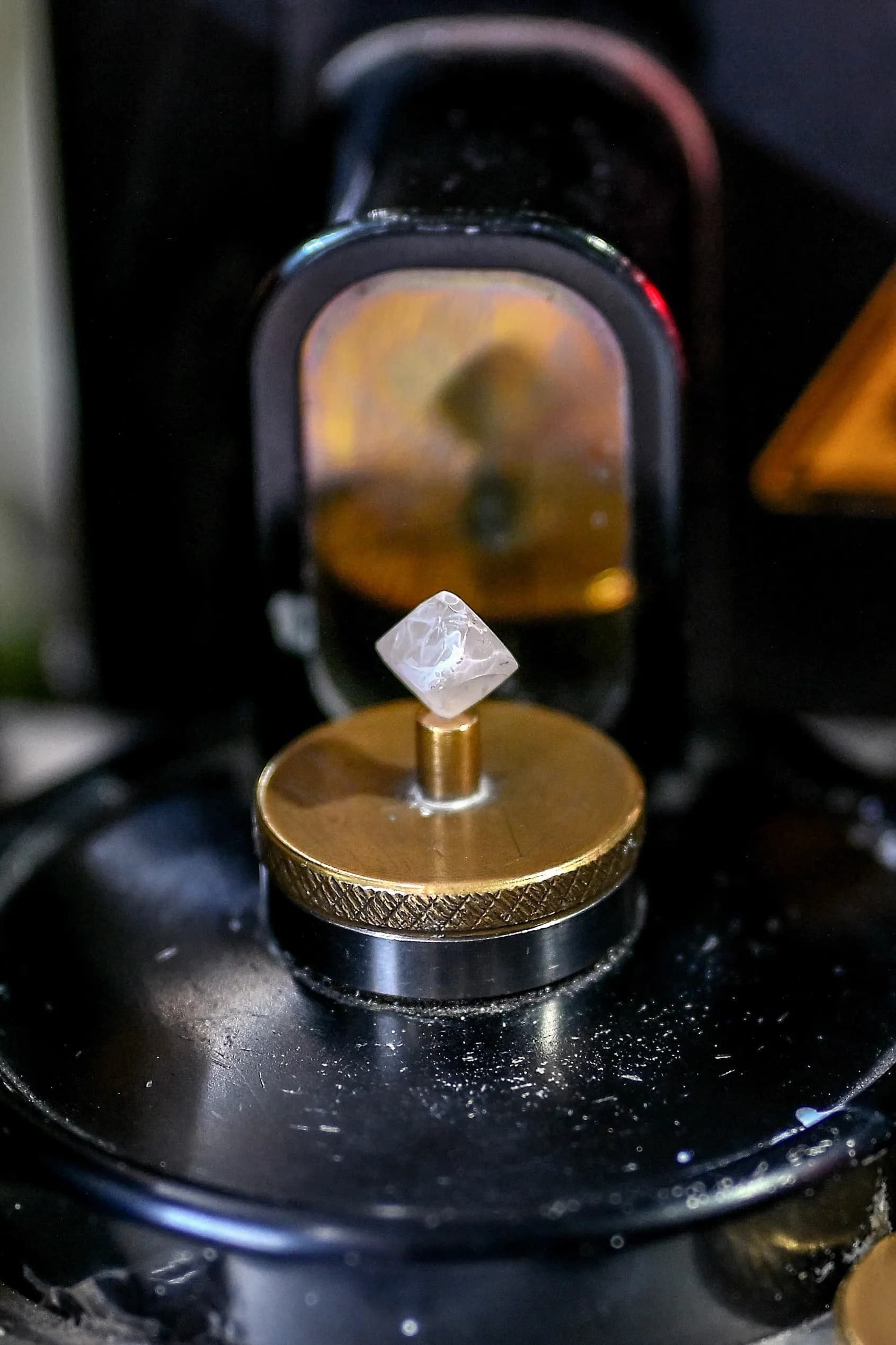
Walk the corridors of the Surat Diamond Bourse on a Tuesday morning and you will hear very little. The complex, which surpassed the Pentagon as the world's largest office building when it opened in 2023, was designed to consolidate India's grip on an industry where nine of every ten diamonds on earth are cut and polished before reaching a retail case. Nine towers, each rising fifteen floors, connected by a central spine and clad in sloping glass facades: the bourse was supposed to be the cathedral of the global diamond trade. Today, roughly 250 of its 4,700 offices are occupied. That is about 5% capacity in a $350 million building. Bloomberg reporters Preeti Soni and Thomas Biesheuvel documented the vacancy in a March 2026 feature, and the detail lands with the force of a structural diagnosis, not a weather report.
If you are shopping for an engagement ring in the next three to six months, that empty corridor matters to you directly.
A Convergence of Pressures, Not a Single Shock
The diamond industry's troubles are not the product of one bad season. Several independent forces arrived simultaneously and are now compressing prices and supply at every stage of the pipeline.
Chinese luxury demand, which had propped up the upper tier of the natural diamond market for years, weakened considerably. Russian supply, which historically flowed through Surat's cutting workshops, has been snarled by sanctions and logistics friction since 2022, creating both scarcity and pricing unpredictability for traders who depended on that rough material. Gold prices hit record highs, pulling budget-conscious shoppers toward plain-metal settings and away from elaborate diamond-set designs. And threading through all of it: lab-grown diamonds, which are chemically identical to mined stones and now cost roughly 73% less.
De Beers, the company that spent a century engineering the emotional architecture of diamond desire, reportedly lost nearly $1.5 million per day last year. Its parent, Anglo American, is actively restructuring the business. When the world's most recognized diamond brand is bleeding cash at that rate, the downstream effects reach every jeweler's display case.
India's cut and polished diamond exports to the United States collapsed from $13.6 billion in 2022-23 to $4.9 billion in 2024-25, a decline that explains the silence in Surat's towers as precisely as any market report.
Lab-Grown's Rise Is Structural, Not Cyclical
The critical distinction Soni and Biesheuvel draw is between a downturn and a transformation. The Surat bourse's near-empty state reflects a permanent redistribution of where diamonds come from, not a temporary slump that corrects when confidence returns.
BriteCo data shows that synthetic stones were used in nearly half of all US engagement rings sold between January and August 2025. By late 2024, a separate survey by The Knot found that 52% of couples said their ring featured a lab-grown center stone. A 1-carat lab-grown diamond now averages $1,000 or less at retail; its natural equivalent costs around $4,200. Lab diamond prices fell approximately 74% between 2020 and 2025, driven by improvements in Chemical Vapor Deposition and High Pressure High Temperature production, with Surat's own manufacturers among the global leaders in driving those costs down, even as the city's natural-diamond trade evaporates around them.
That irony is not lost on the industry: the workers and workshops of Surat developed the precision to grow gem-quality synthetics at scale, and in doing so accelerated the structural pressure on the mined-stone trade that built the city in the first place.
What the Supply-Chain Stress Means at the Jewelry Counter
The practical implications for anyone buying a natural diamond engagement ring in the next six months are real and specific.
Certain cuts and sizes will be harder to source. Rounds in the 1-to-2-carat range remain the most traded stones globally, but with rough-diamond supply from Russia disrupted and Indian cutting houses operating well below capacity, lead times for custom or semi-custom natural diamond rings are extending. Retailers who would normally pull from a deep inventory are working with thinner stock, which limits your ability to comparison-shop between stones of identical specifications.
Polished prices have declined steeply, and that creates genuine negotiating room. A natural diamond retailer carrying pre-crisis inventory faces margin pressure from every direction. If you are flexible on clarity, choosing a VS2 or SI1 stone over a flawless grade delivers visible savings with no perceptible difference to the naked eye, and right now retailers are motivated to move that mid-tier stock. Eye-clean SI1 rounds in the 1-carat range represent the category where price flexibility is highest.
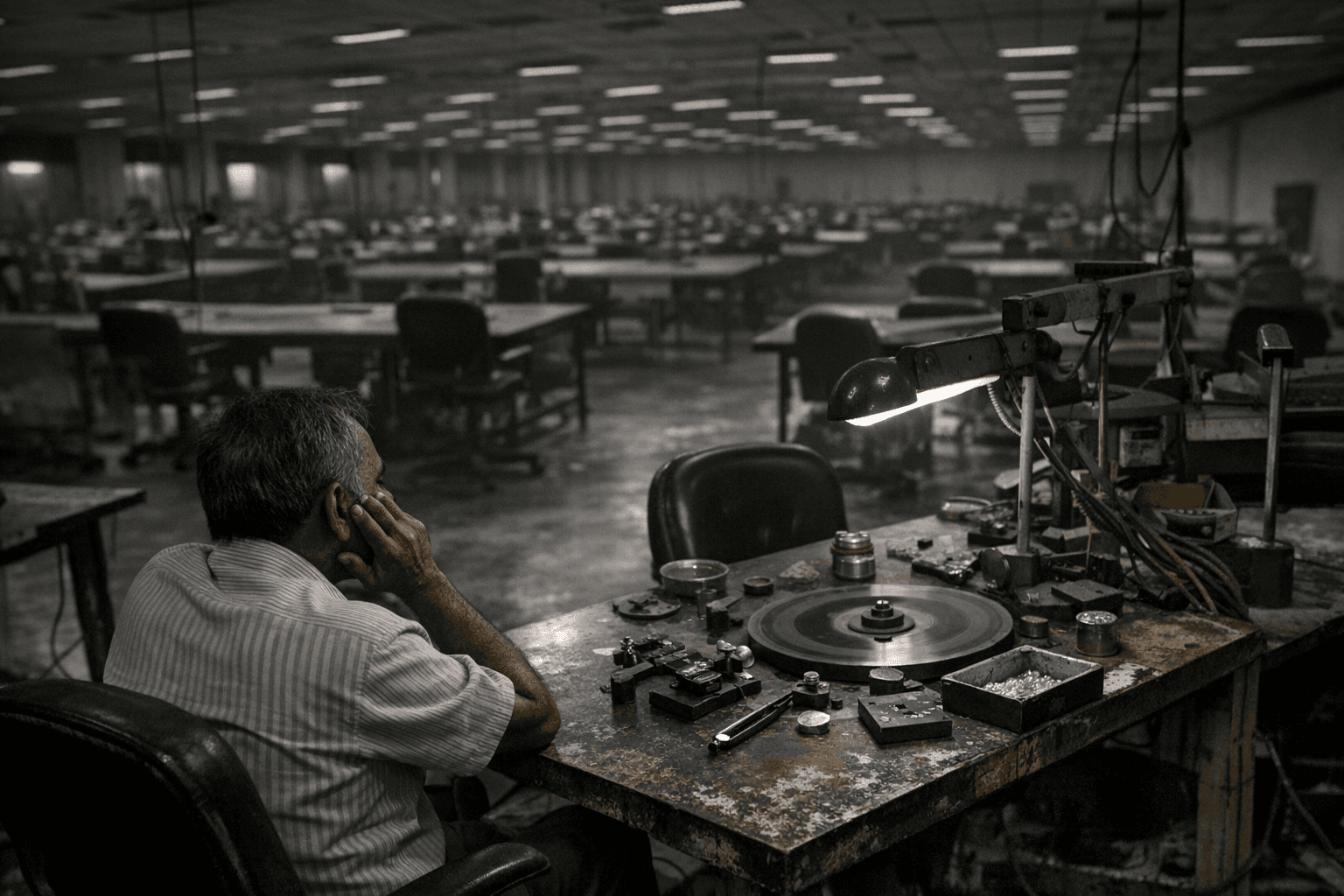
The record-high gold price complicates setting decisions in a different direction. A platinum or 18-karat white gold solitaire that might have added $800 to your total two years ago now adds considerably more. Couples are responding by simplifying settings: four-prong solitaires and slim pavé bands that use fewer diamonds are gaining ground over elaborate halo configurations, which layer both stone costs and labor costs onto an already stretched budget.
Natural vs. Lab-Grown: The Design Trade-offs Couples Are Making
The pricing gap between natural and lab-grown has grown wide enough to reshape what couples consider possible. At the $5,000 engagement ring budget, which the BriteCo data shows has been the rough US average since 2024, the math is stark.
With a natural diamond, $5,000 gets you a well-cut round brilliant in the 0.7-to-0.9-carat range with VS2 clarity and G-H color, set in a simple solitaire. With a lab-grown stone at the same budget, you are looking at 2 carats or more, with room to upgrade to a more complex setting. That size differential is why lab-grown adoption accelerated not just among budget shoppers but among couples who place genuine value on visual presence.
The trade-offs run the other way, too. Lab-grown prices have fallen so fast that resale markets are essentially nonexistent for synthetics. Natural diamonds, even in a depressed market, retain some secondary value. For couples who treat an engagement ring as an heirloom rather than a consumable luxury, the mined stone carries a provenance argument that its cheaper competitor cannot yet match.
Cut quality has become a particularly sharp dividing line. As lab-grown production scaled up, so did the volume of stones with mediocre cut grades flooding the market. An AGS Ideal or GIA Excellent cut in a lab-grown stone will cost more than a mediocre lab-grown, but it will outperform a well-cut natural at comparable price points. For buyers navigating both markets simultaneously, prioritizing cut grade over carat weight in either category is the single most reliable way to maximize visual return.
Navigating the Next Three to Six Months
The Surat Diamond Bourse's vacancy rate is a lagging indicator; the structural shifts driving it have already reached retail. For couples buying in the spring and summer season, several dynamics are worth understanding.
- Natural diamond retailers with older inventory are negotiating. Asking for a price reduction of 10-15% off the ticketed price on a natural stone is not unreasonable in the current climate, particularly at independent jewelers who are not bound by corporate pricing policies.
- Lab-grown availability is essentially unlimited for most popular cuts and sizes, which means no urgency and no scarcity premium. Take your time and prioritize cut grade and certification, specifically from IGI or GIA, which grade lab-grown stones to the same standards as mined.
- Fancy shapes, including ovals, cushions, and elongated radiants, are showing steeper natural-diamond discounts than rounds, because cutting houses in Surat deprioritized them as trading volumes dropped. If a fancy shape appeals to you, this is a favorable window.
- Setting complexity costs are rising with gold prices. A simpler setting with an exceptional center stone is better value engineering right now than an elaborate halo around a mediocre one.
The empty towers of Surat are a genuine crisis for tens of thousands of diamond workers and for an industry built over generations. For the couple standing at the jewelry counter this season, that crisis translates into something more immediate: more negotiating leverage on natural stones, more choice in lab-grown, and a market that is, for the first time in decades, genuinely reshaping itself around what buyers actually want rather than what the trade has always supplied.
This article was produced by Prism’s automated news system from verified source data, official records, and press releases, then run through automated quality and moderation checks before publishing. The system is built and supervised by the people who set the standards it runs under. Read our full AI policy.
Did this article answer your question?