Ring Resizing Costs: What to Expect for Your Engagement Ring
Resizing an engagement ring costs $20 to $200+, but the metal, direction of adjustment, and your jeweler's skill matter far more than any headline number.
The ring fits beautifully in the photograph. On your finger, it's another story. Whether it's a touch too loose after winter or slightly snug after years of wear, an engagement ring that doesn't fit isn't a minor inconvenience — it's a daily reminder of something unresolved. The good news: resizing is a routine service at most fine jewelry shops. The less predictable part is the cost, which swings considerably depending on the metal, the complexity of the band, and whether you're going up or down in size.
What the Numbers Actually Look Like
Price ranges for ring resizing vary more than you might expect, and the differences across jewelers reflect genuine variations in labor, material costs, and expertise. Billig Jewelers reports that resizing costs range from $25 to $200 or more, depending on the metal, design, and how much the size needs to change. Lajoyajewelry puts the overall range at $50 to $150, based primarily on metal type and complexity. For a more granular view, per-metal averages break down as follows: silver rings are the least expensive to resize, typically running $20 to $60; gold averages $30 to $100; and platinum can reach $50 to $150, owing to its density and the specialized equipment required to work it.
For plain bands in silver or base metals with no stones or decorative details, Billig Jewelers places basic resizing at $25 to $50. Most engagement rings in 14-karat or 18-karat gold, or platinum, fall into what Billig Jewelers describes as the standard range: $50 to $100, with pricing dependent on band width, metal type, and the number of sizes being adjusted. Complex designs — those set with stones, detailed engraving, or pavé melee diamonds along the band — will push costs higher, though exact figures for highly ornate work are best confirmed through an in-store evaluation, since final pricing is always determined after a jeweler has examined the ring in person.
Sizing Up vs. Sizing Down: Why Direction Matters
The direction of the adjustment has a direct effect on price, and the logic is straightforward. Sizing a ring down means removing a portion of the band and reshaping it — no new material is required, which keeps labor and cost lower. That process can fall between $30 and $60 for simpler work. Sizing up is inherently more expensive because additional metal must be sourced and added to the band. According to guidance from Robinwoolard, sizing up can increase the resizing price by $20 to $40 due to the cost of the added material. Lajoyajewelry frames it plainly: "Making a band larger carries a higher fee since we must add pure gold."
Beyond material cost, sizing up also demands more skilled finishing. The jeweler must match the color and surface texture of the original metal seamlessly, which adds labor — particularly for rings with intricate designs or gemstones that complicate access to the shank.
Metal Matters: Gold, Platinum, and White Gold
Gold is among the most cooperative metals to work with. Yellow and white gold resize cleanly, and most 14-karat and 18-karat gold rings fall within the $50 to $100 range. White gold, however, often requires one additional step: rhodium plating. That bright, reflective finish on white gold is a surface treatment, and after the heat and mechanical stress of resizing, the rhodium coating typically needs to be refreshed. Billig Jewelers notes that this "can slightly increase the final price," though it's a relatively modest addition to the overall bill.
Platinum is the premium option at the repair bench as well as the jewelry counter. Denser and harder than gold, it requires specialized tools and techniques that many general jewelers don't have on hand. As Billig Jewelers explains, "Platinum ring resizing usually costs more than gold, often landing toward the higher end of the standard pricing range." In practice, that means costs between $50 and $150, per Robinwoolard's per-metal figures. The silver lining: platinum's durability means it can be resized safely in the hands of a skilled metalsmith, and the result is lasting.
The Process: What Happens to Your Ring
Resizing is not a casual alteration. The procedure, as described by Lajoyajewelry, involves "precise cutting, adding gold, and seamless soldering" — and the turnaround is typically one to two weeks. That timeline allows the jeweler to work carefully, complete any necessary finishing (buffing, polishing, rhodium plating for white gold), and ensure the structural integrity of the setting is maintained.
For sizing down, the jeweler cuts away a calculated section of the band, brings the two ends together, and solders the joint before refinishing. Sizing up involves cutting the band, inserting a piece of matching metal, and then soldering and finishing both seams. In both cases, the goal is a join so seamless you cannot find it.
Structural Limits You Should Know
Here is where many guides gloss over something genuinely important. Every time a band is cut and resoldered, it undergoes a degree of metal fatigue. Lajoyajewelry is explicit on this point: "Bands suffer from metal fatigue and should never be cut more than twice during their lifespan." If you've already had a ring resized once, that history matters when you bring it back for a second adjustment.
Extreme size changes carry their own risks as well. Resizing a ring down by two sizes is technically possible, but it isn't without consequence. As Lajoyajewelry's guidance explains, doing so "may loosen the prongs holding the side stones. Bending the band that drastically changes the curve of the entire setting, which puts pressure on the delicate metal holding your diamonds." For rings set with side stones, a dramatic size reduction may require prong retipping or resetting in addition to the resize itself — which adds both cost and complexity.
Choosing the Right Jeweler
Pricing differences across jewelers and locations are real, and where you take your ring matters as much as what you pay. Lajoyajewelry offers a pointed observation on this: "Large corporations often inflate these resizing prices or send the work to outside contractors, which can compromise quality." An independent jeweler who performs the work in-house, with firsthand knowledge of your ring's metal and construction, is generally the safer choice for a piece of this significance.
Before committing to a price, ask directly whether the work will be done in-house or sent out. Ask whether white gold will receive rhodium plating after resizing, and whether that's included in the quoted price. For platinum, confirm that the jeweler has specific experience with the metal, since its working properties differ enough from gold that technique matters considerably.
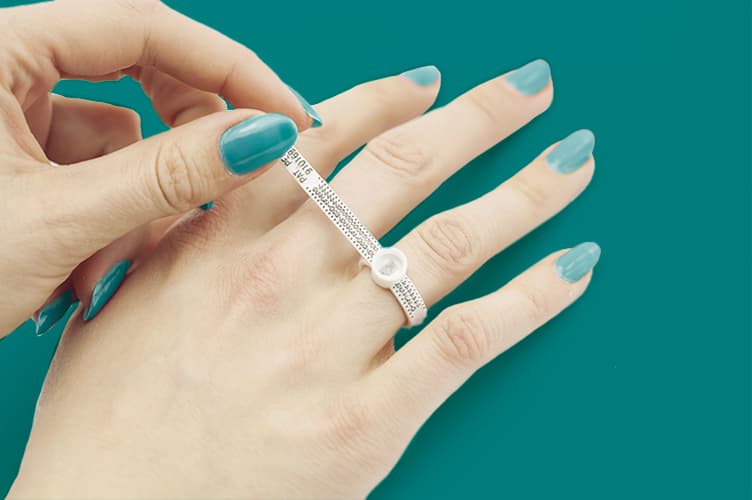
The most reliable way to avoid resizing costs entirely, of course, is to get the size right from the start. Many independent jewelers will walk you through accurate at-home sizing before purchase — a step worth taking seriously, since a ring that fits from day one is one less visit to the bench.
This article was produced by Prism’s automated news system from verified source data, official records, and press releases, then run through automated quality and moderation checks before publishing. The system is built and supervised by the people who set the standards it runs under. Read our full AI policy.
Did this article answer your question?