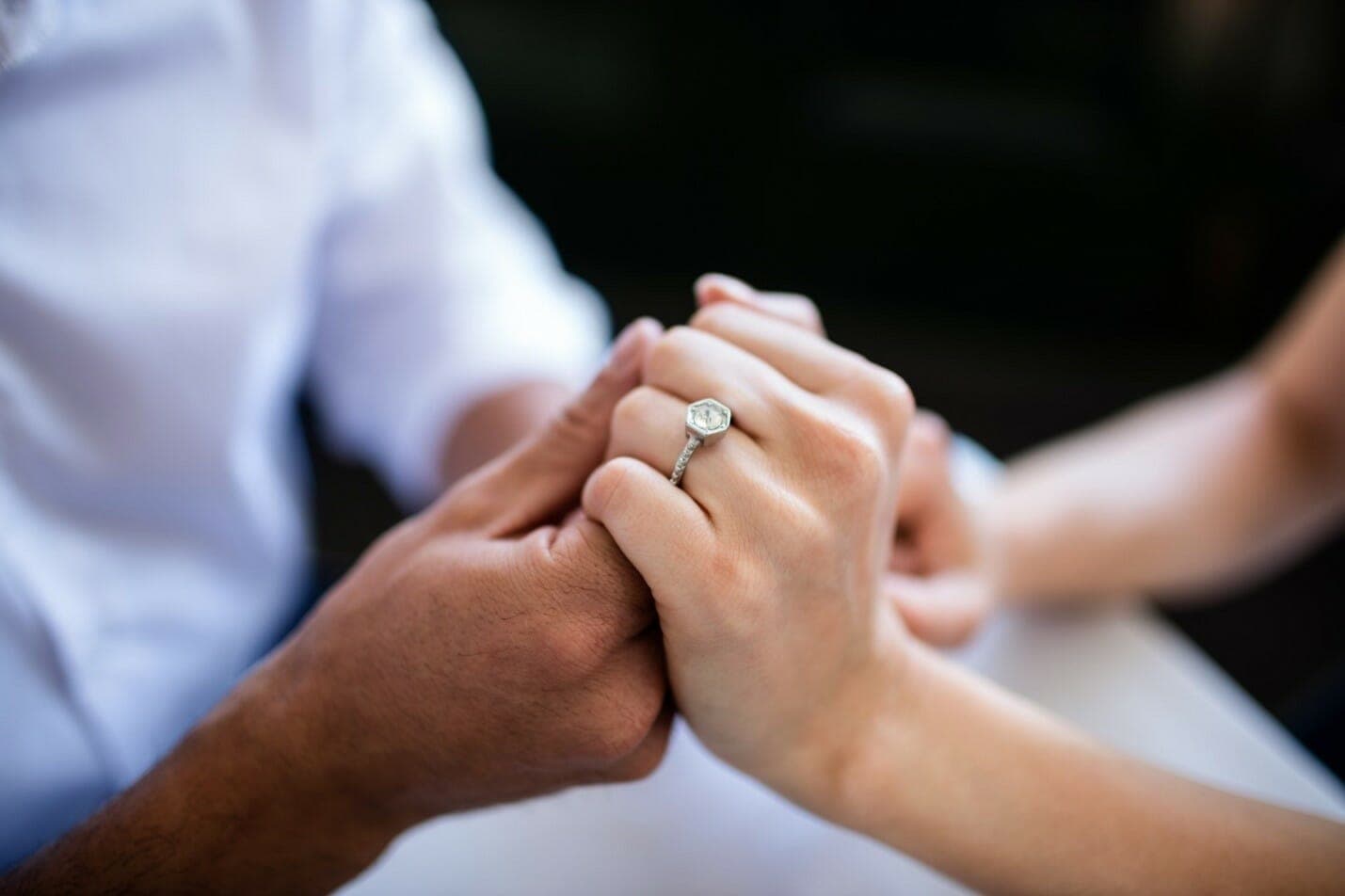
Your Complete Step-by-Step Guide to Buying the Perfect Engagement Ring
Before you pick a setting or size a stone, there's a question most ring guides skip: does your partner even want to get married? Here's everything else you need to know.

The most important step in buying an engagement ring has nothing to do with carats or settings. It happens weeks before you walk into any jewelry store.
Start with the Conversation You Might Be Avoiding
Before any ring research begins, the most clarifying thing you can do is talk honestly with your partner. Does your partner even want to get married? Are you both on the same timeline? If the answers to those first two questions are yes, does your partner want to wear an engagement ring, and do you? Who is actually proposing? "Having a serious discussion is less romantic than what you've seen in the movies, but trust us when we say that it's definitely the right move." Once those answers are clear, everything that follows, from budget to stone shape to setting style, becomes far easier to navigate.
Set a Budget That Actually Reflects Your Life
The first thing you should do is set a realistic budget. The old rule of thumb about spending "three months' salary" on a diamond ring is an outdated myth. Your number should reflect what you're genuinely comfortable spending, full stop. Budget shapes nearly every subsequent decision: the stone type, the size, the metal, and whether you choose to customize. Clarity on this number early keeps the process focused and prevents the kind of scope creep that turns a joyful purchase into a stressful one.
Choose Your Stone: Diamond, Lab-Grown, or Something Else Entirely
Once you have a budget, the stone question is the one that will most shape your ring's look and feel. The choice today is wider than it has ever been.
For the first time ever, more than half of couples reported their engagement ring features a lab-grown stone, according to The Knot's 2025 Real Weddings Study. The appeal is straightforward: on average, a proposer looking to buy a lab-grown engagement ring could expect to spend about $4,900 compared with $7,600 for a mined diamond ring. Lab diamonds are optically, chemically, and physically the same as natural diamonds; their difference lies only in their origins, with natural diamonds forming within the Earth and lab diamonds grown by professionals with specialized equipment.
The tradeoff worth understanding is resale value. Engagement rings are typically purchased for sentimental reasons and are not considered investments, but it is worth noting that lab-grown diamonds do not hold their value and will likely sell for less than what you initially paid. A high-quality natural diamond or gemstone may hold its value, or even appreciate.
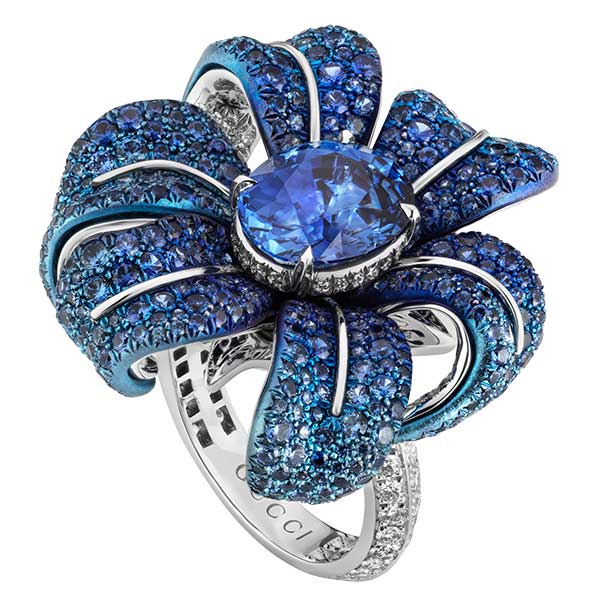
If neither a lab-grown nor a natural diamond speaks to you, colored gemstones are a genuine and increasingly popular option. Sapphires, rubies, and emeralds all make striking center stones. One essential guideline when considering alternatives: remember the lucky number 7. Don't go for anything graded lower than this on the Mohs hardness scale, since gems below that threshold will be much too soft for daily wear on an engagement ring. Diamonds are the hardest known substance on Earth, ranking at a 10 on the Mohs scale, which makes them ideal for everyday wear as center gems in engagement rings. If you have a specific gem in mind, a quick search of its name followed by "Mohs Scale" will tell you whether it can handle a lifetime of wear.
Master the 4 Cs (and Know Which One to Prioritize)
If you've decided on a diamond center stone, the 4 Cs are your essential vocabulary: carat, cut, color, and clarity. Originally coined by GIA founder Robert M. Shipley, the 4 Cs ensure the most accurate diamond evaluation possible, taking into account everything from sparkle to size.
Here is what each one actually means:
- Cut: The proportion, shape, and arrangement of facets that determine a diamond's brilliance, sparkle, and fire. While all 4 Cs are essential, cut is one of the most obvious to the untrained eye. Since it determines the brightness, scintillation, and fire of the diamond, it is most likely to be the first thing someone notices.
- Color: Color is graded on a D-to-Z scale, with D meaning a diamond is completely colorless and Z meaning it has light yellow or brown color. Diamonds with less color are rarer and more highly sought-after.
- Clarity: Clarity measures how free a diamond is from inclusions and blemishes. The GIA clarity scale ranges from Flawless to Included, and most diamonds fall somewhere in between, with inclusions that are microscopic and don't impact their beauty.
- Carat: Carat is a measurement unit that describes a diamond's weight, with one carat equaling 200 milligrams. Two diamonds of identical carat weight can appear noticeably different in size depending on their shape and cut.
Once you understand what the 4 Cs mean, ask yourself which one matters most to you. Prioritizing the 4 Cs will help you quickly eliminate some diamonds from your search, and it will also help you work with your budget, knowing which C you are willing to spend more on and which you are willing to compromise on.
Insist on Independent Grading
Learn about the store's return policy, and be sure to ask for an independent grading report, like those provided by GIA, prior to purchasing a diamond to validate the quality of your purchase. "GIA certified diamond" is a common misnomer: GIA doesn't certify diamonds, it grades them. What a GIA grading report does give you is something more useful: buying a diamond with a GIA report ensures you know exactly what you're purchasing, eliminating any guesswork. Considering that couples spent an average of $5,500 on an engagement ring in 2023, the cost of a GIA Diamond Grading Report is a small price to pay for peace of mind. For lab-grown stones, IGI leads in lab-grown diamond certification, providing accurate and consistent reports at a budget-friendly cost, while GIA also offers grading reports for lab-grown stones, applying the same rigorous standards as for natural diamonds.
Pick Your Setting and Metal
The setting is the architecture of the ring: it shapes how the stone sits, how it catches light, and how it holds up over decades of daily wear. The four most classic engagement ring settings are the solitaire, halo, three-stone, and bezel.
The three-stone ring, also known as the trinity or trilogy ring, symbolizes friendship, love, and fidelity, or past, present, and future. For engagement rings, the setting style further influences perceived size: halos, small diamonds surrounding the center gem, can make a diamond appear larger, while cathedral settings elevate the gem for greater prominence. A bezel setting, in which the metal wraps fully around the stone's perimeter, offers excellent protection for an active lifestyle at the cost of some brilliance and visual openness.
For the band itself, an engagement ring is meant to last a lifetime, so it is often made of gold or platinum, highly durable metals that can withstand many decades of daily wear. Metal color is a matter of personal preference, with gold providing more color options: white, yellow, or rose. Metal color is also a consideration because the appearance of a diamond's color is affected by its surroundings; once you've selected your diamond, ask your jeweler to show you how it looks with different colored metals.
Work with a Jeweler You Can Trust
Since an engagement ring is a significant investment, you'll want to buy it from a jeweler you can trust. Your jeweler should be armed with expert training, be open to questions, and be able to explain how to buy a diamond in clear, simple language. Look for a jeweler who has earned a credential from a highly recognized and internationally accredited program, such as the GIA Graduate Gemologist (GG) or Applied Jewelry Professional (AJP) diploma programs.
If you have a specific stone or a design vision that no ready-made ring quite captures, a fully custom process is worth exploring. Many jewelers who specialize in bespoke work will allow you to bring your own gemstone, whether a mined or lab-grown diamond or a colored stone, and build a setting around it from scratch. That path takes longer, but the result is a ring built to a single specification: yours.
After purchasing, it is important to properly care for and insure your diamond. Although a diamond's remarkable hardness makes it resistant to scratches, other diamonds can scratch them, and diamonds can be chipped through impact or come loose in their settings. Insurance, sizing, and a return or resizing policy are details worth confirming before you finalize any purchase. A ring bought with this much thought deserves to be protected with the same care.
This article was produced by Prism’s automated news system from verified source data, official records, and press releases, then run through automated quality and moderation checks before publishing. The system is built and supervised by the people who set the standards it runs under. Read our full AI policy.
Did this article answer your question?