Inflation hits two-year high, renewing debate over gold’s safe-haven role
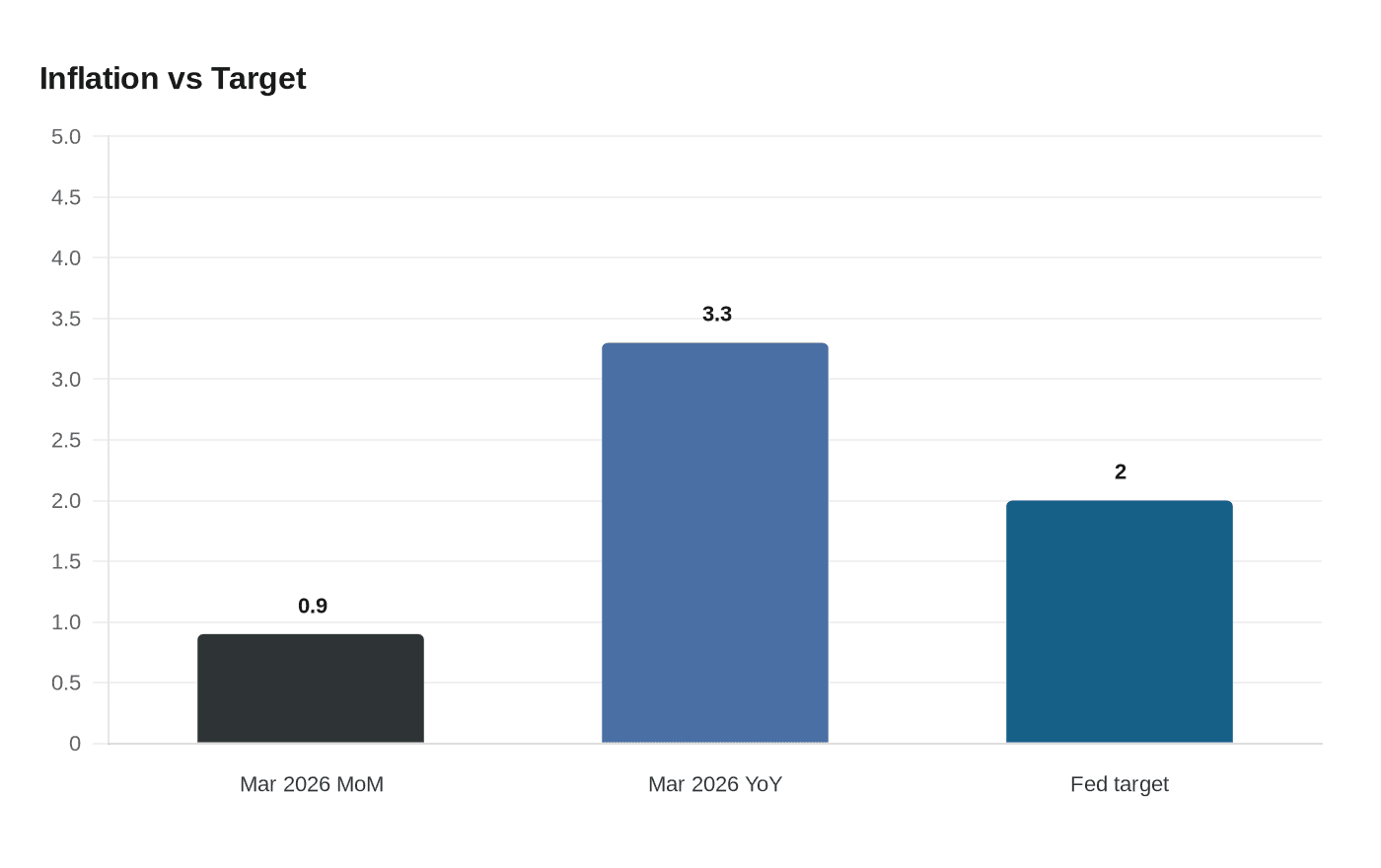
March CPI rose 0.9% and 3.3% over the year, the hottest pace in nearly two years. That is pushing gold jewelry buyers to rethink when to buy.

Inflation has returned to its highest pace in nearly two years, and that is putting fresh pressure on both gold prices and the jewelry counters that follow them. The U.S. Bureau of Labor Statistics said the Consumer Price Index for All Urban Consumers rose 0.9% in March 2026 and 3.3% over the previous 12 months, a reading released on April 10 that revived the argument over whether gold still works as a safe haven.
For jewelry buyers, the answer is more practical than philosophical. Gold can gain when inflation rises, but not automatically. The Federal Reserve still aims for 2% inflation over the longer run using personal consumption expenditures prices, so today’s 3.3% annual CPI pace keeps inflation above the central bank’s comfort zone. That matters if you are considering a simple 18K chain, a wedding band, or a plain bangle, because retail prices on finished pieces usually move in step with the metal and then some.
That distinction is why gold jewelry is not the same as bullion. Bars and coins are priced mainly on metal content. A finished bracelet or necklace includes fabrication, finishing, retailer margin, and brand premium, and those extra layers do not come back cleanly at resale. The result is that a buyer may pay more for a piece when gold rises, but still face a wider spread when selling it later. Jewelry can preserve value, but it is a wearables market first and an investment vehicle second.
The broader gold market has been powerful enough to keep the debate alive. The World Gold Council said financial speculation, stronger inflation-hedging demand, and a higher stock-bond correlation could support gold. In 2025, total gold demand including over-the-counter trading exceeded 5,000 tonnes for the first time, gold set 53 new all-time highs, and the value of demand reached $555 billion. U.S. gold demand more than doubled to 679 tonnes, led by physically backed exchange-traded funds, while U.S.-listed ETFs added 437 tonnes and ended the year with 2,019 tonnes in holdings worth about $280 billion.
Jewelry demand told a different story. Volumes fell globally in 2025 because prices were historically high, even as demand value rose because consumers were spending more per piece. That is the signal for buyers now: if you want gold jewelry, the costliest delay is often waiting until the next wholesale repricing hits the case. Central banks are still buying too, with net gold purchases of 230 tonnes in the fourth quarter of 2025, Kazakhstan the largest buyer in the third quarter and Brazil adding gold for the first time since 2021. Gold remains a monetary and emotional asset, but in jewelry, craftsmanship still decides how much of that value you keep.
This article was produced by Prism’s automated news system from verified source data, official records, and press releases, then run through automated quality and moderation checks before publishing. The system is built and supervised by the people who set the standards it runs under. Read our full AI policy.
Did this article answer your question?