Bazaar spotlights 2026 necklace trends built for layering
Front-fastening chains and torques are reshaping necklace layering, while east-west stones and utility cues push the stack toward a more intentional 2026 silhouette.
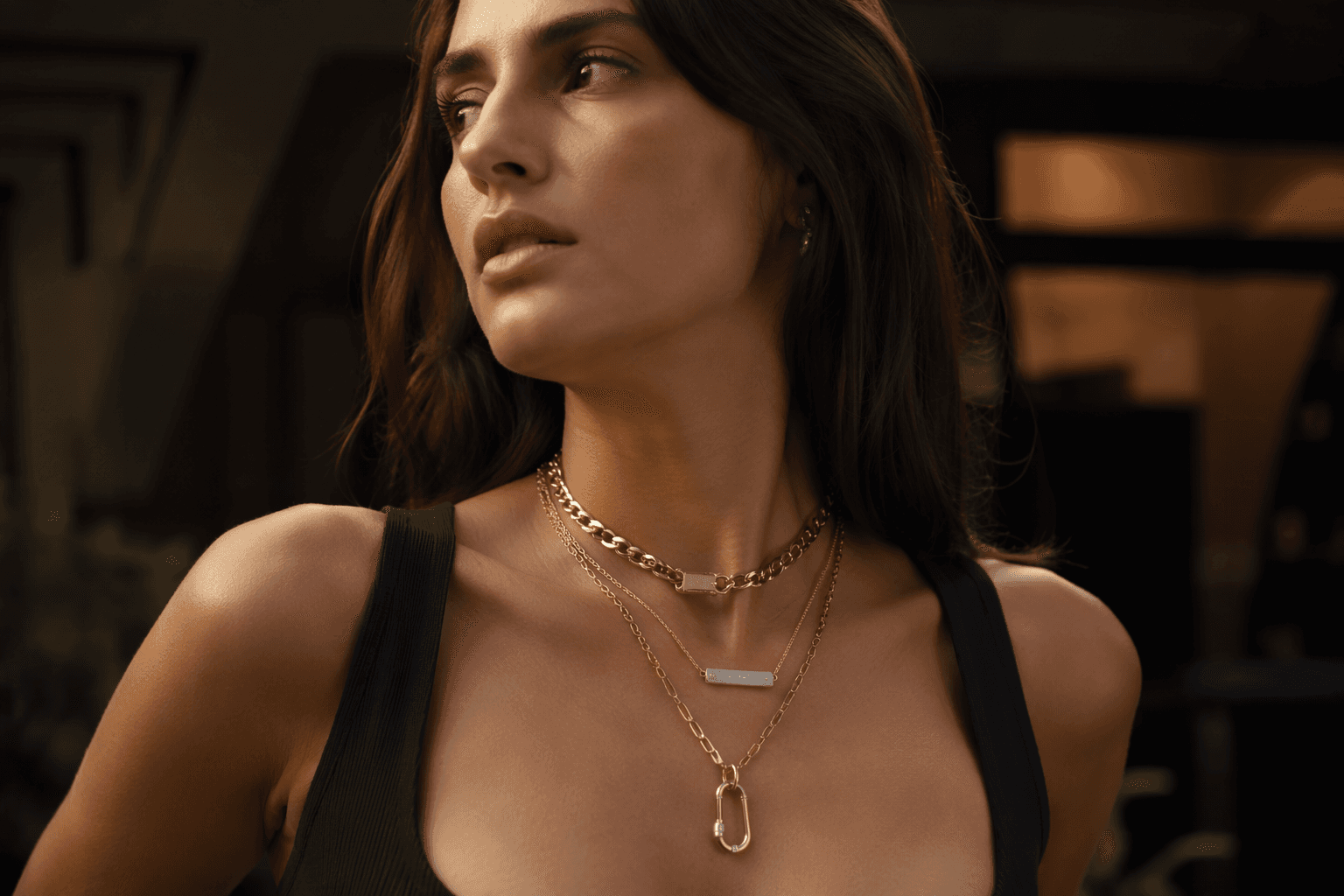
A front clasp at the center of the neck is changing how a necklace stack is built. It pulls the eye to the front and makes the whole arrangement feel deliberate rather than accidental. In 2026, the most interesting necklace shapes are the ones that make layering easier, sharper, and more intentional, not just prettier.
The new logic of the layer
The shift starts with a simple change in attitude. Necklaces have moved from sentimental keepers and heirlooms into a more experimental category, helped by the rise of independent jewellery brands and wider access to demi-fine and waterproof pieces. That combination has made it easier to buy a good-quality necklace with the same ease once reserved for shoes, and the result is a market that rewards pieces you can wear often, mix often, and trust to hold up.
Maddy Sangster of Heavenly London captures the mood with one word: intention. Rosanna and Christie Wollenberg at Otiumberg point to longevity, versatility and emotional connection as the qualities buyers now want over novelty.
The silhouettes that actually change layering
Front-fastening chains are one of the clearest examples. Unlike a conventional delicate chain that disappears into the neckline, a front clasp creates a visible design element, almost like jewelry hardware. That makes it a strong anchor for a layered look, especially when the rest of the stack is kept slimmer or more restrained.
At the 2025 Las Vegas shows, collars, torques and chokers recurred in yellow gold and silver. In June 2026 at Las Vegas Jewelry Week, they were still showing up widely, often paired with a single diamond pendant or substantial gold bands with bezel-set stones.
East-west gemstone settings also belong in this category. Set horizontally, a stone reads as graphic and modern, and it sits in conversation with chains rather than competing with them. In a layered necklace stack, that sideways profile helps the piece feel built for composition, not just worn as a standalone drop.
Why the mood turned toward utility
The broader fashion mood is pushing the same way. Spring and summer 2026 jewelry trends are shaped by intentionality, scale and high-fashion function, even as Pantone’s 2026 Color of the Year is Cloud Dancer, a pale note that could easily have invited minimalism. Instead, the jewelry answer is “new maximalism,” a look defined less by excess for its own sake than by pieces with clear visual jobs to do.
Utility-driven accessories showed up at Miu Miu and Coperni, and wallet necklaces and turn-lock pouches were worn as pendants at Coach, Tory Burch and Michael Kors. They blur the line between ornament and tool. When a necklace behaves like a clasp, a pouch, or a piece of hardware, layering becomes less about symmetry and more about function, structure and contrast.
That is also why the front-closing necklace feels so current. It fits the same instinct as a turn-lock pouch worn at the neck: the jewelry is not pretending to be invisible. It is meant to be seen, handled, and integrated into the outfit as part of the construction.
The celebrity signal is emotional, not just decorative
Margot Robbie’s symbolic jewelry during the Wuthering Heights press tour may be feeding the mood, but the larger shift was already underway. The press-tour effect helps spread the look, but it does not create the demand for pieces that feel considered, wearable and a little more authored.
The same emotional logic shows up in how buyers are talking about permanence. Rosanna and Christie Wollenberg’s emphasis on longevity and connection suggests that the modern necklace stack is increasingly built around pieces with a story, a material value, or a design hook that makes them feel worth keeping.
What this means for the 2026 stack
The necklaces most likely to change layering habits are the ones that give the stack an architecture. Front-fastening chains create a visible center line. Torques and collars set a rigid frame at the base of the neck. East-west stones add a horizontal note that keeps the look directional rather than lumpy.
The commercial backdrop reinforces that direction. Gold pricing pressures and shifting preferences around diamonds, color and versatility are shaping retail strategy in 2026, which helps explain why investment-minded silhouettes are gaining traction. Pieces that feel adaptable, modular and strong enough to repeat are easier to justify when the market is sensitive to cost and buyers are looking harder at value.
This article was produced by Prism’s automated news system from verified source data, official records, and press releases, then run through automated quality and moderation checks before publishing. The system is built and supervised by the people who set the standards it runs under. Read our full AI policy.
Did this article answer your question?