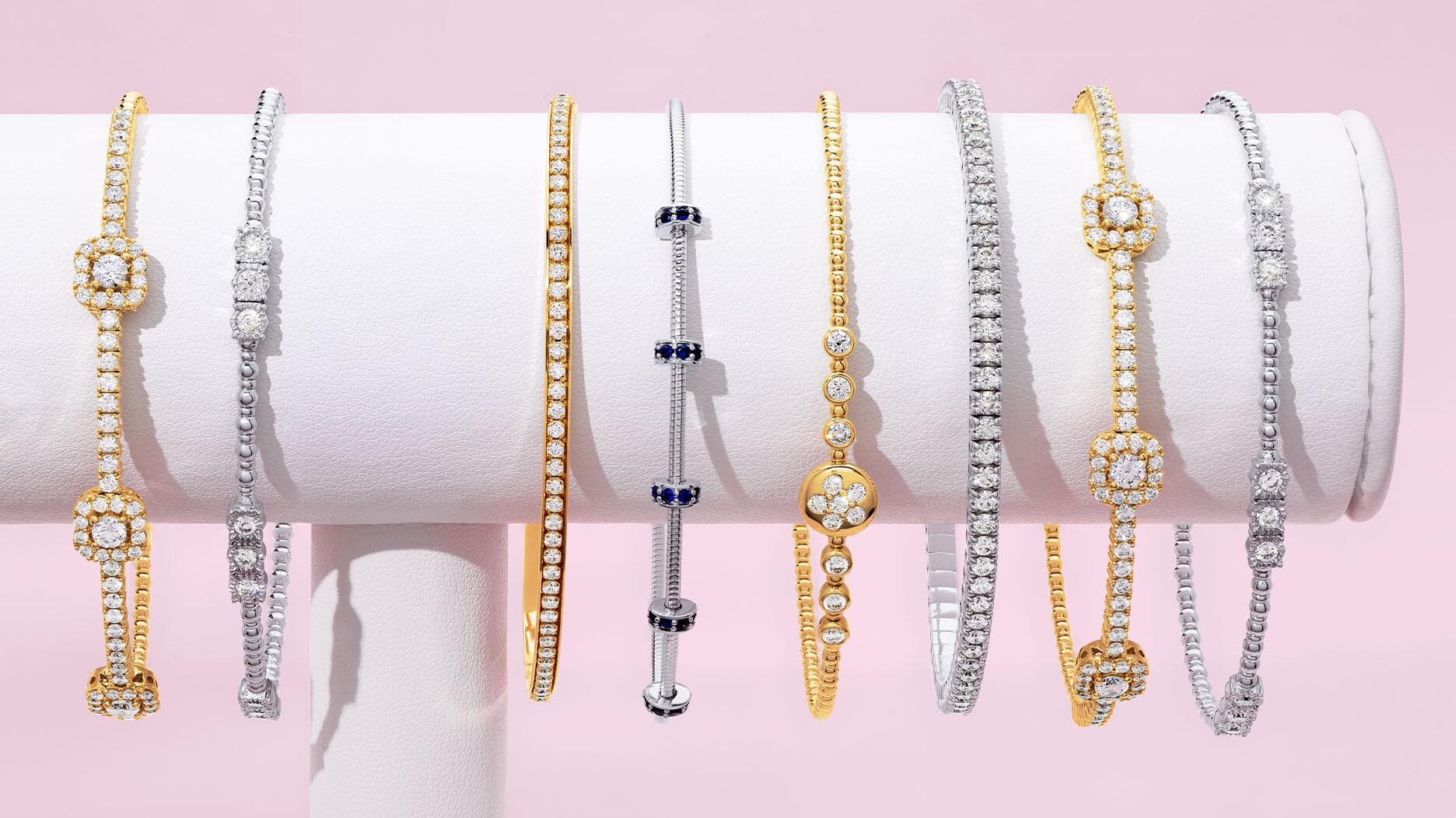
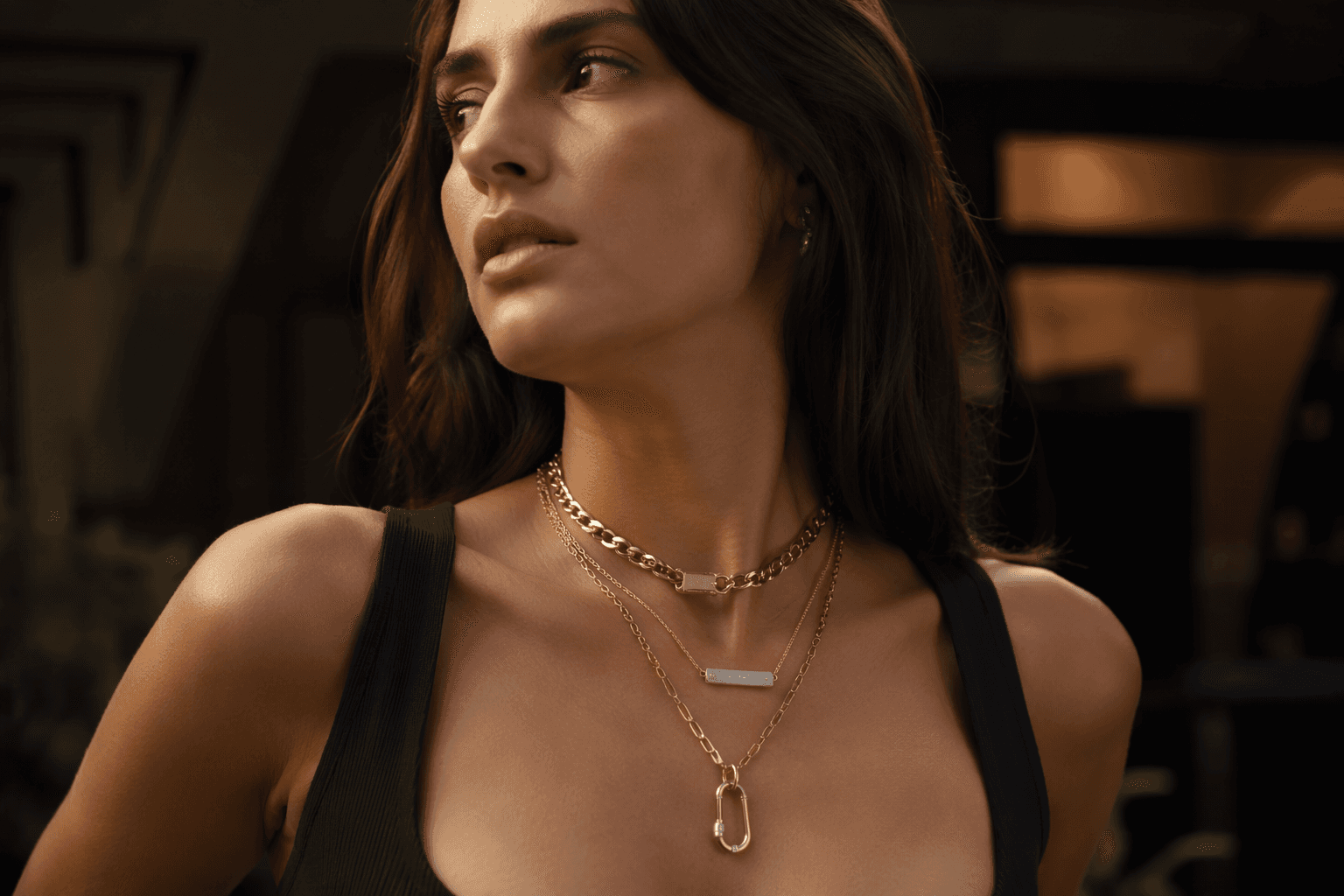
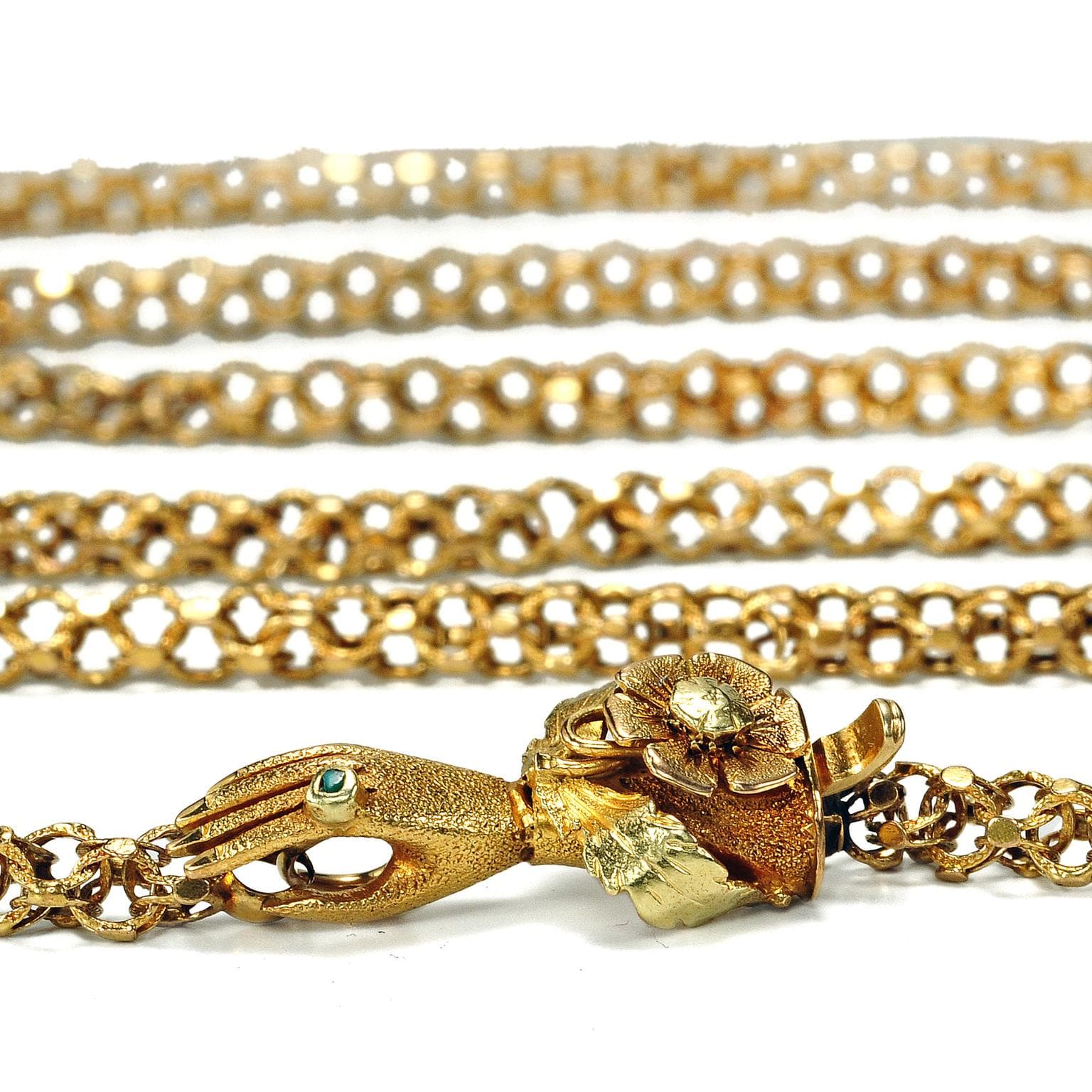
Cuff bracelets lead summer's jewelry layering trend, from runways to stars
Cuff bracelets are replacing delicate wrist stacks with one sculptural anchor, powered by runway momentum, celebrity wearers and a wider turn toward maximalism.
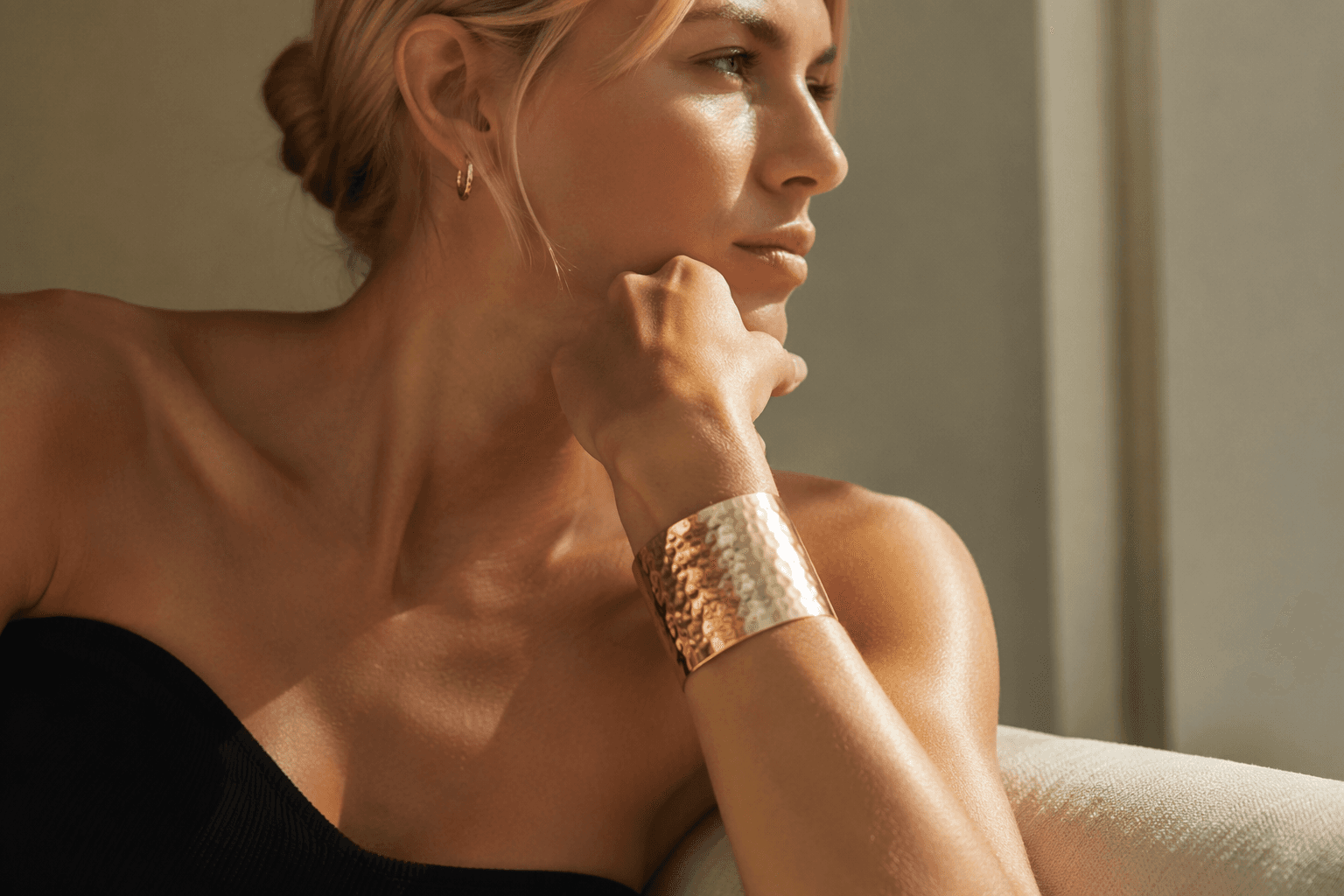
One cuff is doing the work of an entire wrist stack this summer, and that shift says more about jewelry’s mood than any passing accessory whim. The silhouette is bold, sculptural and instantly legible, which is why it moved from the spring/summer 2025 runways to the wrists of Rosie Huntington-Whiteley, Zoe Kravitz and Alexa Chung.
The cuff has become the new statement layer
The strongest cuffs now read less like a finishing touch and more like the center of the look. Harper’s Bazaar identified sculptural silver and gemstone-set cuffs as the season’s biggest jewelry story, with demand accelerating after spring/summer 2025 showings from Alaïa, Alexander McQueen and Saint Laurent. That runway momentum matters because cuffs solve a very current styling problem: they deliver impact without the visual clutter of a many-piece stack.
Xenia Lally, Mejuri’s fashion director, captured the appeal in practical terms. A structured cuff creates tension against finer chains, and one cuff can carry the same visual weight as a full wrist stack. That is the key change in the layering conversation. The point is no longer to add endlessly, but to choose one piece with enough presence to anchor everything else.
Why the shape feels right now
Part of the cuff’s resurgence is that it fits the broader return to statement jewelry without feeling overworked. ELLE’s 2026 jewelry coverage describes a market leaning back toward maximalism, with bold, fun pieces and organic forms taking hold again, while mixing and matching remains a major draw. A cuff sits neatly inside that mood because it has volume, but it also leaves room for contrast.
That is why cuffs look especially fresh against simpler companions. A slim chain, a clean ring, or a pared-back watch lets the bracelet’s architecture stand out. The effect is not delicate layering for its own sake, but composition: one decisive shape, then enough quieter pieces to make that shape matter.
From heritage object to modern shorthand
The cuff’s modern appeal is sharpened by its history. Tiffany & Co.’s Bone cuff, first designed by Elsa Peretti in 1970, remains a reference point because it turned the wrist into sculpture rather than decoration. Worn over the years by Catherine Deneuve and Margot Robbie, it shows how a cuff can outlast trends precisely because it carries a strong line and a recognizable silhouette.
That heritage is part of the reason the format still feels luxurious. A good cuff has the authority of design, not just the flash of adornment. It can be minimal, like an open band in polished metal, or more decorative, as in gemstone-set versions, but the appeal stays the same: it reads from across a room.
Runway jewelry is moving bolder, not busier
The cuff is not standing alone. At Paris Fashion Week in 2025, houses including Chopard, Boucheron, Chaumet and Dior presented jewelry with real graphic force. Chaumet, in particular, showed highly stackable bangles and ring sets alongside hexagonal beehive earcuffs, a useful clue that the broader jewelry mood is moving toward stronger shapes and more visible structure.
That matters because it shows the cuff trend is part of a wider swing in the market. The industry is not simply making wrists heavier; it is making jewelry more deliberate. Bangles are being stacked with intent, rings are being grouped with more thought, and ears are joining the conversation through pieces like Chaumet’s geometric earcuffs. The result is a more editorial kind of layering, where each item has a job to do.
Celebrity wear confirms the split between gold and silver
The celebrity sightings have been useful because they show how little this trend depends on one metal or one dress code. Rosie Huntington-Whiteley wore a gold open cuff at the Serpentine Summer Party, while Zoe Kravitz chose a silver cuff at Jessica McCormack’s Summer Solstice Party. Alexa Chung has also helped keep cuffs in the fashion conversation, which reinforces the sense that the shape works across different wardrobes and different levels of polish.
Gold gives the cuff warmth and softness; silver sharpens it. Both read as modern when the form is clean and the scale is assertive. That flexibility is part of why the trend has traction beyond a single look or season, and why it is replacing the more fussy logic of stacking several thin bracelets until the wrist disappears.
The spend data backs the appetite for fewer, stronger pieces
There is also a clear market argument for the move toward more dramatic jewelry. De Beers’ 2026 U.S. Diamond Acquisition Study surveyed 18,500 women aged 18 to 74 and found that natural diamonds remain the most desired luxury jewelry product. The same research showed average prices for natural diamond jewelry rising to $4,063 per piece in 2025 from $3,242 in 2023, a 25 percent increase.
That price shift helps explain why consumers are gravitating toward pieces that feel substantial and memorable. De Beers also found that Gen Z accounts for 23 percent of natural diamond demand value while representing 18 percent of the population, which suggests younger buyers are already shaping the market toward fewer purchases with more visual and emotional weight. A cuff fits that mindset: it is not an afterthought, but the piece you notice first.
How the new layering logic works
The most convincing cuffs today do not fight the rest of the jewelry story. They set the tone for it. A silver cuff beside a fine chain, a gold open cuff beside a pared-back ring, or a sculptural bracelet paired with stacked bands creates more tension than a wrist crowded with small pieces ever could.
That is the real summer shift. Jewelry layering is no longer about accumulation for its own sake. It is moving toward intentionality, where one bold cuff can replace a dozen delicate additions and make the entire look feel clearer, sharper and more resolved.
This article was produced by Prism’s automated news system from verified source data, official records, and press releases, then run through automated quality and moderation checks before publishing. The system is built and supervised by the people who set the standards it runs under. Read our full AI policy.
Did this article answer your question?