Layered Pearl Necklaces Define 2026 Style, From Polished to Everyday
Layered pearls are shifting from heirloom to everyday uniform, with spacing, length, and texture doing the styling work. The right formula keeps them polished, not bridal.
How layered pearls became the most useful necklace formula of 2026
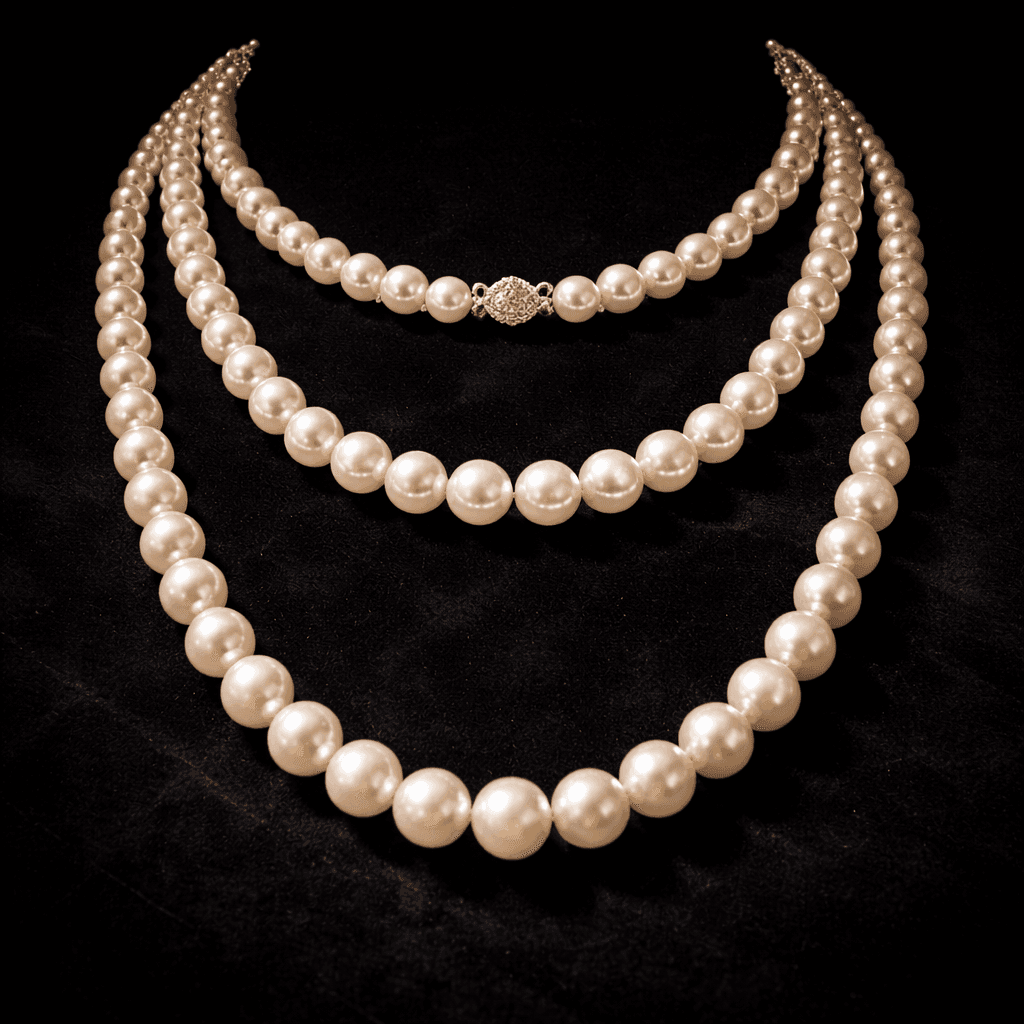
Pearls are winning the layering game because they do something many necklaces cannot: they bring structure without looking stiff. PearlsOnly argues that multiple strands feel richer than a single necklace, and the styling logic is simple enough to use now. When the lengths are separated cleanly and the pearls vary in type or scale, the result reads polished first and bridal only if you push it there.
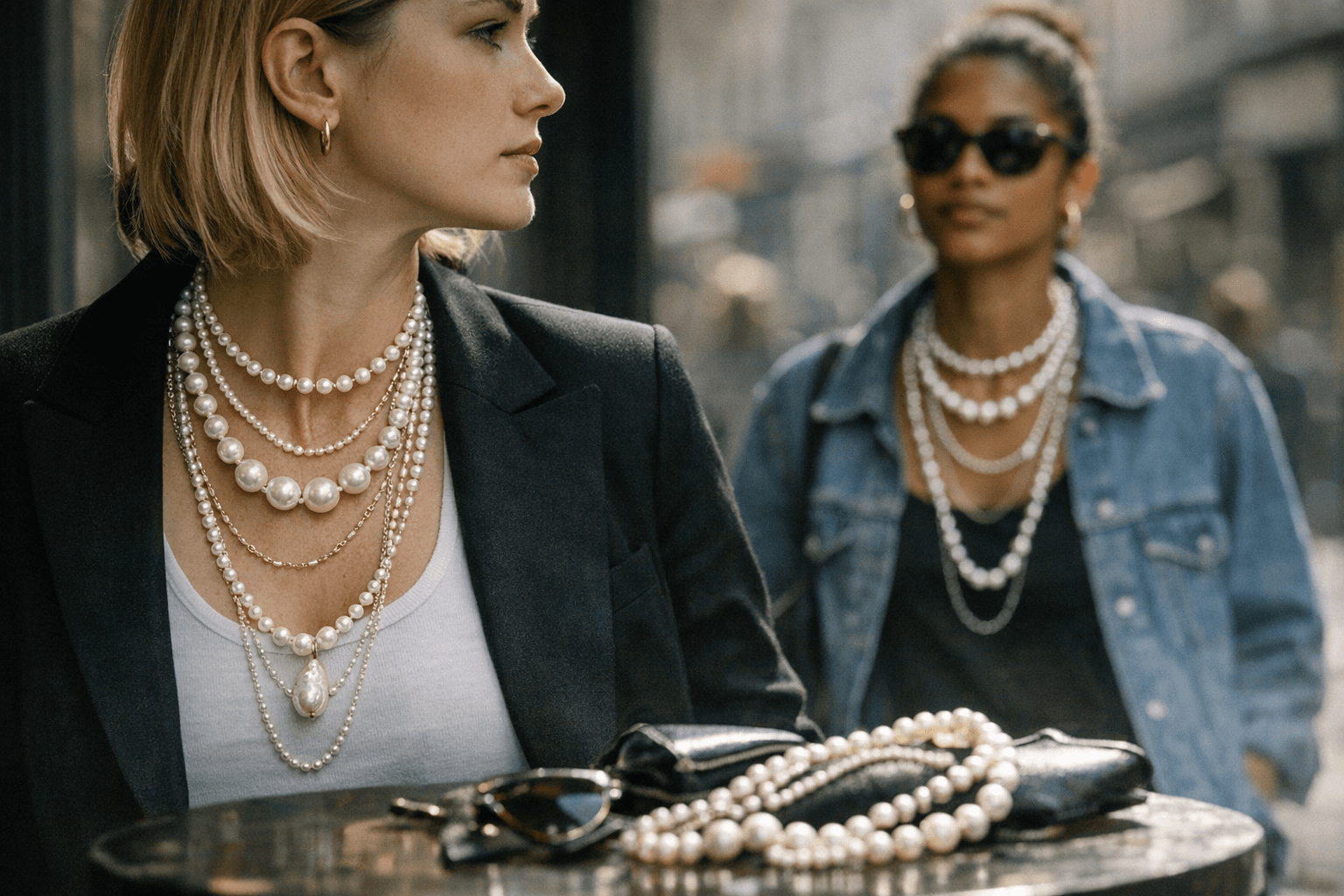
The trend is already visible on Instagram and Pinterest, where multiple pearl strands are worn at different lengths and styled less like heirlooms and more like daily uniform. That matters because the look has moved out of special-occasion territory. A layered pearl necklace can sit just as easily over jeans and a tee as it can with a blazer or a slip dress, which is exactly why it feels current rather than costume-like.
The formula that keeps pearls from tangling or looking fussy
The most useful styling rule is also the least glamorous: leave room between the strands. PearlsOnly recommends about 2 inches of separation between layers so each necklace stays visible and the stack does not collapse into a single knot of shine. That gap gives the eye a clear path from one strand to the next, which is what makes the look feel intentional instead of crowded.
The brand’s recommended starting point is practical: build from a 16-inch foundation strand, then add 18-inch, 20-inch, and 22-inch lengths. Even two strands, when they are clearly different in length, can deliver the layered effect without overwhelming the neckline. A 14- to 16-inch choker paired with 17- to 19-inch and 20- to 24-inch lengths pushes the architecture further, but the principle stays the same: each necklace needs its own space to read as a deliberate layer.
Why pearl variety matters as much as length
Layering works especially well with pearls because the category is not one note. PearlsOnly points to classic Akoya, baroque freshwater, and Tahitian pearls as part of the appeal, and that range gives the wearer room to create texture without losing balance. A single strand of uniform pearls can feel formal; a mix of forms gives the stack movement.
That is where 2026 pearl styling becomes less traditional and more editorial. A round, classic strand can anchor the look, while a baroque or freshwater layer adds an irregular surface that catches light differently. The effect is refined, but not too precious, which is why the trend translates so neatly from fashion imagery into real wardrobes.
How to wear pearls now without looking overly traditional
The easiest way to modernize layered pearls is to let one strand stay classic and let the others introduce contrast. Think of the formula as one polished layer and one modern texture, rather than three competing statements. A smooth Akoya strand beside a baroque freshwater necklace feels alive; a choker with a longer pearl line feels sharper still.
PearlsOnly also frames the wider 2026 shift as intentional layering, not matching sets. That distinction matters. Matching sets can feel formal and prescribed, while intentional layering suggests editing, not uniformity. The look becomes more personal when you mix pearl shapes, vary the lengths, and let the stack look composed rather than symmetrical.
The new pearl mood is mixed-media, not museum-like
Coveteur describes pearl necklaces in 2026 as mixed-media looks, often styled with oversized pearls, pendants, and chokers. That is an important correction to the old pearl stereotype. Pearls are no longer being presented only as neat strands with perfect spacing and a conservative finish. They are being reworked as part of a broader styling language that includes metal, volume, and a little friction.
Other trend coverage points in the same direction, with more playful pearl styling, organic shapes, and freshwater pearls appearing in roundups. Together, those signals explain why pearls are suddenly easier to wear with everyday clothes. The less perfect the shape, the less formal the mood. The more visible the mix of textures, the more the necklace feels styled for now.
Why this comeback has real commercial weight
Pearl layering is not just a fashion mood board story. Statista projects global jewelry revenue at US$408.64 billion in 2026, with the market expected to grow at a 5.10% CAGR from 2026 to 2031. In the United States alone, the jewelry market was about US$63 billion in 2023. That scale explains why a styling shift can matter far beyond one accessory category.
When a look moves from niche to broadly wearable, the category widens with it. A layered pearl necklace is not only about aesthetics, it is a way for brands to sell modularity, mixability, and repeat wear. That is a more durable proposition than a single trend-driven pendant, because the same strands can be restyled across outfits, seasons, and dress codes.
The deeper reason pearls keep returning
Pearls have always carried cultural weight. One recent fashion article traces them back to antiquity as status symbols and notes their particular prestige in Elizabethan England. That history helps explain why each revival feels larger than a simple trend cycle. Pearls already come with memory, authority, and a sense of inherited value.
What changes in 2026 is the styling. Pearls are no longer positioned only as heirloom objects reserved for formal moments. They are being treated as modular accessories, designed for mixing, personal expression, and everyday wear. That is why the layered version feels so right now: it honors the polish of the classic strand, then loosens it enough to fit real life.
A simple pearl stack formula worth using now
If you want the look to stay elegant rather than overloaded, the structure is straightforward:
- Start with a 16-inch base strand.
- Add one or two longer lengths, such as 18, 20, and 22 inches.
- Keep roughly 2 inches between each layer.
- Mix pearl types, such as Akoya with baroque freshwater or Tahitian, to add texture.
- If you want a sharper finish, introduce one modern element, such as a choker or a pendant, but keep the rest of the stack restrained.
That balance is why layered pearls are defining 2026 style so effectively. They solve a familiar styling problem, too much necklace with too little clarity, and turn it into something deliberate. The result is a pearl look that feels polished, current, and easy enough to wear beyond the mirror-lit moments that once defined it.
This article was produced by Prism’s automated news system from verified source data, official records, and press releases, then run through automated quality and moderation checks before publishing. The system is built and supervised by the people who set the standards it runs under. Read our full AI policy.
Did this article answer your question?