Mixed Metals Go Mainstream, Layered Jewelry Feels More Personal
Mixed metals are no longer a styling mistake; they’re the quickest way to make a jewelry layer feel deliberate, personal, and easy to wear.
Mixed metals, on purpose
The most persuasive jewelry looks rarely match too neatly. Gold and silver worn together create tension, and that tension is exactly what makes a stack feel edited rather than accidental. What once read as a fashion faux pas has settled into a more confident code, one built on contrast, repetition, and personal taste.
That shift is bigger than a styling trick. Jewelry writing across 2025 has tied mixed metals to layering, individuality, and capsule-jewelry dressing, a combination that makes sense in a market where people want pieces that travel across outfits and occasions. A consumer survey from The Plumb Club, which sampled more than 2,000 men and women ages 25 to 60 across the United States, points to the same idea: shoppers respond to customization, not sameness. Jewelry is becoming less about a matched set and more about a signature.
Why the look feels current now
The runway offered one early nudge, but retail has carried the idea into daily wear. In Paris Fashion Week coverage from March 2023, mixed metals stood out as one of the strongest trends, with independent designers showing two-tone pieces that combined gold and silver-toned precious metals. By 2025, that language had moved from showrooms into real wardrobes, where the appeal is not novelty but usefulness.
Layering has helped the shift go mainstream. JCK described 2025 as a year when maximalism returned to jewelry, with a long-necklace comeback, multistrand chain layering, and bangle stacks making piling on feel polished again. The result is a vocabulary of jewelry that reads intentional even when it is abundant. Mixed metals fit naturally into that world because contrast creates structure, and structure keeps a layered look from turning messy.
The simplest rule: repeat the metal or add a bridge
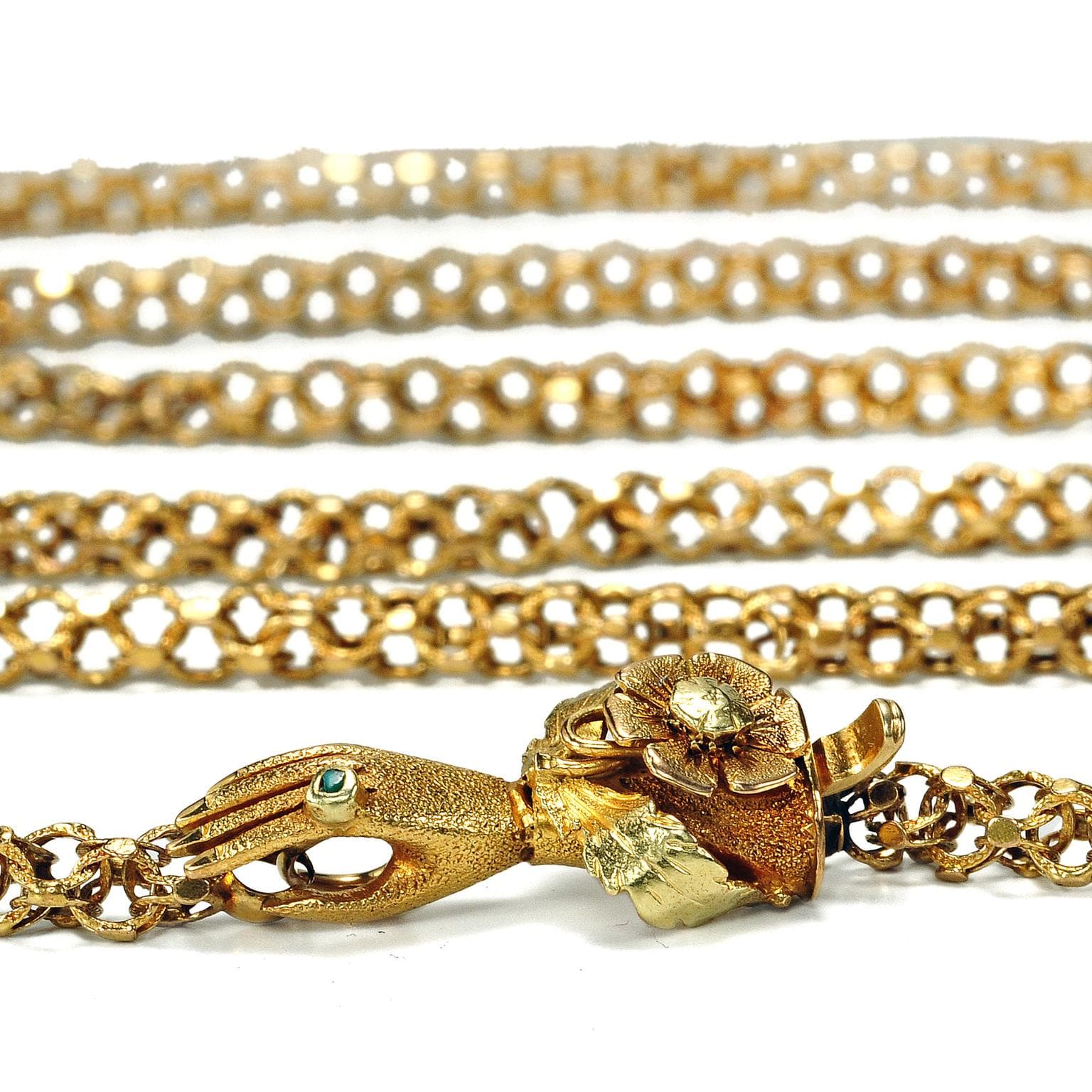
If the fear is that gold and silver will look random together, the fix is surprisingly simple: repeat each metal at least twice, or use one bridge piece that contains both tones. Repetition makes the eye understand the stack as a composition, not a coincidence. A bridge piece, whether it is a two-tone clasp, a mixed-link chain, or a ring that blends both finishes, acts like a hinge between the two colors.
This matters most when the jewelry sits close together. A lone silver chain beside a lone gold pendant can look unresolved, but two gold pieces and two silver pieces, or one mixed-metal anchor in the middle, tells a cleaner story. The same logic applies whether the pieces are delicate or bold.
Necklaces: build from one anchor, then vary the texture
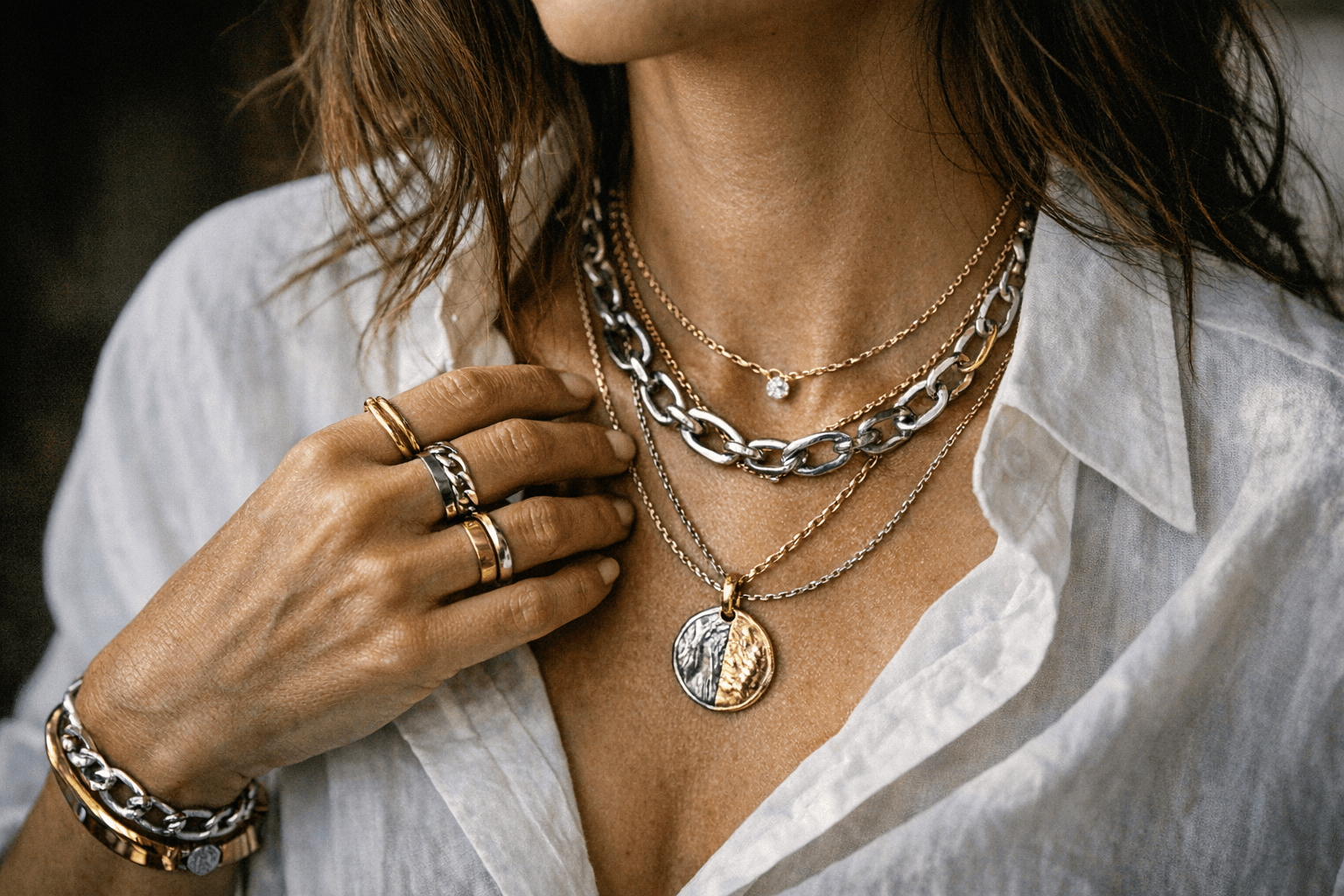
Necklaces are where mixed metals can look the most polished, because length creates breathing room. Start with one anchor, then layer upward or downward with another chain that changes either scale or finish. A fine gold chain, a silver pendant at a slightly longer length, and a third strand in a heavier gauge can make the mix feel deliberate without getting cluttered.
The best mixed-necklace stacks also separate visual jobs. Let one piece carry the pendant, another add shine, and a third supply texture, such as a curb chain, a rope chain, or a link chain with more weight. Long-necklace layering is especially effective here because it keeps pendants from knocking into one another and gives each metal its own lane.
Rings: think in pairs, not in singles
Ring stacking is where mixed metals can become surprisingly elegant. Instead of scattering one gold band among several silver ones, repeat the gold twice, then the silver twice, or alternate deliberately on adjacent fingers. That rhythm keeps the hand from looking over-accessorized and makes each finger feel like part of a wider composition.
A mixed stack also benefits from changes in profile. Pair a flat polished band with a pavé ring, then add a brushed or hammered finish in the other metal to create depth. The contrast between smooth and textured surfaces matters almost as much as the contrast between yellow and white tones, because it keeps the stack from reading flat.
Earrings: echo the metals without copying the same shape
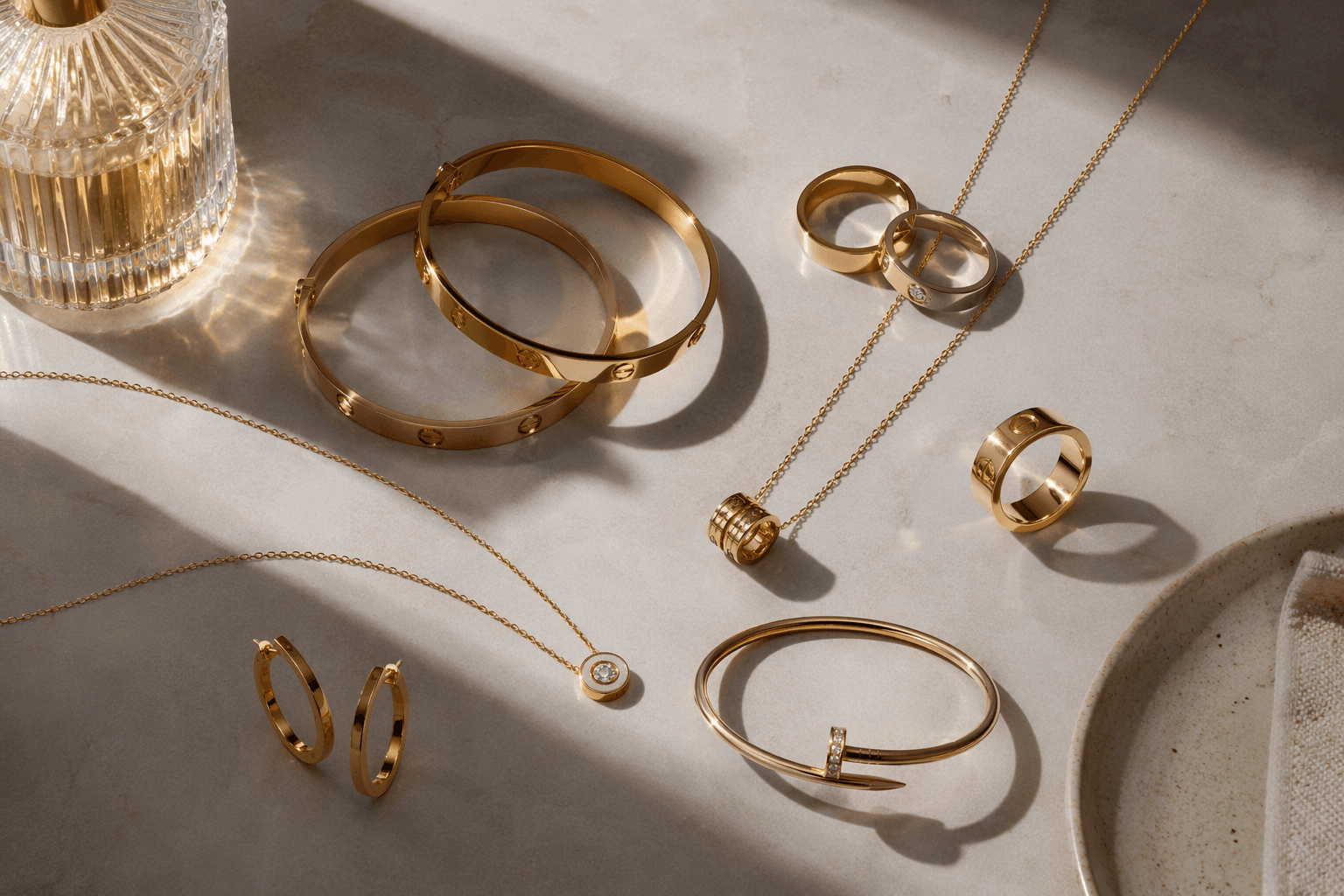
Earrings are the easiest place to make mixed metals look chic rather than busy. A gold hoop in one piercing and a silver stud or huggie in another can look sharper than a perfectly matched set, especially when the proportions are different. The trick is to echo the shape or scale so the eye understands the pairing.
Stacked earrings work well when one piece acts as the anchor and the other as punctuation. A sleek huggie in one metal, paired with a slightly larger hoop in the other, creates movement without noise. If the earrings are more sculptural, keep the rest of the ear restrained so the contrast between metals remains the point.
Bracelets: let the wrist do the work
Bracelets are where mixed metals can become playful, especially because bangle stacks already invite sound, motion, and variation. JCK highlighted the satisfying jingle of a bangle stack as part of jewelry’s return to layering, and mixed metals fit that mood naturally. One gold bangle, one silver bangle, and a chain bracelet in either tone can create enough contrast to feel finished.
For cuffs or chunkier bracelets, think about balance rather than symmetry. A thicker gold cuff can sit beside a finer silver chain bracelet without conflict if the weights differ enough. The wrist, unlike the neck, rewards asymmetry when the proportions are controlled.
Why the look also makes practical sense
There is an economic logic beneath the aesthetic one. INSTORE pointed out that astronomical gold prices may be nudging some shoppers toward mixed metals, and that does not weaken the style argument. It strengthens it. When gold becomes more expensive, pairing it with silver lets a jewelry wardrobe stretch further while still looking current, and versatility becomes part of the value proposition.
That is one reason mixed metals now feel more personal than trend-driven. The best stacks are not chasing a uniform finish; they are assembling a vocabulary from pieces already owned, pieces collected over time, and pieces that work across seasons. In a category where The Plumb Club’s research shows consumers care deeply about personalization, that makes mixed metals feel less like a rule break and more like common sense.
How to make the mix look finished, not improvised
A good mixed-metal stack usually follows one of three structures:
- one bridge piece in the center, with single-metal pieces on either side
- at least two pieces in each metal, so the eye sees repetition
- one dominant metal, then one secondary metal used as a deliberate accent
That formula works because jewelry is visual rhythm. If every piece competes, the look frays. If one metal leads and the other replies, the effect becomes refined. The goal is not to disguise the mix, but to make it look considered enough that the contrast becomes the point.
Mixed metals have moved from the margins into the main language of layering because they solve several problems at once. They make older pieces feel relevant, allow new pieces to integrate with what is already in the box, and turn a stack into something more personal than matching ever could. The result is jewelry with more character, and a little more room for individual style to show.
This article was produced by Prism’s automated news system from verified source data, official records, and press releases, then run through automated quality and moderation checks before publishing. The system is built and supervised by the people who set the standards it runs under. Read our full AI policy.
Did this article answer your question?