Mejuri Adds Silver Birthstone Puzzle Rings to Expand Mixed-Metal Stacking Options
Mejuri's Puzzle ring system now covers all 12 birthstones in silver, with a three-ring starter stack running $30 less than the all-gold version.
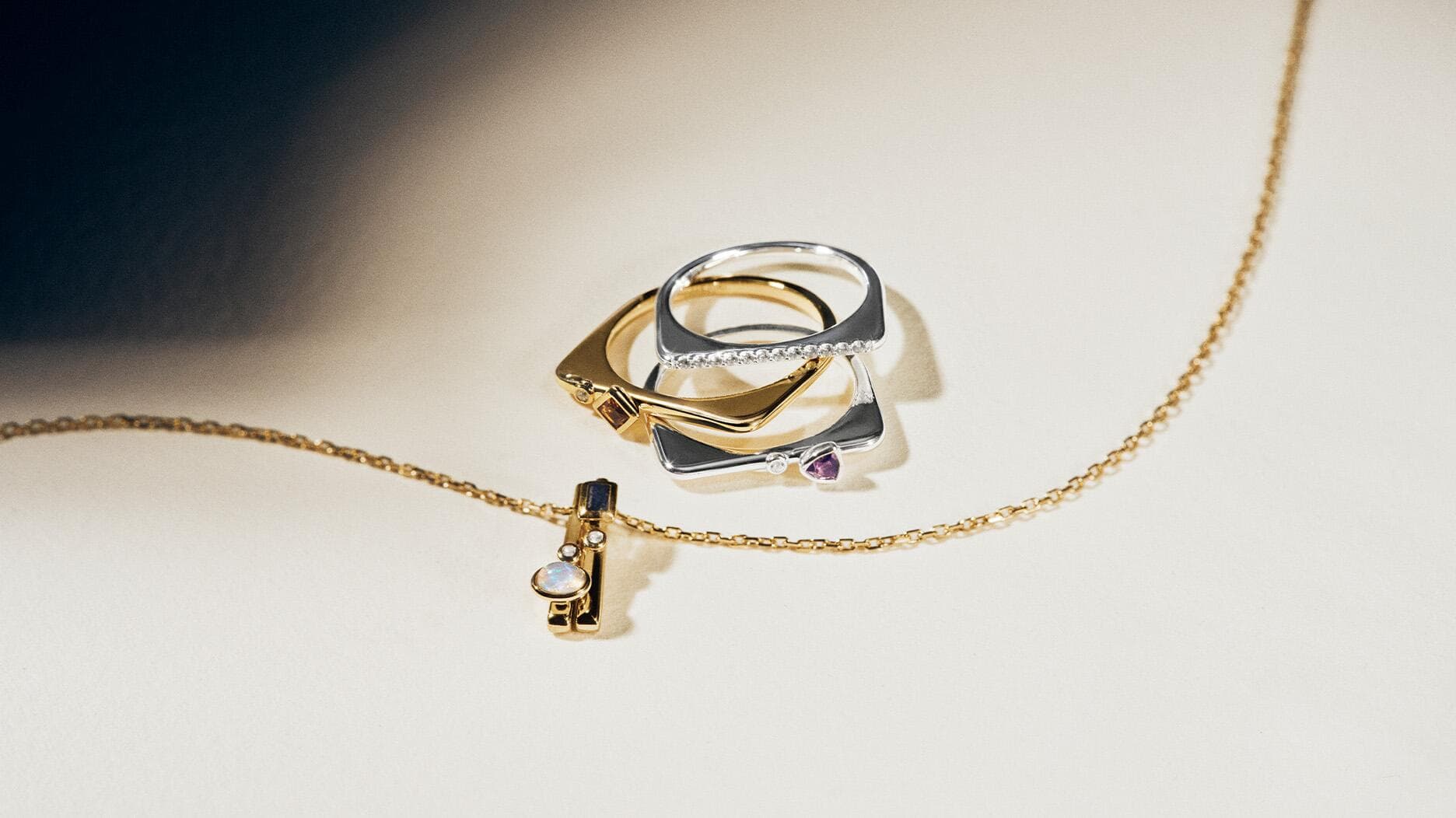
The rings you wear say something before you do. A garnet pressed against an amethyst, flanked by cool sterling silver, reads differently than either stone worn alone: it is the arrangement that tells the story. That logic drives Mejuri's Puzzle ring system, and with 14 new sterling silver birthstone styles added in late March 2026, the storytelling vocabulary just got considerably richer.
The expansion brings the total Puzzle collection to 28 rings. The line debuted in August 2025 exclusively in 18-karat yellow gold vermeil, and the new sterling silver pieces cover all 12 birth months: garnet for January, amethyst for February, aquamarine for March, lab-grown white sapphire for April, lab-grown emerald for May, pearl for June, lab-grown ruby for July, peridot for August, lab-grown blue sapphire for September, opal for October, citrine for November, and Swiss blue topaz for December. Silver ring pricing runs $118 to $128, undercutting the existing vermeil styles, which range from $128 to $148.
Nicole Ghosn, Mejuri's senior jewelry design director, has been clear that the silver expansion is about styling range, not economics. While some jewelry brands have leaned into silver as a hedge against elevated gold prices, Mejuri framed the move differently. The silver pieces exist specifically to enable mixed-metal stacks, giving wearers the tonal contrast and visual movement that a single-metal build cannot achieve. "It also allowed us to lean into the continued momentum around mixed metals," Ghosn said. She has described the modular Puzzle concept as designed to "grow, layer, and change alongside the wearer," and the 1.5mm shank construction, with interchangeable stone formats ranging from 1.25mm to 4x3mm, makes that evolution literal.
The commercial data behind the expansion is worth noting. Since the collection launched in August 2025, 60 percent of Mejuri's customers have purchased three or more Puzzle pieces. In a category where a single ring often closes a transaction, that figure suggests the modular logic is working.
For first-time buyers, the silver entry point changes the math meaningfully. A three-ring starter stack built entirely in sterling silver runs roughly $354 to $384. The equivalent build in 18k gold vermeil starts at $384 and reaches $444 depending on stone selection. That $30 to $90 difference represents, for some buyers, the threshold between committing to the system and hesitating.
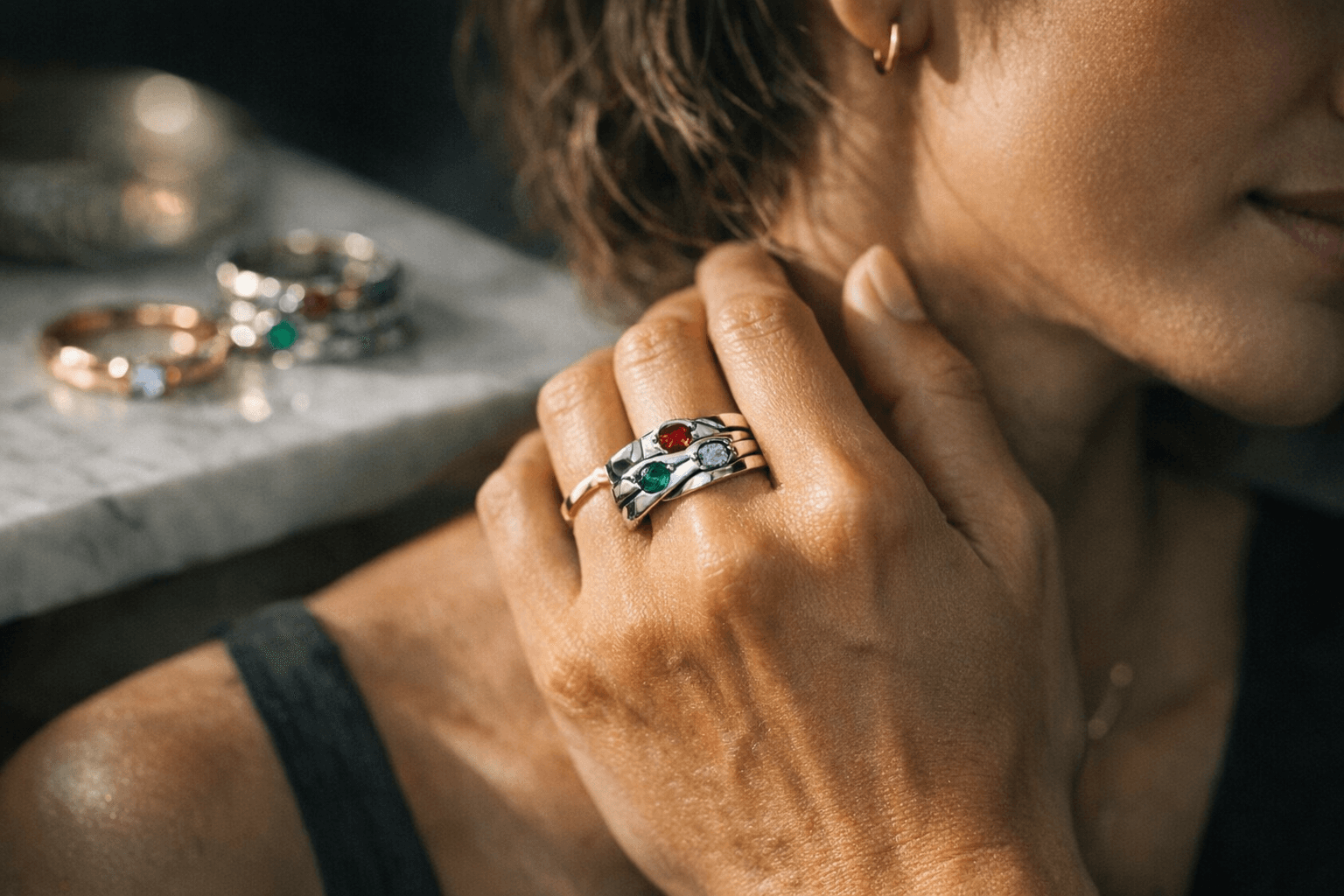
Mixed-metal stacks are where the silver pieces earn their place editorially. Anchoring the index finger with one gold vermeil Puzzle ring and flanking it with two silver styles on adjacent fingers lets the cooler silver tone separate the stones visually, preventing the stack from reading as a single crowded mass. A second approach pairs a silver aquamarine at $118 with a gold vermeil pearl Puzzle ring at $148 on the same hand: the metal contrast creates depth that matching finishes cannot. A third recipe runs three silver rings across the middle finger with a single vermeil piece on the ring finger, using the ratio of silver to gold to control warmth rather than eliminating it entirely. For a bolder build, alternating silver and vermeil across four fingers, one piece per finger, reads as intentional mixed-metal rather than mismatched.
Sizing for a stacked system requires slightly different thinking than buying a single band. Mejuri advises sticking to your usual size for thin bands, but notes that stacked rings fit and feel different than a single piece. Measure fingers at the end of the day, when they are at their largest, and in warm conditions: fingers can shrink up to half a size in cold weather, turning a comfortable three-ring stack into one that shifts and gaps between knuckles. Two to three Puzzle rings per finger is the practical ceiling for most wearers; distributing stacks across the index, middle, and ring fingers balances visual weight without overloading any single joint.
The new Puzzle slider charms, released alongside the silver rings and priced at $128, clip onto existing ring shanks rather than functioning as standalone bands, adding a further layer of reconfigurability to the system. Together with the 28 birthstone styles, they position Puzzle as one of the more genuinely modular birthstone platforms in accessible fine jewelry. The collection's architecture rewards incremental building, and with silver now in the mix, the first piece no longer has to determine the direction of everything that follows it.
This article was produced by Prism’s automated news system from verified source data, official records, and press releases, then run through automated quality and moderation checks before publishing. The system is built and supervised by the people who set the standards it runs under. Read our full AI policy.
Did this article answer your question?