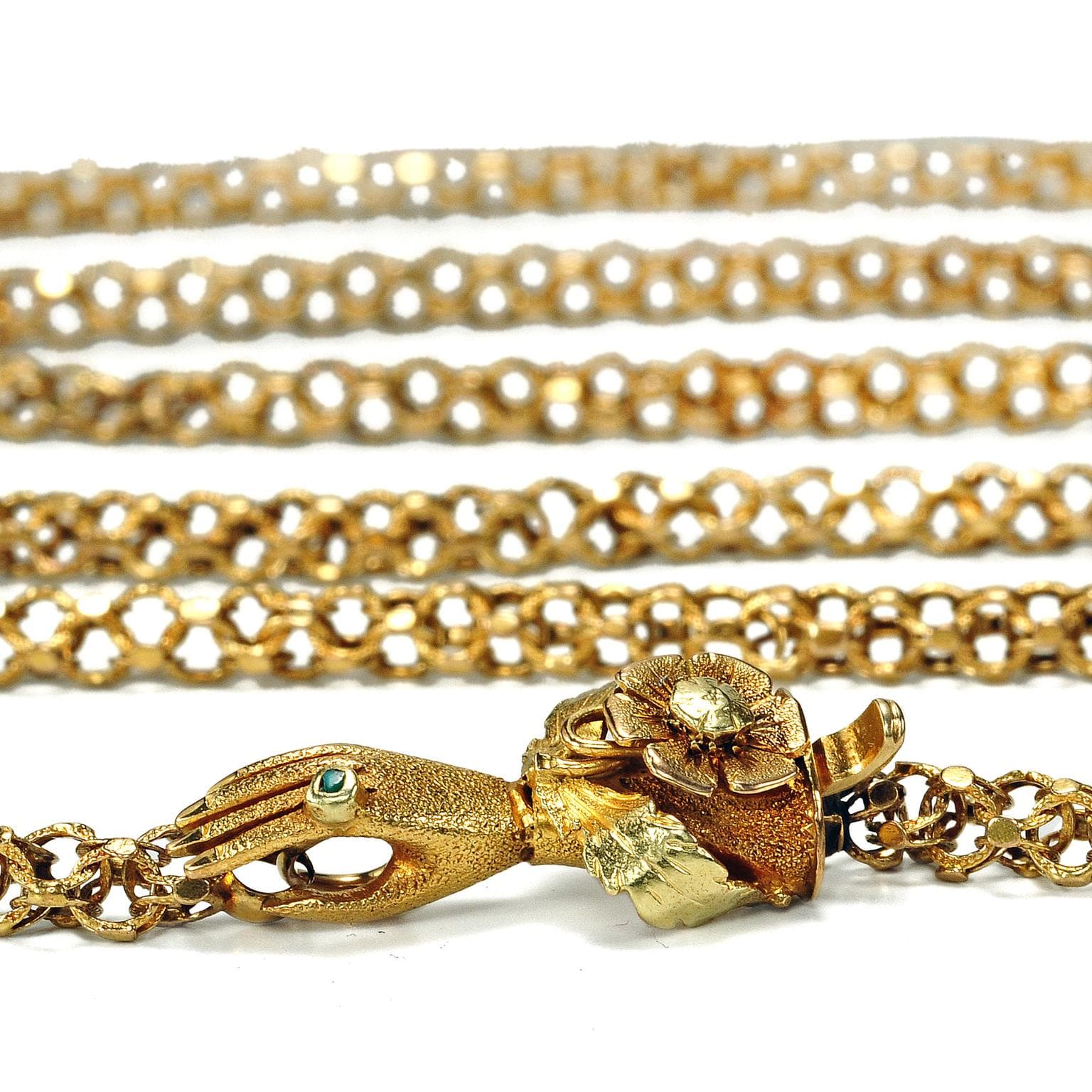
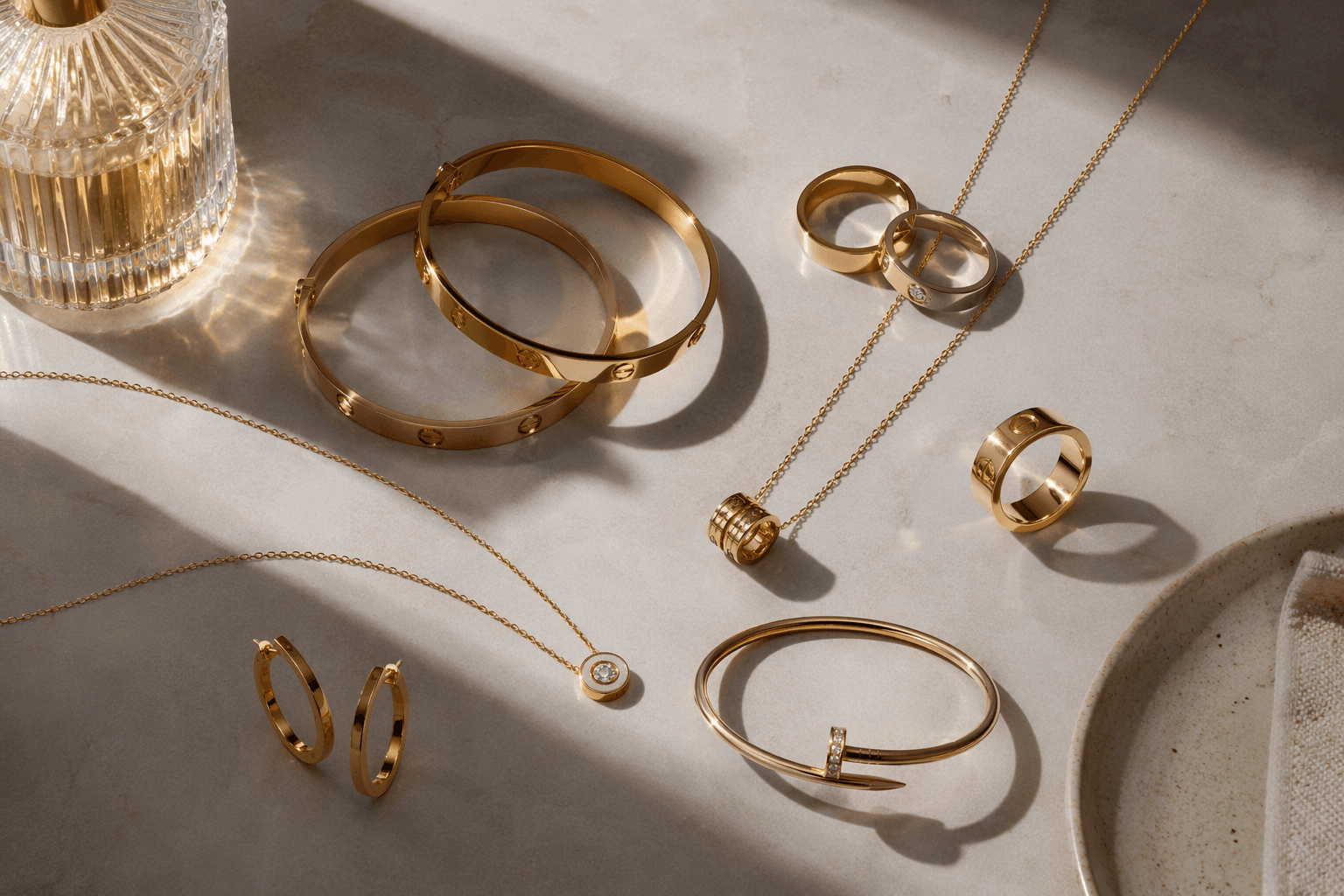
Multistrand Chain Layering Is Back
Sabrina Carpenter's 50-carat Chopard sautoir at the 2025 Grammys proved multistrand chain layering is back, and this guide shows you how to do it tangle-free.

There is a particular confidence that comes from wearing jewelry well. Not just wearing it, but composing it: deciding which chain sits where, which length creates negative space, which gauge creates enough contrast that your stack reads as intentional rather than accidental. Multistrand chain layering, the slightly more architectural cousin of the anything-goes "neck mess," is back in the conversation in a serious way, and the distinction between those two aesthetics is exactly where this guide lives.
The proof point that crystallized the moment came at the 2025 Grammys, when Sabrina Carpenter wore a 50-carat brilliant-cut diamond pendant on a long Chopard sautoir over a backless JW Anderson gown. The necklace cascaded down her spine as the sole focal point, a single grand statement on an otherwise bare canvas. What made it resonate wasn't the carats; it was the architecture: one long, graduated strand with a pendant anchored at the terminal point, falling precisely where it was meant to fall. That is the grammar of modern multistrand layering, whether you're working in fine diamonds or everyday gold-filled cable chain.
What Separates a Stack from a Tangle Waiting to Happen
The JCK trade analysis published in May 2025 framed the shift clearly: this is maximalism, yes, but a polished kind. Modern designers are pairing long pendants with graduated delicate strands specifically to preserve the separateness of each layer. The goal is for each chain to remain legible as an individual piece while the whole reads as a composed set. That means three things must be deliberate from the start: length spacing, gauge contrast, and clasp strategy.
Length spacing is the most underestimated variable. Each strand in your stack should differ from the next by a minimum of two inches; less than that and the chains will occupy the same plane on your chest, defeating the graduated effect and creating constant friction between links. The ideal spread for a three-strand stack is 16 inches (collarbone), 20 inches (mid-chest), and 24 inches (pendant length, sitting comfortably at the sternum).
Gauge contrast is what gives the eye somewhere to travel. A 0.8mm to 1mm delicate cable chain cannot be layered with another 0.8mm cable without both chains fighting for the same visual territory. Pair that fine chain with a 2mm to 2.5mm rope or figaro at the mid length, and then use a 1.5mm box or snake chain at the longest point with a pendant. The variety in link structure, not just thickness, is what keeps each strand visually distinct.
The Anti-Tangle Checklist
This is the part most guides skip because it involves hardware rather than aesthetics, but it is where the whole system either works or collapses by 11am.
- Use a layering clasp. These are multi-loop connectors that sit at the nape of your neck and gather up to three separate necklace clasps into a single fastening point. Both strands leave from the same origin, which dramatically reduces the rotational drift that causes tangling. Look for connectors made in sterling silver or gold-filled rather than base metal, which will tarnish against your skin.
- Choose lobster claw clasps over spring rings whenever possible. Lobster claws are self-locking and require deliberate pressure to open; spring rings can disengage with friction. For a stack you're wearing through a full workday or an evening of movement, the difference is material.
- Avoid toggle clasps in multistrand stacks. The bar can slip through the ring under lateral movement, particularly on longer chains. They are beautiful as standalone pieces; in a layered stack, they are a liability.
- Use spacer bars for four-strand stacks. A spacer bar is a small, perforated pendant-style separator threaded onto each chain at the mid-chest point, holding all strands parallel and preventing them from crossing. They come in plain barrel styles and more decorative versions with small stones.
- Extend before you commit. Extender chains in one-inch and two-inch increments let you micro-adjust spacing after you've put the stack on, so you're not relying entirely on fixed lengths to create the right graduation.
- Dress first, jewelry last. Putting on a knit or a high-neck top over a layered stack is how chains get stressed, twisted, and occasionally broken. The stack goes on after the outfit is settled.
- Store hanging, not pooled. A multi-arm tabletop stand, or individual small hooks, prevents the overnight tangling that happens in bowls and pouches. If you travel with a layered stack, feed each necklace through its own straw before coiling into a pouch.
Occasion Formulas
Work
Two strands are the professional maximum for most office contexts, and the formula is simple: a 16-inch fine cable chain (1mm or under) at the collarbone, paired with a 20-inch chain carrying a single small pendant. Keep total combined weight light enough that neither chain pulls on your collar. Lobster clasps only. If you're in a client-facing role, the layering clasp at the back keeps the setup invisible and precise.
Weekend
Three strands, maximum freedom. Start with a 14-inch to 16-inch choker-adjacent layer (a fine cable, a thin paperclip, or a small-link figaro), add an 18-inch mid-layer in a contrasting texture, and anchor the stack with a 22-inch chain carrying a charm or pendant. This is where you can mix metals productively: gold-filled with sterling silver adds dimension when the lengths and link styles are different enough that each chain reads independently. The contrast justifies the mix.
Evening
Three to four strands, graduated deliberately. A 16-inch collarbone chain, a 20-inch mid, and a 24-inch or longer sautoir with a pendant at its terminal point creates the kind of cascading silhouette that reads well against evening necklines. The pendant does the visual work at the longest point; the upper strands serve as framing. For backless or halter styles, reroute the longest strand so it falls down the back, Carpenter-style, and let the upper two sit at the front.
Working with Necklines
The neckline determines where you start, not where you finish. For crew and scoop necks, begin your shortest strand at or just above the collar so the layering reads above the fabric line. For V-necks, follow the angle of the V with your longest strand and let the upper chains echo it from shorter lengths, typically 18 inches, 22 inches, and 26 inches. For off-shoulder and strapless styles, lead with a choker at 14 inches and add no more than one longer strand; the absence of fabric at the shoulder makes even two chains feel like a considered decision. Button-down shirts, worn with one or two buttons open, work best with a 16-plus-20-plus-24 stack that disappears into the placket and re-emerges at the chest.
The Underlying Principle
What the current iteration of multistrand layering is really about is authorship. The "neck mess" moment of a few years ago was deliberately chaotic, a deliberate rejection of precision. The graduated chain stack emerging now asks for something different: each piece should know where it lives. When the spacing is right, the gauges contrast, and the clasp strategy is sound, the stack moves as one coherent object, not a collection of chains that happen to share a neck. That specificity, the two-inch rule, the lobster clasp, the hanging storage, is what separates jewelry that looks composed from jewelry that just looks like a lot.
This article was produced by Prism’s automated news system from verified source data, official records, and press releases, then run through automated quality and moderation checks before publishing. The system is built and supervised by the people who set the standards it runs under. Read our full AI policy.
Did this article answer your question?