This Massive Collection of More Than a Million Tools Tells the Striking History of Jewelry Making in America
A Tucson collector's 1.2-million-piece archive of hubs and dies reveals why die-struck chains outlast their impostors, and exactly what to look for when building a layered neck.
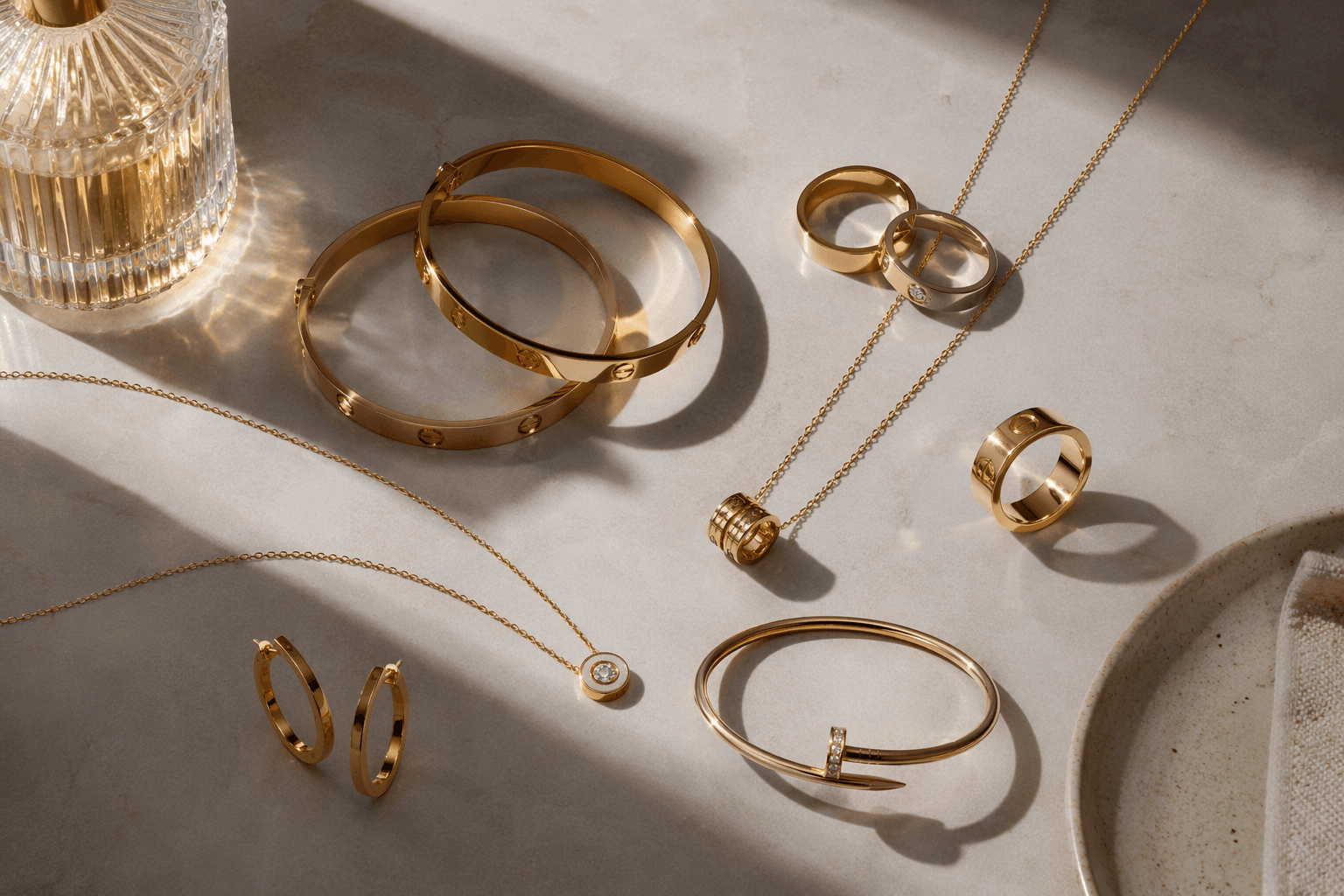
There is a particular confidence that comes from wearing jewelry well, and not just wearing it, but composing it. A layered neck stack that works is never an accident. It is the product of specific decisions: the right link shape here, the right weight there, a clasp that won't surrender to gravity by noon. What most people don't realize is that those decisions are guided by more than instinct. They are guided by history, by the logic of machines that have been silent for decades, by the hands of craftsmen who are long gone but whose work still determines what sits in your jewelry box today.
Kevin Potter knows this better than almost anyone alive. Potter, 56, is a jewelry maker based in Tucson, Arizona, who also presides over what is likely the world's largest collection of jewelry-making hubs and dies: an estimated 1.2 million pieces, packed into two warehouses in a scruffy old Tucson neighborhood. The collection, featured in the April/May 2026 issue of Smithsonian Magazine, spans tools and artifacts from 68 former jewelry manufacturers across the United States, Finland, France, and Germany, with the largest portion drawn from Rhode Island, once the undisputed capital of costume jewelry production in America.
A Archive Built From Near-Oblivion
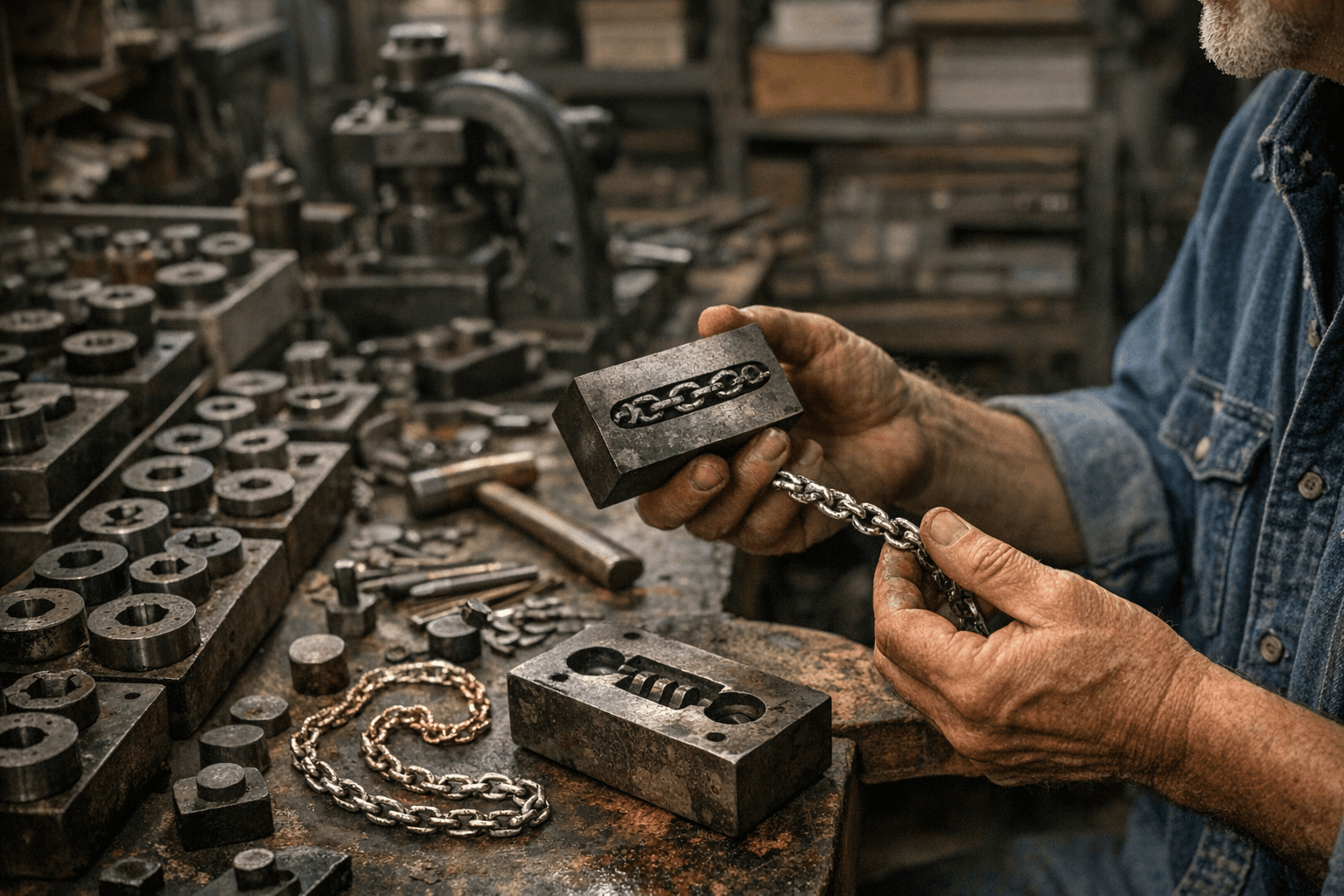
Potter did not set out to become a custodian of an industry. He founded Potter USA in 1997 from his garage, specializing in wax carving, casting, and silversmithing. The collecting began in earnest in 2016, when he discovered the Parisi Tool and Die Company in Providence, Rhode Island, a firm with a 120-year history that was about to be sold for scrap. He brought the collection back to Tucson, and the trajectory of his work shifted permanently. Since then, the warehouses have accumulated tools spanning artwork from the 1800s through the 1980s: hubs, dies, drop hammers, and chain-making machines that once ran around the clock in Providence factories.
Opening one drawer in the archive, Potter reportedly encountered an intricate Art Deco butterfly design carved into an old, weathered block of steel. "A guy made this with chisels and files," he said. "It probably took him two weeks. This hub would have made gorgeous, top-quality brooches." The hub in question also illuminates something crucial for anyone who has ever wondered why certain older pieces, inherited or discovered at estate sales, look sharper and more precise than modern counterparts at a similar price point.
What Die Striking Actually Does to Metal
The process at the heart of Potter's archive is die striking, and it is worth understanding before you buy another chain. A hub is a hardened steel master tool, hand-carved with extraordinary precision, often over weeks. That hub is pressed into softer steel to create a die, and that die is then used under enormous force to stamp finished metal components, compressing and hardening the metal in ways that casting and electroforming cannot replicate.
"Die striking is really the Rolls Royce of jewelry making," Potter has said. "The reason that your grandma's rings and earrings are still here today, 100 years later, is because they were die struck." His son Vincent Potter has noted that a single hub and die set took an average of two weeks to produce by hand. That investment in time and precision is precisely why die-struck links, clasps, and findings carry details that hold over generations rather than wearing soft within a season.
Die striking gained widespread industrial use from roughly the 1870s through the 1940s, the period that produced the Victorian, Edwardian, and Art Deco pieces that still command attention in vintage markets. The original steel hubs from that era were engineered for longevity; many of those in Potter's collection remain capable of producing thousands of crisp impressions.
Peter DiCristofaro, curator of the Providence Jewelry Museum, Rhode Island's first institution dedicated to chronicling the history of American jewelry, has described Potter's role with precision: "He is actually the custodian of generations of die makers right now. He is, in a most perplexing way that I could ever imagine, providing legions of craftspeople all over the place with tools and dies to make pieces of jewelry from hubs that could be 150 years old. In essence, he's passing on DNA."
Reading Chains Through the Lens of the Archive
The chain-making machines in Potter's warehouses, alongside the hub and die sets used to make individual links, reveal something directly relevant to how you shop and stack today. Not all chain link shapes behave equally when layered, and the differences trace back to how they were made.
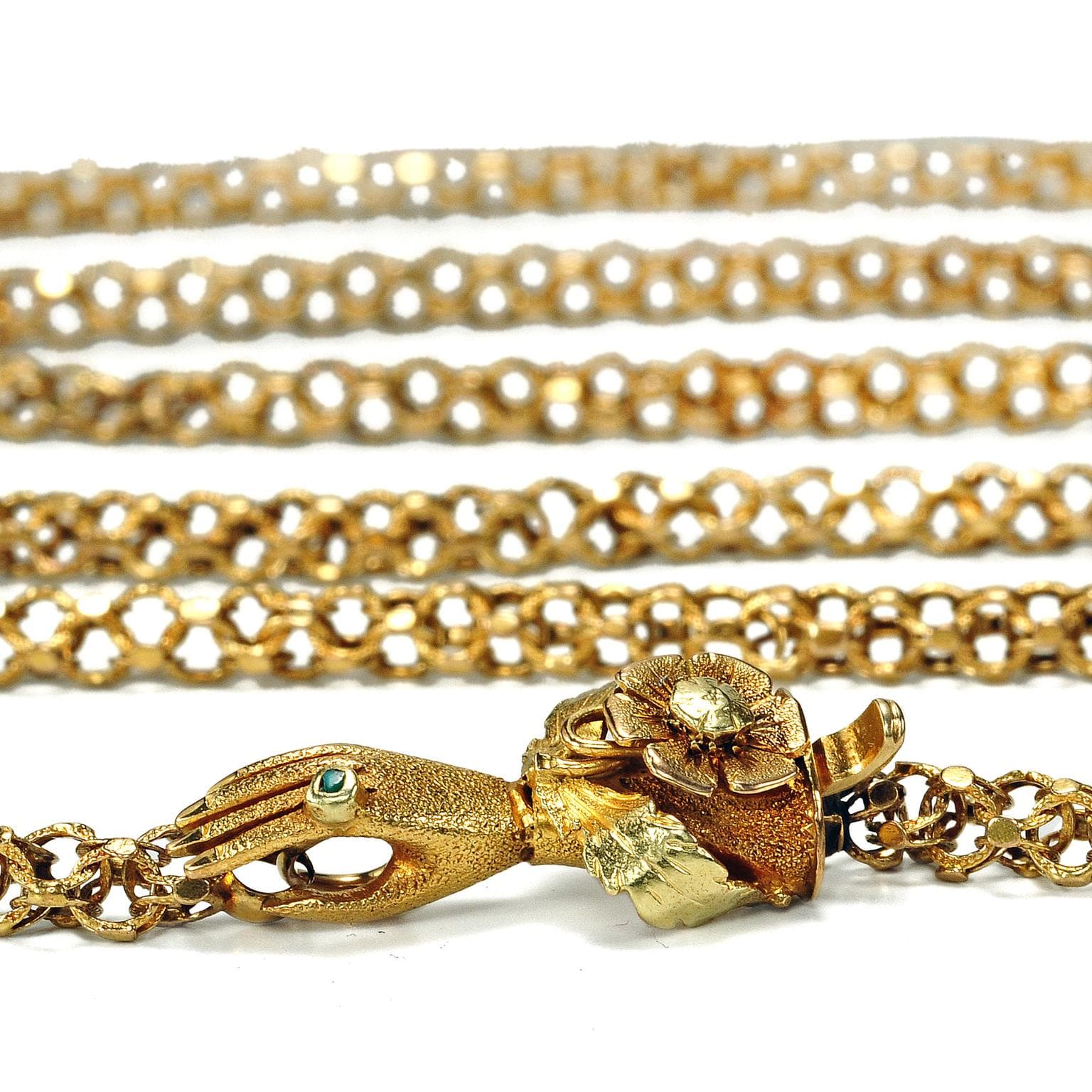
Cable chains, the most basic link style, are formed from uniform oval or round rings. Their open construction means light passes through them easily, which reads as delicate when worn close to the neck; when die-struck rather than cast, those rings hold their circular shape under tension instead of warping. Rolo chains use rounder, chunkier links of equal width and height. Because the links are more fully closed and symmetrical, rolo chains are among the easiest to layer without tangling, and they sit flat against the chest rather than twisting.
Curb chains, with their interlocked, flattened, and twisted links, lie exceptionally flat because each link is torqued to a consistent angle during manufacturing. A properly die-struck curb chain will have links of even thickness throughout, a detail you can confirm by running a fingernail across the surface: uniform resistance means consistent manufacture, while variable texture suggests inconsistency in the stamping process.
The herringbone chain is perhaps the most architecturally interesting product of this tooling tradition. It is made from a double cable that has been drawn through a flat condensing die, a process that creates the chain's signature smooth, mirror surface and its characteristic V-pattern drape. Herringbones lie beautifully in isolation, but they kink under the weight of stacking. They belong, in a layered look, at the longest length where they won't contact other chains.
Clasps and Jump Rings: The Hardware That Holds Everything Together
The die also shaped the history of clasps, and clasp choice is the most underestimated factor in whether a layered look survives contact with real life. Spring ring clasps, the small hollow circles with a lever mechanism, were introduced in the early 1900s and remain popular because they are inexpensive to manufacture and visually discreet. They are, however, best reserved for lightweight single chains. Under the combined weight of multiple layered necklaces or a heavier pendant, the spring mechanism fatigues.
The lobster claw clasp is the right choice for any chain carrying real weight. Its lever-controlled mechanism distributes tension across a larger body than a spring ring, and the self-closing design means it doesn't rely on a single small spring to maintain security. For a layered stack where chains of different lengths are all fastened at the nape simultaneously, lobster claws on each individual chain are the most reliable solution.
Jump rings, the small circles of wire that connect clasps to chains and pendants to links, are the component most often overlooked and most often responsible for a lost piece. Their lineage runs from ancient chain maille armor through the Providence factories. When shopping, the gauge of the jump ring relative to the weight it carries is the critical specification: a thin-gauge jump ring on a heavy pendant is a failure waiting to happen. Look for soldered or seamless jump rings on any piece that will be layered with additional weight.
Surface Finish and the Texture of Tangling
Among the hubs in Potter's archive, hammered and textured surfaces appear frequently, particularly in Art Deco-era tools. This is not merely aesthetic. A lightly hammered or brushed finish on a chain link creates micro-friction that actually helps chains stay in position relative to one another when layered. High-polish mirror chains are beautiful in isolation but tend to slide against each other, bunching toward the neckline. If you layer two high-polish chains, give them at least a two-inch length difference and reach for a chain with some surface texture for any third layer.
The tools preserved in those two Tucson warehouses are a record of decisions made under industrial pressure: what shapes stamp cleanest, what surfaces hold detail longest, what link geometries survive the most wearings. Every chain type and clasp mechanism in a modern jewelry case carries, in its design, the logic of those original hubs. Understanding the history doesn't just make you a more informed buyer. It makes you a better composer of the pieces you already own.
This article was produced by Prism’s automated news system from verified source data, official records, and press releases, then run through automated quality and moderation checks before publishing. The system is built and supervised by the people who set the standards it runs under. Read our full AI policy.
Did this article answer your question?