Paris couture’s high jewelry leans into layered, architectural statement pieces
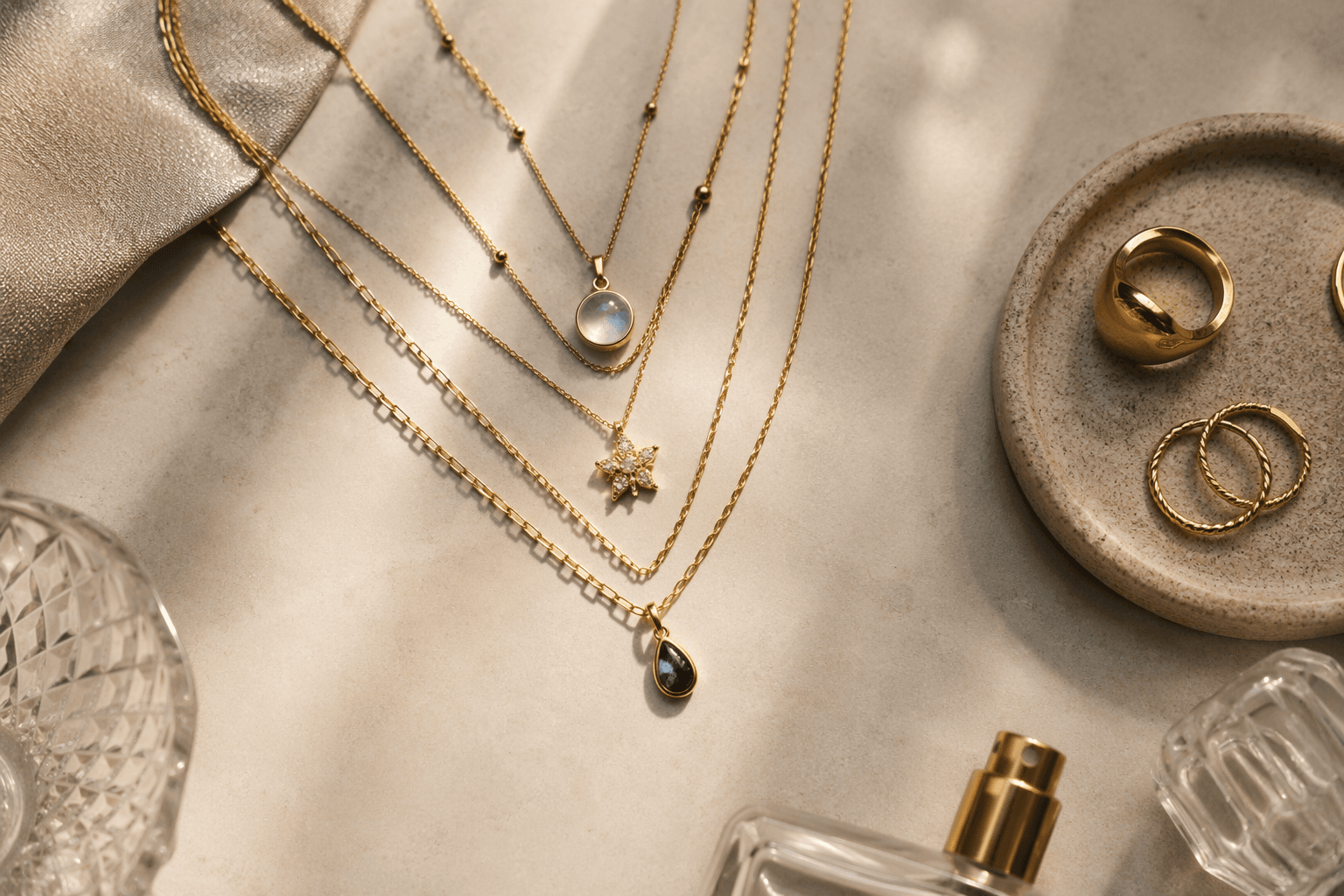
Paris couture turned layering into structure: transformable necklaces, modular brooches and yellow-gold stacks made high jewelry feel built in, not merely piled on.
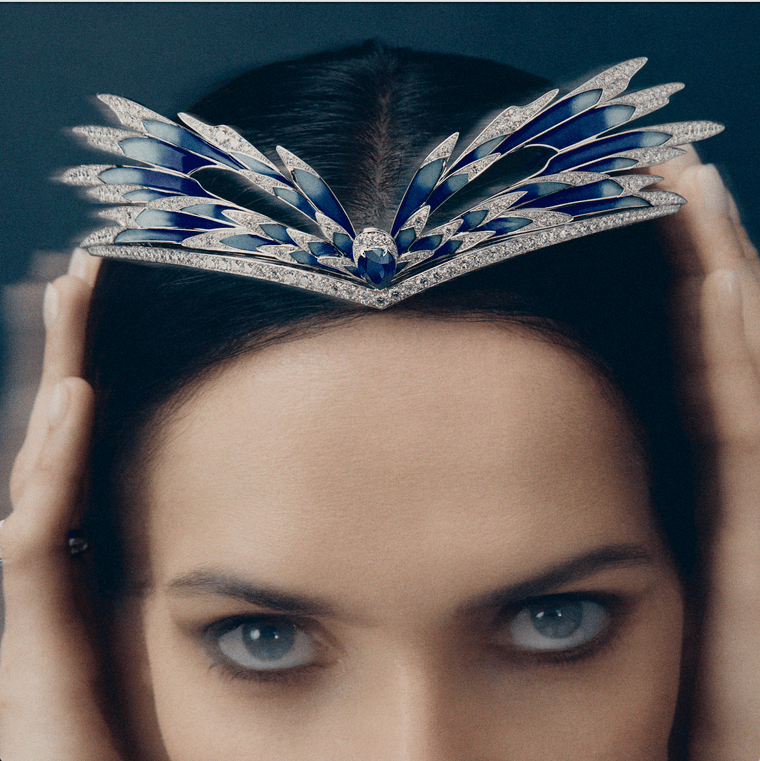
High jewelry in Paris stopped behaving like a delicate afterthought and started reading like architecture. During Paris Haute Couture Week, July 6-9, 2026, the strongest pieces stacked color, texture and function: transformable necklaces, Egyptian Revival references and statement constructions that looked engineered rather than merely worn.
Layering becomes structure
The season’s clearest shift was away from flat, decorative prettiness and toward compositions that carry their own internal logic. Rubies, emeralds, sapphires and pearl tassels were not simply collected for sparkle; they were arranged into built-in stacks that gave necklaces depth, movement and a sense of gravity. Even the most opulent pieces felt modular, as if each element could be read separately before locking back into a single silhouette.
That is what made the week feel different from a standard high-jewelry parade. The focus was less on spectacle for its own sake and more on narrative, craftsmanship and personal symbolism, with collections staged in historic salons and around Place Vendôme. In that context, layering became a design language rather than a styling trick.
Chanel’s lion, yellow gold and fairy-tale scale
Chanel’s Fall 2026 couture show at the Salon d’Honneur of the Grand Palais in Paris leaned fully into fantasy. Giant flowers, flying chairs, climbing vines and huge vases turned the room into a storybook set, and Matthieu Blazy’s second couture show for the house was framed around a dialogue with Gabrielle Chanel’s life and an old fairy-tale book found in her Paris apartment. That theatricality mattered because the jewelry echoed the same impulse: build a world, then place the pieces inside it.
The house has long tied its high jewelry to Gabrielle Chanel’s universe, and it says the lion remains one of its enduring emblems, alongside five other motifs in the 1932 heritage line. That heritage shows up with particular force in the Lion Topaz necklace, a layered composition in yellow gold, diamonds, yellow sapphires, beryls, imperial topaz and orange spinels. The effect is not a single flash of color but a controlled cascade, the kind of arrangement that makes layering feel intentional rather than crowded.
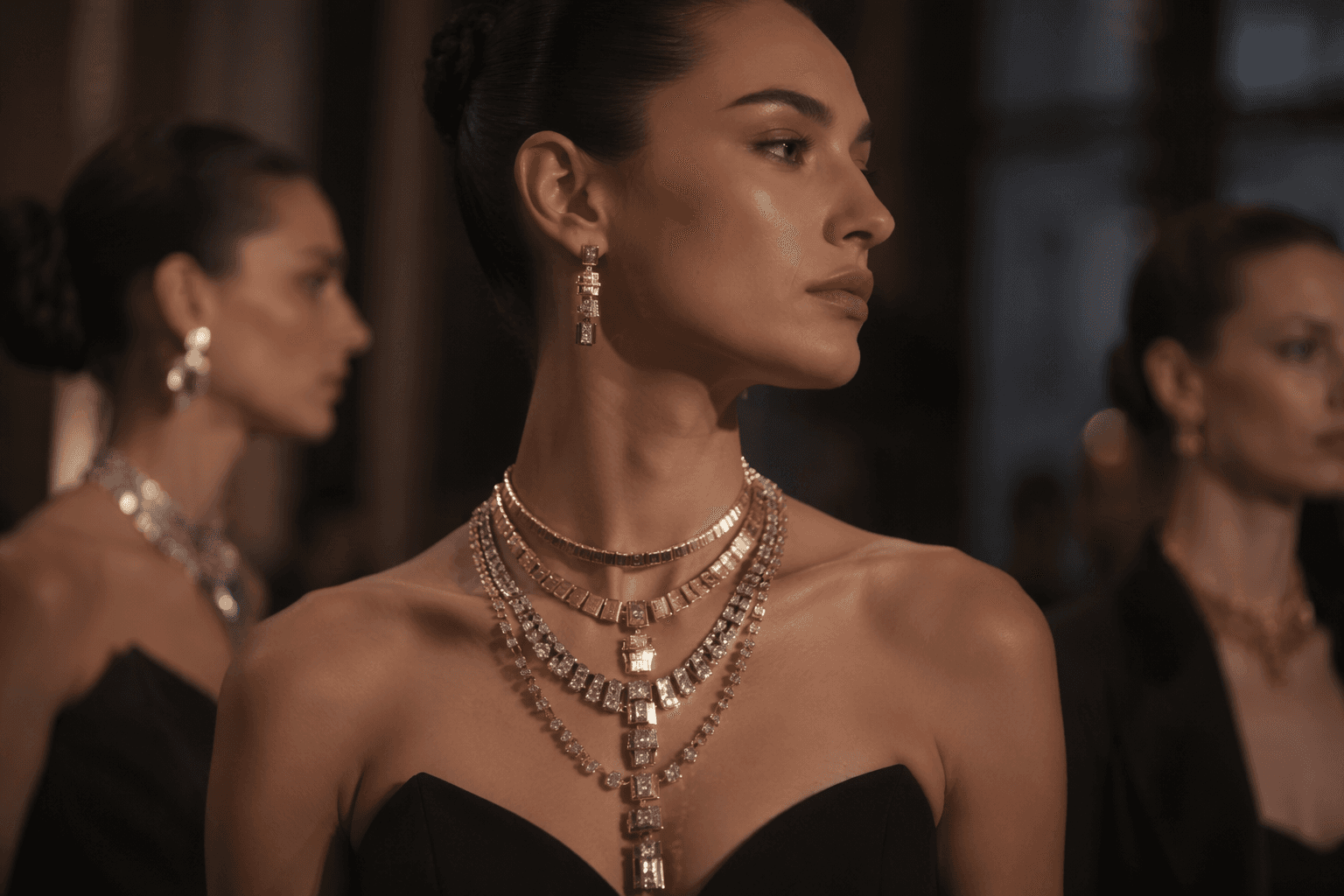
Chanel’s TWEED ROYAL NECKLACE pushes that logic further. The piece took 2,400 hours of work and combines 18K yellow gold with 37 oval-cut rubies totaling 41.42 carats and a 10.17-carat pear-cut DFL Type IIA diamond. That is couture-level construction in the strictest sense: the necklace is not just ornament, it is a built object, with proportion and weight as central to the design as brilliance.
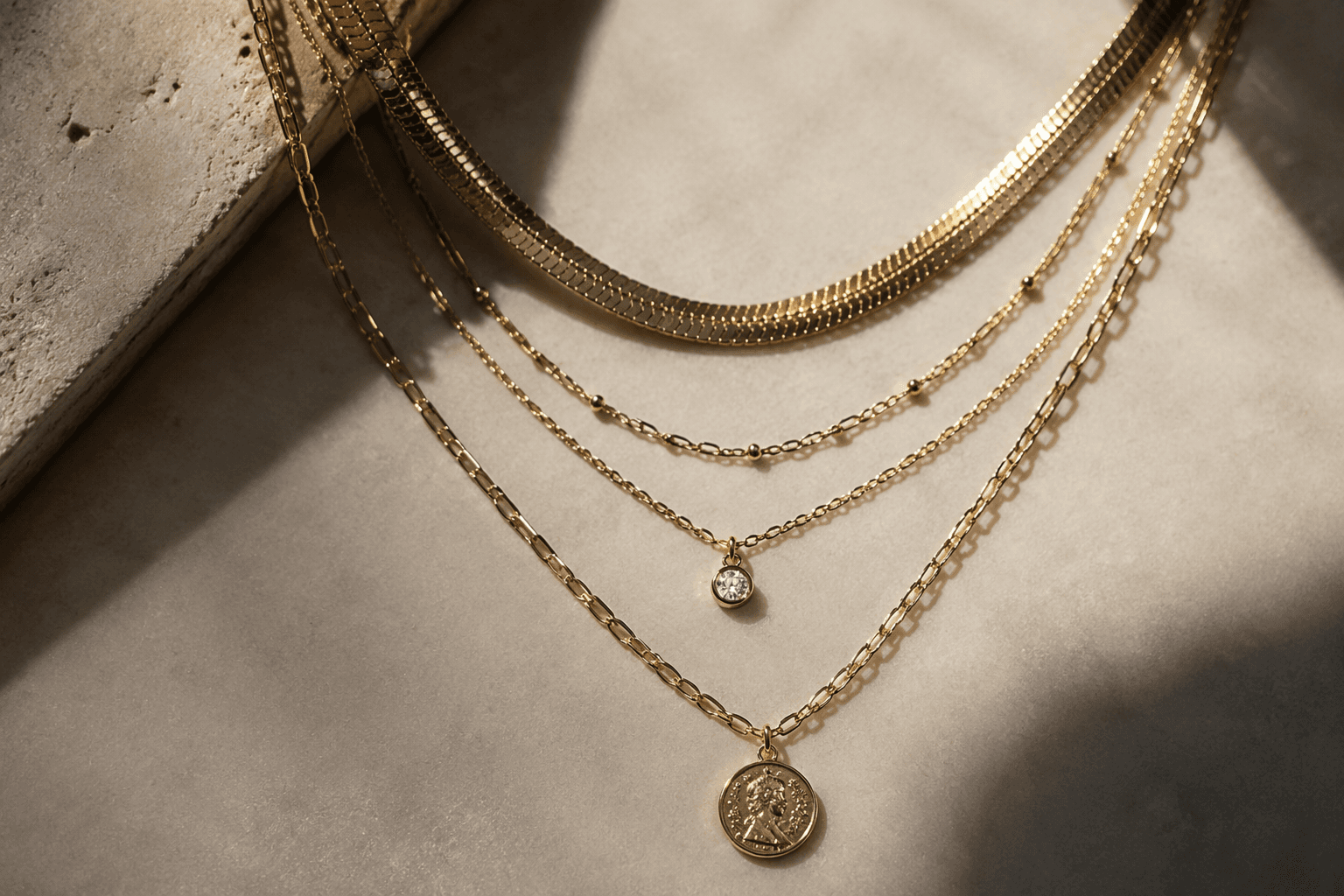
The same direction runs through Chanel’s broader jewelry vocabulary this season. The house describes necklaces, chokers, pendants and sautoirs as part of its fine-jewelry offering, and its Fall/Winter 2026 runway emphasized layered sautoirs, chains, pearls and even costume-jewelry references. Yellow gold comes through as the clearest pivot, not as a nostalgic throwback but as a material that amplifies structure and makes mixed layering feel anchored.
Cartier and Dior make modularity look polished
Cartier’s third chapter of En Equilibre, shown at the Musée des Arts Décoratifs, sharpened the idea that modern high jewelry is as much about engineering as about display. Alexa Abitbol called the work “emotional resonance achieved through technical mastery,” while Jacqueline Karachi described it as “the art of balance, creating distinction through understatement.” Those phrases capture the new luxury code better than any trend board could: form still dazzles, but the real prestige lies in how cleanly the piece resolves.
That same emphasis on balance makes Cartier’s contribution especially relevant to layering. Instead of piling elements until they overwhelm, the house treats volume, line and negative space as equal parts of the composition. The result is a kind of disciplined opulence, where stacked forms still feel precise enough to wear with a bare neckline or a sharply cut evening look.
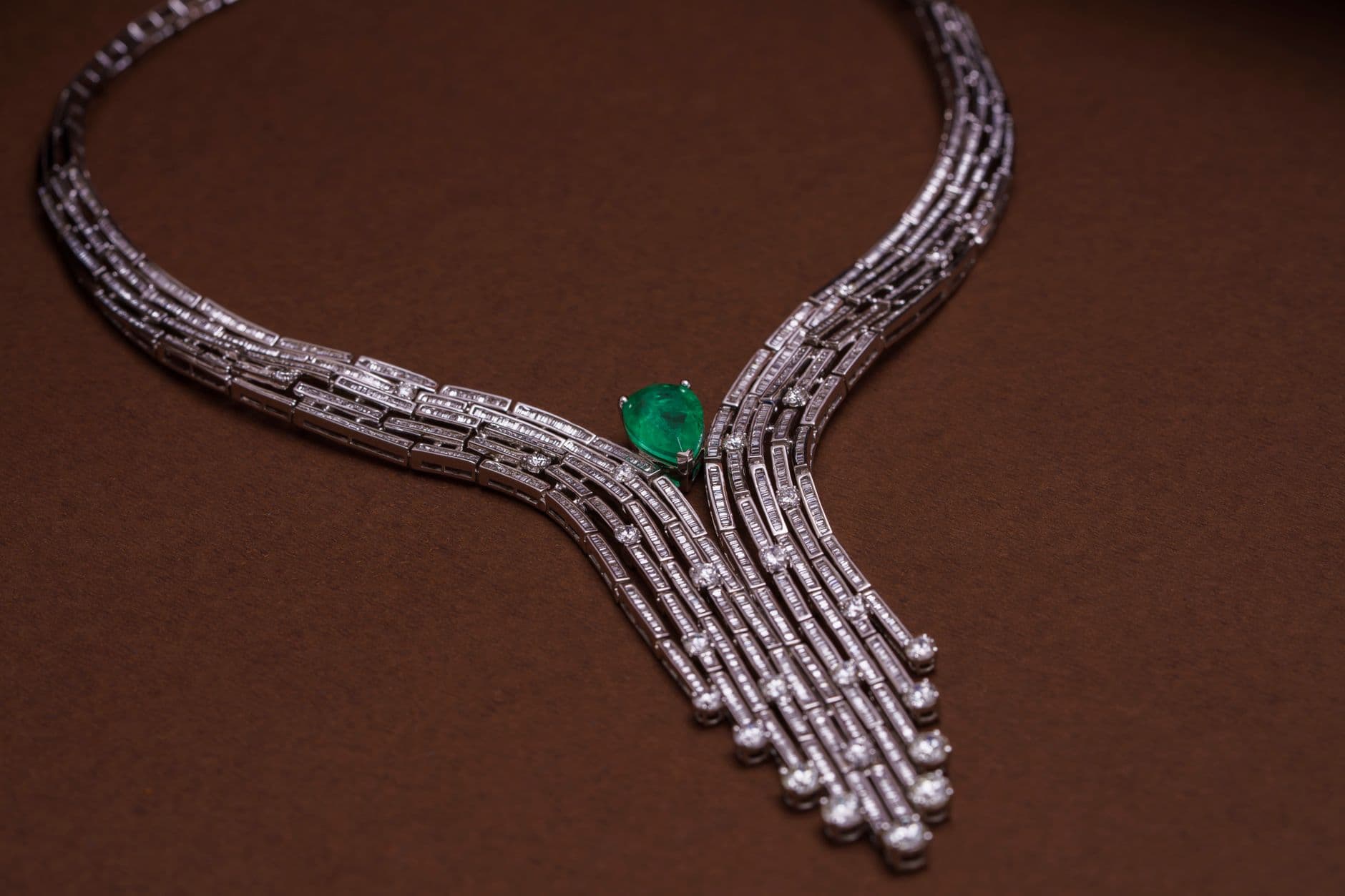
Diorissima moved the conversation in a different but related direction. The collection was reported to comprise 141 high-jewelry creations and leaned on modular necklaces and transformable brooches, with layered botanical and celestial motifs reassembled into new combinations. That is one of the season’s most telling signals: high jewelry is no longer limited to one fixed arrangement. A brooch can shift function, a necklace can alter its profile, and a piece can move between roles without losing its identity.
What will actually filter into everyday styling
Not every couture idea will travel cleanly off the Place Vendôme circuit, but the most wearable ones are easy to spot. Layered sautoirs, mixed chains and pearls, and necklaces built from a mix of stones and metals are already close to how people actually stack jewelry, only with a far more elevated material palette. Those are the ideas most likely to trickle down because they preserve the core gesture of the trend without requiring a full couture wardrobe to support them.
Transformability is the other major takeaway with real-world reach. Modular necklaces and brooches that can be worn in more than one way offer a practical luxury that feels contemporary, especially when pieces are designed to move from long line to collarbone, or from pendant to pin. That kind of versatility will matter more than literal extravagance, because it gives the wearer agency over proportion and mood.
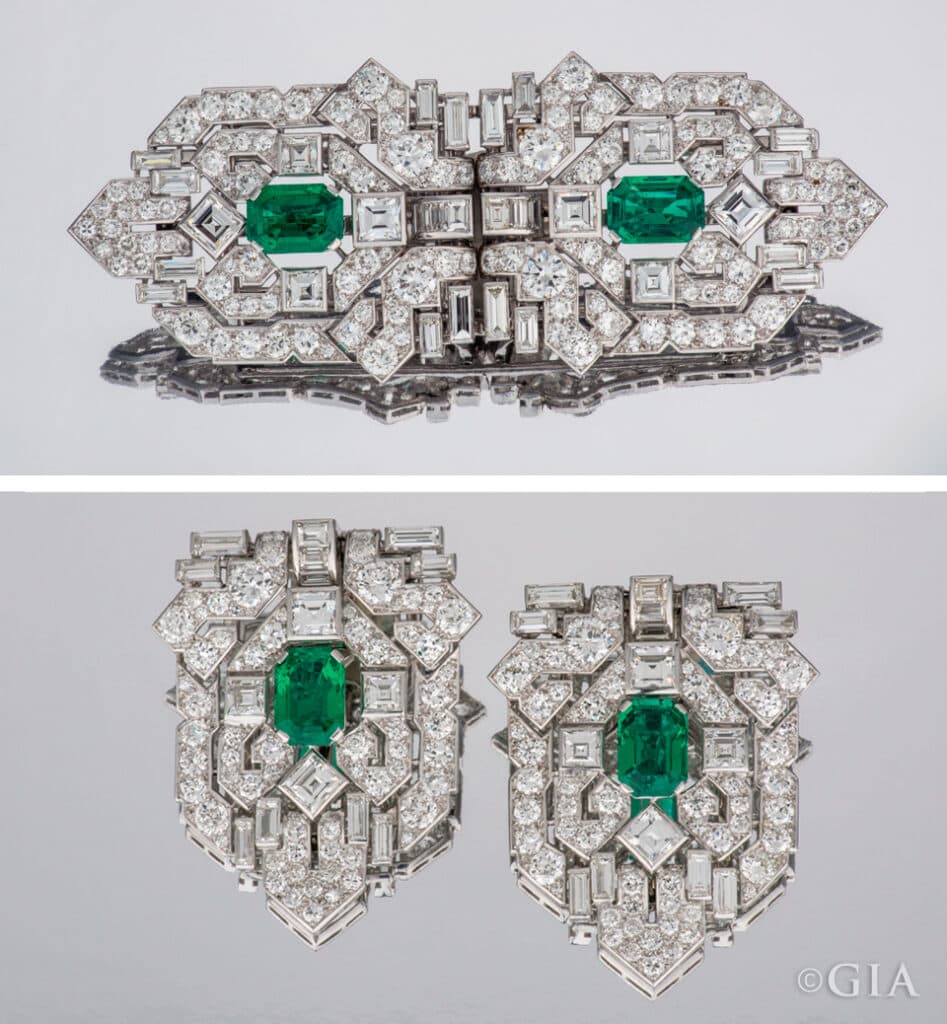
Egyptian Revival references are likely to appear more as silhouette and ornament cues than as strict historical reproductions. The season’s emphasis on architectural layering makes that language useful, but in practice it will read best when translated into strong collars, elongated pendants, sculptural settings and geometric rhythm. In other words, the couture message is not to imitate the past; it is to use the past to sharpen the outline of the present.
The broader field around Paris confirmed the point. Boucheron, Buccellati and Messika were also showing collections in and around Place Vendôme, reinforcing that high jewelry is moving in concert toward pieces that are both symbolic and structurally legible. The most persuasive stacks this season did not chase more volume for its own sake. They used layering to make luxury look built, which is exactly why the idea feels ready for the rest of the market to follow.
This article was produced by Prism’s automated news system from verified source data, official records, and press releases, then run through automated quality and moderation checks before publishing. The system is built and supervised by the people who set the standards it runs under. Read our full AI policy.
Did this article answer your question?