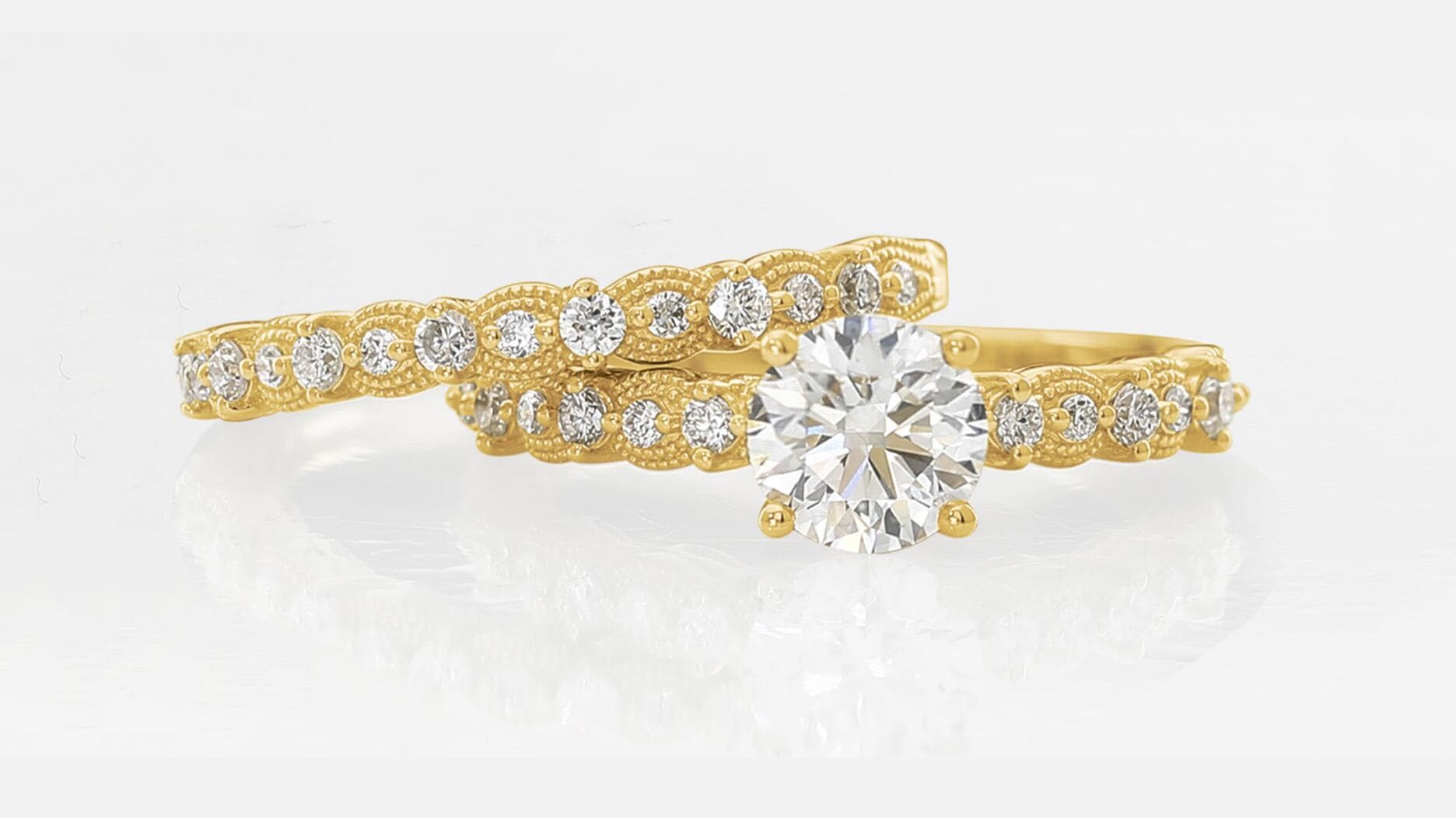
3D Printing Brings Platinum Jewelry Into a New Era of Fine Manufacturing
Platinum Guild International's Tùsaire Collection, the world's first commercially available direct-metal 3D-printed platinum line, proves what wall thicknesses of 0.30 mm can do for fine jewelry design.
Platinum has always carried a particular weight in fine jewelry, not just physically but symbolically. It is the metal of heirlooms, of engagement rings passed between generations, of pieces designed to outlast their wearers. For decades, though, that same density and an exceptionally high melting point of around 1,768°C made platinum stubbornly resistant to the kind of radical design reinvention that gold and silver enjoyed. Additive manufacturing, specifically Laser Powder Bed Fusion (LPBF), is now changing that calculus entirely, and the proof is sitting in a commercially available collection named, fittingly, after the Scottish Gaelic word for "pioneer."
The Technology Behind the Shift
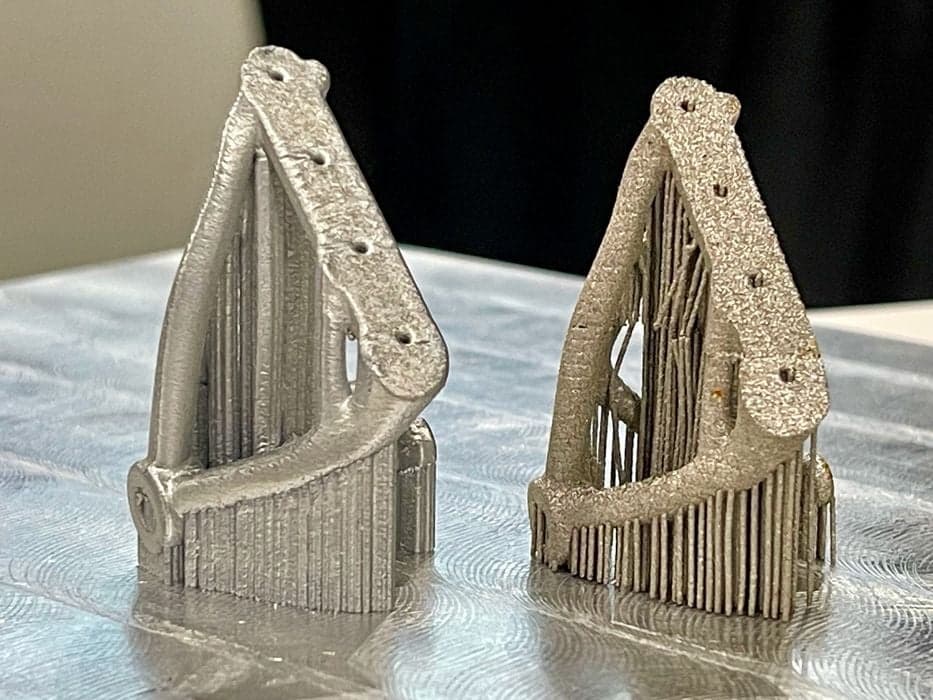
The process driving this change is Laser Powder Bed Fusion, consistently cited by Additive Manufacturing Research's "3D Printing Jewelry Markets 2023: Market Study and Forecast" as "the most common method for precious metal Additive Manufacturing" in the jewelry sector. In LPBF, a laser beam fuses fine metal powder in extremely thin layers on a movable build platform, tracing the geometry defined in CAD software until the final object emerges. Each successive layer is fused into place with precision that traditional casting simply cannot replicate at this scale.
What makes this especially significant for platinum specifically relates to the metal's own physical character. Platinum's high tenacity, strength, and high melting temperature enable the highest quality of structural integrity with precise heat control, while its good light absorption and low reflectivity make it a comparatively energy-efficient metal for printing with lasers. In other words, platinum's notorious difficulty in casting becomes a surprising advantage in laser-based printing: the physical properties of platinum alloys, particularly their reflectivity to infrared laser light, are much more similar to those of steel or titanium alloys, which makes the LPBF process simpler for platinum than for gold or silver alloys.
What 0.30 mm Changes
The design implications of LPBF for platinum become tangible when you look at the numbers. According to the AMR report, direct metal 3D printing facilitates the creation of lightweight, intricate platinum jewelry with wall thicknesses of 0.30 mm to 0.35 mm, compared to what traditional casting can achieve, enabling filigree-style structures that were previously impractical or impossible in this metal. Metal powder bed fusion technology supports these thin-walled structures while achieving high material density, and in some cases may potentially eliminate the need for Hot Isostatic Pressing (HIP), a densification process that is often required for investment-cast platinum and palladium jewelry. Experiments have shown that optimum densities of greater than 99.9% have been achieved for platinum alloys across a wide range of LPBF processing parameters, which speaks directly to the structural integrity questions that any fine jeweler would rightly ask about a piece destined to be worn for decades.
Hollow structures, interlocking lattices, and micro-detailing that couldn't be achieved with traditional methods can now be realized, effectively elevating platinum from a dense, rigid material to a fluid medium of design expression.
The Tùsaire Collection: From Lab to Market
Platinum Guild International (PGI) announced a groundbreaking achievement in fine jewelry with the launch of the Tùsaire Collection, the world's first commercially available line of platinum jewelry created using direct metal 3D printing. Unveiled late last month, and designed by the renowned Scottish-American artist Maeve Gillies and produced in collaboration with ProGold in Italy, Tùsaire signifies a paradigm shift in how luxury jewelry is conceived, designed, and manufactured.
Unlike most previously seen direct precious metal 3D printed products, which have been mostly experimental or one-off pieces, the Tùsaire Collection marks the transition of 3D printed platinum jewelry from experimental novelty to commercial reality. The collection was manufactured by ProGold S.p.A., based in Trissino, Vicenza, Italy, using metal Laser Beam Powder Bed Fusion (PBF-LB) technology.
Created by Scottish-American jewellery designer Maeve Gillies, the thirty-piece Tùsaire collection includes necklaces, bracelets, earrings, and rings produced through metal additive manufacturing. The pieces incorporate Scottish rocks and Celtic-inspired designs, with prices ranging from $800 to $35,000 USD. At the heart of the collection lies a mythic narrative: the Lost Jewels of Caledonia.
Gillies, who is also the founder of MaeVona, brings over 30 years of experience, dual US-UK citizenship, and accolades across continents to her work; she has consistently fused craftsmanship with storytelling, including the design of the world's first 22ct Scottish gold collection. Her approach to Tùsaire was shaped by her deep grounding in platinum as a bridal metal. "As most of my work is in diamond bridal jewellery fabrication, I learned through experience that platinum is the ideal bridal metal due to its strength, resilience, and suitability for diamond design innovation. For this 3D-printed jewellery collection, my knowledge of platinum was invaluable in allowing me to design new solutions with the printing technology, helping to transform platinum into new jewellery looks and categories," said Gillies.
Unlocking Design Freedom and Customization
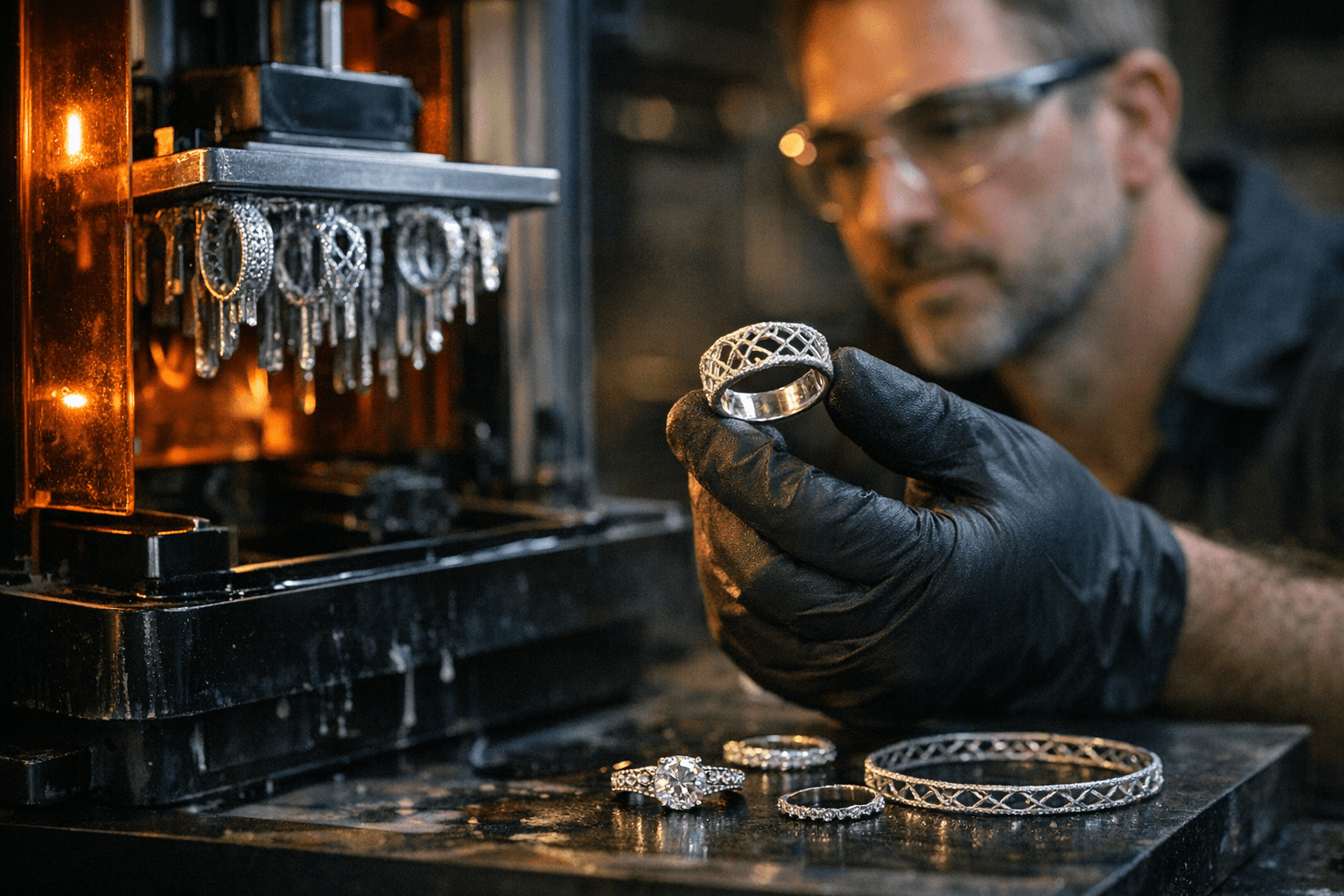
The structural vocabulary available through LPBF is genuinely new territory for platinum design. Additive manufacturing liberates jewelry designers from the constraints of traditional mold-based techniques. The Tùsaire Collection showcases the potential for complex and organic forms, lightweight hollow structures, and intricate interlocking elements that are virtually impossible to achieve with traditional casting. This technology allows for unparalleled geometric complexity, enabling designers like Maeve Gillies to translate mythical narratives into wearable art with unprecedented fidelity.
Ultra-light hollow, precious Celtic-patterned Torc necklaces and cuffs swirl platinum and titanium around each other in bold, modern silhouettes, with designs featuring contrasting layers of unpolished, native 3D-printed platinum against high-polished surfaces. Seven pieces in the collection include native Scottish rock specimens, protected by platinum structures, a detail that would be structurally and geometrically prohibitive in conventional casting. Furthermore, 3D printing enables unprecedented levels of customization, allowing for on-demand adjustments to sizing, integration of personalized design elements, and the creation of unique, bespoke pieces at scale.
Sustainability and Material Efficiency
The process also carries meaningful environmental implications for a metal whose mining and refining footprint is considerable. Beyond design innovation, 3D printing of platinum offers significant sustainability advantages. The additive nature of the process minimizes material waste compared to subtractive methods like traditional casting, which can generate substantial scrap. Additionally, platinum's inherent properties, including low reflectivity and excellent heat control, make it an energy-efficient material for laser-based manufacturing.
Michela Ferraro, a jewelry expert and educator with over 30 years of international experience who specializes in luxury, innovation, sustainability, and precious metal additive manufacturing for the jewelry industry, has argued that these qualities are inseparable: she believes her areas of specialization "are the key drivers for ethical, responsible, and sustainable practices." For readers who care about provenance and the full cost of a piece, that alignment between process efficiency and material accountability is not incidental; it is structural.
Industry Momentum and the Road Ahead
The Tùsaire Collection did not emerge in isolation. The AMR report notes that "the opportunities are vast," with metal AM having "proven to be not just suitable for platinum, but to have great potential as demonstrated by the contest launched by Progold in collaboration with Chaumet and Platinum Guild International." That contest served as an early proof-of-concept for what is now a commercial product line. Tim Schlick, CEO of PGI, stated: "Additive manufacturing will be very important for the future of jewelry as it unlocks so many new possibilities."
The AMR report is also candid about where the work remains: "Challenges now primarily pertain to crafting jewelry in platinum, beyond classic jewelry with diamonds, with new and bespoke designs that could only be manufactured with metal AM." That framing is instructive. The technology is no longer unproven; the challenge has shifted from feasibility to imagination, from whether platinum can be printed to what, exactly, a designer dares to print with it.
"This is such an interesting time in the industry because technologies are coming in thick and fast. At the same time, craft has never been more important for people to preserve and understand the process and the possibilities of new materials and new ways of expressing and pushing more towards what platinum can do," Gillies observed. When a 30-piece collection priced between $800 and $35,000 can carry hollow platinum structures, interchangeable Torc elements, and embedded Scottish quartz specimens into commercial retail, the turning point has already arrived.
This article was produced by Prism’s automated news system from verified source data, official records, and press releases, then run through automated quality and moderation checks before publishing. The system is built and supervised by the people who set the standards it runs under. Read our full AI policy.
Did this article answer your question?