Amethyst for February: History, Buying Tips, Styling and Valentine's Gifts
Amethyst is February’s official birthstone, choose deep, clean purple for value, ask sellers for grading/certification, and treat wellness claims as tradition, not medical fact.
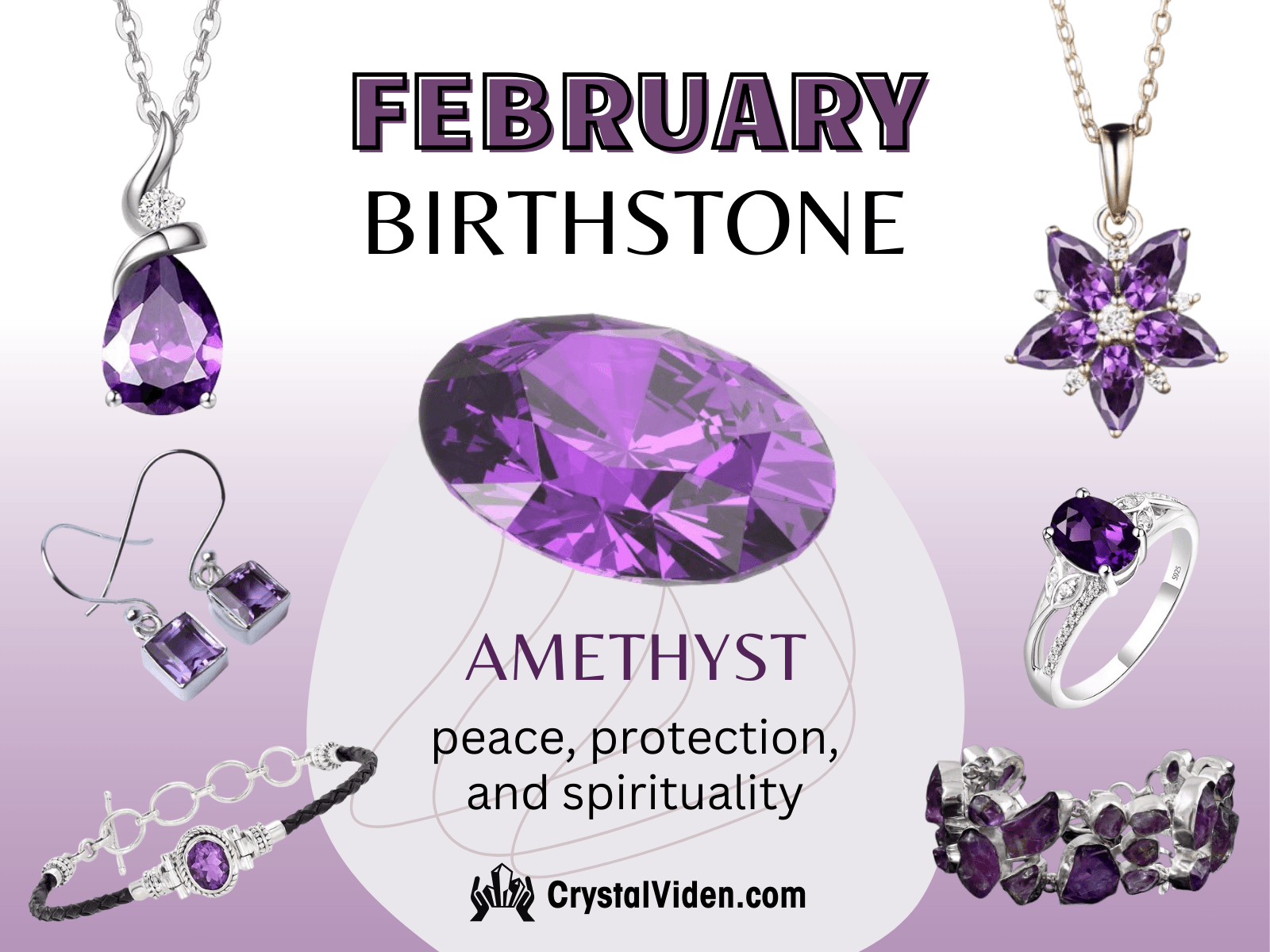
Amethyst arrives in February as both a birthstone and a versatile gift: from delicate pendants to a bold brooch it can move from daytime neutrals to evening sparkle. Use the four sections below, history, buying tips, styling, and Valentine's gift ideas, to shop and wear amethyst with provenance and purpose.
1. History and symbolism
Amethyst’s name and early mythology trace to the Greeks: “This gemstone got its name from the Greek word ‘Amethystos’ which refers to intoxicate.” Early Greek lore linked the stone to Bacchus and a belief that “The Greeks used to believe that Amethyst had the power to prevent getting drunk.” Across centuries its status shifted, “Historically, amethyst was rare and expensive. Before the 19th century, it ranked alongside diamonds, rubies, emeralds, and sapphires in value.” Russian mines once supplied most of the world’s amethyst; after large deposits were found in Brazil prices fell, though “amethyst never lost its visual appeal or symbolic weight.” Modern retailers emphasize meanings that vary slightly by source, Filigreejewelers highlights “clarity, calm, protection, love,” Golden Bird Jewels frames it as “a symbol of royalty, spirituality, and elegant beauty,” and Doverjewelry calls it “the most enchanting, mystical and regal birthstone.” Those cultural notes explain why amethyst appears in royal jewelry, Victorian cocktail rings, and contemporary everyday designs.
- Color: Price and desirability track color intensity, “The darker or deeper the purple-color of the amethyst is, the higher the price will be.” Look for even saturation and avoid stones with brownish or overly gray tones.
- Clarity: Sellers quoted in the excerpts note clarity expectations; ask for close-up photos or a loupe view to confirm eye-clean appearance and minimal fractures. Betz lists clarity expectations as part of its actionable checklist.
- Cuts and sizes: Amethyst “can be cut into many shapes and sizes,” from rounds for eternity bands to elongated ovals and cushion cuts for pendants; choice of cut affects perceived color and sparkle. Golden Bird’s product copy implies round cuts are common in eternity bands.
- Durability and use: Sources vary in emphasis, Geoffreysdiamonds calls amethyst “really durable and perfect for daily wear” and recommends it as “the perfect choice for engagement rings,” while Lolabean tempers that to “Amethyst is durable enough for everyday wear, but proper care will help maintain its beauty.” Ask the seller about toughness, cleavage risks, and recommended settings (protective bezel vs. exposed prongs) before committing.
- Certification and provenance: The excerpts do not list lab certificates or modern sourcing claims, make certification a shopping requirement. Request any grading report the retailer provides and provenance details (country of origin today versus the historical Russia/Brazil narrative). If a seller emphasizes wellness benefits or steep discounts, ask for the paperwork that substantiates stone origin and any treatments applied.
2. Buying tips: color, clarity, cuts and provenance
“Published Feb 17, 2026, Betz Jewelers’ guide to amethyst combines gemstone history, practical buying criteria (color grading, clarity expectations, common cuts), and styling/sentimental use cases for February-birthday and Valentine's gifting. The guide is actionable: it outlines how to eval”, use that framework when you shop.
3. Styling: how to wear and pair amethyst
Amethyst’s color range, “from soft lilac to deep, wine-dark violet”, gives flexible styling options. Golden Bird Jewels advises a stacking and layering approach: “Try stacking a February Birthstone Purple Amethyst Round Eternity Band with plain gold bands or layering multiple necklaces of different lengths, one featuring an amethyst centerpiece. This will enable you to be creative and, at the same time, harmonious.” Follow their “Styling Hint: Always remember the balance- in case you are wearing necklaces, earrings should be minimal to prevent clutter of the image.” Doverjewelry suggests day looks like “small to medium-sized amethyst studs or a dainty pendant” paired with light neutrals for shopping or lunch, while for dramatic statements Dover notes: “Amethyst Brooches: A dramatic amethyst brooch turns the attention in the room to YOU.” Filigreejewelers points out classic metal pairings, “It pairs well with yellow gold or platinum, diamonds or pearls, black tie or casual neutrals”, so match metal warmth to your wardrobe (yellow gold warms up skin tones and deep purple; platinum or white gold reads more modern and graphic). For daily wear pick simpler settings (studs, pendants, bezel-set rings); for evening or statement pieces consider large cushions, brooches, or a round eternity band stacked with plain bands.
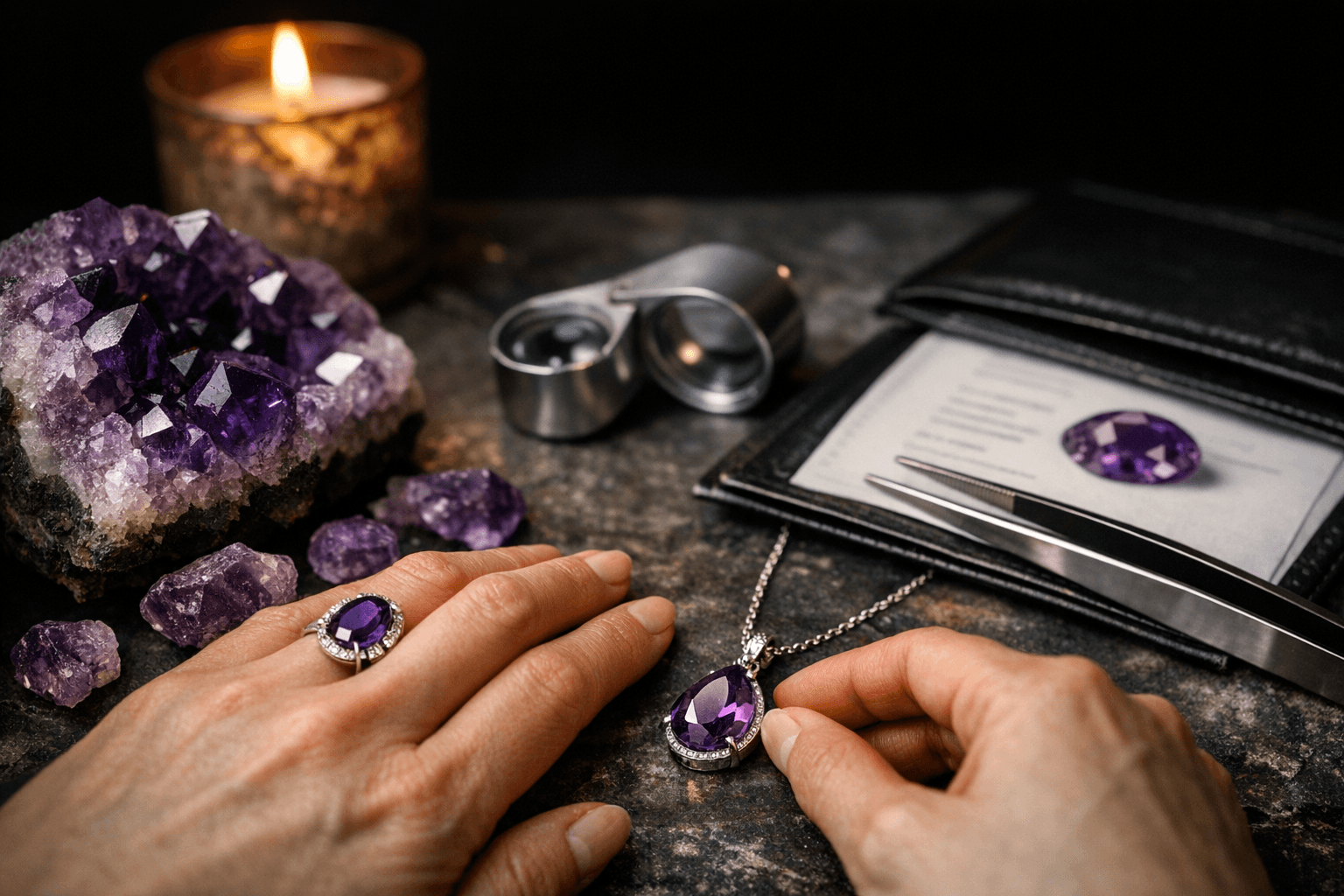
4. Valentine’s and gifting ideas: occasions, budgets, and traditions
Amethyst is repeatedly positioned as a meaningful February and Valentine’s gift. It is “the February birthstone” and is recommended across multiple retailer guides for February-born recipients and for Valentine’s gifting (Betz focuses its guide on February-birthday and Valentine’s gifting). Anniversary traditions make amethyst a sentimental choice, Geoffreysdiamonds notes it is “a traditional sixth-anniversary gift,” and Filigreejewelers adds that it’s traditional for both the 6th and 17th anniversaries. For engagement alternatives Geoffreysdiamonds promotes amethyst as “a stunning and colorful alternative for diamond engagement rings and an ideal engagement ring or a thoughtful gift idea for those born in February.” If you are shopping price-aware, look to curated lower-price categories: Golden Bird promoted “Best Jewelry Gifts Under $500 for Every Occasion” and ran seasonal promotions such as “Christmas Jewelry Sale 2025 – Up to 50% OFF on Ready-to-Ship,” signaling retailers often peg amethyst pieces to accessible price tiers, but confirm current prices and the scope of any sale. For online shoppers note UI copy from one retailer: “FREE GROUND SHIPPING ON ALL US ORDERS!”, always confirm shipping and return policies before purchase.
Care, wellness claims and final buying cautions Multiple sources make wellness or symbolic claims and the notes show a necessary tension: Geoffreysdiamonds states, verbatim, “In conclusion, this gemstone can aid with both mental and physical ailments. It helps in reducing stress and anxiety and, this way your mind and body will work more optimally.” Counterbalancing that, Lolabean explicitly cautions: “Note: These meanings are rooted in tradition and personal belief, not medical claims, but they can still make amethyst a beautiful symbol to wear or gift.” Treat wellness statements as part of amethyst’s folklore and buyer sentiment rather than as medical fact. For care, follow Lolabean’s practical note that “Amethyst is durable enough for everyday wear, but proper care will help maintain its beauty,” and ask your jeweler for specific cleaning and treatment guidance before using ultrasonic or steam cleaning.
Conclusion Amethyst combines centuries of cultural weight, Greek etymology, royal usage, and a 19th‑century market shift from Russian scarcity to Brazilian abundance, with a wide modern price and style range that makes it ideal for February birthdays, anniversaries, Valentine’s gifts, and even nontraditional engagement rings. Buy with eyes open: prioritize color and clarity, request provenance and any grading paperwork, treat wellness claims as tradition, and choose settings that protect the stone for the life you intend it to live. Amethyst rewards informed choices: its purple can signal history, sentiment, and style without compromise.
This article was produced by Prism’s automated news system from verified source data, official records, and press releases, then run through automated quality and moderation checks before publishing. The system is built and supervised by the people who set the standards it runs under. Read our full AI policy.
Did this article answer your question?