Calms Jewelry Founder Jennifer O'Brien Crafts Modern Heirlooms in NYC's Diamond District
Jennifer O'Brien makes fine jewelry in NYC's Diamond District that's meant to be worn daily, drawing design inspiration from places as far-flung as Grenada's cocoa groves.
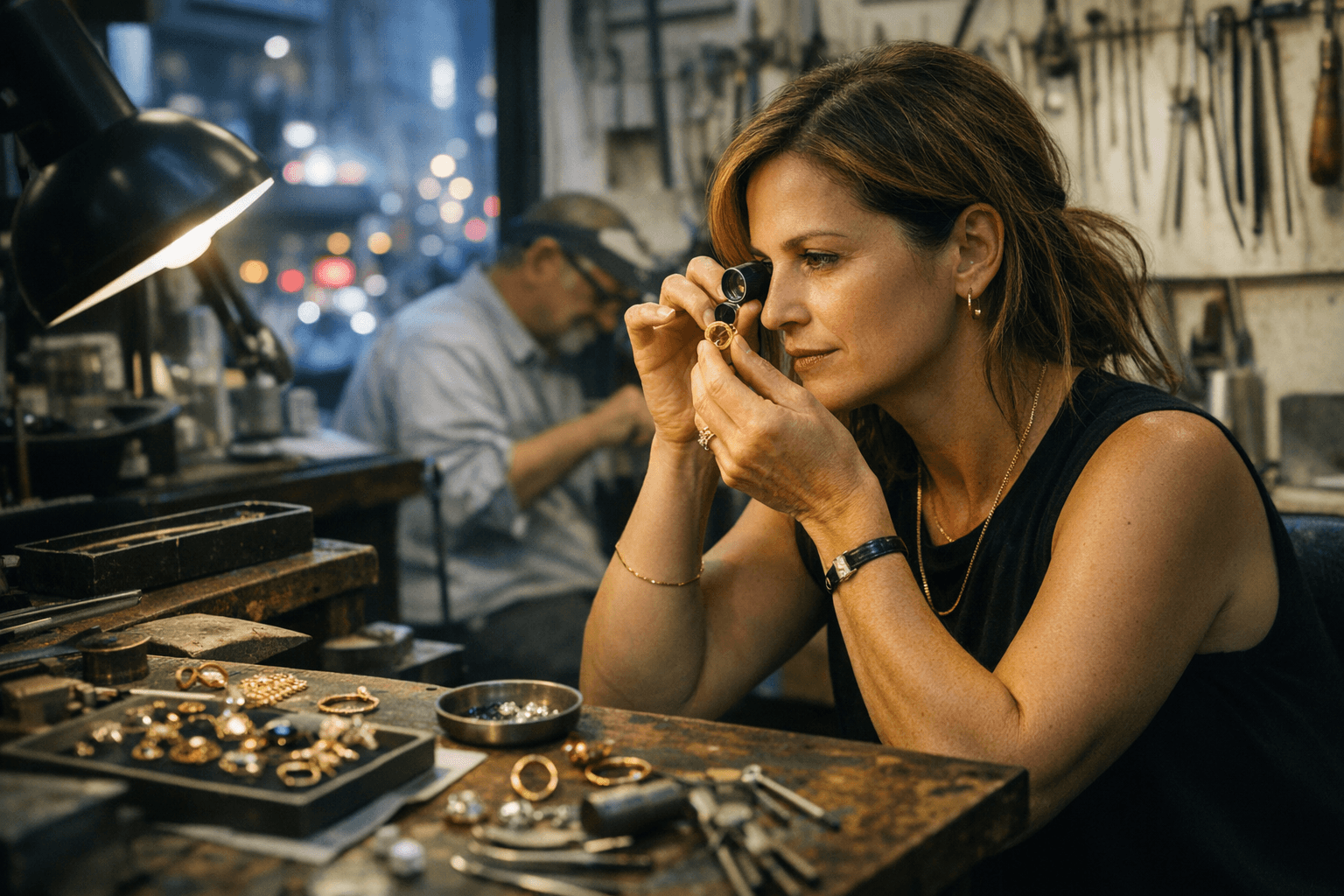
Jennifer O'Brien has a theory about beautiful things: they are meant to be lived in. It's a philosophy that runs through every piece she creates under Calms Jewelry, her fine jewelry house rooted in New York City, and it shapes everything from where she works to how she travels to what she hopes a wearer feels when they're far from home.
A Fine Jewelry House Built in the Diamond District
Calms Jewelry is designed and produced locally in NYC's historic Diamond District, the dense stretch of West 47th Street that has served as the heart of American jewelry making for nearly a century. Working within this ecosystem connects O'Brien to a long tradition of craft, and her stated intent is to extend that tradition forward: creating "modern heirlooms intended to carry meaning, memory, and lasting presence." The phrase isn't marketing language so much as a design brief. An heirloom, by definition, outlives the moment of its purchase. Designing toward that standard from the start demands a different set of commitments than seasonal jewelry production.
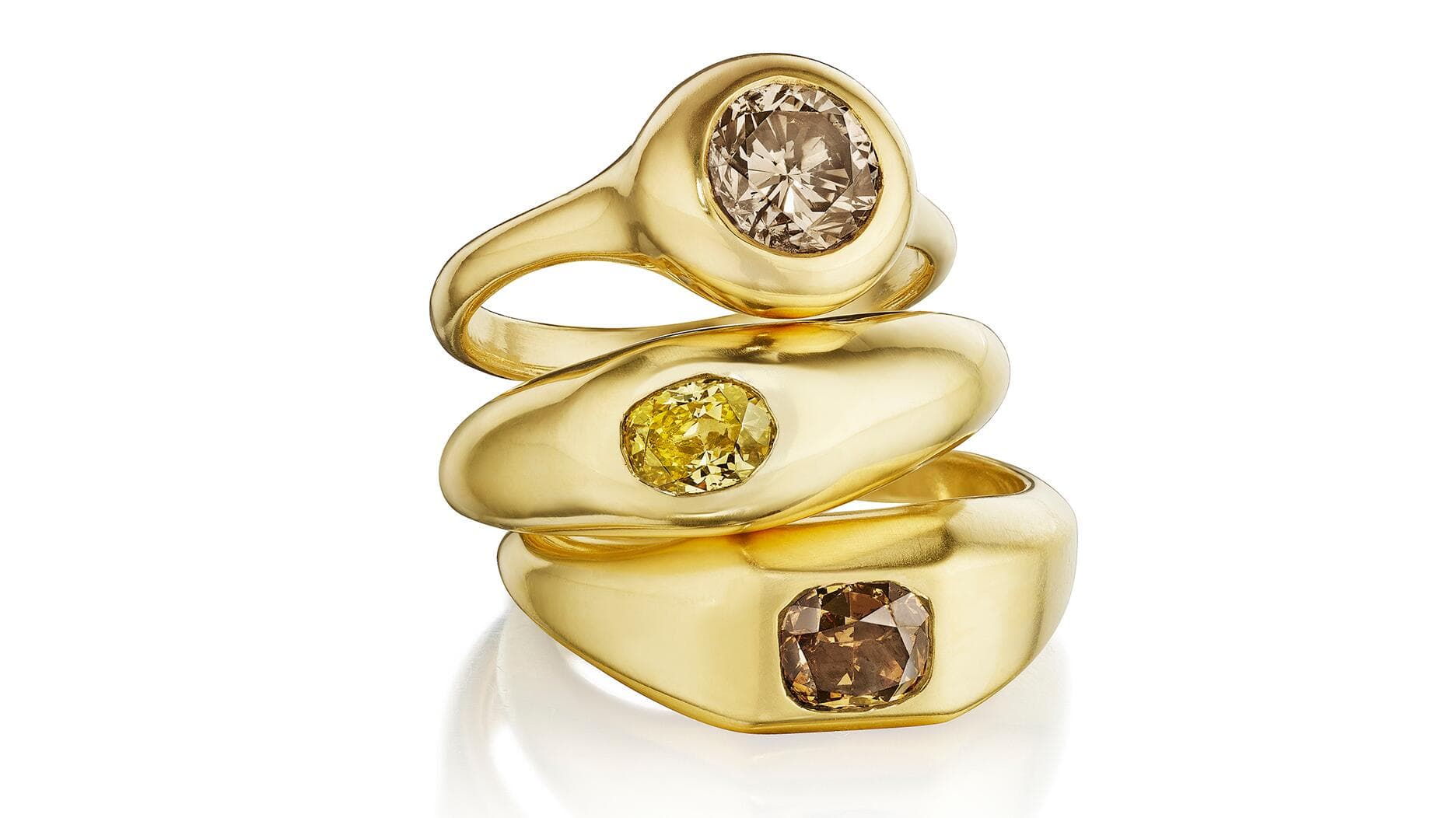
O'Brien's design language draws from three distinct sources: antique heirlooms, nautical symbolism, and art deco architecture. That combination is more cohesive than it might first appear. Art deco, with its geometric rigidity and its origins in a moment of industrial optimism, shares a formal vocabulary with nautical instruments and with the kind of jewelry that was meant to telegraph permanence and status across generations. O'Brien's lifelong fascination with geometric architectural form pulls all three influences into alignment. Her pieces aren't nostalgic in a passive sense; they translate historical visual languages into something a person might actually wear today, and wear often.
How the Obsession Began
Her fascination with jewelry started early, through collecting vintage pieces and studying their craftsmanship and history. That origin story matters, because it means O'Brien came to the craft as a student of objects rather than as a student of trends. Vintage collecting forces a different kind of attention: you handle pieces that were made before planned obsolescence existed as a business model, pieces where the setting was chosen to protect the stone for decades and the metal gauge was selected to last. That formative education in what makes jewelry endure is evident in her central creative conviction.
"I believe the most meaningful jewelry deserves to be worn every day," she has said. "Pieces that carry memory and significance become part of normal life rather than something kept only for rare occasions." In the fine jewelry world, that is a quietly radical position. Much of the industry is organized around the idea of jewelry as occasion wear, pieces brought out for weddings and anniversaries and then returned to velvet boxes. O'Brien is arguing for the opposite: that the more meaningful a piece is, the more it should be present in daily life.
Her personal style reflects the conviction. "I've always loved dressing up, even for casual moments," she explained. "A friend once joked that I arrived in a ballgown to a casual gathering. In reality it was a short cotton dress, but I've always been drawn to texture and structure and I'm often slightly overdressed. I laughed, but to me beautiful things are meant to be lived in." The anecdote captures something essential about her design sensibility. Jewelry that can only be worn on rare occasions is jewelry that spends most of its existence in a drawer. That is not what she is making.
Travel as a Design Source
O'Brien's work explicitly reflects "the sense of place discovered through travel," and she takes that influence seriously enough to seek it out deliberately. She is not a coffee drinker, but she will rearrange an entire itinerary around cocoa. "I love to take chocolate tours in new destinations," she said. "On a recent trip to Grenada, the taste of fresh cocoa and the warm spices stayed with me. The lush green landscape and crystal-clear water felt incredibly inspiring and will likely find their way into my designs."
Grenada is one of the Caribbean's most significant cocoa-producing islands, and O'Brien's description of her experience there is precise in its sensory detail: not just the chocolate itself, but the warm spices, the specific green of the landscape, the clarity of the water. For a designer whose work is rooted in geometric architectural form, it's interesting to note that the Grenada impression she describes is almost entirely textural and atmospheric rather than structural. That suggests her travel influences operate at a different register than her architectural ones, feeding color, mood, and feeling rather than form.
The connection between place and jewelry is not incidental for O'Brien. A piece that carries a wearer's memory of somewhere they've been functions as a portable geography, a way of keeping a place present in daily life. That ambition connects directly back to her philosophy of everyday wear: jewelry doesn't just carry personal history, it carries place.
What She Wants You to Feel When You're Far From Home
When asked what emotion she hopes someone feels wearing a piece of Calms Jewelry in a place far from home, O'Brien's answer was specific. "I hope someone wearing a piece of Calms Jewelry feels grounded, calm, and safe wherever they are in the world. That sense of steadiness can make travel feel even more expansive and joyful."
The word "grounded" is worth pausing on. For a jewelry brand named Calms, the emotional vocabulary is consistent: steadiness, presence, safety. These are not the feelings typically associated with luxury jewelry marketing, which tends toward aspiration and glamour. O'Brien is reaching for something quieter and arguably more durable. A traveler who feels grounded is a traveler who can be fully present in a new place, and that, she suggests, is precisely what a well-chosen piece of jewelry can do.
It's a meaningful reframing of what fine jewelry is for. Not an indicator of arrival, not a display of wealth or occasion, but a talisman of continuity. Something that stays constant when everything else is unfamiliar. In that sense, the "modern heirloom" isn't just a design category. It's a functional description of what O'Brien believes jewelry should do in a person's life.
Working from the Diamond District, drawing on the visual precision of art deco, the symbolism of the sea, and the specific sensory memory of fresh cocoa in Grenada, O'Brien is building a body of work designed to travel with the wearer and mean more with every year of wear.
Know something we missed? Have a correction or additional information?
Submit a Tip