Cartier, Bulgari, and Sculptural Signed Pieces Lead 2026 Jewelry Trends
Sotheby's Geneva specialist says "Bulgari prices are currently soaring at auction" — and three Oscars looks prove exactly why signed, sculptural jewelry is the collector story of 2026.
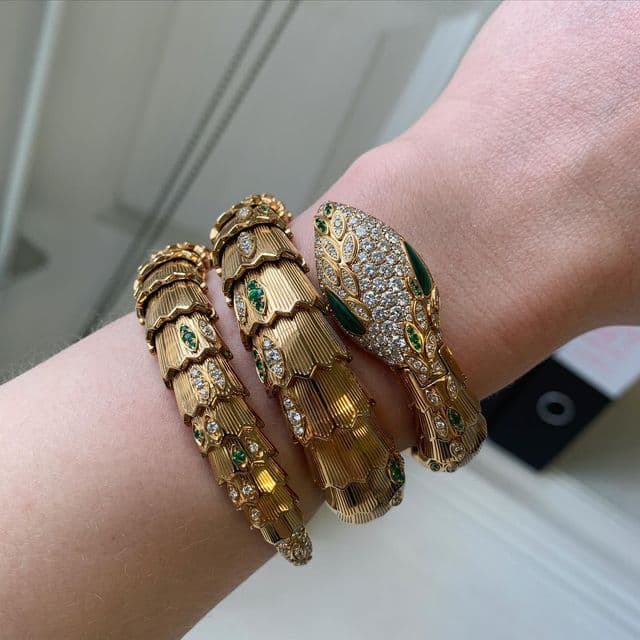
Jemima Chamberlain-Adams, Head of Sale for Fine Jewels at Sotheby's Geneva, named the trend directly in the auction house's March 20, 2026 editorial: "Bulgari prices are currently soaring at auction." That single sentence, grounded in real consignor and collector data, reframes what the recent Academy Awards red carpet was actually telling us. As the Sotheby's editorial put it: "We may not have an über-celebrity engagement to lead us at the moment, but luckily, the award season that concluded with last weekend's Academy Awards offered us plenty of jewels and gems to ogle, admire, and ultimately take direction from." The direction, it turns out, points squarely toward archival signed houses — Bulgari and Cartier chief among them — and specifically toward sculptural pieces that announce themselves as objects of art before they announce themselves as accessories.
Why Signed Pieces Are Moving Again
The appetite for archival and signed jewelry is not a nostalgic impulse. It is a market correction toward legibility. In an era when provenance and maker attribution increasingly drive secondary-market value, a piece signed by a major house carries built-in authentication, design heritage, and a collector community that sustains demand across decades. Sotheby's specialists have identified both Cartier and Bulgari as houses whose signed pieces are returning to prominence among collectors and consignors, with sculptural works occupying a particularly strong position at auction. The logic is straightforward: a sculptural signed piece cannot be easily replicated or confused with unsigned contemporaries. Its authorship is visible in the design language itself.
Cartier's reemergence in this context speaks to the enduring commercial intelligence of its archive. The house's geometric vocabulary — the Panthère, the Trinity, the iconic tank proportions translated into jewelry — carries a visual authority that holds across market cycles. While specific Cartier lots were not detailed in the Sotheby's editorial, the house's inclusion alongside Bulgari as a named driver of signed-piece demand signals that collectors are treating both maisons as reliable stores of value, not merely aesthetic choices.
Bulgari Wins Best In Show
Bulgari's performance is more precisely documented, and more dramatic. Chamberlain-Adams's observation that prices are "currently soaring at auction" is reinforced by the brand's extraordinary red-carpet saturation at this year's Oscars, where three distinct Bulgari moments illustrated three entirely different registers of the house's design sensibility.
Anne Hathaway's necklace was the most architecturally commanding of the three. The geometric piece placed an 8.02-carat Fancy Vivid Yellow pear-shaped diamond at its center, surrounded by dozens of triangular white diamonds, with the full necklace totaling 35 carats. The Sotheby's editorial cites it as "a perfect example" of sculptural signed jewelry: the kind of piece where the setting itself is the design statement. Those triangular white diamonds are not mere accent stones; they are load-bearing elements of the composition, creating the angular, almost faceted silhouette that distinguishes Bulgari's high jewelry from any other house's output. A necklace like this, at auction, reads as a single cohesive object with a clear artistic signature. That clarity commands a premium.
Chloé Zhao, the director of Hamnet, approached Bulgari from a different angle entirely. Her choice of a classic Bulgari Serpenti necklace is the kind of selection that rewards informed observers: the Serpenti line is among the most recognizable and collectible in the house's archive, and wearing it in its canonical form rather than a contemporary reinterpretation is itself an editorial statement about the primacy of the original design. At auction, early and signed Serpenti pieces have long attracted serious collector attention, and red-carpet moments like Zhao's reinforce the cultural currency that sustains that interest.

Priyanka Chopra offered the most forward-looking of the three looks. Her collar-like choker, from Bulgari's upcoming Eclettica collection, centers an enormous 14-carat Madagascar sapphire within a snake design described as slithering around her neck. The Madagascar origin matters gemologically: sapphires from the island's Ilakaka and Ambondromifehy deposits have become increasingly sought-after for their range of saturated blues, and the combination of a double-digit carat weight with a named provenance places this stone in rarefied company. That Bulgari chose to preview the Eclettica collection on Chopra at the Oscars rather than at a trade presentation signals both the collection's commercial ambition and the house's confidence in the red carpet as its primary market-communication channel.
The Red Carpet as Market Intelligence
The absence of a major celebrity engagement, that singular moment when a ring drives immediate consumer demand, has not left the jewelry market without orientation. The Sotheby's editorial makes the case that award season functions as a distributed version of the same phenomenon: multiple high-visibility appearances by sophisticated dressers who choose jewelry with deliberation rather than obligation. Anne Hathaway, Chloé Zhao, and Priyanka Chopra were not wearing Bulgari because a stylist defaulted to a trusted house. Each look reflected a distinct design philosophy within the same maison, which is itself a more nuanced form of market education than a single engagement ring moment can provide.
For collectors and serious buyers, this creates a practical framework. The sculptural necklace, the archive classic, the stone-forward contemporary design: Bulgari demonstrated in a single evening that it can command all three registers simultaneously. That versatility, visible to a global audience, translates directly to secondary-market confidence.
What This Means If You Own Signed Pieces
Chamberlain-Adams's practical guidance is unusually direct for an auction-house specialist: "So, if you have some stashed in a velvet box, she says, this is the time to sell." The advice reflects a genuine market window. Bulgari auction prices are rising, red-carpet visibility is reinforcing collector demand, and the broader trend toward signed archival houses shows no sign of reversing. Consignors who have been waiting for the right moment are, according to Sotheby's own market intelligence, already in it.
For buyers, the same data applies in the other direction. Signed sculptural pieces from Bulgari and Cartier are becoming more expensive to acquire at auction, which means that pieces still available through private sale, estate channels, or secondary dealers may represent relative value against an ascending benchmark. The triangular white diamonds in Anne Hathaway's necklace, the serpent coil of the Eclettica choker, the unmistakable clasp of a vintage Serpenti: these are not just beautiful objects. They are legible, attributable, and in demand. In the current market, that combination is its own kind of rarity.
This article was produced by Prism’s automated news system from verified source data, official records, and press releases, then run through automated quality and moderation checks before publishing. The system is built and supervised by the people who set the standards it runs under. Read our full AI policy.
Did this article answer your question?