Charm jewelry helps designers tell stories as gold prices soar
As gold stays painfully expensive, charms are becoming the industry’s compact storytelling device, packing symbols, dates and identities into smaller, collectible pieces.
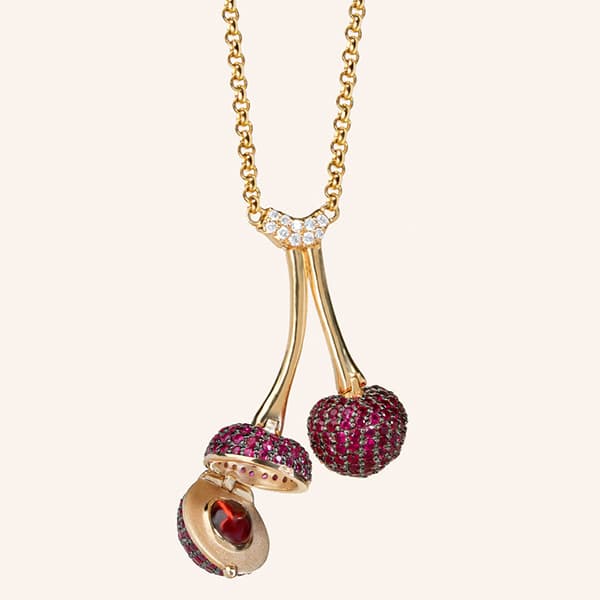
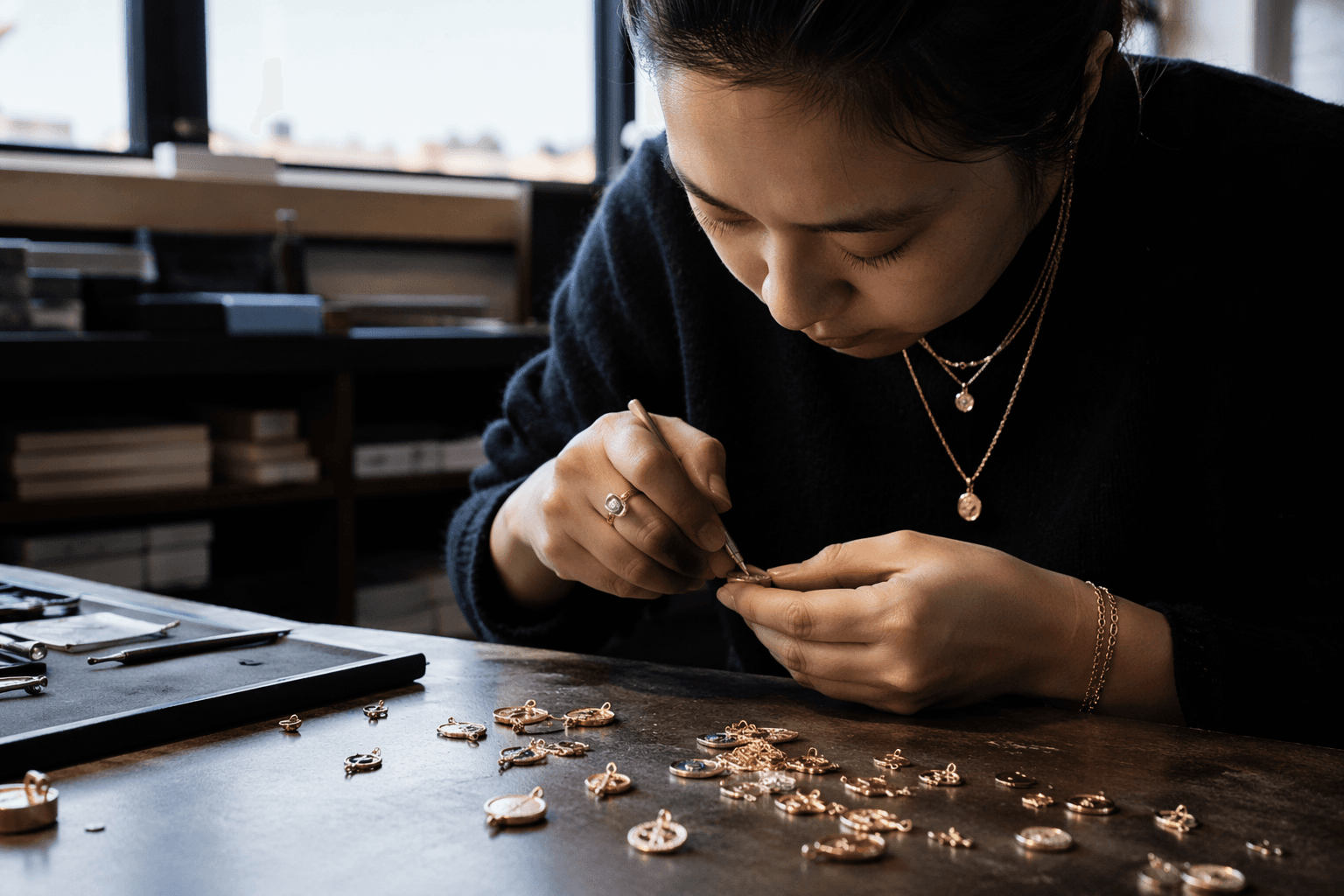
Gold’s climb has changed the shape of jewelry storytelling. In Las Vegas, designers are answering historic highs by shrinking their ideas into charms, using tiny symbols, initials and talismanic motifs to keep meaning intact when heavy statement gold no longer feels practical.
Why charms are winning now
Charm jewelry has become the clearest proof that design can adapt without losing its emotional charge. JCK reported that gold had slipped from an all-time peak of $5,589 an ounce in January 2026, yet it remained at historic highs, and many Las Vegas jewelry-week designers responded not by fleeing to silver or simply dropping into 14k or 10k gold, but by making miniature charm styles. That choice matters because it keeps the language of luxury in the picture, only in a smaller register.
The format also works across more than one category. Charms can move from necklaces to bracelets, earrings and anklets, which gives designers a way to build systems rather than one-off objects. Stuller’s “Storyteller” trend, launched on April 6, 2026, leans into that flexibility with customizable charms and dangles set with birthstones, names, dates, symbols and unusual shapes meant for layering and daily wear. In other words, the charm is no longer a leftover souvenir piece; it is the structure through which a collection can grow.
A lineage older than the market pressure
The rush toward charms looks contemporary, but the form has always carried memory. JCK traces charms back to ancient Egypt, where they were treated as talismans, and then forward to Victorian-era Britain, where Queen Victoria helped turn sentimental jewelry into a language of keepsakes. After World War II, souvenir and hobby charms surged again, letting women signal personal affiliations through small, wearable markers.
That history explains why the current revival feels more like a design correction than a trend cycle. A charm can hold a date, a place, a relationship or a political conviction without demanding the carat weight of a major ring or collar necklace. In a market where gold is expensive enough to force scaling back, the charm preserves the emotional scale even as the physical scale changes.
What the gold market is doing to jewelry design
The data behind this shift is stark. The World Gold Council said global gold jewelry demand fell to 380.3 tonnes in the first quarter of 2025, down 21 percent year over year, even as value rose 9 percent to $35 billion. By the third quarter of 2025, demand fell again to 371.3 tonnes, down 19 percent year over year, while value climbed to $41 billion. That combination tells a familiar story in precious metals: fewer grams sold, more money spent.
The Council also drew a useful distinction inside the category. Lighter-weight pieces proved relatively resilient, while more heavily designed 24k jewelry suffered the sharpest losses. That distinction helps explain why charms are so well positioned. They offer visible design and emotional density without the same metal burden as a large, dense statement piece. When prices climb, weight becomes part of the story, not just cost.
CNBC added another marker on October 7, 2025, when gold hit $4,000 an ounce for the first time and some jewelry companies focused on lower price points said they were sounding the alarm. Analysts warned that prices could keep rising into 2026. For brands that live closer to entry-level luxury or accessible fine jewelry, the implication was immediate: the old formulas for volume and margin were under strain, and smaller, modular pieces became a more defensible answer.
How designers are turning memory into form
The most compelling charm jewelry now is not trying to imitate heirlooms. It is trying to make biography legible. Dorian Webb’s charm necklace honoring Harriet Tubman shows how a single piece can carry historical memory, while Clara Chehab’s Liberté charms use the format to hold a more distilled symbolic charge. Both examples show why charms have become such an effective storytelling tool: the scale is small, but the narrative is not.
Stuller’s Storyteller direction pushes the same idea into the commercial center of the market. Birthstones, names, dates, symbols and unique shapes all point toward the same principle, which is collectibility through personalization. A charm system invites accumulation. One piece can mark a birth, another a move, another a belief, another a loved one. The value is not in one massive object but in the way the pieces accumulate meaning over time.
That is why charm jewelry feels especially persuasive when full-gold statement pieces are harder to justify. It lets brands preserve symbolism, encourage repeat collecting and keep a visual identity intact even as the metal content shrinks.
What matters if you care about provenance
The charm boom still deserves an ethical eye. Smaller pieces can reduce the amount of gold in play, but less metal is not the same thing as better sourcing. If a brand leans on words like meaningful, symbolic or thoughtful without saying what the metal is, where it came from, or whether the design uses lower-karat gold, the claim stays vague.
The strongest charm programs are the ones that make the story visible and the materials legible at the same time. A charm that honors Harriet Tubman or spells out Liberté is doing emotional work; it should also be able to withstand basic questions about construction, metal content and sourcing. In a market pushed upward by $4,000 and then $5,589 gold, clarity is part of the design brief.
Charm jewelry is rising because it does something that expensive, heavy pieces increasingly struggle to do: it keeps meaning, collectibility and personal symbolism within reach without pretending the gold market has gone back to normal.
This article was produced by Prism’s automated news system from verified source data, official records, and press releases, then run through automated quality and moderation checks before publishing. The system is built and supervised by the people who set the standards it runs under. Read our full AI policy.
Did this article answer your question?