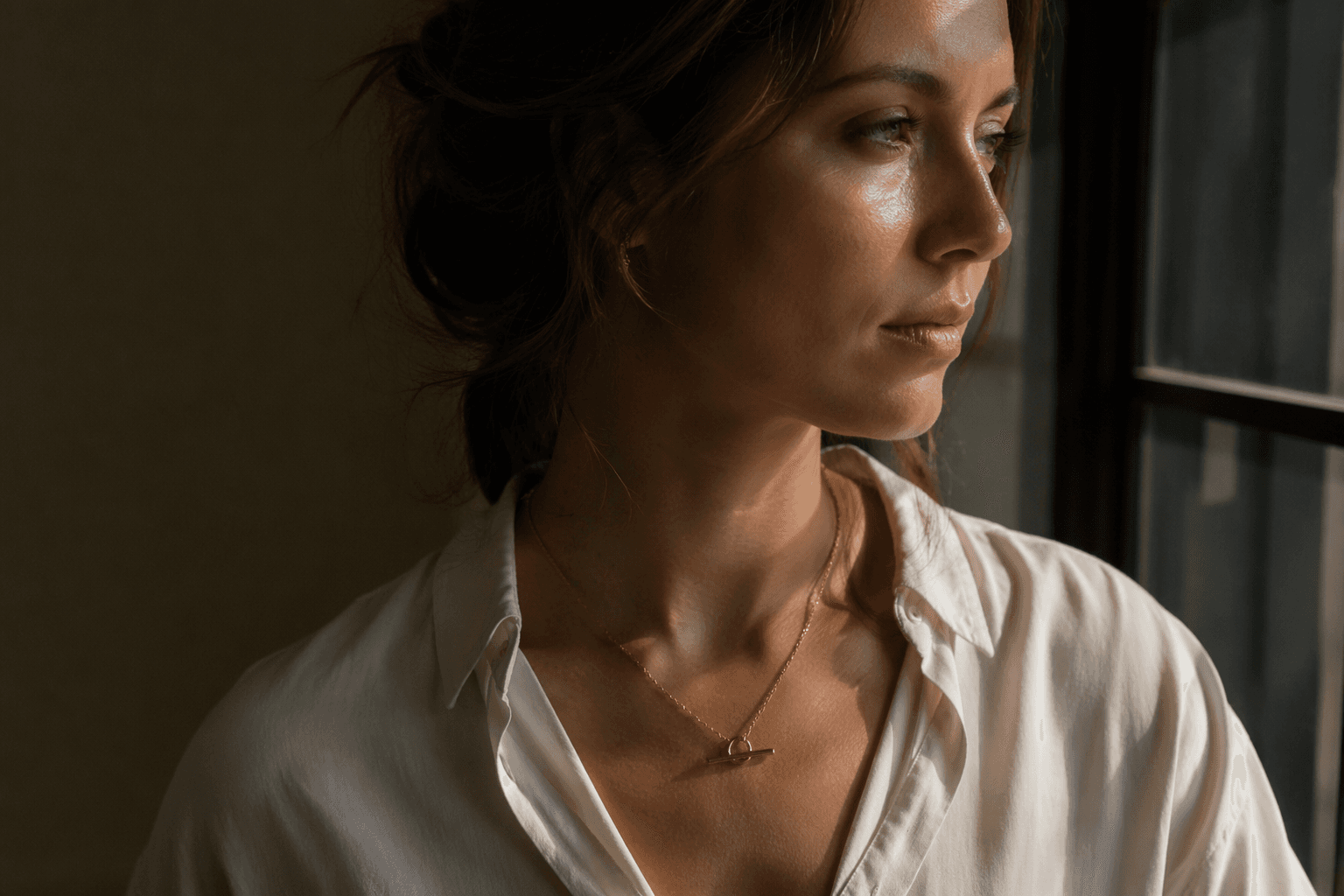
El&Elle Founders Reimagine Luxury Jewelry With Heirloom-Minded, Identity-Driven Designs
Toronto's El&Elle is rewriting luxury jewelry's rules with moissanite-forward designs that put artistry before carat cost.
When Justin and Louis went shopping for an engagement ring, they encountered what most couples quietly endure: pricing that felt arbitrary, materials that were poorly explained, and a retail experience designed more to intimidate than to inspire. That frustration became the founding logic of El&Elle, their Toronto-based independent jewelry brand, and it shaped every design decision that followed. The premise was straightforward, even if the execution required courage: luxury doesn't have to mean an impenetrable markup. It can mean intention.
El&Elle has since positioned itself as a Latinx and LGBTQIA2+-led pioneer in what the brand calls the moissanite revolution, a broader industry shift away from the diamond-centric hierarchy that has governed fine jewelry for more than a century. The brand's philosophy is perhaps best captured in a single line from its founders: "Luxury isn't about an astronomical markup, it's about intention, edge, and the freedom to wear 14 carats with a T-shirt and jeans." That sentence is practically a manifesto. It signals not just a product category but a point of view about who luxury jewelry is for and what it should feel like to own.
Dismantling the Markup Culture
The conventional jewelry industry operates on a logic that El&Elle finds worth interrogating. Legacy brands have long built their pricing architecture around the cost of large center diamonds, a model that doesn't just affect what customers pay but shapes what designers can even conceive. When a single stone consumes most of a budget, the mounting, setting style, and surrounding details become afterthoughts rather than artistic choices. The result, as Justin and Louis see it, is an industry where design is perpetually subordinated to carat economics.
Their response was structural as well as philosophical. El&Elle bypassed the permanent overhead of brick-and-mortar retail, the showroom leases and sales staff that quietly inflate every price tag, and instead targeted what they openly describe as the "markup culture" of legacy brands. The goal was not to make cheap jewelry. The goal was to remove the financial distortions that prevent good design from being attainable.
Using moissanite as their primary gemstone was central to that strategy. A lab-created silicon carbide mineral with a refractive index that actually exceeds that of diamond, moissanite offers exceptional brilliance and hardness without the supply-chain opacity that has long complicated diamond pricing. For El&Elle, its value isn't just optical. It's structural. "One of the biggest advantages of working with moissanite is that we're able to lead with design, not with the cost of carat weight," the founders explain. "In traditional jewelry, the price of a large center stone can quickly dictate the entire design process, which naturally limits a piece. For us, that pressure disappears."
That freedom is not abstract. It directly determines what El&Elle can put into production, how bold a centerpiece can be, how intricate the surrounding stonework, how considered the geometry of a band.
Identity as Design Language
El&Elle's identity as a Latinx and LGBTQIA2+-led brand is not a marketing footnote. It informs the aesthetic sensibility that distinguishes the brand's work from more conventional fine jewelry houses. There is an emphasis on edge, on pieces that have presence without apology, on designs that resist the kind of quiet understatement that luxury brands often use as a proxy for refinement. The founders' vision of accessible luxury is explicitly tied to cultural identity: the idea that fine jewelry should speak to and for communities that legacy brands have historically treated as afterthoughts.
This positioning also carries practical implications for the customer experience. The opacity that frustrated Justin and Louis during their own ring search is precisely the opacity that tends to disadvantage buyers who aren't already fluent in the vocabulary of fine jewelry retail. By building a brand that prioritizes transparency in materials and design rationale, El&Elle is addressing a structural gap in how the industry communicates value.
The Time Moissanite Bangle: Art Worn on the Wrist
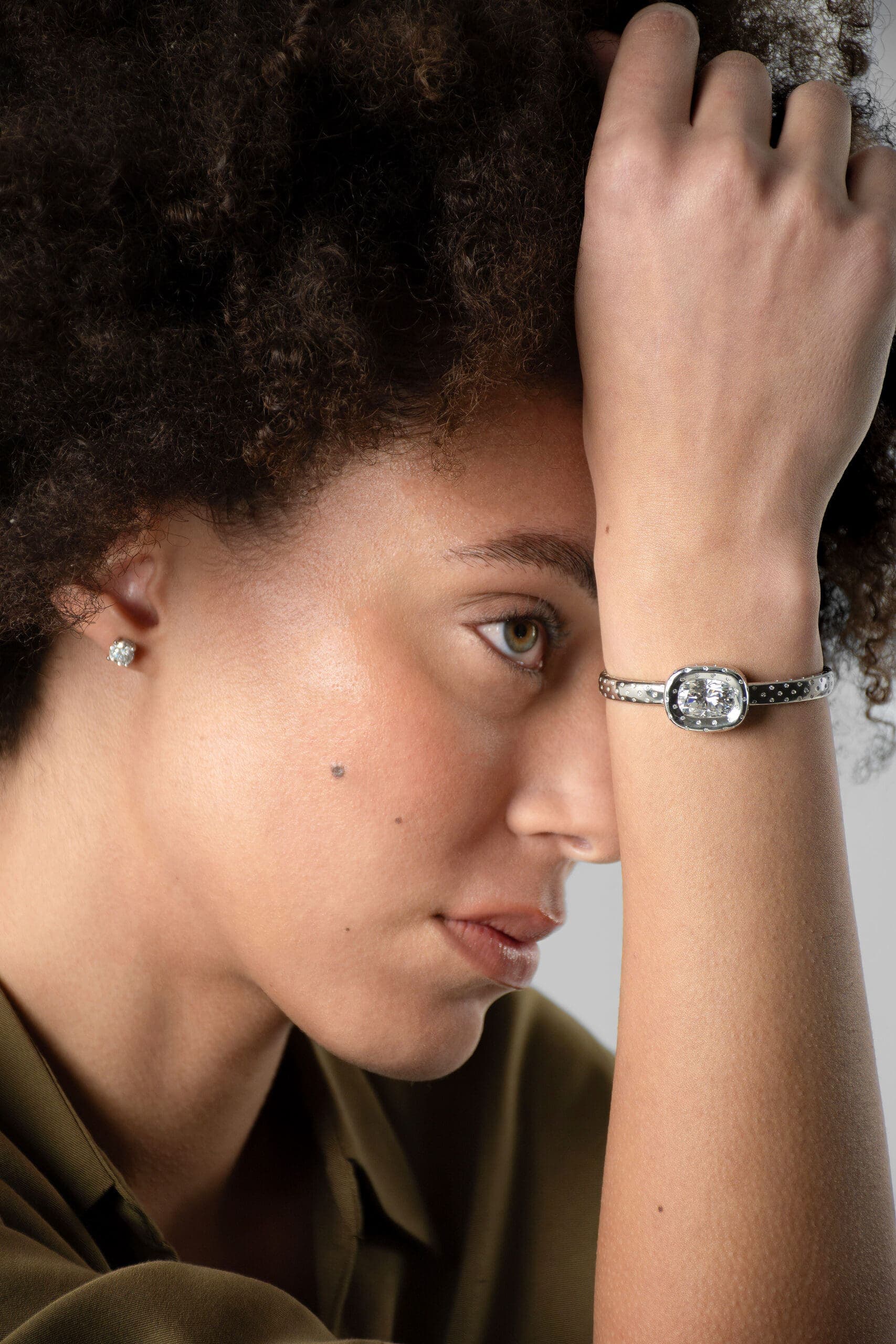
The brand's latest piece, the Time Moissanite Bangle, which debuted on March 15, 2026, is the clearest expression yet of what El&Elle's philosophy looks like when fully realized in metal and stone. The inspiration was rooted in a simple behavioral observation: we no longer look at our wrists to tell the time. Screens are everywhere. The watch, as a functional object, has ceded its wrist real estate to something more expressive. "The wrist has transitioned from a place of functional necessity to a prime location for personal expression," as the brand frames it, and the Time Moissanite Bangle was designed to occupy that territory with full artistic conviction.
The piece is explicitly not a watch. As El&Elle describes it, "It isn't a watch; it is a piece of art that captures the visual weight and balance of a classic wrist icon without the need to measure minutes." That framing matters technically as much as it does conceptually. Freed from the mechanical requirements of a timepiece, the bangle can pursue pure sculptural logic: the proportions of a watch face without the constraints of a movement, the visual gravity of a statement bracelet without the bulk.
The construction reflects that ambition in precise terms. The bangle is crafted on a sleek 6mm band, a width that sits in the precise range where a bracelet transitions from delicate to substantial without tipping into unwieldy. The centerpiece is an 8CTW elongated cushion moissanite, a cut that balances the soft romance of a traditional cushion with the elongated geometry that reads as more contemporary on the wrist. That stone is then framed by over 150 hand-set 1mm round moissanites, each placed individually to create a field of light that extends the bangle's visual presence well beyond the center stone alone.
The hand-setting detail deserves particular attention. In an era when pavé and channel-set accent stones are often machine-set to reduce labor costs, the choice to hand-set more than 150 individual 1mm stones is a declaration of craft priority. It is the kind of decision that rarely appears in a product description but that any trained eye will notice in the finished piece: the slight variation in prong placement that signals human hands, the way the stones catch light at slightly different angles rather than in mechanical uniformity.
What Moissanite Actually Offers
For readers encountering moissanite seriously for the first time, the material warrants a brief grounding. Moissanite was first discovered in a meteorite crater in 1893 by French chemist Henri Moissan, and modern gem-quality moissanite is produced in laboratories. Its refractive index of 2.65 to 2.69 exceeds that of diamond, which registers at approximately 2.42, giving moissanite a fire and brilliance that is distinctive rather than merely imitative. On the Mohs scale of hardness, moissanite rates at 9.25, making it highly resistant to scratching and appropriate for pieces intended to be worn daily or passed down across generations.
The current generation of fine moissanite is nearly colorless and eye-clean, bearing little resemblance to earlier iterations that drew criticism for a slight yellowish or greenish tint under certain lighting conditions. El&Elle's positioning of moissanite as a design-enabling material rather than a diamond substitute reflects a broader maturation in how the gemstone trade, and increasingly the buying public, understands what the stone actually offers on its own terms.
The Larger Stakes
El&Elle's arrival at this particular cultural moment carries weight beyond the launch of a single bangle. The fine jewelry industry is in the middle of a genuine reckoning with its own structures: with how it has historically priced access to beauty, with whose tastes and identities it has centered, and with whether the materials it treats as aspirational are still fit for purpose in a world that increasingly questions inherited hierarchies of value.
Justin and Louis built El&Elle out of a personal frustration, but the brand they've created speaks to something wider. The combination of moissanite's technical properties, a direct-to-consumer model that cuts legacy overhead, and a design philosophy that refuses to let carat cost set the ceiling on creative ambition adds up to something the industry should take seriously. The Time Moissanite Bangle is a confident opening statement, 150 hand-set stones and an 8CTW cushion centerpiece announcing that this is what design-led luxury looks like when the markup isn't running the show.
This article was produced by Prism’s automated news system from verified source data, official records, and press releases, then run through automated quality and moderation checks before publishing. The system is built and supervised by the people who set the standards it runs under. Read our full AI policy.
Did this article answer your question?