First-Time Vintage Jewelry Buyers Guide to Authentication, Eras, and Smart Shopping
Buying vintage jewelry without knowing how to read a hallmark or identify an era is an expensive gamble — here's how to shop with expertise from the very first piece.
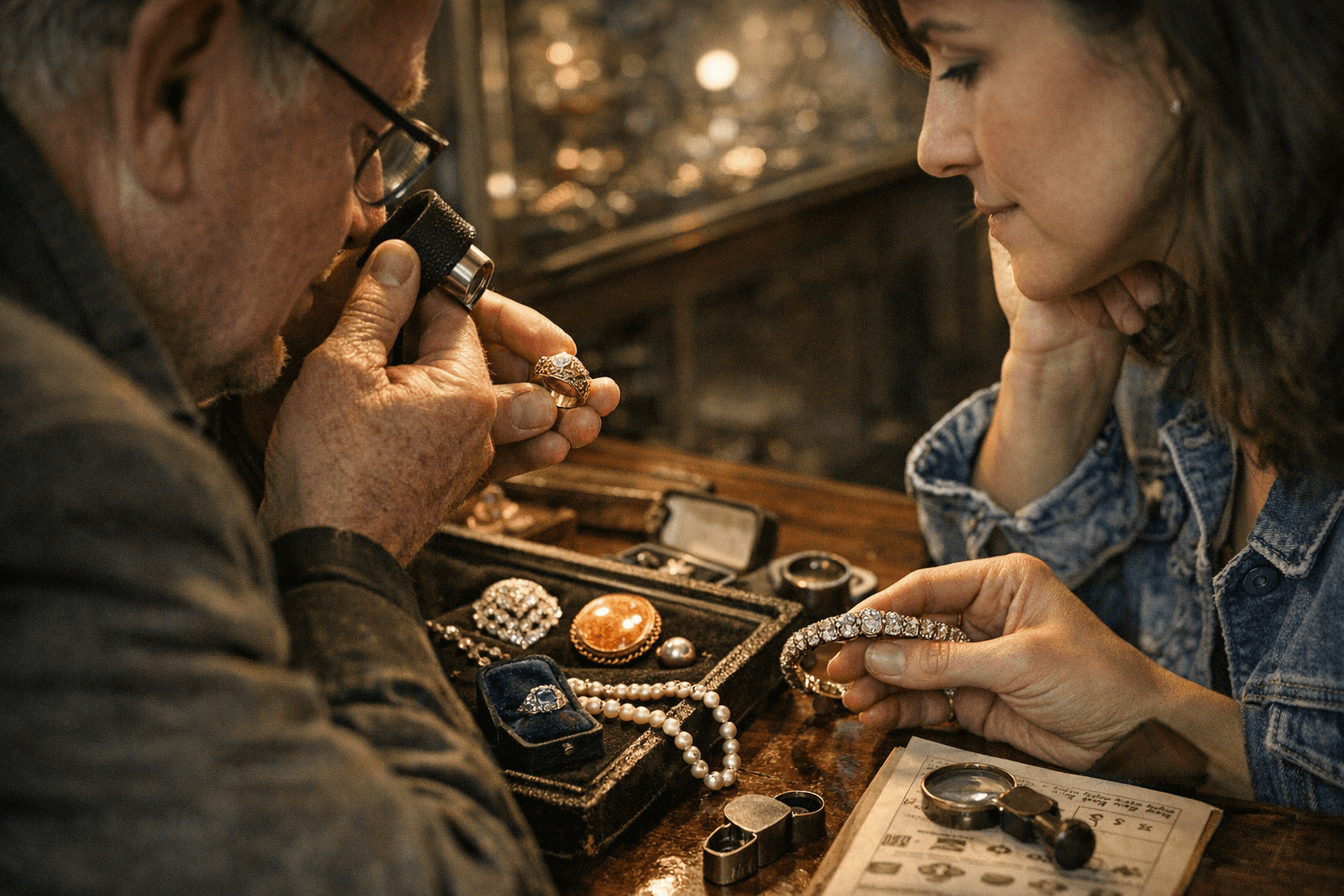
There is a particular thrill in lifting a Victorian mourning brooch or an Art Deco cocktail ring from a velvet tray and sensing that its story predates you by a century or more. But that thrill, unguided, can be costly. The vintage jewelry market rewards knowledge with extraordinary finds; it punishes ignorance with convincing fakes and overpriced reproductions. Before you spend a dollar, learn the language.
Antique, Vintage, or Estate: Know What You're Actually Buying
The terminology matters more than most first-time buyers realize. A jewelry item must be at least 100 years old to be considered antique, while vintage items fall between 20 and 100 years old. Estate, by contrast, simply refers to any second-hand jewelry, regardless of age. These distinctions affect price, rarity, and what you should expect to pay. Antique jewelry is often more valuable than vintage due to its age, rarity, and historical significance, and pieces over 100 years old tend to be rarer and more collectible, especially when they come from notable periods such as the Victorian or Art Deco eras. A seller who uses all three terms interchangeably is one worth questioning.
The Four Eras Every Buyer Should Know
The most collectible periods of antique and vintage jewelry each have a visual and material fingerprint. Learning to read them is the single most powerful skill you can develop before entering any antique market or estate sale.
*Victorian (1837–1901)*
The Victorian era is typically divided into three periods: Early Victorian (Romantic), Mid-Victorian (Grand), and Late Victorian (Aesthetic). Hearts, serpents, bows, flowers, stars, and lockets were especially popular in the Romantic period. By the mid-Victorian Grand period, the mood darkened considerably. Mourning jewelry from this era might have hair woven into it, a reminder of lost ones. Yellow gold was popular in many pieces, adding warmth and elegance. Gem cuts to look for include the old mine cut, a cushion-shaped, slightly irregular cut popular in Georgian and Victorian eras; the old European cut, the forerunner to the modern round brilliant; and the rose cut, flat-bottomed with a domed, faceted top, often used in Georgian and early Victorian rings. These cuts, produced before mechanized precision, carry a warmth and individuality that modern brilliant cuts simply don't replicate.
*Edwardian (1901–1910)*
Named after King Edward VII of England, who reigned from 1901 to 1910, Edwardian jewelry is celebrated for its sophisticated grace and use of high-quality materials. Platinum became the metal of choice during the Edwardian era, prized for its strength and ability to be drawn into fine wires and sheets, allowing jewelers to create delicate, intricate designs that were not possible with gold. Diamonds were predominantly featured, often accompanied by pearls, and the introduction of the modern brilliant cut during this period brought out maximum brilliance, making them a centerpiece in many pieces. Filigree work, featuring tiny beads and twisted threads of metal, and milgrain decoration, which adds a beaded texture to edges, were hallmark techniques that added to the delicacy and detail of Edwardian jewelry. Cartier, appointed the official jeweler to the king, played a crucial role in setting the pace of the era's stylish trends, introducing innovative and fashion-forward concepts to the jewelry world.
*Art Nouveau (1890–1910)*
Art Nouveau jewelry is known for flowing lines and themes drawn from nature and fantasy, including dragonflies, water lilies, nymphs, and whiplash curves. Favored materials included gold, horn, jasper, amber, aquamarine, glass, enamel, opal, moonstone, ivory, and baroque pearls in irregular shapes and shades. Pieces from France often feature the eagle's head mark for 18K gold and are signed by renowned maisons like Lalique or Vever. The movement was a deliberate reaction against the ornate Victorian aesthetic: pastel colors achieved through enamel, Japonisme expressed through vibrant colors and organic motifs, and elaborate handcrafted designs defined its character.
*Art Deco (1920–1935)*
After the devastations of World War I, the Art Deco era blew in, lifting everybody's spirits; this period is widely remembered for its cocktail-sipping flappers, jazz, and Great Gatsby-esque lifestyle, and it's also known for its spectacular, bold jewelry. The jewelry designers of the Art Deco era were keen to break away from the fluid lines and natural themes of Art Nouveau, instead embracing modernism and advances in technical innovation, giving birth to bold, geometric shapes with clean lines and symmetry. Platinum dominated, and makers like Cartier, Van Cleef & Arpels, and Tiffany created iconic Deco pieces. Color contrast was enormous: diamonds paired with onyx, emeralds, rubies, or sapphires in dramatic combinations.
Reading Hallmarks: The Hidden Language of Fine Jewelry
Hallmarks are official stamps or engravings applied to precious metals to confirm their content, origin, and authenticity, and they serve as a guarantee of quality, certifying that a piece meets established standards for purity and production. You'll typically find hallmarks in discreet places such as the inner band of a ring, the back of a brooch, or the clasp of a bracelet.
Hallmarks confirm the purity of the metal: "925" indicates sterling silver, and "750" indicates 18K gold, making these marks vital in confirming the metal's authenticity and quality. Many countries have their own conventions, such as the "18K" stamp for 18-karat gold in the U.S., or the leopard's head for pieces assayed in London. Some vintage jewelry features maker's marks, which are often initials, names, or symbols that identify the designer or manufacturer, and additional markings such as date stamps, patent numbers, and trademarks can provide even more context to verify a piece's age and authenticity.
Use a jeweler's loupe at 10x magnification or a digital microscope to examine faded stamps. Beware of counterfeit items mimicking luxury hallmarks, and buy from trusted, vetted sources. A missing hallmark is not automatically a red flag: until the Hallmarking Act of 1973, it wasn't a legal requirement to hallmark jewelry, and a lack of hallmark might conversely help authenticate an item as vintage, given how strict modern hallmarking laws have become.
Assessing Condition Like a Professional
Thoroughly assess the condition of the jewelry, including the metal, gemstones, settings, and any signs of wear or damage, and document any issues that may affect its value. Condition is one of the most decisive factors in price. Even a 150-year-old necklace won't be worth much if it's in poor condition.
There are physical signs that tell you whether a piece is genuinely aged or artificially distressed. Patina is the natural surface aging of metal; authentic antique jewelry often exhibits this patina, which may vary in color and texture, and assessing wear patterns can indicate whether certain elements were added or replaced over time. Antique jewelry often features detailed hand engraving or milgrain, a tiny beaded edge, that would be near-impossible to mass-produce; older hand-crafted pieces often show slight asymmetry in settings or cut stones, and minor tool scratches or subtle irregularities may be visible under magnification. These are not flaws to negotiate down; they are evidence of authenticity.
Vintage jewelry often feels dense and well-balanced, and supple, hand-finished chains are more fluid than machine-made ones, which can be stiffer. High-quality jewelry uses prongs to affix real gemstones, while cheap pieces use glue to attach fake stones — a distinction easily checked with a loupe.
Watch for these red flags before purchasing:
- A suspiciously low price for a supposedly rare piece
- A brand-new shank on an otherwise antique ring, which could indicate parts replacement
- Modern clasps or fastenings on necklaces and bracelets
- Over-polishing, which is sometimes used to mask wear or disguise added elements
- Construction that doesn't align with the purported era, suggesting a modern reproduction
Provenance: Why the Story Behind the Piece Matters
Provenance, the history of ownership, plays a significant role in understanding the authenticity and value of vintage jewelry; gathering information about a piece's previous owners and its journey can provide insight into its authenticity and even increase its value. If the piece was owned by a notable person or is tied to a significant event, its value can increase substantially.
Documentation such as receipts, letters, or photographs can provide valuable insights into the jewelry's history and age. Ask sellers specifically: is there a receipt of original purchase? An old insurance appraisal? A photograph of the piece being worn? Each document tethers the jewelry to a real moment in time and makes authentication considerably more straightforward.
Jewelry pieces from renowned brands or designers like Cartier or Tiffany are more valuable due to their prestigious reputation, and if a designer is deceased, their pieces become part of a limited collection, significantly increasing their worth.
Practical Shopping Rules
The final step is knowing how to behave at the point of purchase.
Buy from reputable sellers who provide provenance, certifications, or detailed descriptions. Never skip the condition report. A final appraisal report outlines the fair market value and any relevant historical or provenance information, and this document can be used for insurance purposes, liquidation, or selling the jewelry. If a seller cannot or will not produce documentation, treat that as a material fact about the transaction.
The value of antique pieces can be significantly influenced by their condition, rarity, provenance, and intrinsic materials, and consulting with a professional appraiser who specializes in antique jewelry is essential to ensure a fair and accurate assessment.
A few practical principles worth keeping close:
- Start with one era or style, such as Victorian or Art Deco, and learn its key traits before broadening your focus.
- Inspect carefully for signs of age, wear, and craftsmanship, and be cautious of pieces that look too perfect.
- Consult reference books and databases, which provide valuable information on the history, construction techniques, and materials used in different eras of jewelry making.
- Use a jeweler's loupe and cross-reference any stamps with online hallmark databases or antique jewelry reference books, as the right mark can confirm authenticity and even increase a piece's value.
The vintage market rewards patience and specificity. A buyer who knows the difference between an old mine cut and a rose cut, who can spot genuine milgrain from a cast imitation, and who insists on documentation before signing a check will always outperform one who buys on instinct alone. When you choose an authentic vintage piece, you're not just wearing jewelry: you're continuing a story. The wisest buyers simply make sure that story is true.
This article was produced by Prism’s automated news system from verified source data, official records, and press releases, then run through automated quality and moderation checks before publishing. The system is built and supervised by the people who set the standards it runs under. Read our full AI policy.
Did this article answer your question?