How Retailers and Makers Can Create Future Heirlooms and Honor Legacy Pieces
Stuller's 2026 "Storyteller" framework reframes how makers design and sell jewelry built to outlast its first owner.
When Stuller published its "Storyteller" movement framework earlier this year, it named something the industry had been circling for years without a proper vocabulary: the idea that a jeweler's highest calling is not to sell a piece, but to launch one into a family's future. That framing has practical consequences. It changes how you design, how you source, how you talk to a customer standing at the counter with her grandmother's ring wrapped in a tissue.
This guide is for the makers and retailers who want to operate at that level. It covers two distinct but related disciplines: building a product strategy around durability and timeless design so that what you make today can credibly be called a future heirloom, and developing the sales and service workflows that honor legacy pieces when customers bring them in for repair or redesign.
Designing with Durability and Timelessness in Mind
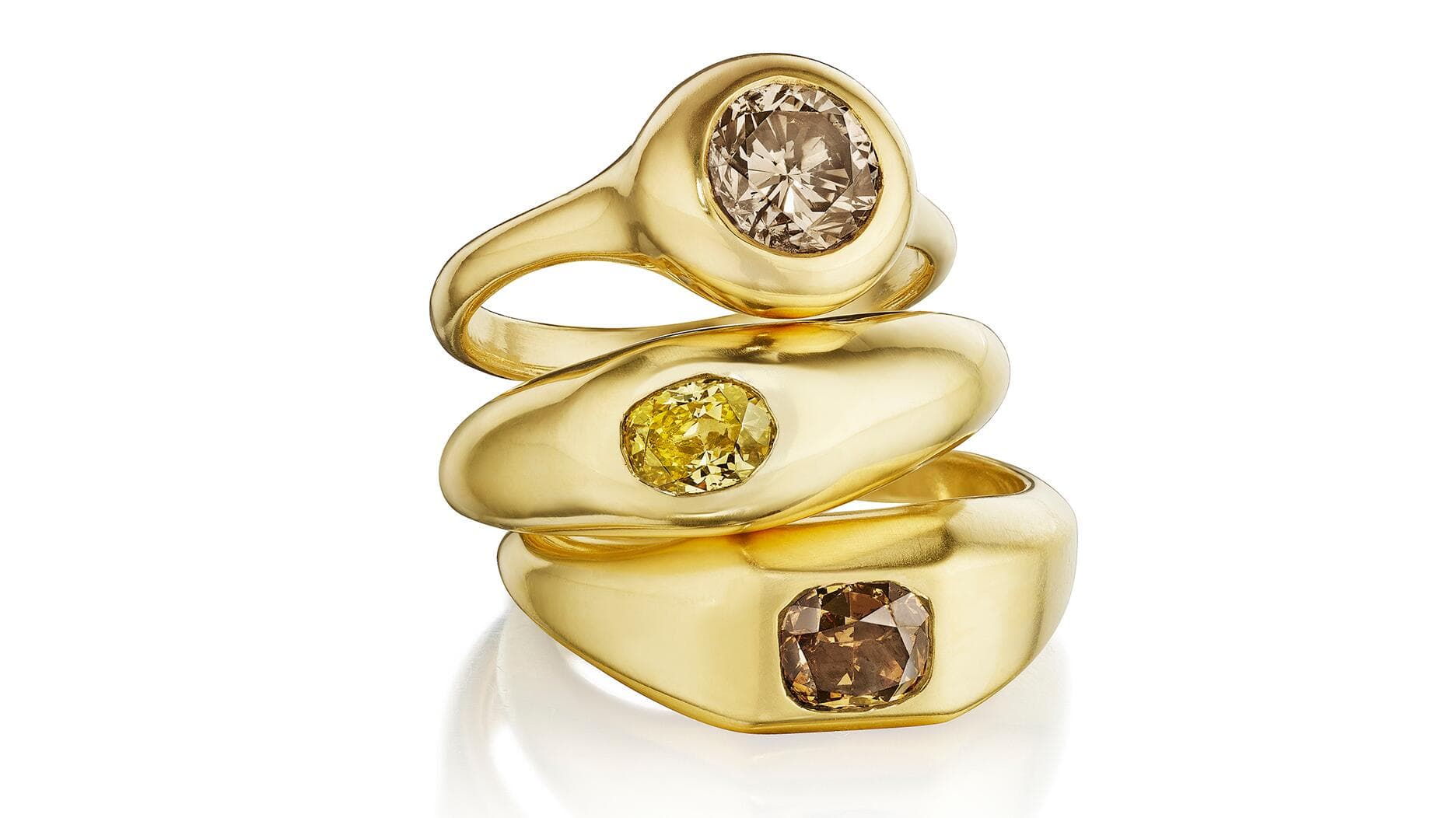
The phrase "built to last" is easy to say and hard to execute. In fine jewelry, durability lives in the details: the gauge of the metal used for a shank, the depth of a bezel, the quality of the prong tips on a cathedral setting. A six-prong Tiffany-style solitaire in 14-karat gold is a workhorse. A thin pavé band in the same metal, set with 1.2mm stones in shared prongs, is not. Both are sold as engagement rings. Only one is likely to survive fifty years of daily wear without significant reconstruction.
For makers developing a "future heirloom" line, the design brief should start with a structural audit before it touches aesthetics. Ask: can this piece be sized without compromising the design? Can the setting be re-tipped or fully rebuilt? If the shank wears through in thirty years, is there enough metal to retip, or will the customer need an entirely new mounting? Platinum, despite its higher price point, answers many of these questions better than gold: it is denser, it doesn't lose metal when it scratches (it displaces rather than removes), and its prongs can be re-tipped repeatedly. For gold pieces, 18-karat strikes a better long-term balance than 14-karat in high-wear settings, despite being softer, because it carries enough fine metal to be worked and reworked over generations.
Timelessness in design is a more subjective discipline, but certain structural principles hold. Solitaires, three-stone settings, and simple band profiles have survived every fashion cycle since the Victorian era. Mixed metals and sculptural forms, which stylist studios are currently flagging as dominant for spring 2026, are compelling now but carry more stylistic risk over a fifty-year horizon. That doesn't mean you avoid them; it means you position them honestly. A piece designed with a distinctive aesthetic moment baked in is a period piece, not an heirloom in the making. Both have value. The retailer's job is to know the difference and communicate it clearly.
Provenance as a Sales Workflow
Provenance documentation is where the industry consistently underperforms its own aspirations. Makers who describe their work as "heirloom quality" often hand over nothing more than a generic appraisal and a warranty card. That is a missed opportunity, both commercially and emotionally.
A provenance workflow for a made-to-order or signature piece should produce a small archive: the original design rendering or CAD file, the gemstone grading report, a record of the metalworker or bench jeweler who built the piece, the sourcing documentation for any ethically traced stones, and a brief written narrative of the commission. This doesn't need to be elaborate. A folded card inside the box that names the stone, records its origin, and carries the maker's signature does more narrative work than a laminated certificate. The goal is to give the next generation something to hold, something that connects the object to its origin story.
For retailers selling existing inventory rather than custom work, the workflow is lighter but still meaningful. Train your sales team to note the occasion for which a piece is being purchased, the names involved if the customer volunteers them, and any specific design requests made during the selection process. Some retailers have begun offering a "registry card" service at point of sale, essentially a structured form that lives with the customer's purchase record and can be retrieved or reprinted years later. It costs almost nothing to implement and dramatically raises the perceived value of the transaction.
Serving Customers Who Bring Legacy Pieces
The customer who walks in with a legacy piece represents a different kind of sales challenge and a more emotionally charged one. She is not browsing. She has already decided something needs to happen; she just doesn't know what. Your first job is to listen before you appraise.
The intake conversation for a legacy piece should establish a few things before any technical assessment takes place. What is the piece's history, as far as the customer knows it? What is her emotional relationship to it: does she wear it, has she never worn it, is she ambivalent about it? What outcome is she hoping for: preservation, transformation, or simply understanding what she has? These questions shape every recommendation that follows. A customer who wants to preserve her mother's ring exactly as it was needs a conservator's approach. A customer who finds her grandmother's brooch unwearable in its current form needs a designer who can re-imagine the stones in a contemporary mounting without erasing the original's DNA.
Technical intake should follow a standard protocol:
1. Document the piece with photographs before any work begins, including close-ups of hallmarks, damage, and existing repairs.
2. Identify the metal and record any stamps or assay marks.
3. Assess the stones: are they original to the piece? Have any been replaced? What is their likely origin period, based on cut style?
4. Note any existing repairs and their quality: a poorly executed previous sizing, for instance, will affect what can be done next.
5. Produce a written condition report that the customer signs before the piece leaves her hands.
This protocol protects both the customer and the shop. It also signals to the customer, immediately and tangibly, that her piece is being treated with the seriousness it deserves.
Redesign Without Erasure
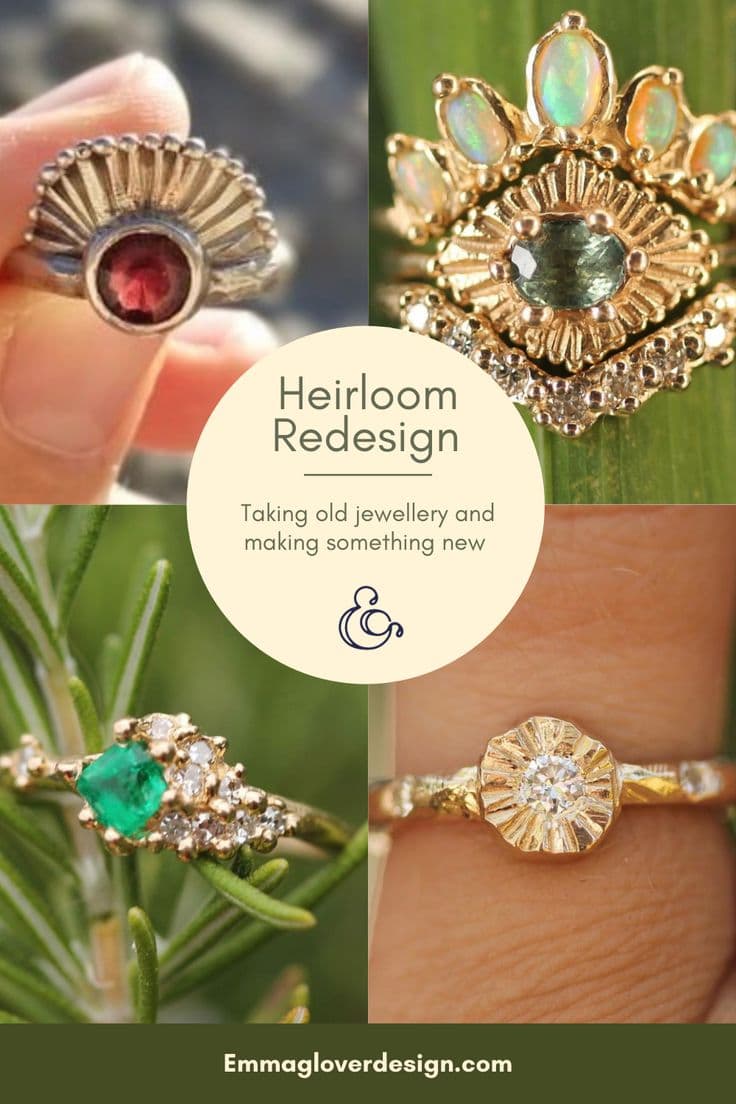
The most delicate work in legacy jewelry service is redesign. The temptation, especially when working with antique stones in outmoded settings, is to modernize completely. Resist it. The old-mine cut diamond in a closed-back foil setting is not just a stone in a bad mounting; it is a document of its era. Resetting it in a contemporary bezel may make it more wearable, but it erases something irreplaceable. The better approach is to find a setting that serves the stone's character while making it livable for a twenty-first century wearer.
Old-mine and rose-cut stones have their own optical language, one built for candlelight, one that reads as soft and romantic rather than brilliant and sharp. Pairing them with a modern open gallery setting that allows light from below while echoing the proportions of the original mount honors both the stone and its history. Similarly, when melting down family gold for a new piece, it is worth asking whether any of the original metal can be incorporated as a structural element rather than simply refined into the alloy pool. A shank made from grandmother's gold, even if it can't be identified visually, carries a continuity that matters to the person wearing it.
The jewelers who build reputations in this space are not necessarily the most technically accomplished. They are the ones who understand that every piece that enters their shop with a history is a trust exercise, and that the measure of their work is not just whether it is beautiful when finished, but whether the story it carries has been treated with the same care as the metal.
Know something we missed? Have a correction or additional information?
Submit a Tip