How to Build a Jewelry Collection With Longevity and Story in Mind
The best jewelry collections aren't built on size or sparkle alone — they're built on knowledge, provenance, and a clear sense of what "value" means to you.
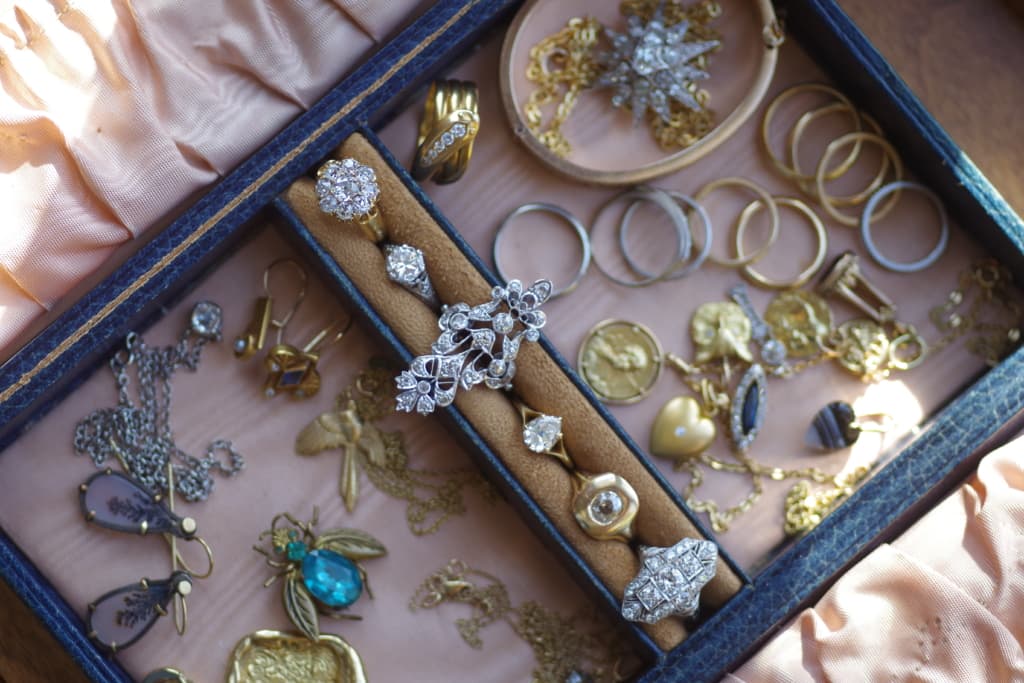
Human beings have crafted jewellery since prehistoric times, for functionality, to represent social status, and as talisman lucky charms. That impulse hasn't disappeared; it has simply evolved. Today, the most considered collectors aren't chasing the biggest stone or the flashiest setting. They're asking harder questions: Where did this come from? Who made it? What will it mean in twenty years? Whether you're eyeing a diamond tennis bracelet, a gold chain necklace, or an antique watch, the foundation of any collection worth building is the same: education about what makes a piece both authentic and valuable.
Why Story Matters as Much as Stone
Our contemporary approach to jewellery selection is often about simply expressing our personalities with beautiful adornments, or with pre-owned jewellery, buying into a piece's legacy and its own unique story. That second motivation deserves more attention than it typically gets. A vintage brooch carries its own biography: the hands that set the stones, the era that shaped its silhouette, the previous owner who wore it to occasions you can only imagine. When you buy into that legacy, you're not just acquiring an object. You're becoming its next custodian.
This is why building a collection with longevity and story in mind requires a different kind of discipline than simply shopping for jewelry. It asks you to slow down, to research before you spend, and to define what "value" actually means to you before you walk into any room, whether that's an auction house, a boutique, or an online platform. Value, as a framework, can be monetary or it can be wearable. A piece you reach for every single day may be worth far more to your life than a locked-away investment stone you never touch. The more information you carry with you into any buying decision, the better the outcome.
Understanding Gemstones: The Four Factors That Drive Price
Gemstones, also referred to as precious or semi-precious stones, appear in a wide range of sizes and quality, and prices vary greatly as a result. The accessible end of that range is genuinely wide: it is possible to find a stone that will fit almost any budget, making gemstones relevant to both beginning collectors and seasoned wearers. But understanding what you're paying for, at any price point, is non-negotiable.
The four factors most important to a gemstone's price are color, clarity, cut, and rarity. These aren't abstract concepts. Color refers to the saturation, hue, and tone of a stone, and a vivid, evenly distributed color commands a significant premium. Clarity describes the presence or absence of inclusions, those internal characteristics that affect how light moves through a stone. Cut determines how well a lapidary has maximized the stone's optical properties, and a masterful cut can make a modest stone sing. Rarity speaks to supply: some stones occur naturally in quantities so limited that their value reflects geological scarcity as much as beauty.
The practical implication of understanding these four drivers is counterintuitive to buyers who equate bigger with better. Generally, a smaller gemstone with superb cut, color, and clarity is more valuable than a larger stone with poor cut, color, and clarity. A compact, precisely cut stone that throws light across a room will outlast and outperform a cloudy, poorly proportioned stone twice its size, both aesthetically and in terms of long-term worth.
Authentication: What Hallmarks Tell You
Before any piece joins your collection, authentication deserves your full attention. The materials, age, condition, and markings of a piece are the primary indicators of what it actually is, as opposed to what it is claimed to be. Markings, specifically official hallmarks, are among the most reliable tools a buyer has. Hallmarks are stamped onto precious metal objects to indicate the metal's purity, its origin, and sometimes the maker's identity. Reading them correctly can tell you whether a gold chain is what the seller says it is, or whether an antique watch was produced in the decade attributed to it.
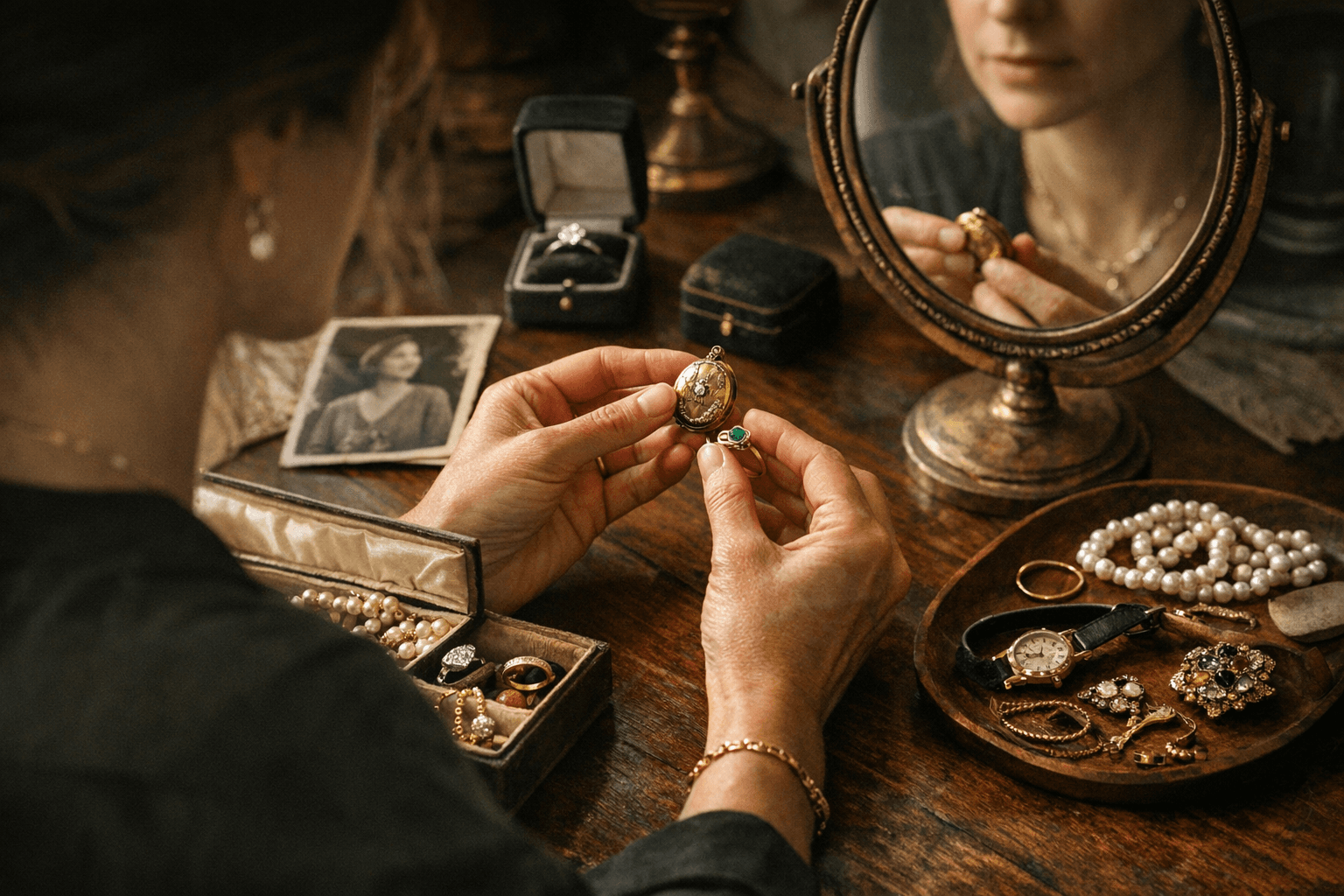
Maker hallmarks go further still. A maker's mark, that small stamped cipher pressed into the metal by the craftsperson or workshop, connects a piece directly to its source. Assessing these marks takes practice, but it is a skill that pays dividends. A piece with a clear, legible maker's mark and a corresponding assay hallmark carries a verifiable chain of provenance that a piece without such marks simply cannot offer. When in doubt, consult a certified appraiser or gemological specialist who can read these marks in context.
What to Consider Before You Buy
The checklist you carry into any jewelry purchase should cover several distinct areas. Think of them not as bureaucratic boxes but as questions that protect your investment and deepen your relationship with what you buy:
- Authenticity through official hallmarks: Can the piece be verified through its stamps and marks? Is the metal what it claims to be?
- Gemstone quality within your budget: Given the four price drivers (color, clarity, cut, rarity), are you getting the best stone available at your price point, or are you paying for size over substance?
- Categorization by type and era: Does this piece fit a coherent narrative within your collection? Understanding whether something is Edwardian, Art Deco, mid-century, or contemporary affects both its value and its story.
- Buying online with care: The online jewelry market is substantial and full of legitimate offerings, but it requires additional diligence. Look for sellers who provide independent certifications, detailed provenance documentation, clear return policies, and high-resolution imagery that shows hallmarks and any condition issues.
- Discovering your personal style: A collection built on impulse tends toward incoherence. Understanding whether you are drawn to delicate settings, bold statement pieces, or historically significant objects helps you spend more deliberately.
- Maintenance and condition: Keeping purchases in tip-top condition is not a passive outcome. It requires knowing how to store pieces correctly, which materials are sensitive to light or moisture, and when professional cleaning or restoration is appropriate.
Building a Collection That Lasts
The pieces most often cited as anchors of a strong collection tend to share certain qualities: they are well-made, clearly authenticated, and connected to a specific tradition of craft or history. A diamond tennis bracelet, for example, is a piece whose design vocabulary has remained consistent for decades, which means condition and stone quality are the primary differentiators between a lasting acquisition and a disappointing one. A gold chain necklace rewards attention to the fineness of the links, the quality of the clasp, and the purity of the metal. An antique watch asks you to understand not just aesthetics but movement history, case condition, and the integrity of any restoration work.
None of these categories is more or less valid than another. The point is to know what you are buying in each case, and to apply the same rigorous framework regardless of the category: materials, age, condition, and markings.
A collection built with this kind of intentionality does something that purely decorative accumulation cannot. It holds its meaning. Pieces chosen with knowledge, authenticated with care, and maintained with attention become objects that carry a story across generations. The more you know going in, the richer that story becomes.
This article was produced by Prism’s automated news system from verified source data, official records, and press releases, then run through automated quality and moderation checks before publishing. The system is built and supervised by the people who set the standards it runs under. Read our full AI policy.
Did this article answer your question?