How to Build an Investment-Grade Jewelry Collection With Lasting Value
Signed Cartier and Van Cleef pieces have outpaced many traditional investments, but only 20-30% of fine jewelry qualifies as investment-grade. Here's how to buy into that minority.
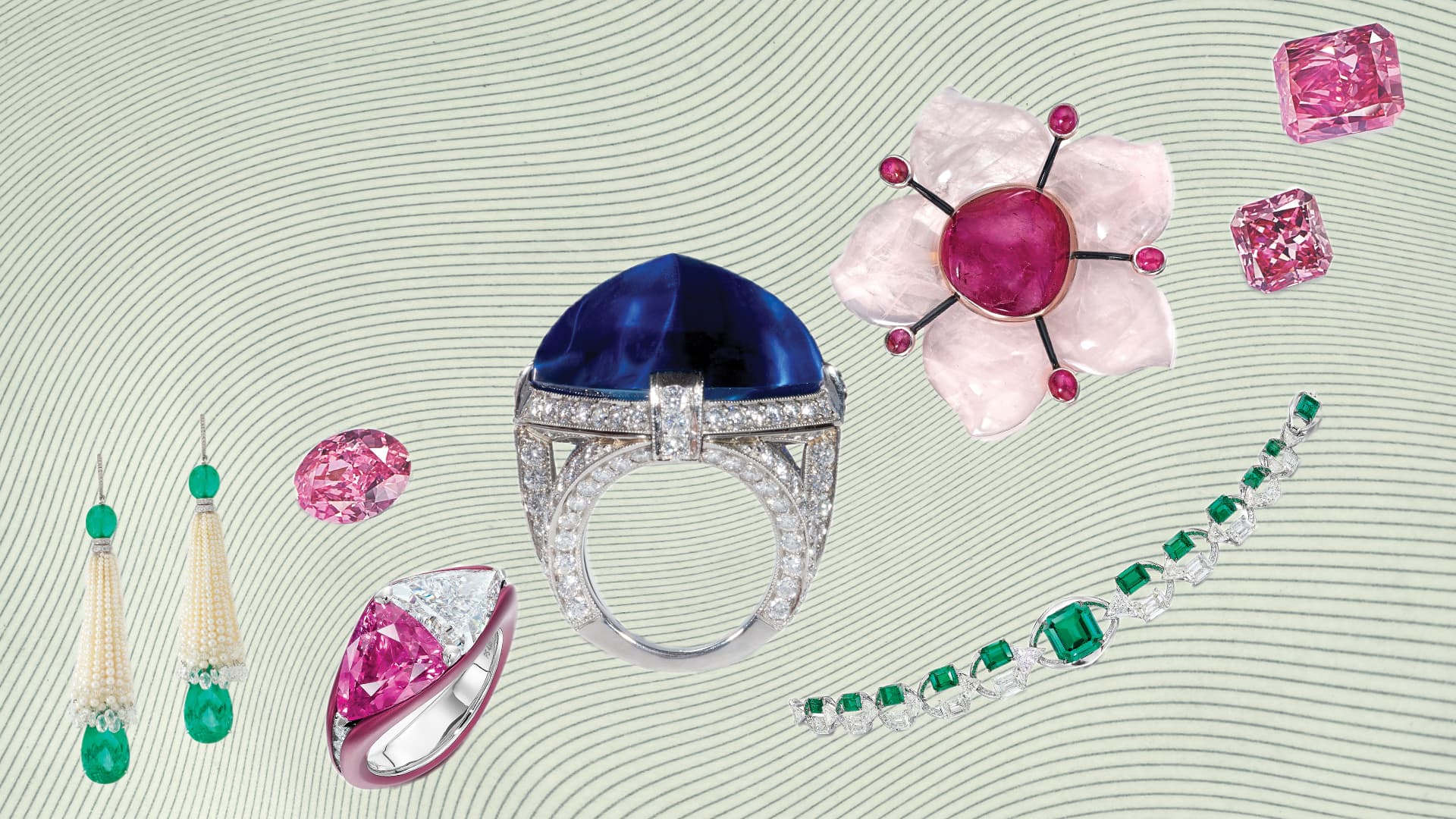
Jewelry has always lived at the intersection of the deeply personal and the quietly financial. But there's a version of collecting that demands more than taste: it requires gemological literacy, market patience, and an understanding of why one signed bracelet appreciates while another, visually identical, stalls on the secondary market. Only about 20-30% of jewelry purchases can be considered true investment pieces that will maintain or increase their value over time. The difference between the minority that appreciates and the majority that doesn't is precisely what this guide is about.
Understanding the Two Kinds of Value
Before you spend a dollar, it helps to understand what you're actually buying. Every piece of fine jewelry carries two distinct types of value, and confusing them is an expensive mistake. Intrinsic material value is almost always less than the retail or collectible value of a finished piece. The gap between melt value and market value is where craftsmanship, design, and desirability live.
Collectible value, by contrast, is driven by the maker's signature, historical context, rarity, and condition. A small engraving such as "Tiffany & Co." or "Cartier" can dramatically increase value. A plain 18-karat gold bangle and a signed Cartier Love bracelet may contain nearly identical gold weight; their secondary market trajectories could not be more different. The lesson: buy metal for security, but buy signatures for appreciation.
The Maisons That Move Markets
Three houses dominate the investment tier of the signed jewelry market with a consistency that auction data bears out year after year. Cartier holds a 33% share of auctions for prestige signed jewelry on the secondary market, ahead of Van Cleef & Arpels in second place. Cartier today remains Richemont Group's best-performing house, accounting for nearly 60% of the jewelry division and a +22% increase in sales over the 2024-2025 fiscal year.
The specificity of which Cartier pieces you target matters enormously. Cartier's animal jewelry, including the Panther, Chimera, and Snake, recorded the strongest growth with an average value increase of +55% between 2020 and 2025. Art Deco pieces have shown more linear, stable appreciation. The iconic Trinity Ring tells its own story: the Trinity Ring's 65% price increase over five years significantly outpaces many traditional investment vehicles, while the piece's iconic status ensures continued demand.
Van Cleef & Arpels plays a different but equally compelling game. Van Cleef Alhambra pieces hold 80 to 90% of retail value consistently. That retention rate is a function of what analysts call "design language legibility": the Alhambra motif is recognizable from across a room, which makes it liquid on the secondary market. Bulgari's Serpenti line occupies similar territory, carrying the double advantage of strong brand recognition and a devoted collector base.
The Gemstone Equation: Rarity Begins With Origin
Signed settings matter, but the stones inside them can make the difference between a good investment and a generational one. Investment-grade gemstones derive their value from a rare convergence of natural origin, lack of treatment, exceptional colour, meaningful size, and verified provenance, a combination found only in a minute fraction of global gemstone production. The operative phrase is "lack of treatment." Untreated stones are considerably rarer, and rarity is the engine of value in the gemstone market. Treatments may improve appearance, but they place the stone into a larger pool of supply.
Collection-grade natural saltwater pearls, particularly those in antique settings by designers like Cartier or Van Cleef & Arpels, have become increasingly valuable as new sources of natural pearls dwindle. Colored diamonds occupy the summit. At Christie's Geneva in November 2025, the Mellon Blue, a 9.51-carat fancy-vivid-blue VVS1 diamond ring, sold for CHF 20.5 million ($25.6 million). At Sotheby's Geneva the same year, the Mediterranean Blue, a 10.03-carat fancy-vivid-blue VS2 diamond, sold for CHF 17.9 million ($21.5 million). These figures are benchmarks, not aspirations for most collectors, but they illustrate where the market's ceiling forms and why colored diamonds, fine Burma rubies, Kashmir sapphires, and Colombian emeralds with origin certificates command such premiums at every price point.
Certification: The Document That Changes Everything
Provenance documentation increases secondary market value by 15 to 30%. That figure alone justifies treating paperwork with the same seriousness you give the jewelry itself. Original receipts, manufacturer marks, and certificates of gemological origin are not mere formalities; they are instruments that convert a beautiful object into a verifiable asset.
For gemstones, the leading authorities are the Gemological Institute of America (GIA) and the Gübelin Gem Lab, alongside the Gem Research Swisslab (GRS). GRS, founded in Switzerland, quickly built a reputation as a world leader in colored gemstone origin and color grading. Collectors, jewelers, and auction houses particularly appreciate its practical and market-oriented approach. A GRS or GIA certificate doesn't just confirm what a stone is; it tells a buyer where it came from, whether it has been treated, and how it grades against objective global standards. Without one, you are asking the market to take your word for it.
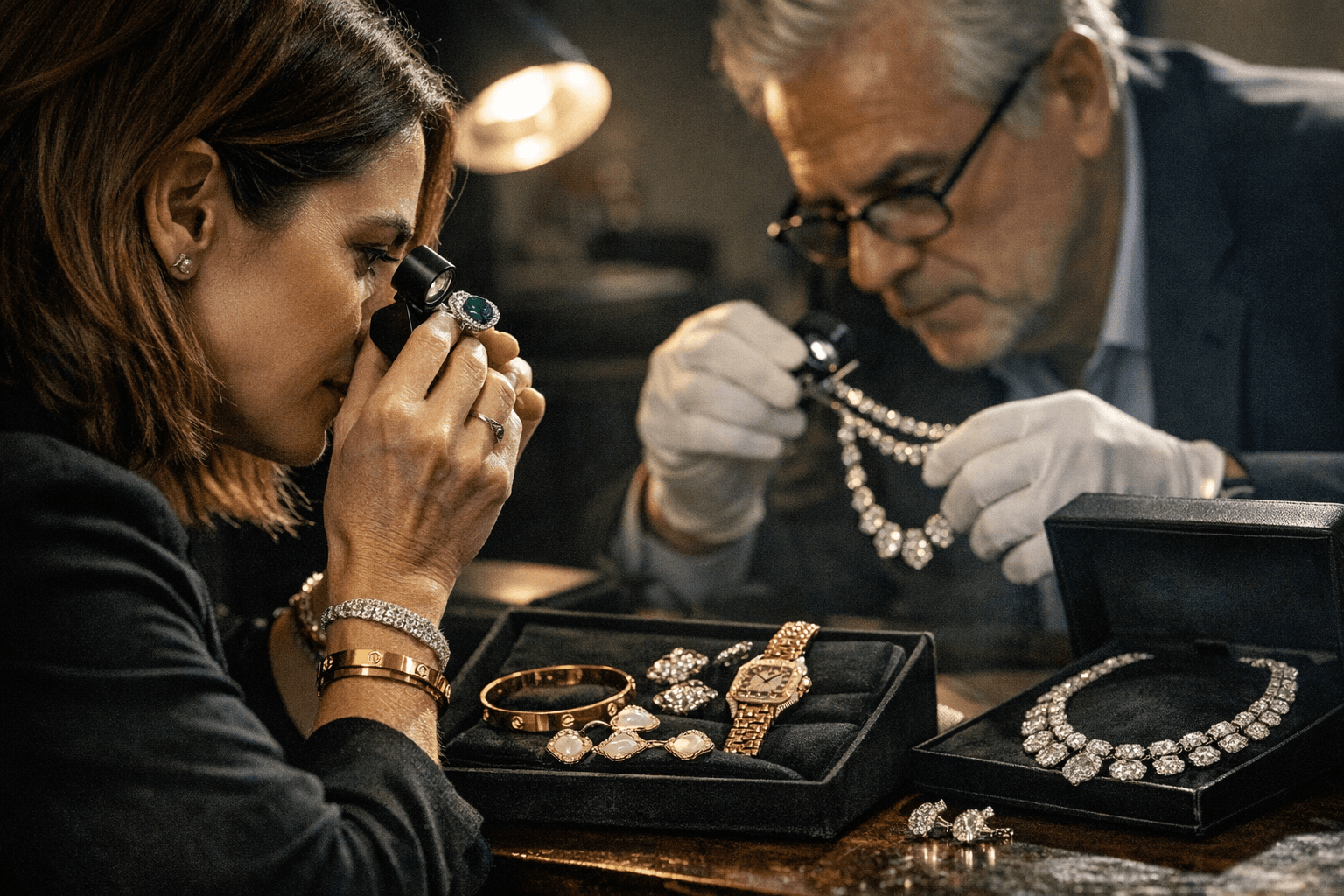
Provenance and historical links, such as a gemstone's connection to historic figures or royal collections, can multiply perceived value well beyond its physical quality. The story behind a gem often plays an outsized role at auctions, where narrative and rarity carry significant weight. Nancy Astor's Cartier tiara, sold at Bonhams in June 2025 for $1.2 million, is a perfect case study: the provenance of royal ownership transformed a turquoise and diamond piece into a headline lot.
Using Auctions as Your Price Education
Auction houses are not just places to buy and sell; they are the market's most transparent pricing mechanism. Hammer prices at Christie's, Sotheby's, and Bonhams set the benchmarks against which every subsequent private transaction is implicitly measured. Study the results. Christie's regularly achieves some of the highest prices for jewels at auction. A six-piece Jean Schlumberger for Tiffany lot sold at Sotheby's for $406,400, comfortably above its high estimate of $315,000, signaling that signed mid-century American jewelry is deeply in demand.
Specialist dealers offer a complementary path: the lots have often been pre-validated, condition is assessed, and the relationship with a trusted dealer can surface pieces before they reach the open market. Either channel, used well, gives you access to pieces with documented histories and accurate pricing context.
Condition, Storage, and the Long Hold
Investment jewelry is not jewelry you lock in a vault and never touch. The emotional dimension of wearing meaningful pieces is, by design, part of the return. But condition is a financial matter. Professional servicing, proper storage away from humidity and direct light, and careful handling of prong and bezel settings all preserve the value that documentation promises.
For antique and vintage pieces specifically, resist the urge to polish aggressively. Patina, the natural aging of metal surfaces, can be a positive feature that confirms age and authenticity. Aggressive cleaning, polishing, or chemical dipping can remove the very surface evidence that makes the piece credible to a future buyer or appraiser.
Insurance and Appraisals: The Safety Architecture
A collection without current insurance and appraisals is a collection exposed. Many collectors are shocked to discover how underinsured they are. With gold prices rising sharply, a gold band purchased before the price spike may not be fully protected, even with 150% coverage. Some specialist insurers, including Chubb, cover jewelry items for up to 150% of their insured value in most states, providing a buffer for appreciation; but that buffer is meaningless if the appraised value is years out of date.
The standard guidance: schedule professional appraisals every two to three years, or immediately following a significant market move in gold or platinum prices. Work with a GIA Graduate Gemologist or a member of the North American Jewelry Appraisers who can provide a detailed written report tied to current replacement values. Store digital copies of receipts, certificates, and appraisals in a secure cloud location alongside photographs of each piece.
The Patient Collector's Advantage
Consumers now rank jewelry 15 percentage points higher than handbags for investment potential. That shift in perception is relatively recent, and it reflects a growing sophistication about what jewelry can do when it is chosen with care. But patience remains the defining virtue of the serious collector. Jewelry investments are long-horizon commitments. The Trinity Ring's 65% five-year gain did not announce itself in year one. The Panther brooches that now command record prices at Christie's Geneva spent decades in private collections before the market fully priced their rarity.
The collectors who built wealth through jewelry did so by combining gemological knowledge with editorial restraint: buying fewer pieces, buying better, documenting everything, and holding through cycles. Taste opens the door; knowledge is what keeps you in the room.
This article was produced by Prism’s automated news system from verified source data, official records, and press releases, then run through automated quality and moderation checks before publishing. The system is built and supervised by the people who set the standards it runs under. Read our full AI policy.
Did this article answer your question?